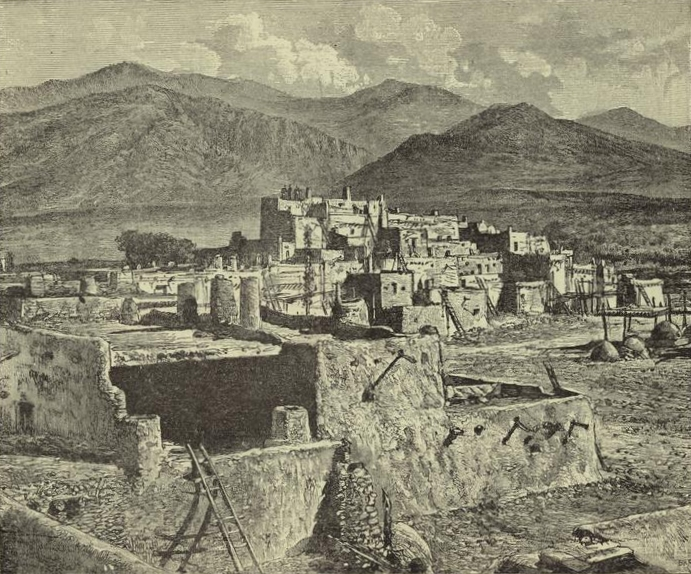
The Taos Pueblo, an 1893 illustration
(Wikipedia)
The siege of Pueblo de Taos was the final battle during the main phase of the Taos Revolt, an insurrection against the United States during the Mexican–American War. It was also the final major engagement between American forces and insurgent forces in New Mexico during the war.
Background
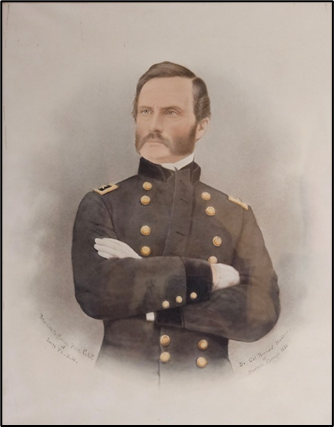
Steven Watts Kearny
(New Mexico History Museum, Santa Fe, New Mexico
In August 1846, New Mexico fell to American troops under Stephen Watts Kearny. When Kearny left for California, Colonel Sterling Price was left in command of the American forces in New Mexico. In January 1847, Price learned of a Mexican revolt in the territory and defeated the rebels at the Battle of Cañada and the Battle of Embudo Pass as his forces moved toward Pueblo de Taos, the center of insurgency activity. Another American force fought the New Mexicans at Mora, on the east side of the Sangre de Cristo Mountains.

Sterling Price
(Library of Congress)
On February 1st, his force of 478 men reached the summit of Taos Mountain, covered in two feet of snow, and on February 2nd, they reached Rio Chiquito, the entrance to Taos Valley. On February 3rd, Price marched through Don Fernando de Taos and found the rebels had strongly fortified Pueblo de Taos.
Siege
Price ordered Lieutenant Dyer to set up an artillery battery, consisting of a 6-pounder and the howitzers, 250 yards from the western flank of the church, and began firing at 2:00 PM and continued for two and a half hours before retiring to Don Fernando for the evening. Early on February 4th, he placed Captain Burgwin’s First Dragoon Regiment and Major Clarke’s light artillery in the same position he had the battery the evening before. Captain St. Vrain’s and Captain Slack’s mounted men were placed to prevent escape towards the mountains or Don Fernando. The remaining men were placed 300 yards from the northern wall along with Lieutenant Dyer’s artillery battery. This placed the front and eastern flank of the church in a crossfire.

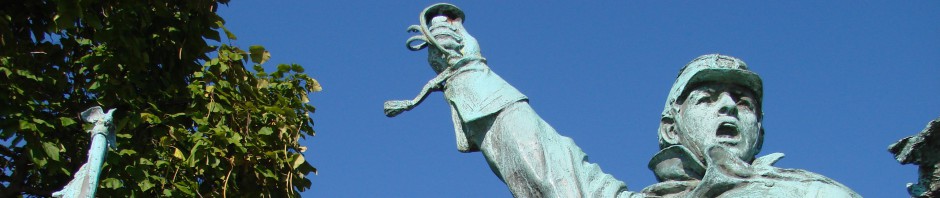
Death of Captain Burgwin
(Wikipedia)
The batteries started firing at 9:00 AM but failed to breach the church walls by 11:00 AM. Price ordered a storming of the church. Captain Burgwin and Captain McMillin charged the western flank of the church, while Captain Agney, Lieutenant Boon, and Captain Barber charged the northern wall. The roof of the church was set on fire, but Captain Burgwin was mortally wounded while moving through the corral at the front of the church. A hole was cut in the western wall, which permitted shells to be thrown in by hand, while the 6-pounder was placed so it could fire grapeshot into the town. By 3:00 PM, the 6-pounder was placed sixty yards from the church and widened the hole after ten rounds, after which it was placed ten yards away and fired three rounds of grapeshot into the church. This allowed Lieutenant Dyer, Lieutenant Wilson, and Taylor to take possession of the church, followed by the rebels abandoning the western part of the town.
Captain Slack and Captain St. Vrain pursued those trying to escape into the mountains, killing many before night fell.The rebels surrendered the next day, giving up one of the insurrection leaders, Tomas Romero, a Pueblo Indian.
Aftermath
Two of the accused rebellion leaders, Pablo Montoya and Tomás Romero, were captured in the fighting. Private Fitzgerald shot Romero in the guard room at Don Fernando before being brought to trial. Montoya was convicted of treason and hanged at Don Fernando on February 7th. Later trials resulted in 14 additional public hangings.
Later skirmishes occurred at the Red River Canyon Affair, the Las Vegas Affair, and the Taos Affair.”[1]
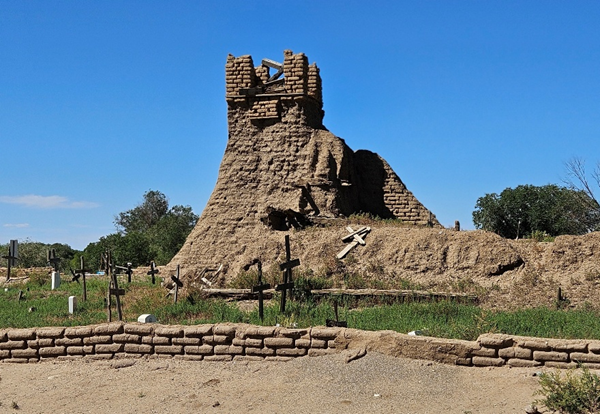
The ruins of the church stand as a memorial
to those who were killed
(Author’s Photograph)
[1] “Siege of Pueblo Taos,” Wikipedia, Siege of Pueblo de Taos – Wikipedia, retrieved September 24, 2025.

 Allen Mesch