
History of La Catrina
La Catrina is a universal character associated with Day of the Dead (Día de Muertos), in Mexico and around the world.
La Calavera Catrina (“The Dapper [female] Skull”) first appeared around 1910-1912 as a zinc etching created by the Mexican printmaker and lithographer José Guadalupe Posada. It was published in 1913, in a satirical broadside.
Between 1946 and 1947, Mexican muralist Diego Rivera transformed Posada’s creation into a life-sized figure for his fresco, “A Dream of a Sunday Afternoon in the Alameda Park.” While Posada originally intended his print as a satire of upper-class women, Rivera used ethnic artistic references to reimagine her as a symbol of Mexican national identity.
The La Catrina image first appeared in a book in 1930. In 1944, the Catrina image appeared on the cover of an exhibition catalogue for the Art Institute of Chicago. Art Institute catalogues with Catrina on the cover, and individual prints of Catrina were widely distributed in Mexico and the U.S.
Catrina features widely in Day of the Dead products and inspires artists annually to recreate her from various materials. Contests for Catrinas have emerged in Mexico and the U.S., along with impersonators, themed fashion shows, and charity events.
Catrinas are currently fashioned out of two- and three-dimensional materials. These include drawings, prints, paintings, and paper-mâché sculptures, Oaxacan wood carvings, polychromed clay figures, and barro negro black clay pottery. Catrina is often paired with a male dandy skeleton, known as a Catrín.
“Catrin” and “Catrina” have become popular costumes during Day of the Dead celebrations in Mexico and elsewhere. They typically feature calavera (skull) make-up. The male counterpart to the Catrina wears the same skull makeup and black clothes, often a formal suit with a top hat or a mariachi costume. A cane might also be part of the costume. Catrinas can be dressed in black, white, or bright colors. [1]
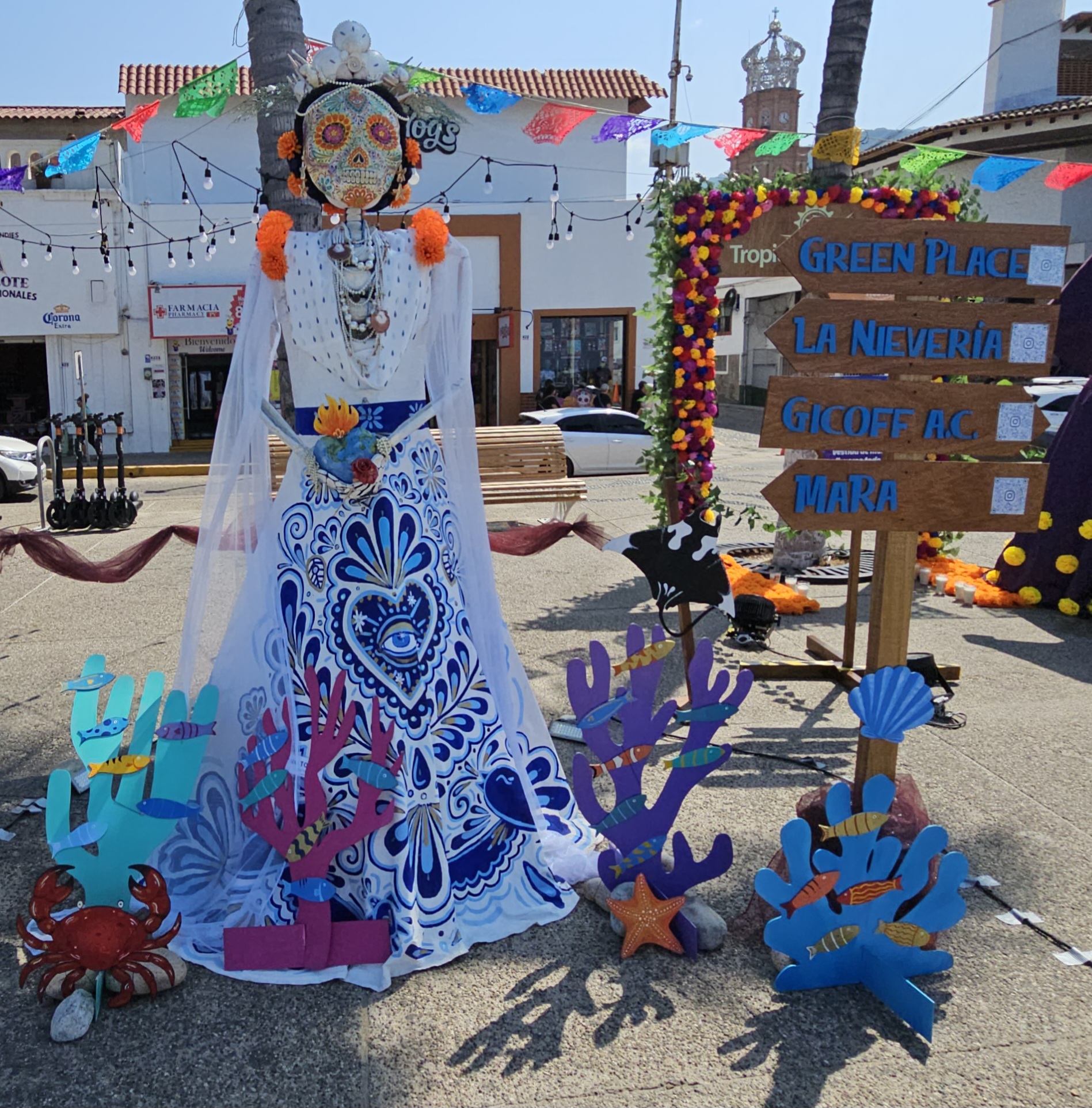
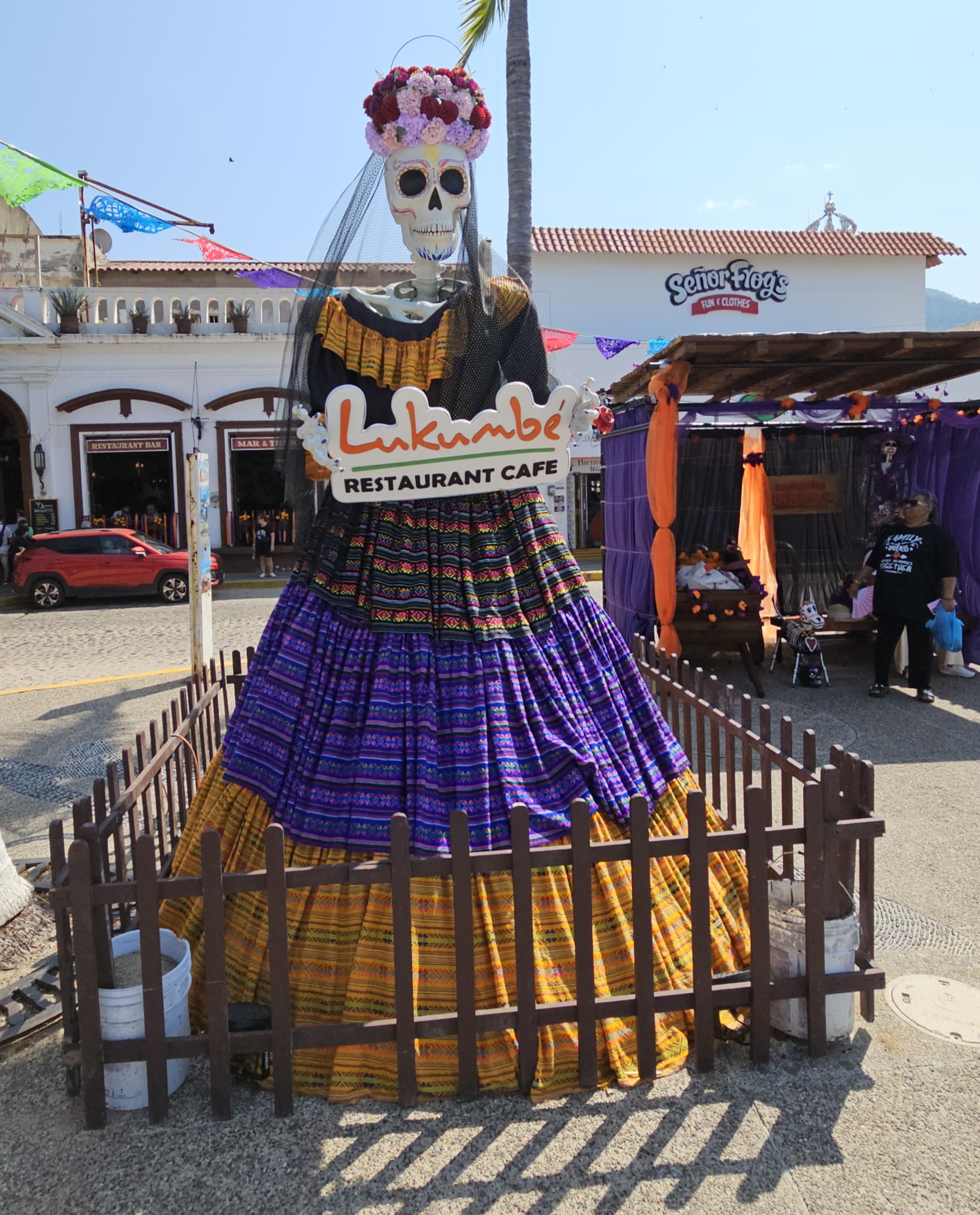
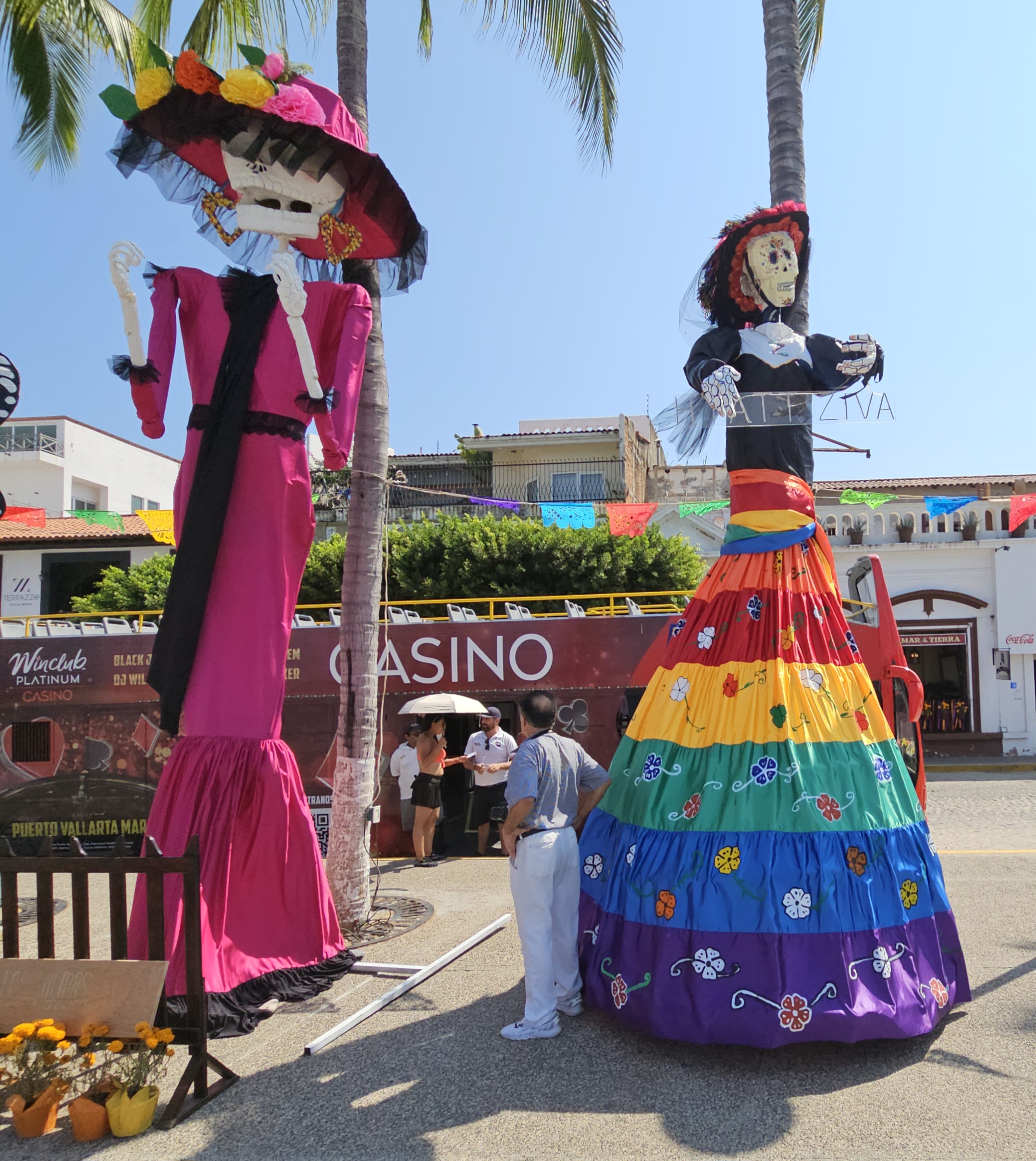
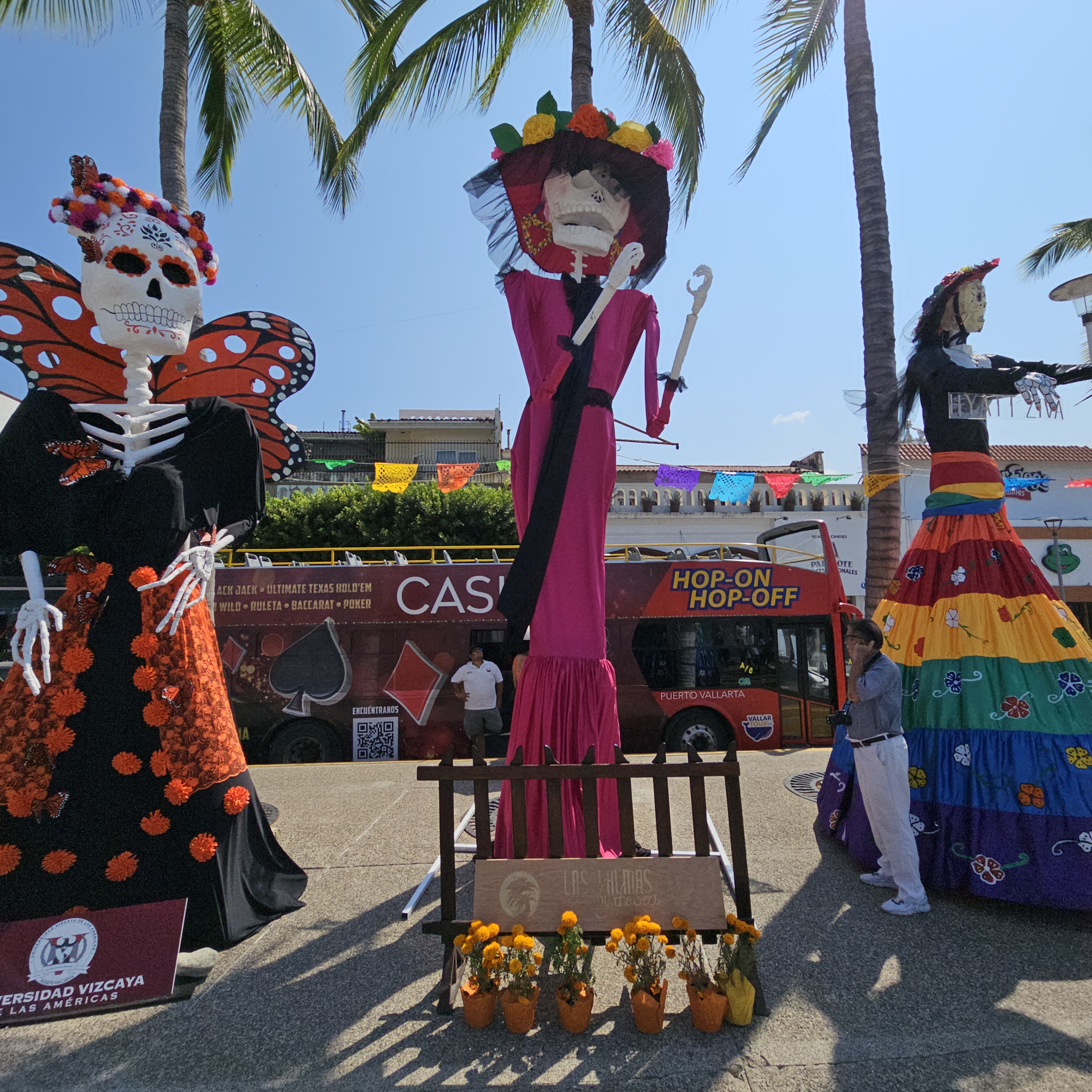
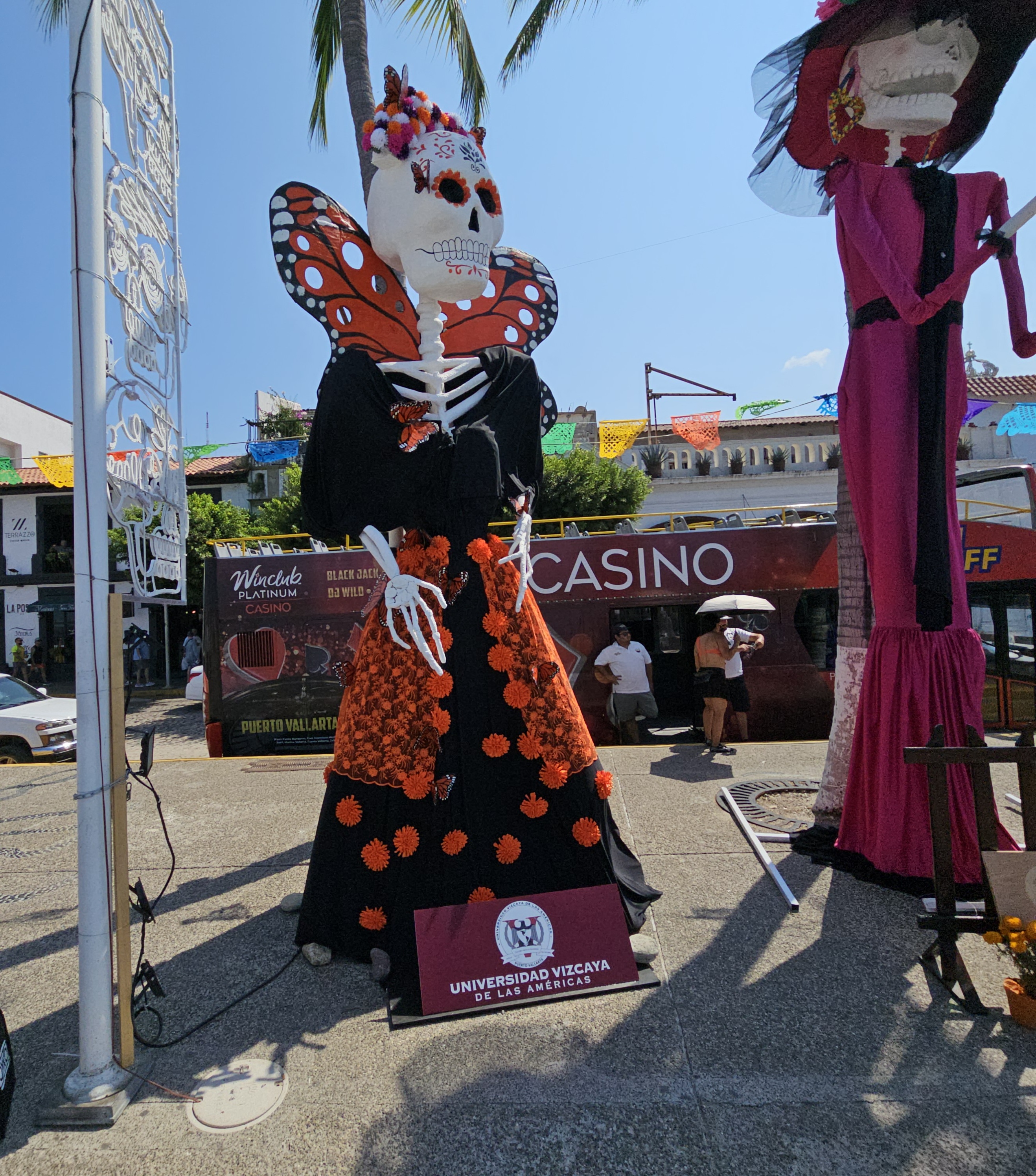
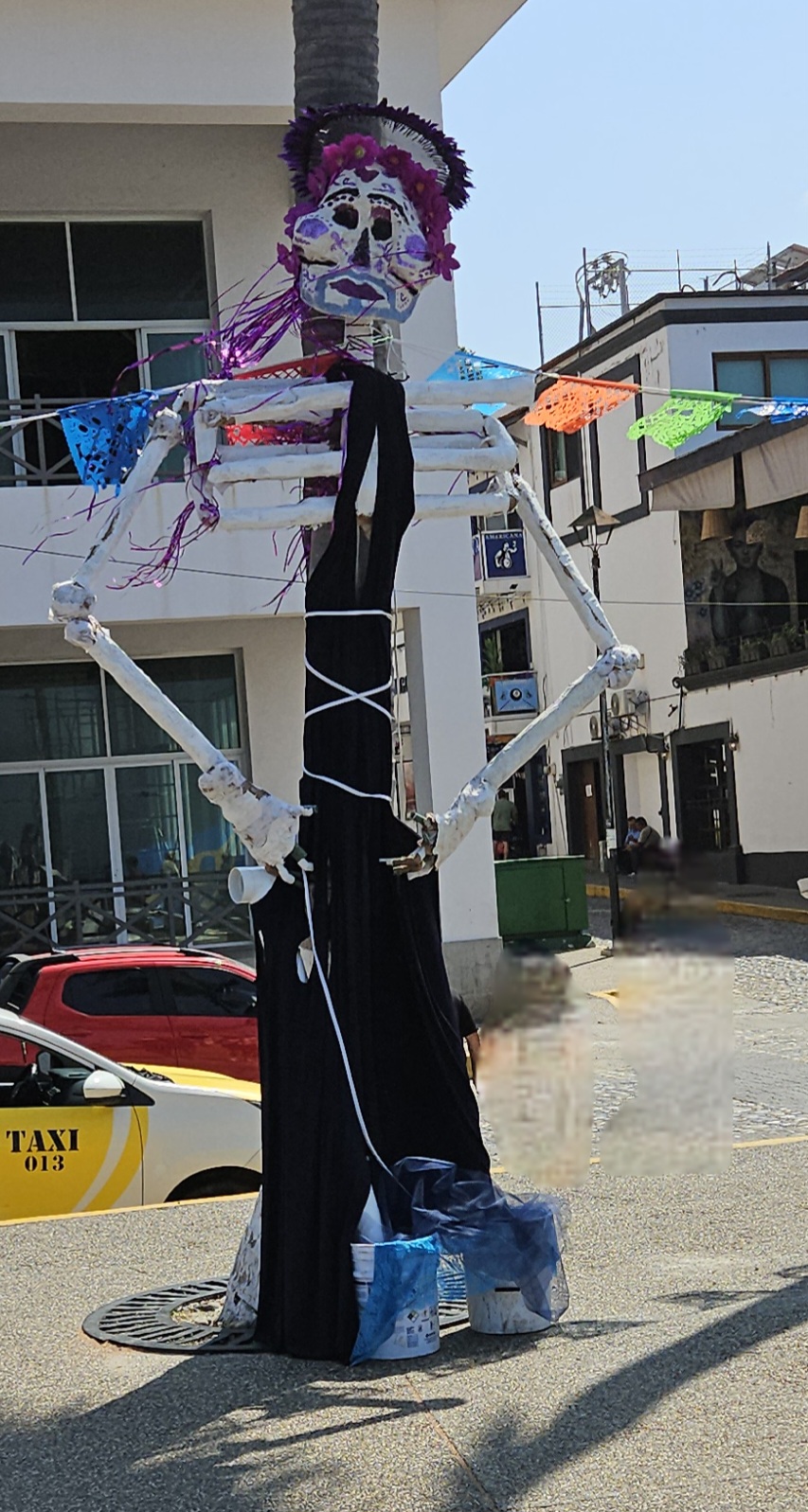
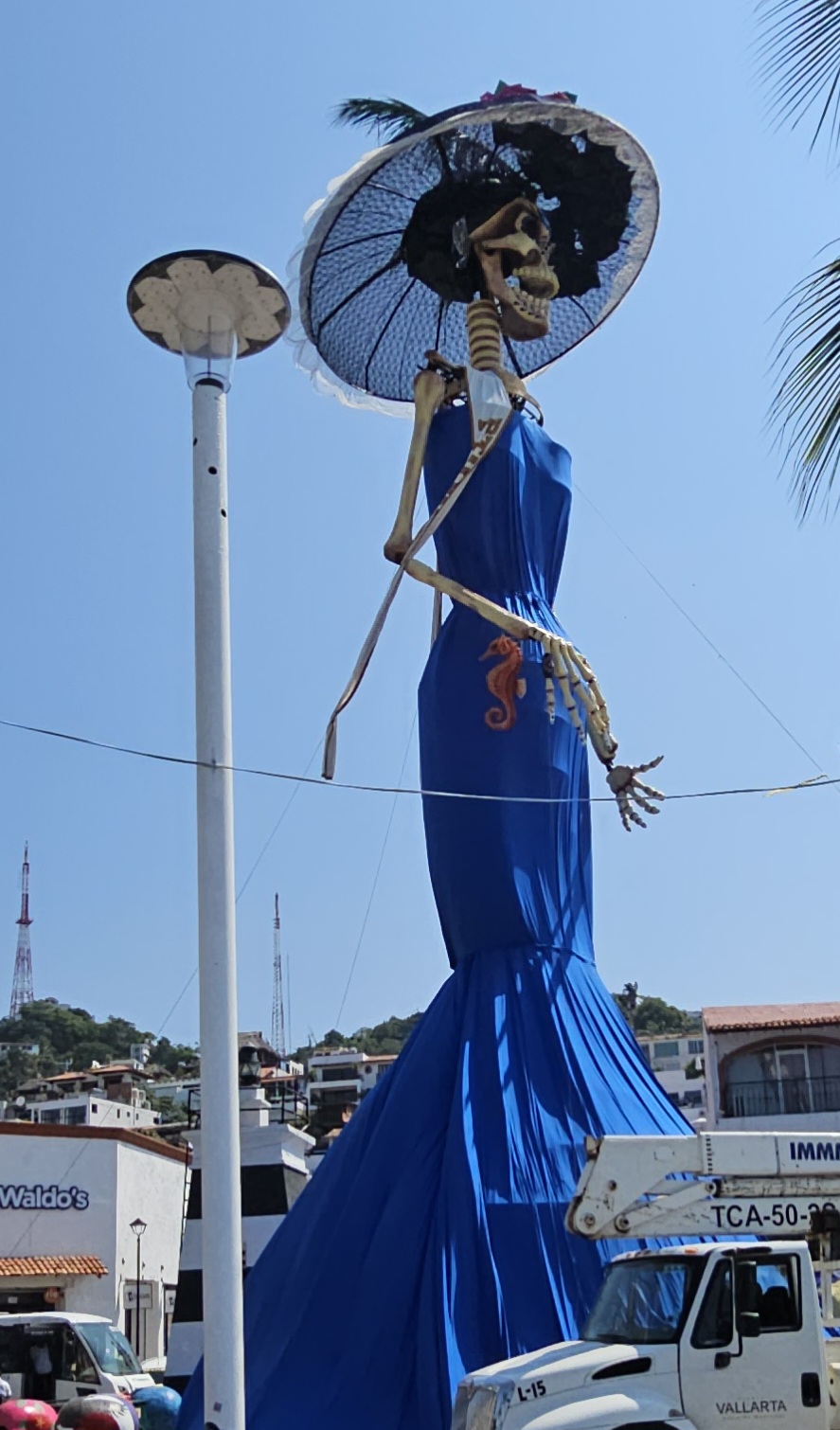
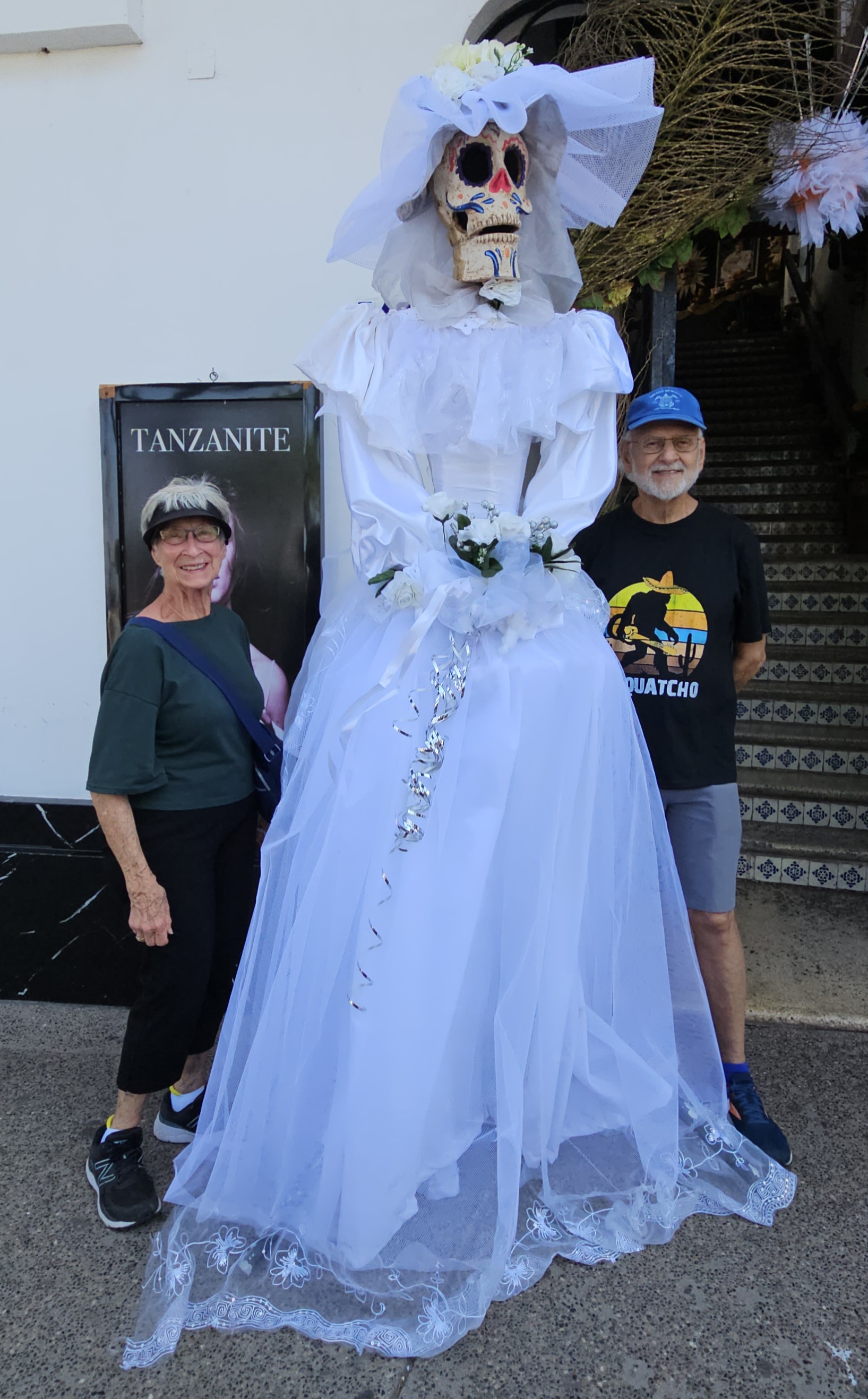
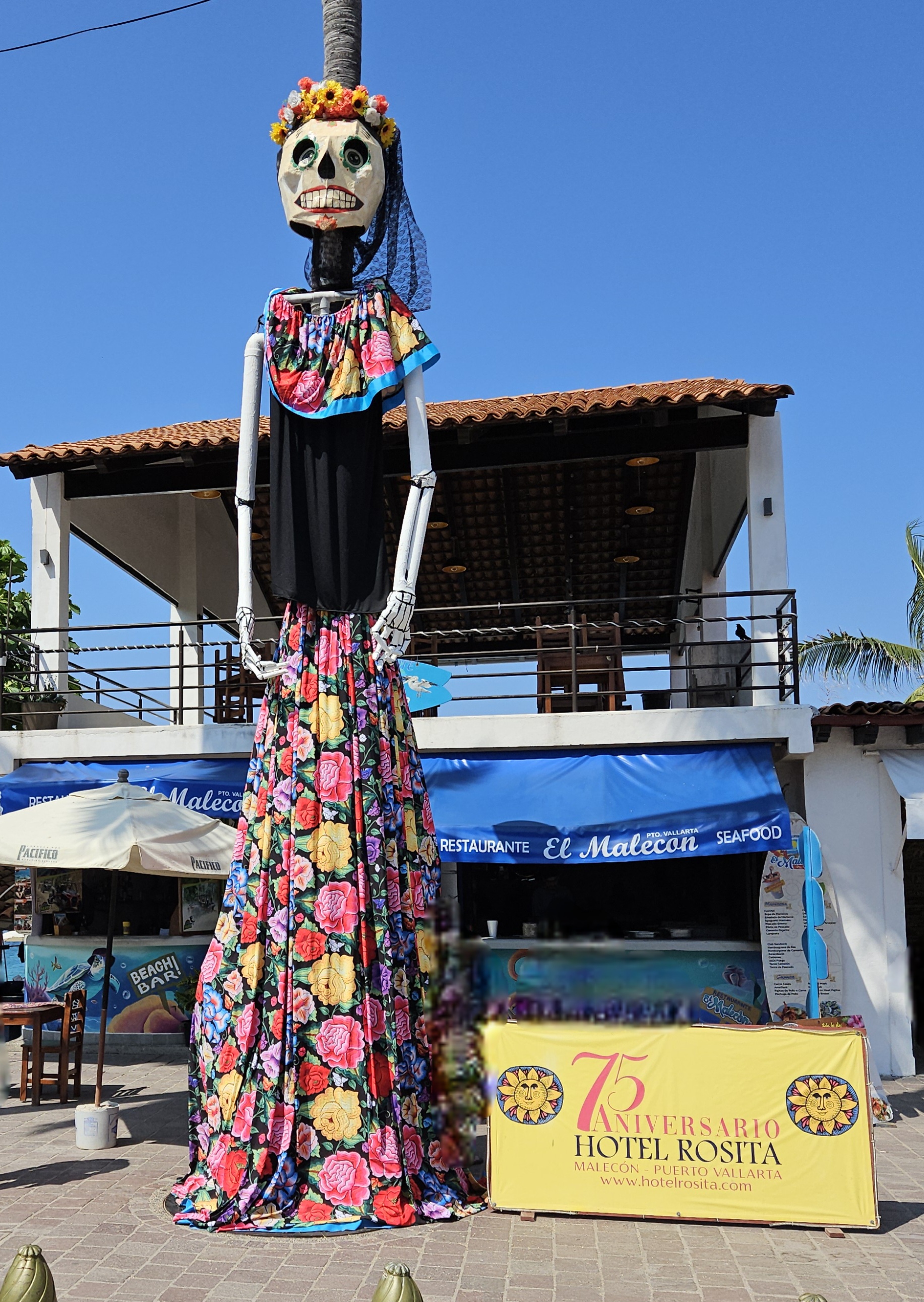
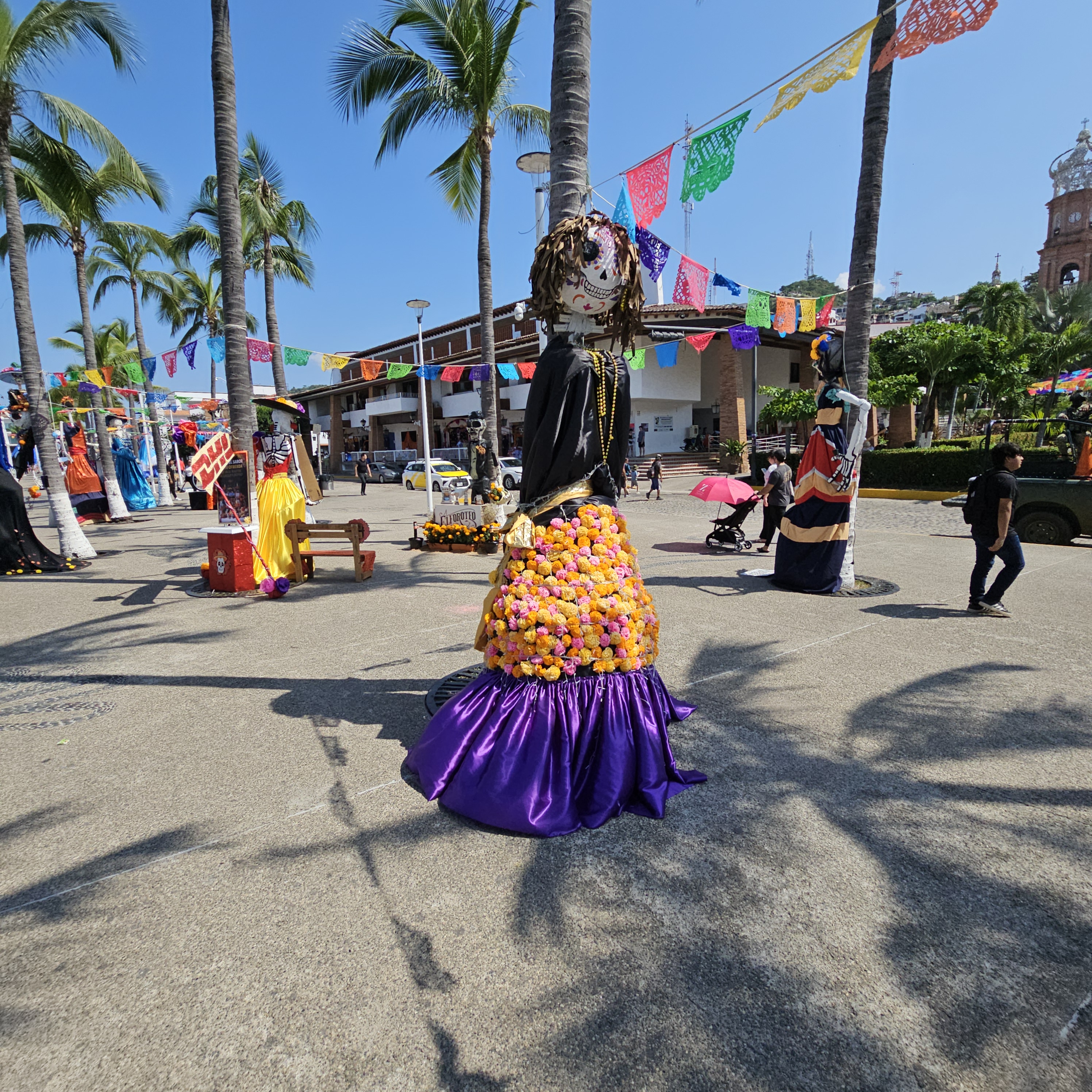
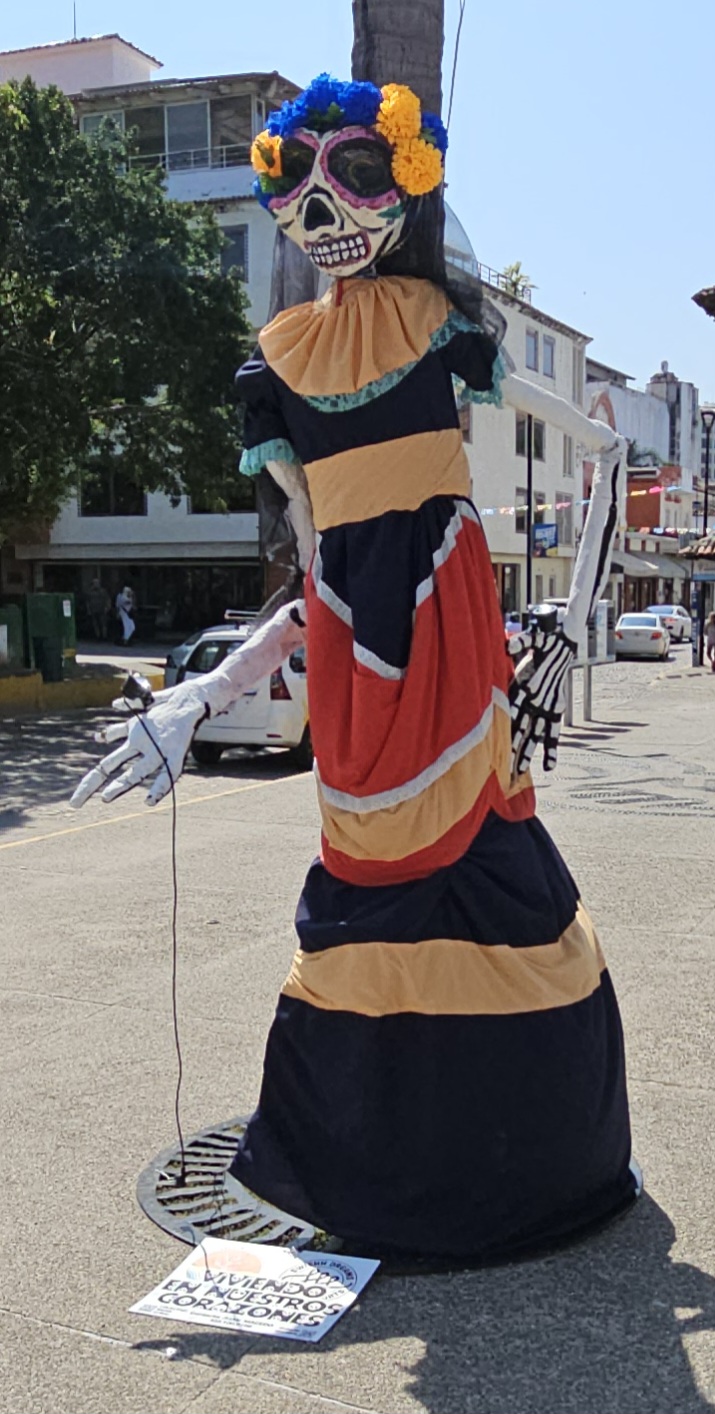
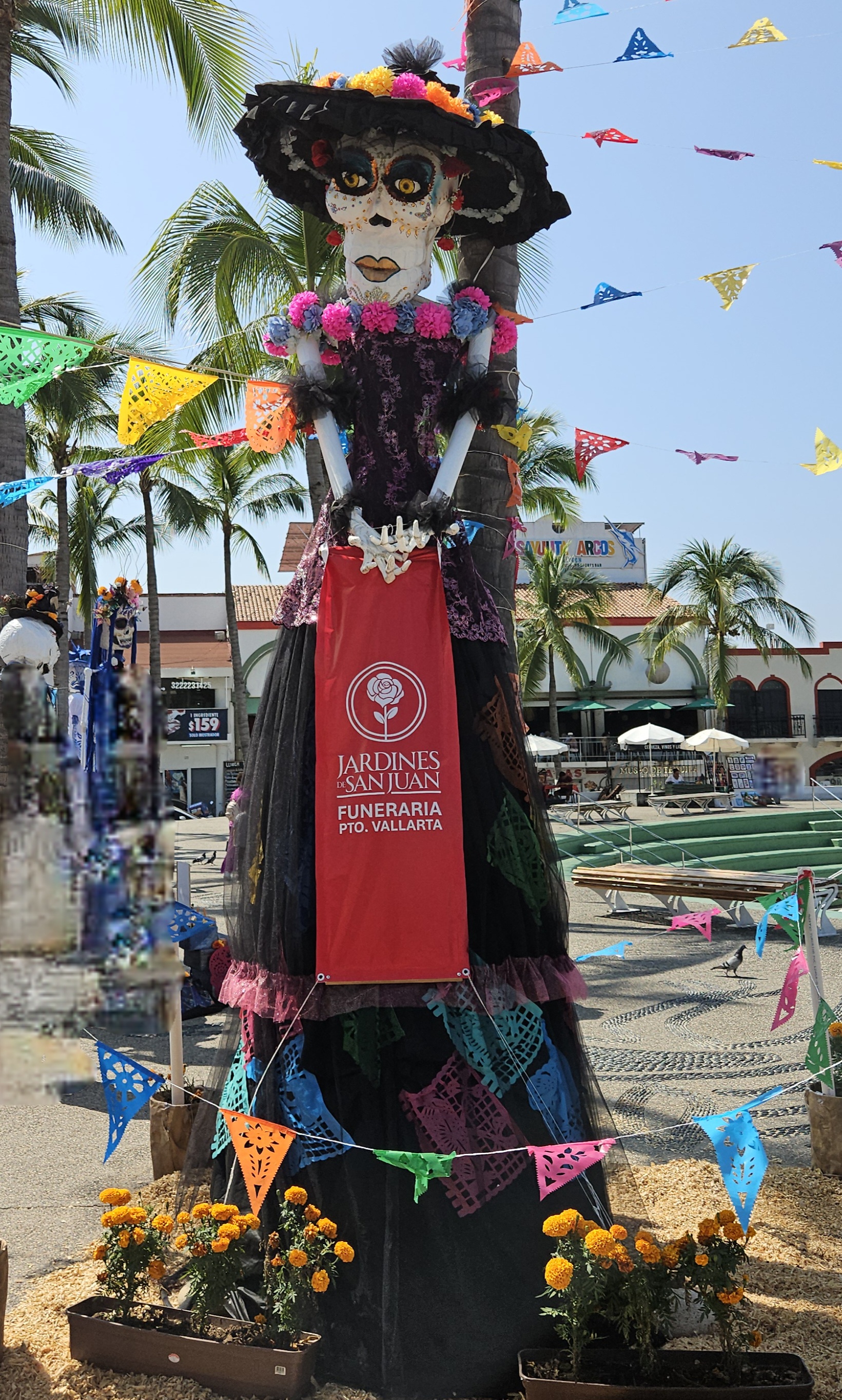
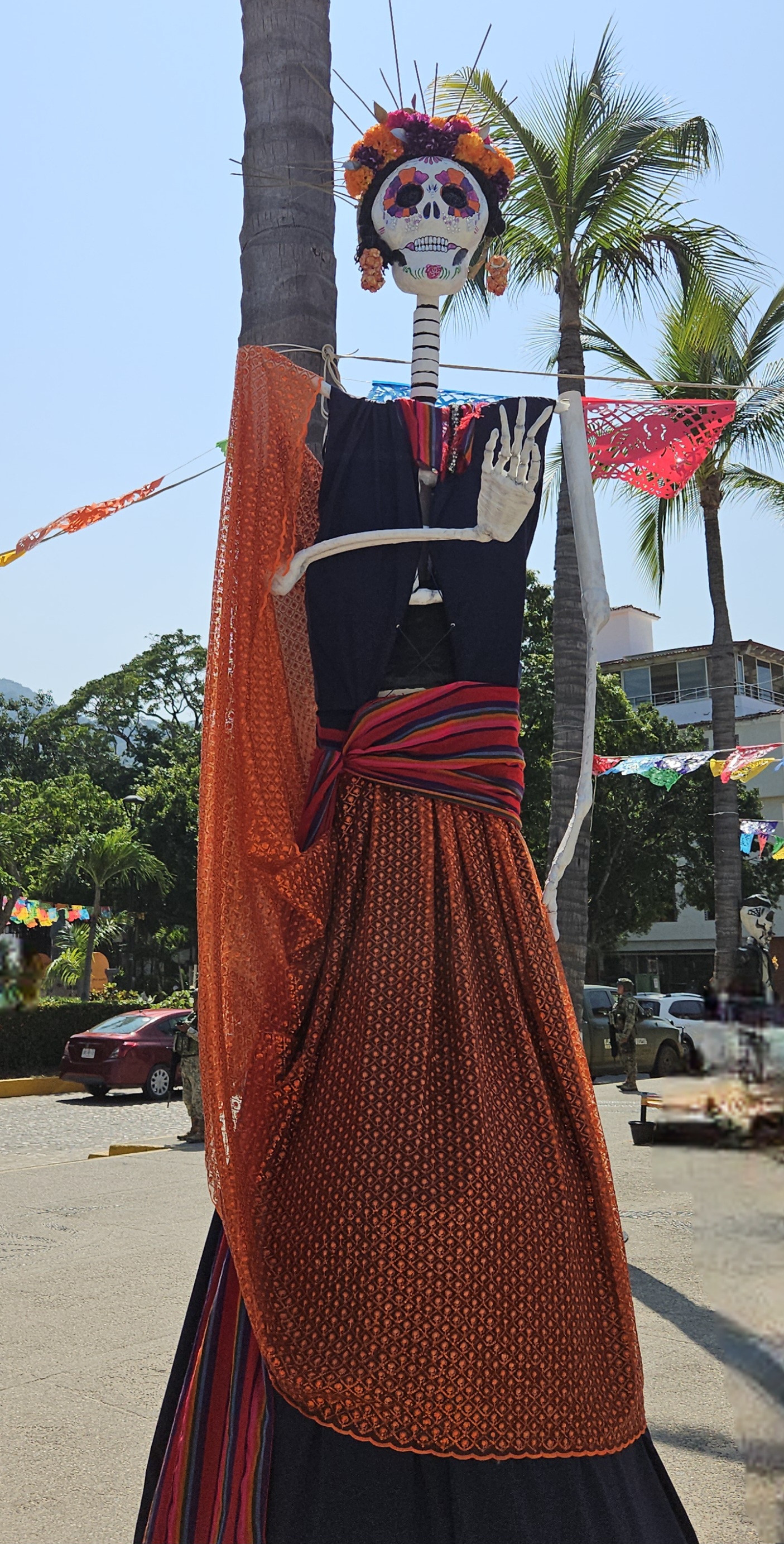
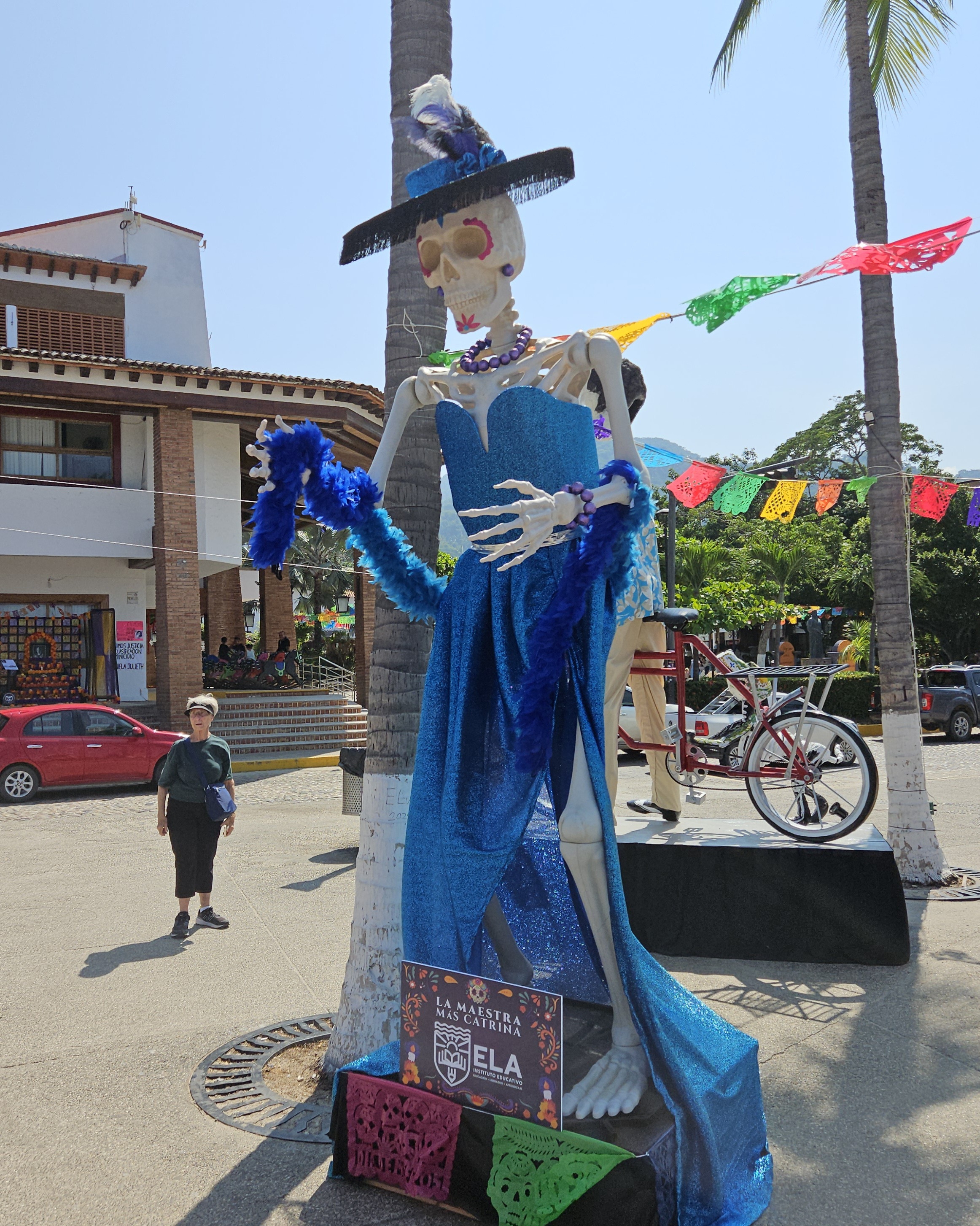
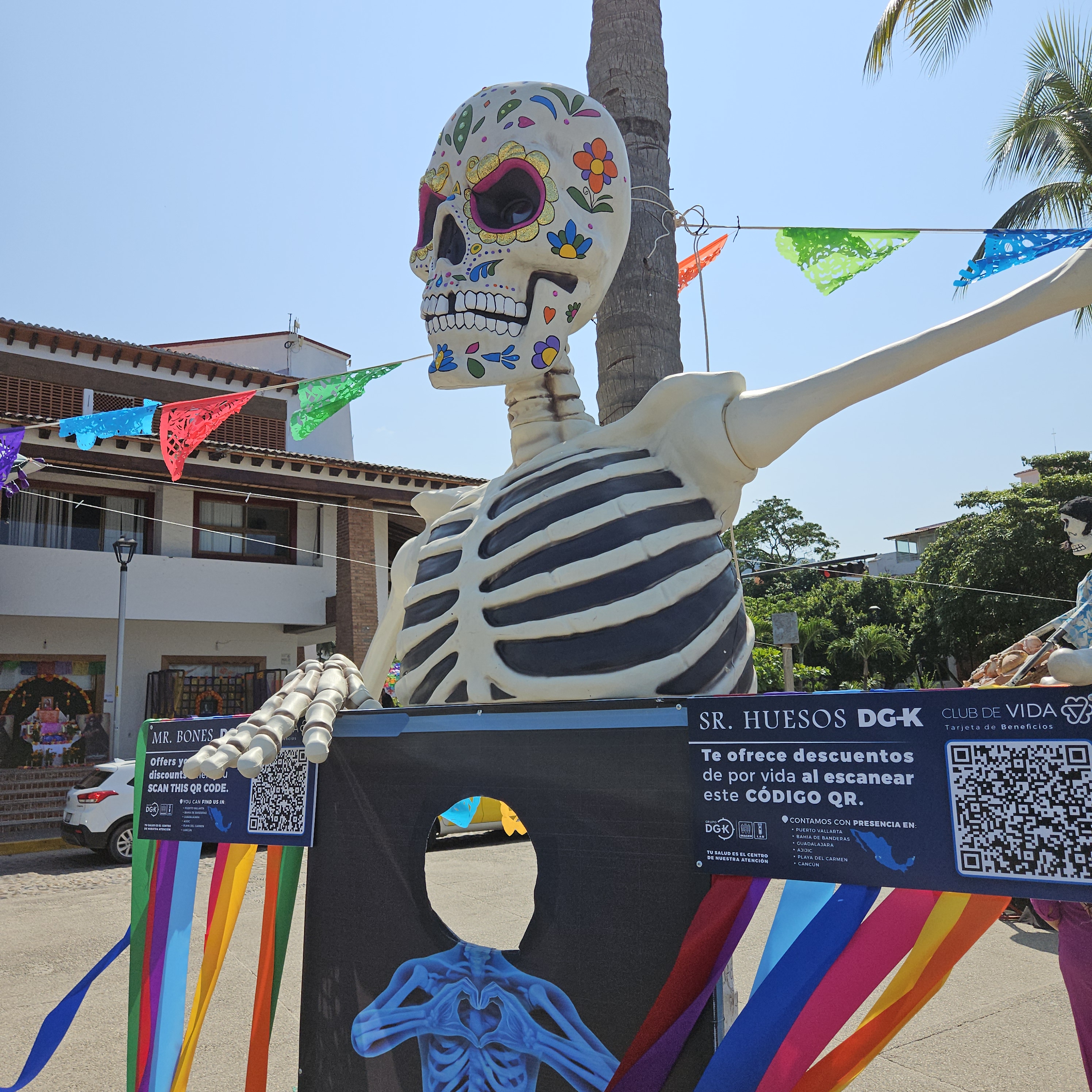
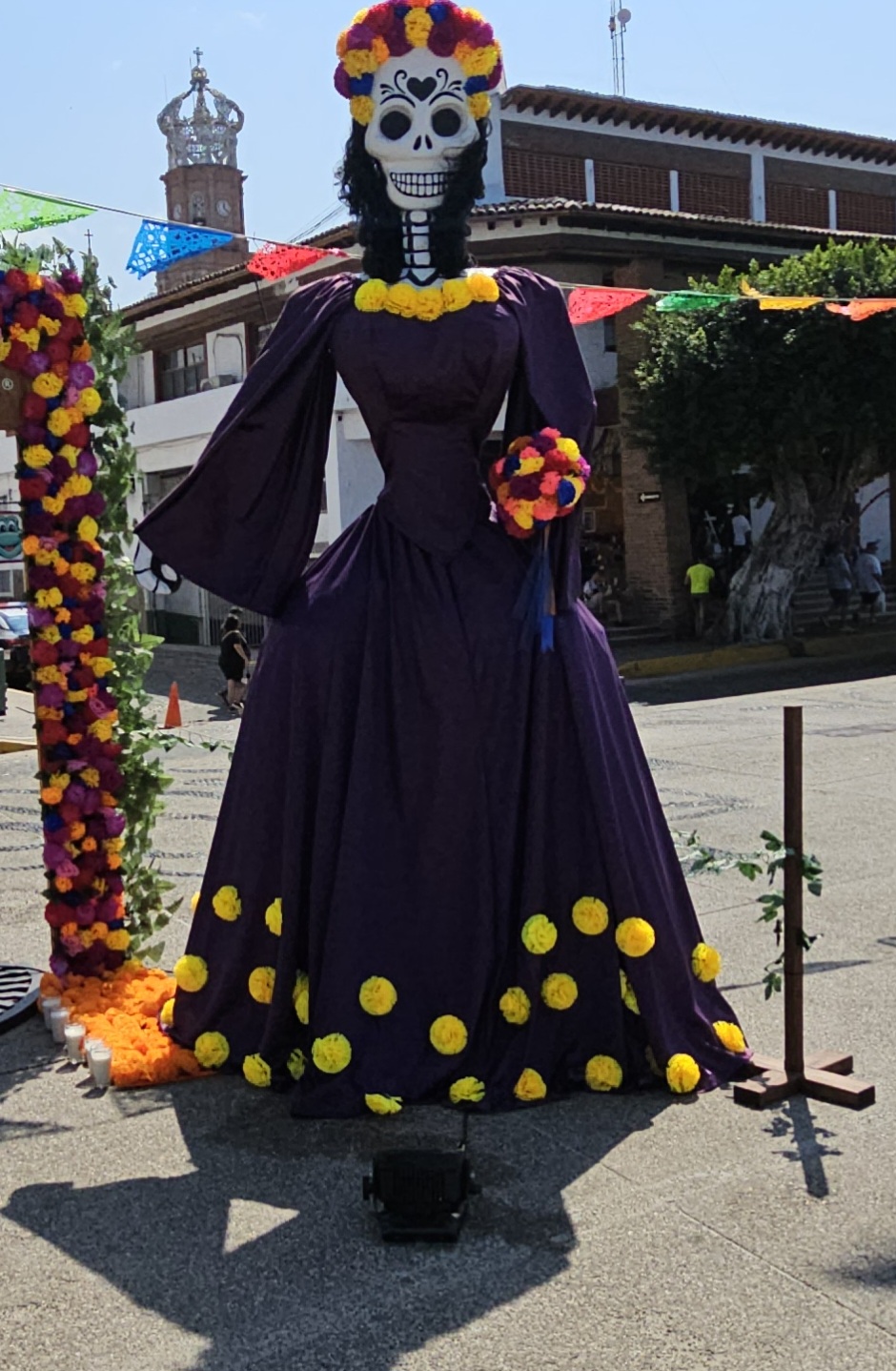
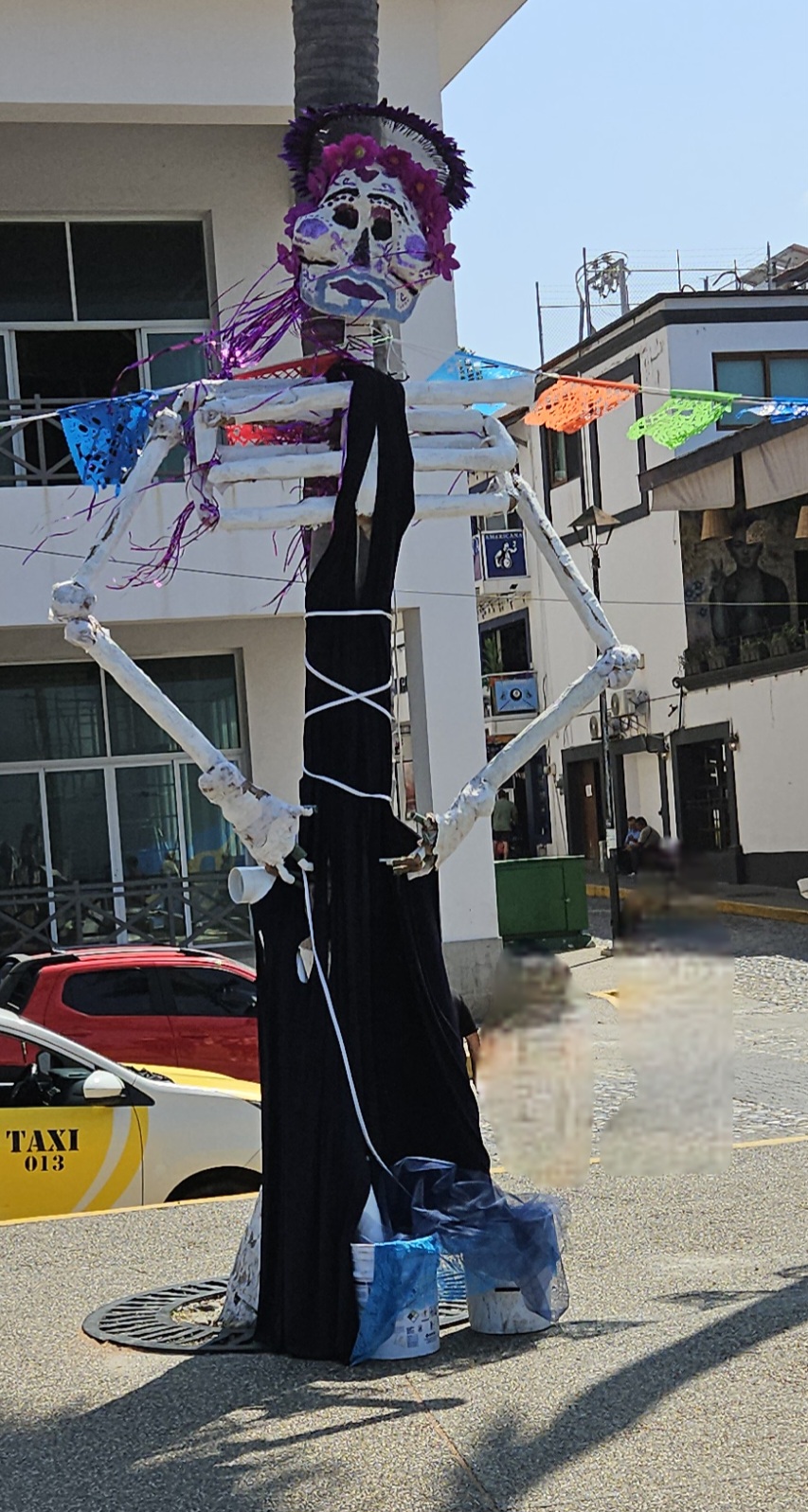
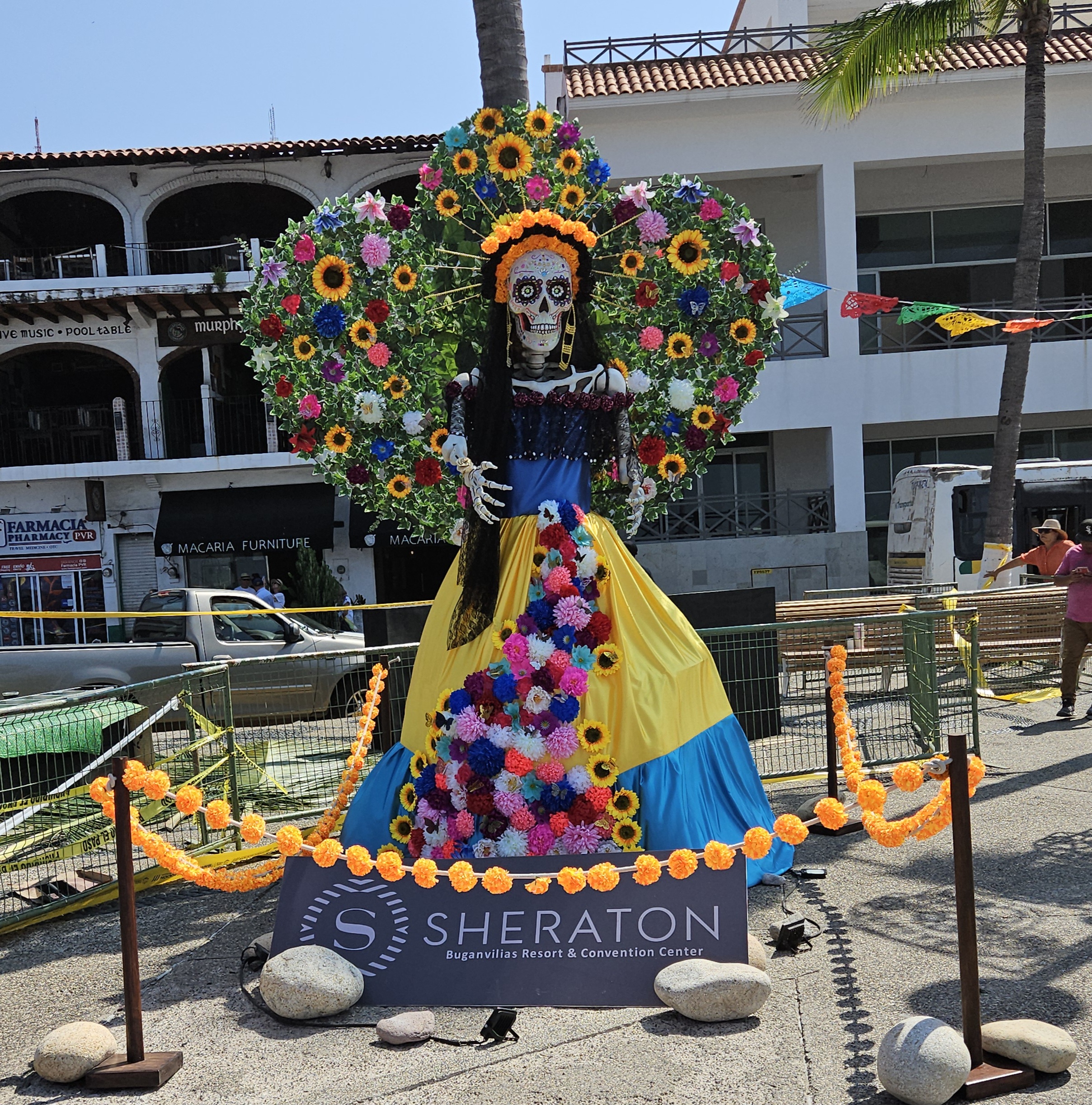
La Catrinas on the Puerto Vallarta Boardwalk
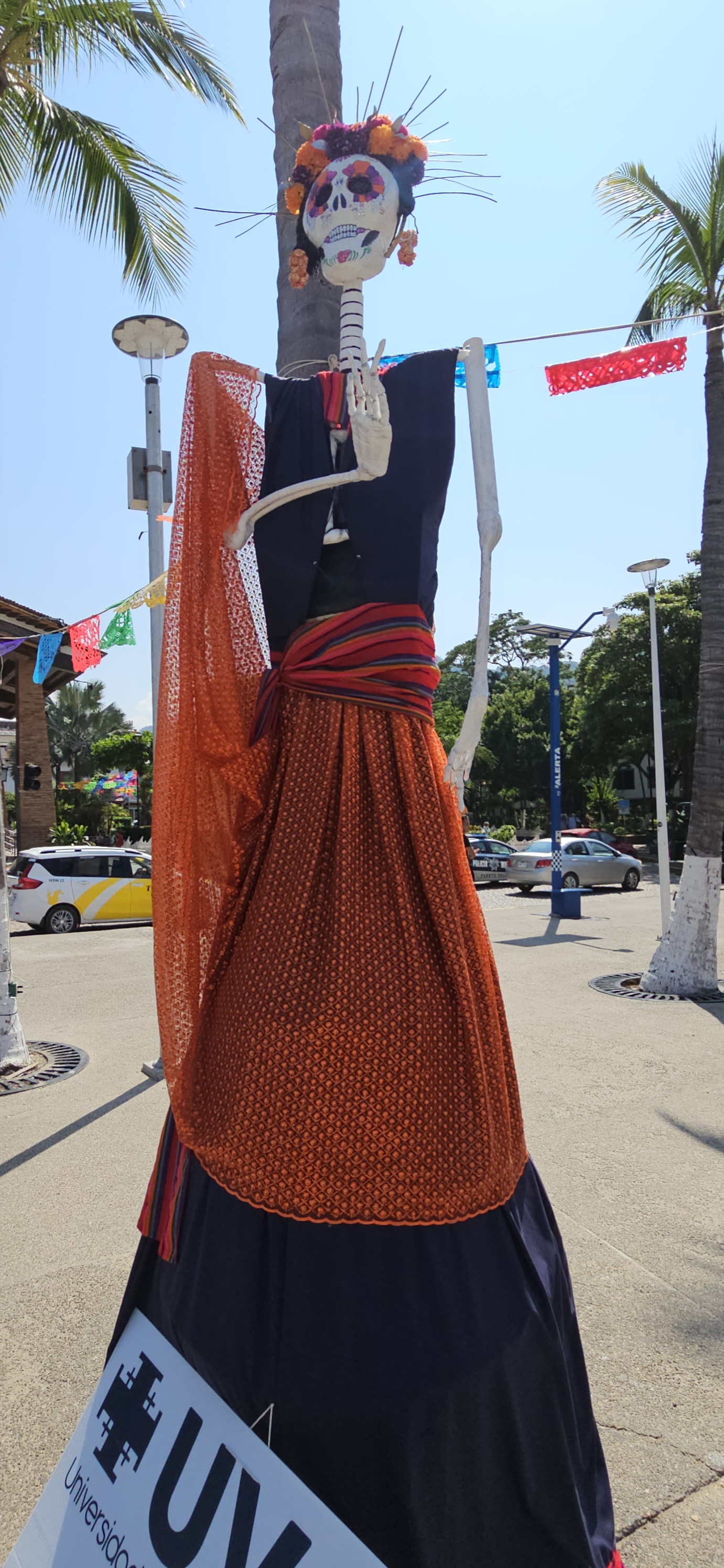
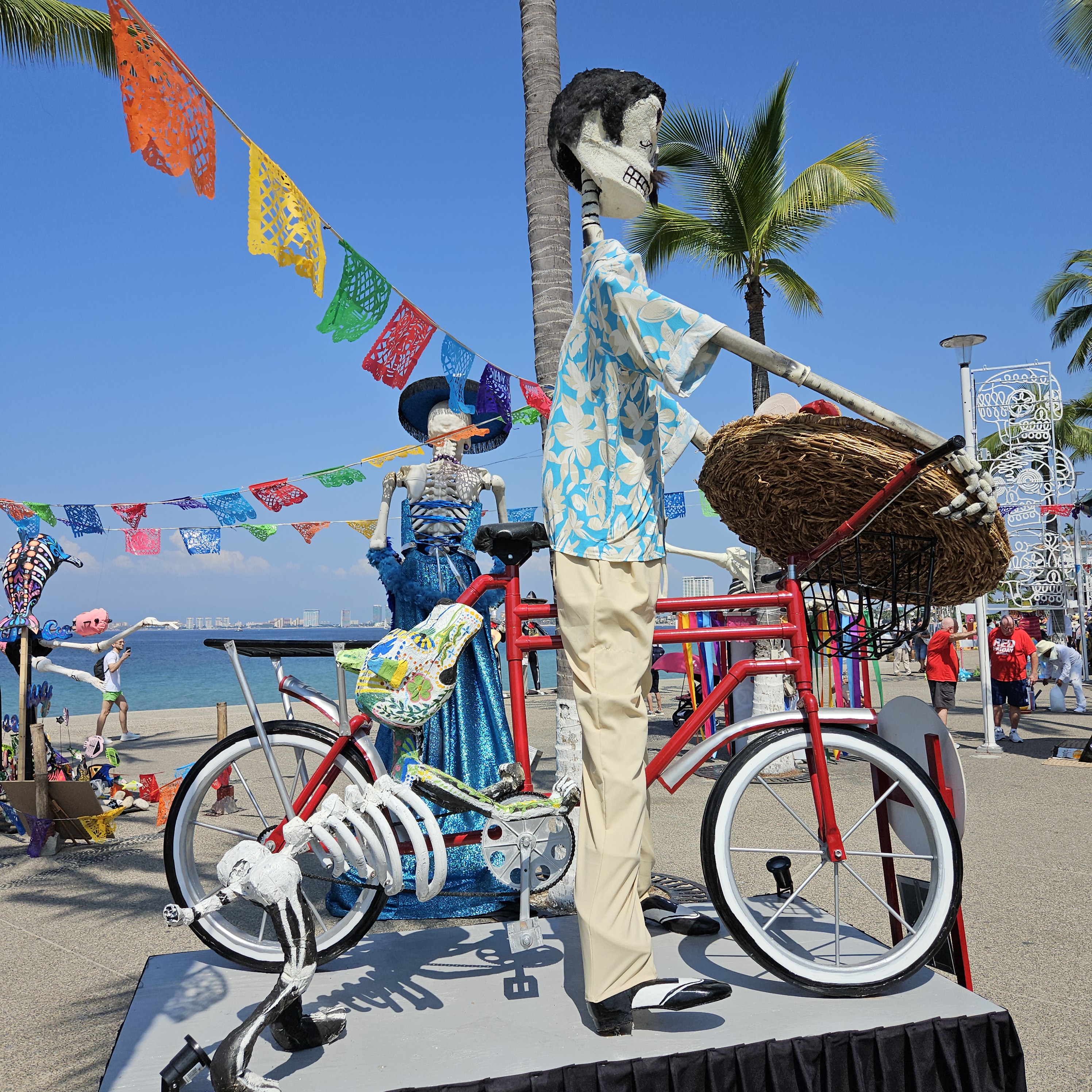
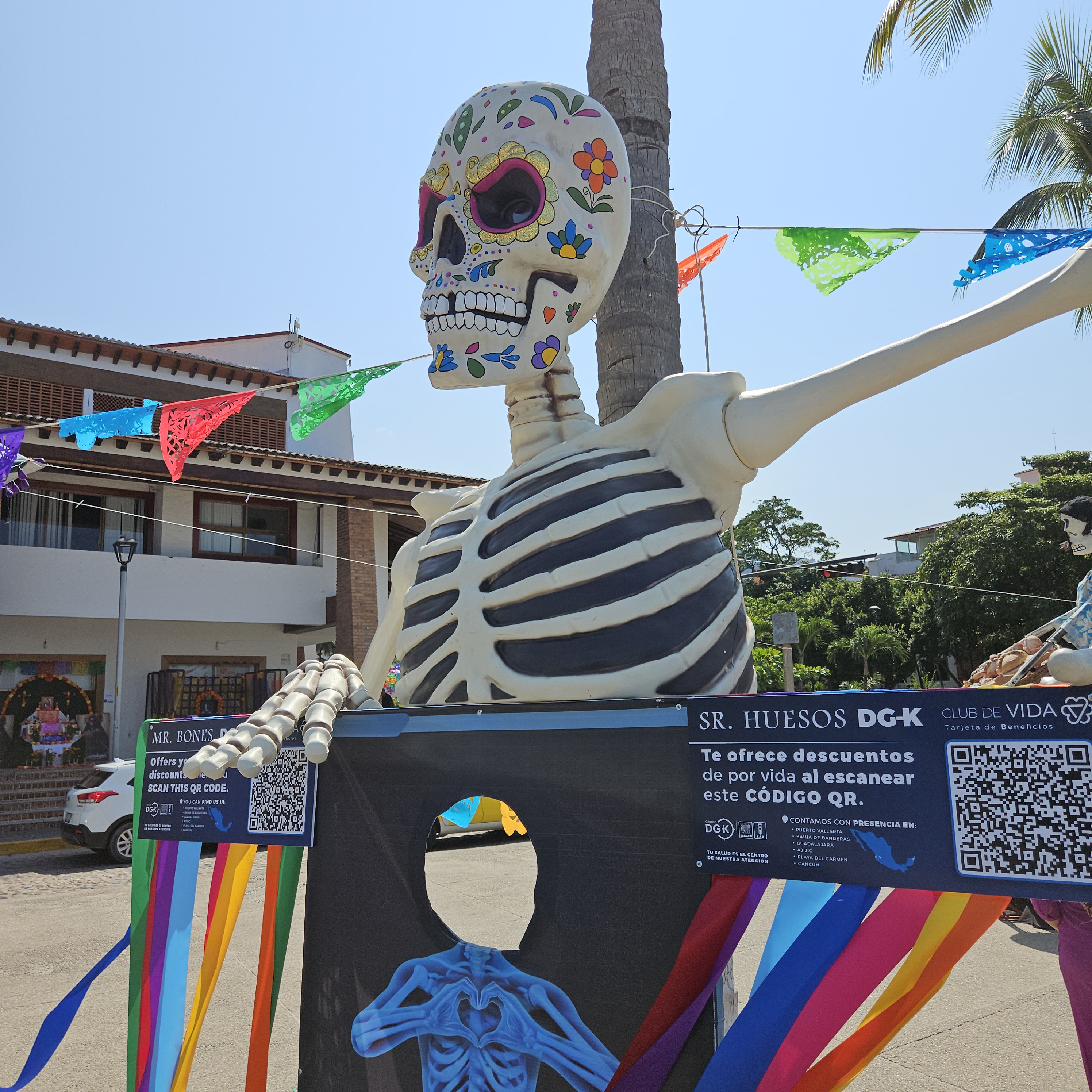
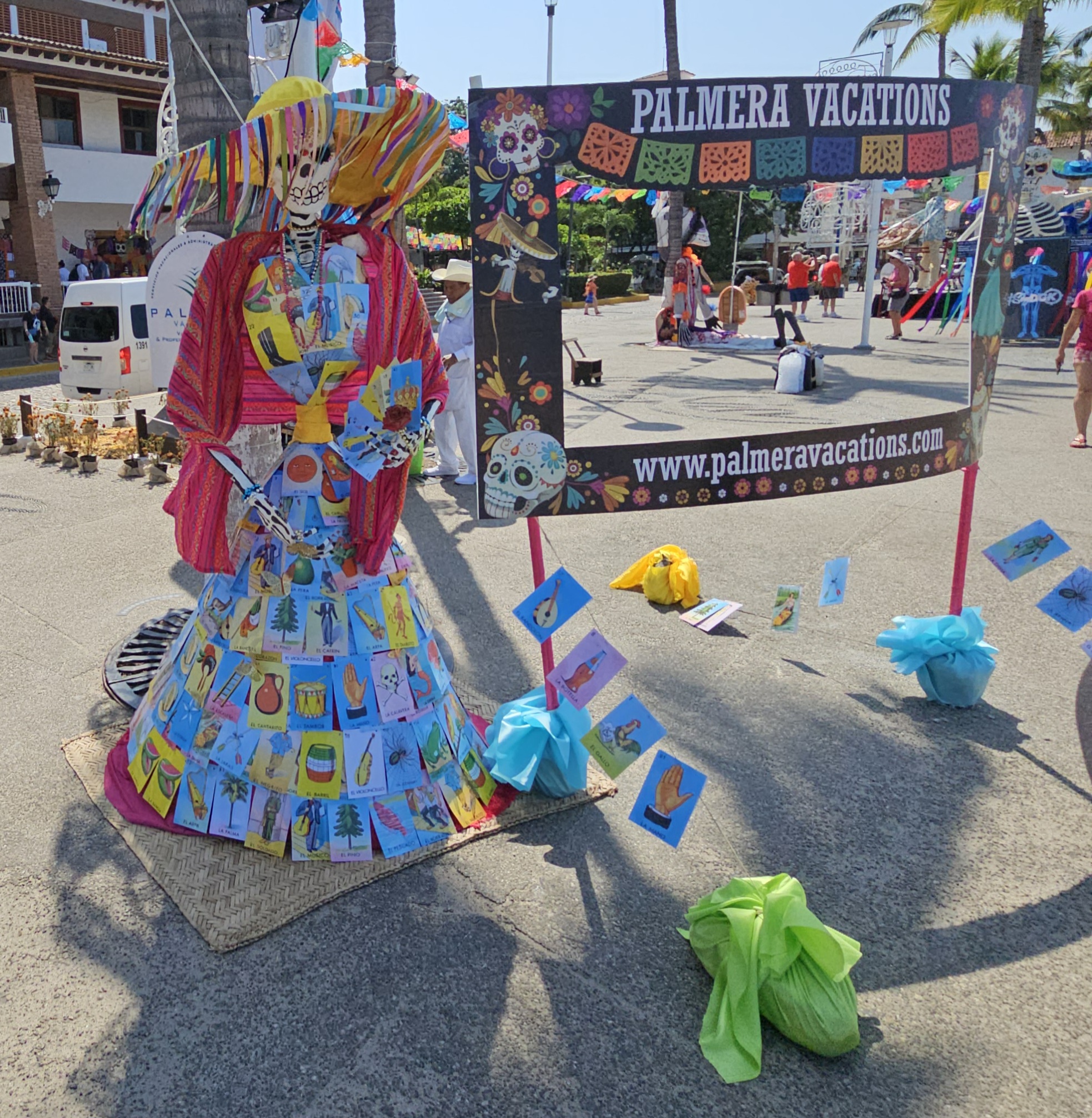
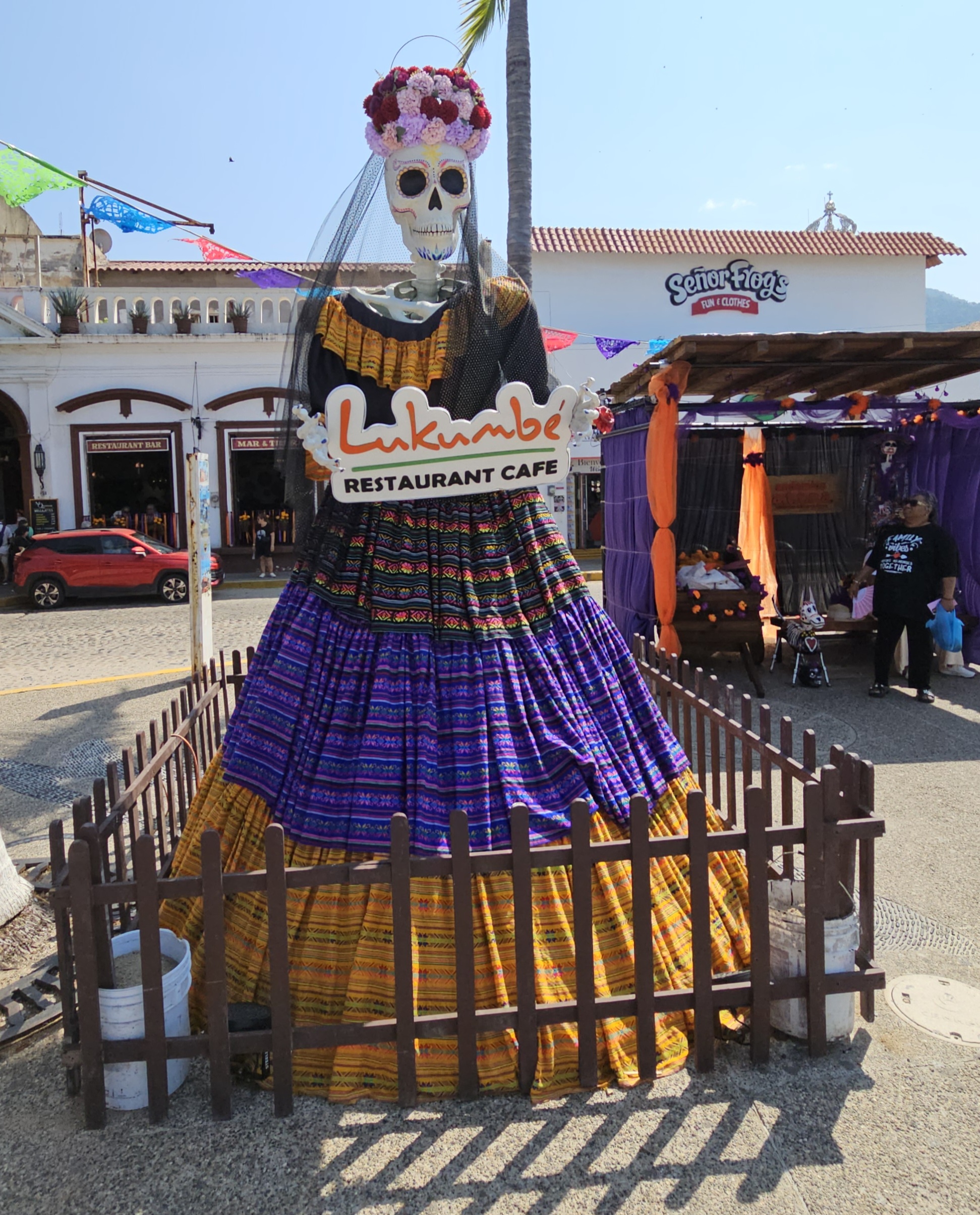
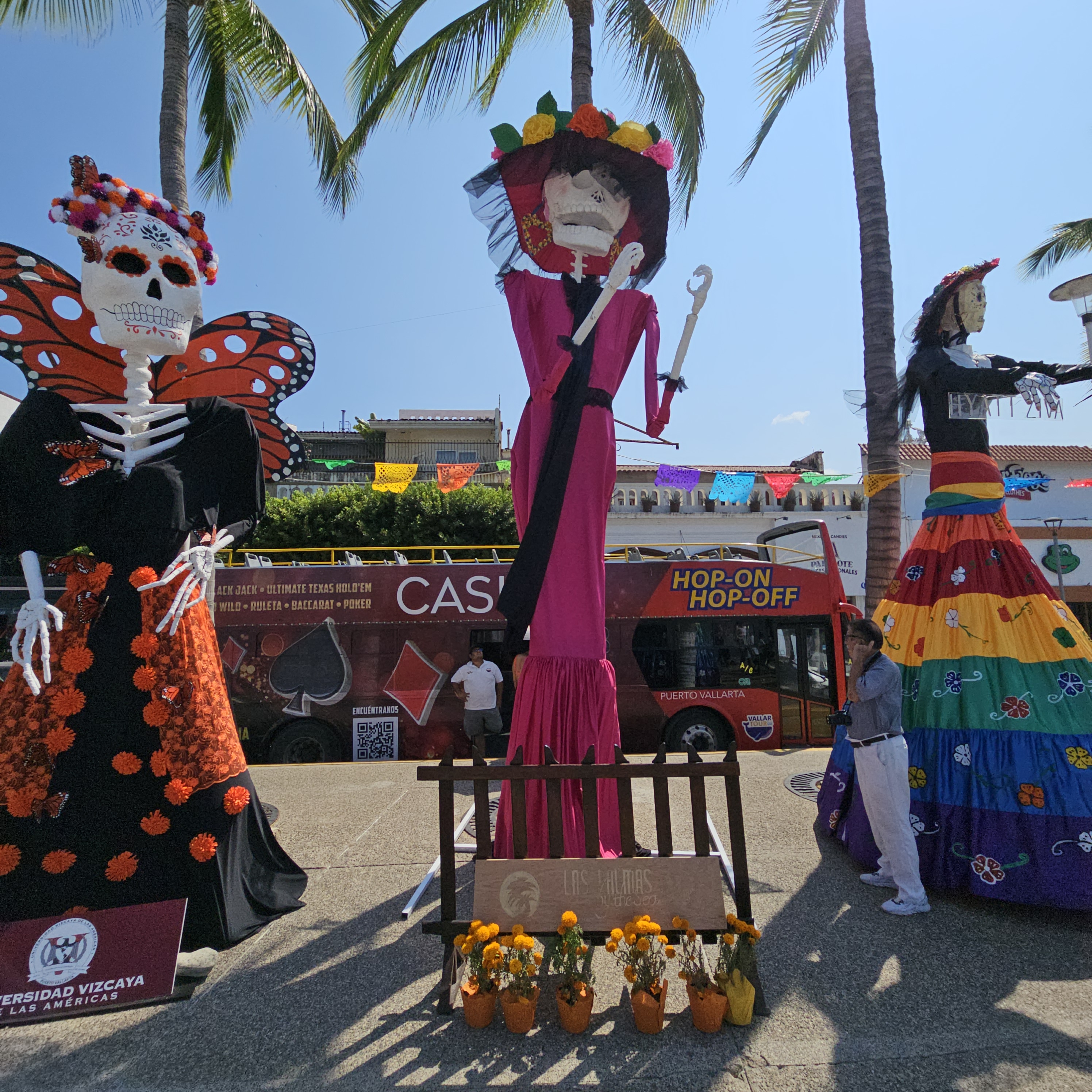
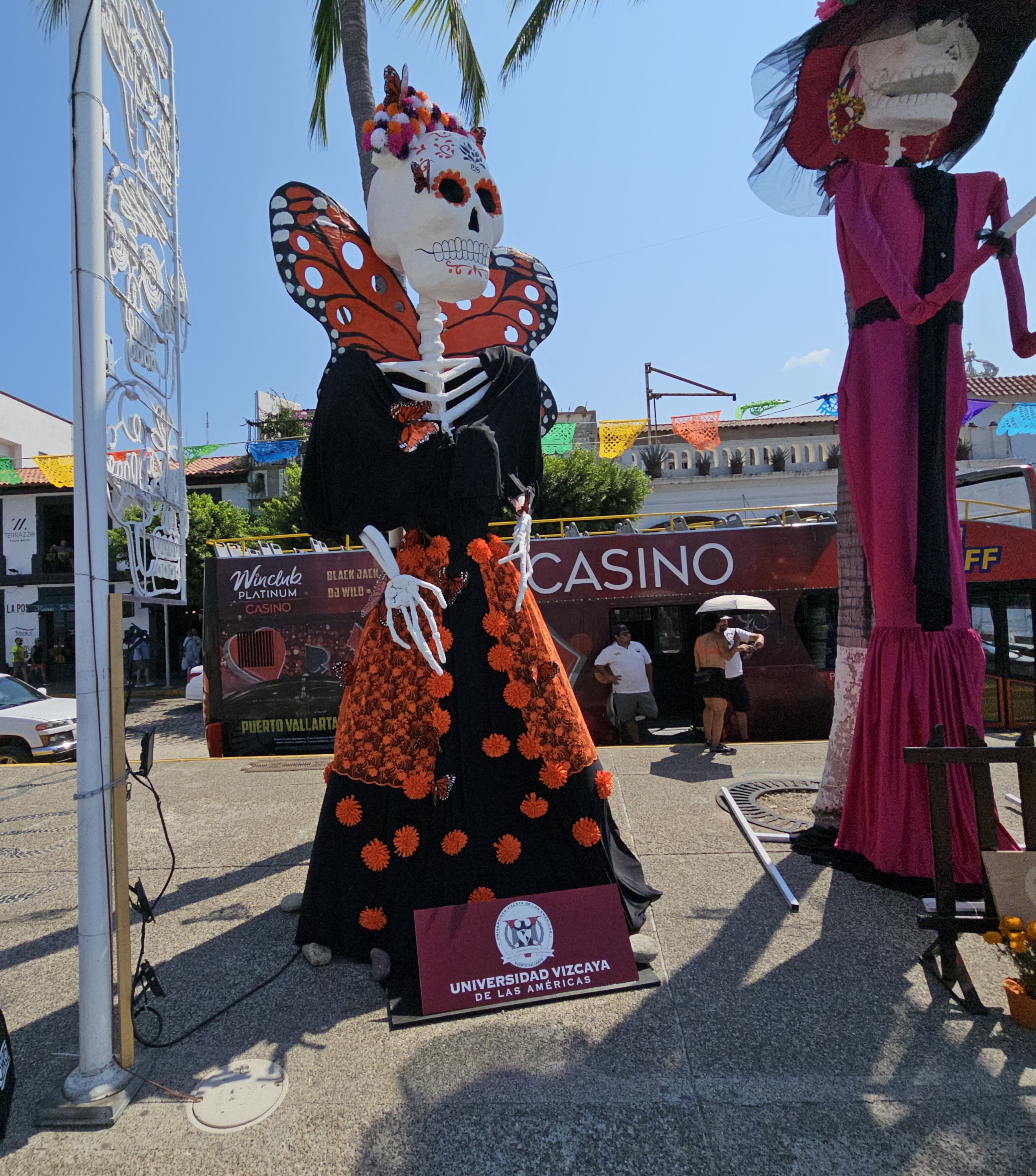
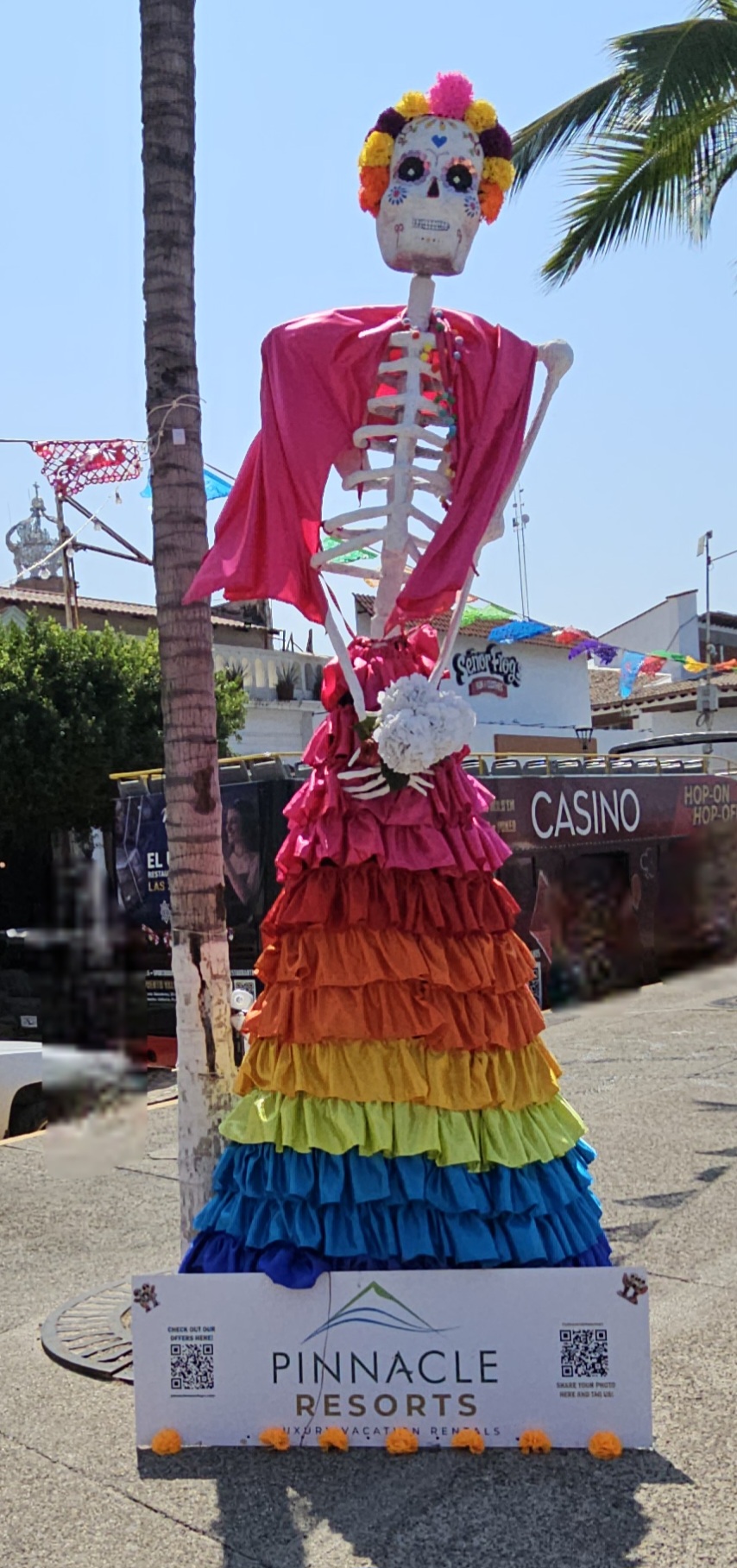
During a recent visit to the Vidanta resort in Puerto Vallarta, we encountered many La Catrinas. Here are the ones we saw on the Puerto Vallarta boardwalk.



















[1] “La Calavera Catrina, Wikipedia, La Calavera Catrina – Wikipedia“

 Allen Mesch