
I recommend two new movies that are based on past events, but are as relevant today as they were then.
The first is Nuremberg. It describes events during the 1940s trials of the chief Nazi war criminals.
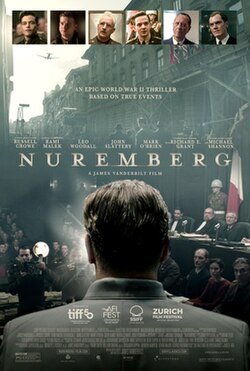
Nuremberg is a psychological thriller based on Jack El-Hai’s 2013 book The Nazi and the Psychiatrist. The film follows U.S. Army psychiatrist Douglas Kelley (Rami Malek) as he investigates the personalities and monitors the mental states of Hermann Göring (Russell Crowe) and other top Nazi officials before and during the Nuremberg trials. The supporting cast includes Leo Woodall, John Slattery, Mark O’Brien, Colin Hanks, Wrenn Schmidt, Lydia Peckham, Richard E. Grant, and Michael Shannon.
When Supreme Court Associate Justice Robert Jackson learns that Reichsmarschall Hermann Göring, Hitler’s second-in-command, has surrendered with his family to American forces, he understands an international tribunal will be necessary to hold the former Nazi leadership accountable. Göring is sent to Bad Mondorf, Luxembourg, along with twenty-one other top Nazi figures selected for possible prosecution. U.S. Army psychiatrist Major Douglas Kelley evaluates their mental health to assess suicide risks. While some, like Robert Ley and Julius Streicher, show open contempt for their captors, Kelley sees the outspoken Göring as intelligent, narcissistic, and charismatic. Kelley plans to write a tell-all after the trial, while Göring vows to “escape the hangman’s noose.”[1]
The acting is superb, and the story carries a strong warning about how a “Nazi-like” regime can arise in the United States.
The second movie, Good Night, and Good Luck, focuses on Edward R. Murrow’s challenge to Joe McCarthy’s attempts to accuse people of being communists.
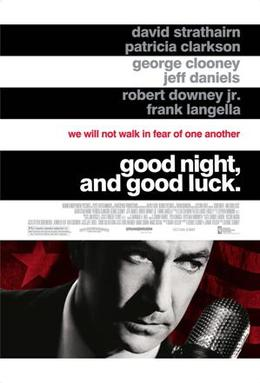
Good Night, and Good Luck is a 2005 historical drama directed by George Clooney, who co-wrote the screenplay with Grant Heslov. The film depicts the clash between veteran journalist Edward R. Murrow (Clooney) and U.S. Senator Joseph McCarthy of Wisconsin, focusing on the Senator’s anti-communist actions with the Senate Permanent Subcommittee on Investigations. The cast includes David Strathairn, Patricia Clarkson, George Clooney, Jeff Daniels, Robert Downey Jr., and Frank Langella.
On October 25, 1958, during an event called “A Salute to Edward R. Murrow,” Ed Murrow gave a speech in which he mentioned Senator McCarthy, among others. The scene then flashes back to October 14, 1953, at the CBS Studios, with on-screen titles stating that McCarthy had claimed there were more than 200 Communists in the U.S. government.
Fred Friendly and the news team go over potential stories for upcoming episodes, and Murrow announces he wants to take on the American military for trying and convicting Air Force member Milo Radulovich, whose sister and father were accused of being communist sympathizers. Murrow points out that the charges were kept in a sealed envelope and never seen by anyone, hinting they should dig into the case to decide if it’s worth covering.
Five days later, Friendly, Murrow, and CBS director Sig Mickelson watch footage of correspondent Joseph Wershba interviewing Milo Radulovich. Mickelson criticizes the piece as unbalanced and accuses Wershba of editorializing. Military officers visit Friendly’s office, trying to convince him not to air the story, but CBS proceeds, and the segment airs on Murrow’s show, “See It Now.”
The news team turns its attention to targeting McCarthy directly. In one clip, McCarthy accuses a man, who had been given an attorney by the American Civil Liberties Union (ACLU) back in 1932, of being a communist.
During the segment on McCarthy, Murrow personally invites the Senator on the show to defend the claims made about his corrupt influence. As the story continues, Murrow challenges McCarthy’s questioning techniques and the untruths he espouses in his hearings. Murrow notes that the American Civil Liberties Union (ACLU) is not on the list that McCarthy claims it to be, and that several U.S. presidents have actually commended it.
Shirley Wershba reads out mostly favorable reports from the newspaper, but one journalist, O’Brian, accuses Hollenbeck, a CBS journalist, of being a “pinko,” meaning a communist sympathizer. The team is informed that the Air Force has reinstated the wrongly terminated Radulovich.
McCarthy appears on the show on April 6, 1954, and addresses the camera directly without interruption, accusing Murrow of being a communist, something that Murrow suspected would happen. In the preceding show, Murrow gives his response, where he unequivocally denies the accusation that he was a member of the Communist Party and highlights that anyone who criticizes or opposes Senator McCarthy’s methods is accused of being a communist. From this point on, the tide turns on McCarthy, and he is investigated due to charges the Army has made against him and his operation.[2]
The cast is excellent, and the story illustrates how one man can destroy people’s lives based on flimsy information and lies. It presents how name-calling is used to discredit political criticism and opposition.
Like Nuremberg, Good Night, and Good Luck presents a grim warning of events that could occur at any time, in any country.

 Allen Mesch