
Some Texans are talking about seceding. It is unlikely that the United States government would let Texas steal quietly away. It didn’t happen in 1861, so it’s unlikely that the separation would be viewed cordially. Before considering what Texas would be like after secession, we need to consider the “legality” of Texas leaving the United States.
Can Texas Leave?
An excellent discussion of the subject, Secession on the Ballot This Week … Almost, appeared in a post on the blog Emerging Civil War.
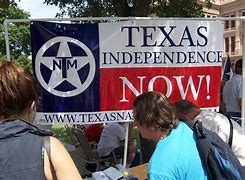
The Texas secession movement is led by the Texas National Movement or TEXIT.
The Texas National Movement’s website says that its mission is to “secure and protect the political, cultural, and economic independence of the nation of Texas and to restore and protect a Constitutional Republic and the inherent rights of the people of Texas.”
The Texas National Movement sought a nonbinding referendum in the Texas Republican primary. TEXIT presented the required number of signatures for the Texas Republican Party to consider the proposal, but the Lone Star Republican Party chose not to add it to the ballot.
According to the post, the Civil War and postbellum actions appear to have settled the issue:
- The United States won the War of Rebellion to return the Confederate states to the Union.
- The Supreme Court declared Texas secession illegal in Texas vs. White.
- In the post-war State of Texas constitution “declared null and void; and the right heretofore claimed by the State of Texas to secede from the Union, is hereby distinctly renounced.”
Please read this excellent post by Neil P. Chatelain and review my class “Rewriting History Revision vs. Negativism.”
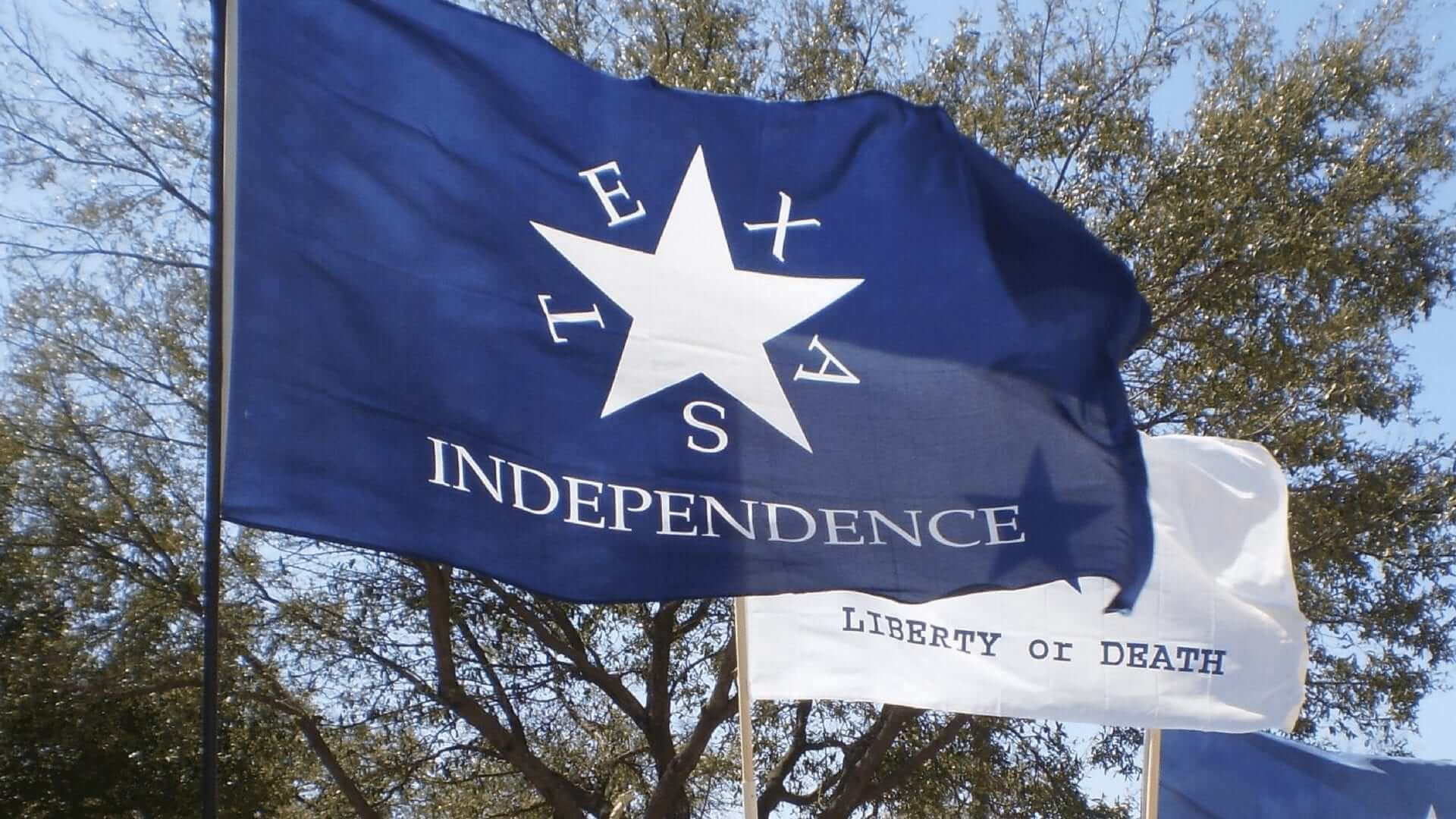
Should Texas Leave?
There are widespread implications from creating a new Republic of Texas. Here are a few of the possibilities:
Federal Impact
- No more federal funds going to Texas. These dollars account for about 30% of the state’s budget.
- Removal of United States military installations in Texas.
> Kelly Field/Joint Base San Antonio – San Antonio formerly Kelly Air Force Base
> Ellington Field Joint Reserve Base – Houston
> Lackland Air Force Base – San Antonio
> Randolph Air Force Base – San Antonio
> Fort Sam Houston – San Antonio
> Camp Bullis – San Antonio
> Martindale Army Air Field – San Antonio
> Dyess Air Force Base – Abilene
> Goodfellow Air Force Base – San Angelo
> Laughlin Air Force Base – Del Rio
> Sheppard Air Force Base – Wichita Falls
> Fort Cavazos – Killeen
> Fort Bliss – El Paso
> Fort Wolters – Mineral Wells
> Corpus Christi Naval Air Station – Corpus Christi
> Naval Air Station Kingsville – Kingsville
> Naval Air Station Joint Reserve Base Fort Worth – Fort Worth Carswell AFB
> Grand Prairie Armed Forces Reserve Complex – Grand Prairie
> Hensley Field – Grand Prairie
> Camp Mabry – Austin
> Camp Swift – Bastrop
> Camp Bowie – Brownwood
> Coast Guard Air Station Houston – Houston
> Coast Guard Sector Field Office Galveston – Galveston
> Coast Guard Station Aransas – Port Aransas
> Coast Guard Station Freeport – Surfside Beach
> Coast Guard Station Port O’Connor – Port O’Connor
> Coast Guard Station Sabine Pass – Port Arthur
> Coast Guard Station Saluria – Matagorda Island
> Coast Guard Station San Luis Pass – Galveston
> Coast Guard Station South Padre Island – South Padre Island
> Coast Guard Station Velasco – Velasco
State military bases support about 235,000 direct jobs and contribute more than $67.6 billion to Texas’ gross domestic product annually. They support an estimated 622,000 Texas workers in some capacity, contributing about $42.3 billion in disposable personal income. <1>
- No more federal courts or justices.
- FBI closes Texas offices,
- No U. S. post offices. Texas would need to develop its own postage and currency systems.
- No more federal oversight agencies like EOC, OSHA, EPA, and CDC.
> Department of Education
> Department of Energy
> Department of Health and Human Services
> Department of Homeland Security
> Department of Housing and Urban Development
> Department of the Interior
> Department of Justice
> Department of Labor
> Department of State
> United States Department of Transportation
> Department of the Treasury
> Department of Veterans Affairs
> Federal Trade Commission (FTC)
> Consumer Product Safety Commission (CPSC)
> Federal Communications Commission (FCC)
> Federal Housing Finance Agency
> United States International Trade Commission
> Corporation for Public Broadcasting (CPB)
> Public Broadcasting Service (PBS)
> National Public Radio (NPR)
> Voice of America (VOA)
> National Constitution Center
> National Endowment for the Arts (NEA)
> National Endowment for the Humanities (NEH)
> National Aeronautics and Space Administration (NASA)
> National Science Board
> National Science Foundation (NSF)
> National Center for Science and Engineering Statistics
> Nuclear Regulatory Commission (NRC)
> Federal Labor Relations Authority
> Federal Mine Safety and Health Review Commission
> National Labor Relations Board (NLRB)
> Occupational Safety and Health Review Commission
> Federal Reserve System
> Federal Retirement Thrift Investment Board
> Railroad Retirement Board
> Social Security Administration (SSA)
- No USA passports, but you can be citizens of the United States and the Republic of Texas.
- No government contracts for Texas companies.
- No federal funds for interstate road maintenance and expansion.
- No Pell Grants for medical research.
Colleges and Universities
- No more federal grants for research
- No more nationally awarded scholarships
- Forget about any national college championships. It is the National Collegiate Athletic Association. We don’t allow hockey teams from Canada to compete in tournaments.
- No more University of Texas or Texas A&M University in the NCAA or SEC.
- New Republic of Texas collegiate league composed of Texas, Texas A&M, Baylor, Texas Tech, Rice, and Houston. Think of Big or Little Six. Texas teams would probably still be allowed to compete with U. S. universities.
- Unable to attract top academics, especially those with liberal perspectives. Lack of grant money and republic-imposed restrictions will also affect hiring.
- Problems with recruiting out-of-state students, especially those in the LGBT community.
Businesses
- National businesses may leave Texas.
- Problems in attracting the best talent to the state because of restrictions on personal freedom.
- Trade tariffs.
Would You Want to Live in the Republic of Texas
- Where is the money going to come from? From the new Republic of Texas Income Tax of course.
- Where is the money going to come from to create a national currency, postal system, army, navy, and air force? See the above answer.
- Texas Rankings
> 37th in health care
> 34th in education
> 15th in the economy category,
> 33rd in the infrastructure category
> 39th in the opportunity category
> 12th in the fiscal stability category
> 33rd in the crime and corrections category
> 40th in the natural environment category.<3>[3]
> 50th in baby wellness checks
> 50th in clinical care for infants
> 50th in uninsured women,
> 43rd in maternal mortality
> 44th in school funding per child,
> 46th in child hunger <4>.[4]
> 1st in personal income tax rate
> 43rd in property tax burden
> 36th in sales tax burden
- Texas is the World’s 9th Largest Economy<5>[5]
- If the trends continue, the Republic of Texas could (will) experience
> Increased poverty
> More attacks on minorities
> More constraints on women’s personal freedom.
> Decrease in public school funding which will widen the educational gap between the rich and poor. Texas ranks 42nd in educational funding.<6>[1] According to the Texas Monitor, “Texas consistently ranks in the middle to lower range in terms of overall educational performance.”<7>[2]
- Right-to-work State – option to join or support a union.
- Texas is last in personal freedom according to a study done by Cato Institute.<8>[6]
So, would you want to live in the new Republic of Texas?
<1> Comptroller of Texas, https://comptroller.texas.gov/economy/economic-data/military/2021/snap-statewide.php
[1] https://www.raiseyourhandtexas.org/policy/where-we-stand-on-school-funding/#:~:text=When%20it%20comes%20to%20state%20spending%20on%20education%2C,ranking%2042nd%20in%20the%20nation%20in%20per-student%20spending.
[2] https://texasmentor.org/where-does-texas-rank-in-education-compared-to-other-states/
[3] https://www.click2houston.com/news/local/2019/12/09/see-where-texas-ranks-in-best-states-list/
<4>[4] https://www.statesman.com/story/news/politics/2021/09/19/texas-ranks-last-near-last-some-childrens-health-metrics/8378932002/
<5>[5] https://www.prnewswire.com/news-releases/texas-enters-2021-as-worlds-9th-largest-economy-by-gdp-301216400.html

 Allen Mesch