Black History Month – Nat Turner and Slave Literacy

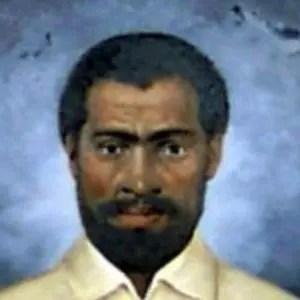
Nat Turner

On August 21, 1831, enslaved Virginian Nat Turner led a bloody revolt, which changed the course of American history. The uprising in Southampton County led to the murder of an estimated 55 white people, the execution of about 55 Black people, and the beating of hundreds of Blacks by white mobs. 

Rebellion Produces Backlash

Although the rebellion only lasted about 24 hours, it triggered a renewed wave of oppressive legislation prohibiting enslaved people’s movement, assembly, and education.

At the same time, abolitionists saw an opening for the argument that the system of slavery was untenable. Lawmakers in Virginia argued over which path to take. A vote to free slaves through gradual emancipation gained support from the state’s leaders.

Ultimately Virginia and other southern states decided to keep slavery in place and tighten control of Blacks’ lives, including their literacy. In the antebellum South only about 10 % of enslaved people were literate. For many slave owners, even this rate was too high. Many Southerners believed that an educated slave was a dangerous person.

Biblical Justification Promoted

The 1831 revolt confirmed this view. Turner was a passionate preacher guided by spiritual visions. His ability to read the Bible allowed him to find stories of divine support for fights against injustice. Slave owners and their clergy controlled the Biblical account justifying slavery given to illiterate slaves. However, educated Blacks, like Turner, refuted this “sanitized” version which tried to legitimize slavery. Abolitionists Agitate Through Written Word.

African American literacy wasn’t just problematic to slave owners because of the potential for enlightening Biblical readings. “Anti-literacy laws were written in response to the rise of abolitionism in the north,” One of the most threatening abolitionists of the time was Black New Englander, David Walker. From 1829-1830, he distributed the Appeal, a pamphlet calling for uprisings to end slavery. Black sailors secretly brought Walker’s text to the South.

William Lloyd Garrison in 1833

Adding to such fears was William Lloyd Garrison’s abolitionist paper, The Liberator, which began publishing on January 1, 1831. Although it was edited by Garrison, who was described as a “radical” white abolitionist, it was primarily seen as a “Black newspaper,” because most of its readers were Blacks. Other readers were a “few radical whites who believed in antislavery and antiracism.” Southern enslavers saw this paper as another example of outsiders’ spreading agitation through the written word.

Literacy Threatens Justification of Slavery

Women Learning to Read

Black Americans’ literacy also threatened a major justification of slavery that Black people were “less than human, permanently illiterate and dumb.” Educated Blacks would disprove that characterization would undermine the logic of the system.

States fighting to hold on to slavery began tightening literacy laws in the early 1830s. In April 1831, Virginia declared that any meetings to teach free Blacks to read or write were illegal. New codes also outlawed teaching enslaved people.

Other southern states passed similarly strict anti-literacy laws around this time. In 1833, an Alabama law declared that “any person or persons who shall attempt to teach any free person of color, or slave, to spell, read, or write, shall upon conviction thereof of indictment be fined in a sum not less than two hundred and fifty dollars.”

Despite the consequences, many enslaved people continued to learn to read. Numerous enslavers may have supported teaching Blacks to read. Many slaves performed “sophisticated work, including management of operations,” which required literacy. Barring Blacks from reading and writing was not a practical strategy for the slave owners. 

Sources: How Literacy Became a Powerful Weapon in the Fight to End Slavery, History, accessed February 8, 2023.

 Includes quotes from:

Patrick Breen, author of The Land Shall Be Deluged in Blood: A New History of the Nat Turner Revolt.
Clarence Lusane, a professor of political science at Howard University.
Sarah Roth, professor of history at Meredith College and creator of The Nat Turner Project. 

Posted in Scratch Pad | Tagged | Leave a comment

Black History Month – Corinth Contraband Camp

As Federal forces occupied significant portions of the South, enslaved people escaped from farms and plantations and fled to safety behind Union lines. The number of freedom seekers increased considerably in Union-occupied Corinth after President Abraham Lincoln’s Preliminary Emancipation Proclamation was issued in September 1862.

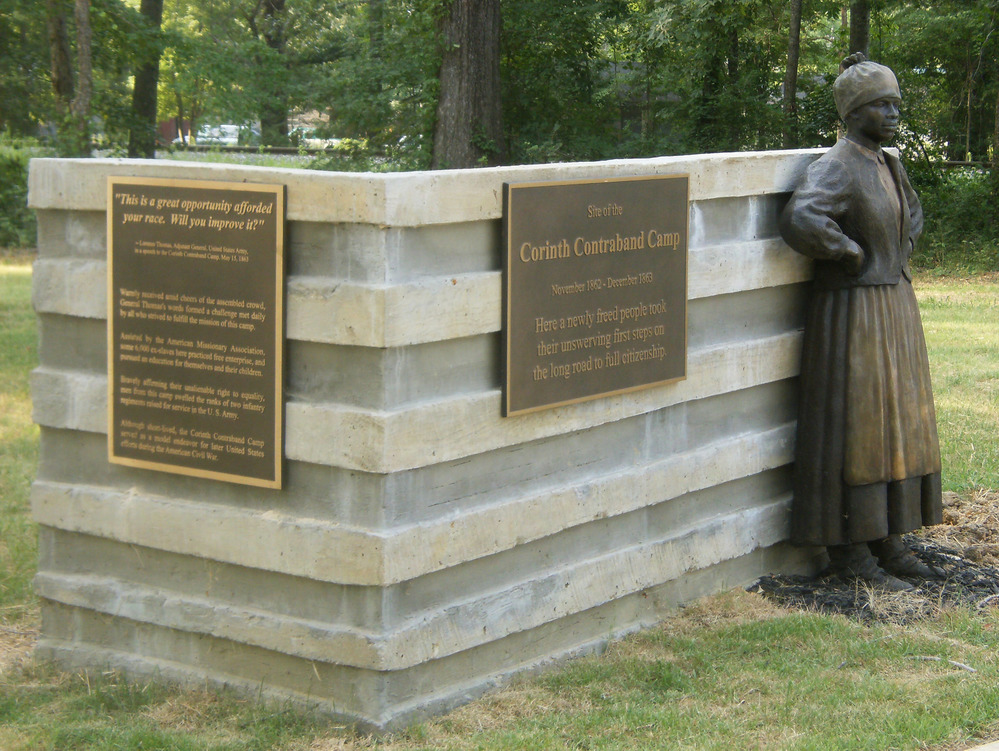
The Corinth Contraband Camp was established by Union General Grenville M. Dodge to help these refugees. The camp included homes, a church, a school, and a hospital. The freedmen cultivated and sold cotton and vegetables in a progressive cooperative farm program. By May 1863, the camp was making a profit of $4,000 to $5,000 from its operations. By August, over 1,000 Black children and adults learned to read through the efforts of various benevolent organizations. Although the camp had a modest beginning, it became a model camp and permitted approximately 6,000 former slaves to establish their own identities.

Once the Emancipation Proclamation was implemented, nearly 2,000 newly freed men at the Corinth Contraband Camp had their first opportunity to protect their way of life and they formed a new regiment in the Union army. Since most of the men came from Alabama, the unit was named the 1st Alabama Infantry Regiment of African Descent, which was later re-designated to the 55th United States Colored Troops.

In December 1863, the camp was moved to Memphis and the freedmen lived in a more traditional refugee facility for the remainder of the war. The Corinth Contraband Camp was the first step on the road to freedom and the struggle for equality for thousands of former slaves.

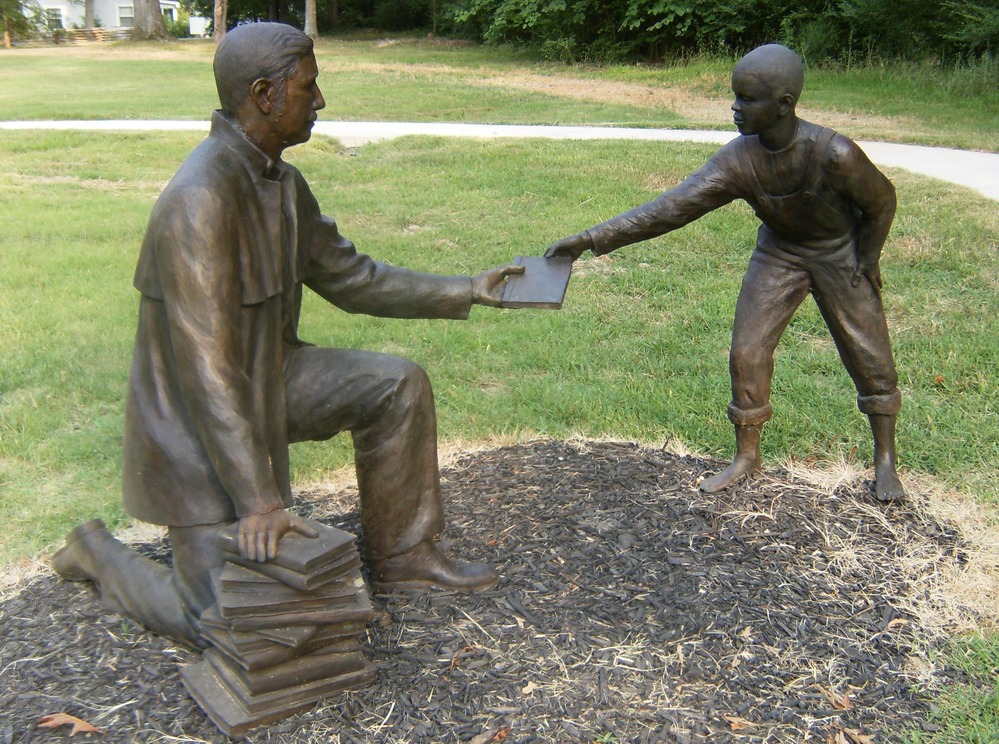
Today a portion of the historic Corinth Contraband Camp is preserved to commemorate those who began their journey to freedom there in 1862-1863. This land now hosts a quarter-mile walkway that exhibits six life-size bronze sculptures depicting the men, women, and children who inhabited the camp.

The following images from the site illustrate the interest and desire that the emancipated Blacks had to learn to read and write.

Please see the Corinth Contraband Camp for more information on this historic site.

Posted in Scratch Pad | Leave a comment

School District Bans Books

Authors beware! Your book may be banned by school districts.

Will Your Book be Banned?

A letter to the editor in the January 30, 2023 Dallas Morning News caught my eye this morning. According to the writer, McKinney ISD changed its review process to remove books based on a review of “specific passages.” The new McKinney ISD library review process allows for the “review and removal of books based on only an individual paragraph or passage.” The first book removed under the new policy is The Bluest Eye which won the Nobel Prize for literature.

This form of censorship indicates that a simple Grammarly check will need to be augmented by a “suitability” check.

For authors, this means that the audience for your book may be significantly reduced. This ban may have started with a school district, but it may soon spread to local public libraries, book stores, and online retailers. Your audience is now about twenty-five readers. How will publishers respond to these restrictions? Will they print your book if it has an unsuitable passage? They are in business to make money and loss of market may make it tough or impossible to get your manuscript published.

While parents want and should be able to exercise control of what their children read, these blanket rules place an academic institution or government in charge of their child’s education.

Houston Chronicle Publishes List of Banned Books

Posted in Scratch Pad | Leave a comment

Desperate Writers Can Become Publishers’ Victims

After spending two years researching and writing my book, I was anxious to find a publisher willing to print and distribute my manuscript. Of course, I hoped to find a “match made in heaven,” but instead I ended up “shaking hands with the devil.” No information on sales! Low to negligible royalties! I learned my lesson and I want to share some information I have discovered to help you avoid my experience.

Some publishers fail to pay authors on time or in full or are non-responsive to authors’ requests. There is a growing number of publishers that have been not paying authors their royalties. There are many lawsuits currently in the works that seek to get compensation, but it’s a long and dark road.

The Authors Guild – Publishers That Have Failed To Pay Authors On Time

The Authors Guild – Reported Publishing Scams

The Authors Guild – Avoiding Publishing Scams

Red Alert Checklist

Here are some guidelines before you leap into a contract that becomes a nightmare:

  1. If the publisher asks for money for any reason – run
  2. If the publisher asks you to sign a contract that is more than two pages – run
  3. If the publisher pressures you to provide a manuscript, biography, and/or picture – run
  4. If the publisher is listed on any list of worse publishers – run
  5. If the publisher approaches you – run
  6. If the publisher has bad reviews – run

Undoubtedly there are other red flags.

The Authors Guild – Avoiding Publishing Scams has some tips to avoid publishing scams.

The Authors Guild – Things Every Writer Should Know Before Signing a Book Contract presents some ideas about what to do before saying “I do.”

Lists of “Best” and “Worst” Publishers

I found these sites which list the “best” and “worst” self-publishing companies. I particularly like the information provided by the Alliance of Independent Authors.

Posted in Scratch Pad | Leave a comment

“The Pale Blue Eye” and the “Real” Edgar Allan Poe.

The Netflix movie The Pale Blue Eye is a murder mystery that takes place at the United States Military at West Point.

The Movie

By Netflix – Netflix., Fair use, https://en.wikipedia.org/w/index.php?curid=72253321

The Pale Blue Eye is a gothic mystery thriller film written and directed by Scott Cooper, adapted from the 2003 novel of the same name by Louis Bayard.[1] The film features an ensemble cast that includes Christian Bale, Harry Melling, Gillian Anderson, Lucy Boynton, Charlotte Gainsbourg, Toby Jones, Harry Lawtey, Simon McBurney, Timothy Spall, and Robert Duvall. Its plot follows veteran detective Augustus Landor in 1830 West Point, New York, as he investigates a series of murders at the United States Military Academy with the aid of Edgar Allan Poe, a young military cadet.

In 1830, alcoholic retired detective Augustus Landor is asked by the military to investigate the hanging of Cadet Leroy Fry at the United States Military Academy at West Point, New York. Landor is a widower who lives alone since his daughter Mathilde ran off a few years previously.

After Fry was hanged, his heart was removed from his body. In the morgue, examining the corpse, Landor finds a small fragment of a note clutched tightly in Fry’s hand. Also, marks on Fry’s neck and fingers suggest that he did not hang himself, but was murdered.

With the officers’ permission, Landor enlists the help of Edgar Allan Poe, another cadet at the academy who has expressed an interest in the case. Poe and Landor deduce from the writing on the note fragment that it was summoning Fry to a secret meeting. After a cow and a sheep are found in the area, butchered and with their hearts removed, it is deduced that the murder could be linked to black magic rituals.

Another cadet, Ballinger, goes missing and is later found hanged, with both his heart and his genitals removed. A third cadet, Stoddard, who was a colleague of the two victims, then disappears, and it is presumed by Landor that this man had reason to believe he was next in line to be killed.

Landor and Poe begin to suspect the family of Dr. Daniel Marquis, who was first brought into the investigation to perform the autopsy on Fry. Particular suspicion is placed on his son Artemus and his daughter Lea (who suffers from random seizures).

While visiting Dr. Marquis’s house, Landor finds an old officer’s uniform; a man impersonating an officer had been involved in the mutilation of Fry’s body. Landor confronts Dr. Marquis, who admits that he had resorted to black magic to cure Lea of her seizures, and initially she appeared to improve.

Poe is enchanted by Lea and volunteers to do whatever she wants. However, he is drugged and wakes to find that Artemus and Lea are about to cut out his heart, in accordance with the ritual to cure Lea. Landor manages to arrive in time to rescue Poe, but the building catches fire and Lea and Artemus die.

Thinking that the case is now solved, the military thanks Landor for his service. However, Poe, recovering from his near-death experience, notices that the handwriting on the note fragment found in Fry’s hand matches that of Landor. Threading together all the information that he has gathered, it becomes apparent that Landor was in fact the killer of the cadets. Poe confronts Landor with his conclusion.

It transpires that two years previously, Landor’s daughter Mathilde was raped by Fry, Ballinger, and Stoddard after attending her first ball. Traumatized by the experience, she later killed herself by jumping off a cliff. Landor did not disclose this to anyone but pretended that she had run away.

Distraught, Landor set out to avenge his daughter. He left the note for Fry, luring him to a lonely spot before hanging him. However, a patrol happened to walk by, so Landor was forced to leave the body there. Lea and Artemus later stole the heart for their ritual. After killing Ballinger, Landor mutilated his corpse to make it appear that the cadet had been murdered by the same “madman” who had desecrated Fry’s body.

Poe tells Landor he has two notes with handwriting samples that can link Landor directly to the murders, but before leaving, Poe burns them. Landor is later seen standing at the cliff where his daughter leapt to her death. He lets her hair ribbon float away in the wind, saying “Rest, my love”.

West Point References

Although the story is fiction, it does contain accurate references to West Point.

The “Real” Edgar Allan Poe at West Point

The following is an excerpt from Teacher of Civil War Generals – Major General Charles Ferguson Smith, Soldier and West Point Commandant:

By Unknown author; Restored by Yann Forget and Adam Cuerden – Derived from File:Edgar Allan Poe, circa 1849, restored.jpg; originally from http://www.getty.edu/art/gettyguide/artObjectDetails?artobj=39406, Public Domain, https://commons.wikimedia.org/w/index.php?curid=77527076

There are many stories, anecdotes, and fantasies about Poe’s exploits at West Point. He became notorious for cutting mandatory drills, skipping classes, and making “nocturnal visits to Benny Havens.” One night Poe stumbled back to his barracks and sprawled on his back on the steps of his tactical officer’s quarters. “When the tactical officer awoke and inquired as to who might be outside his door, Poe allegedly responded in verse: On Linden when the sun was low/All bloodless lay the untrodden snow/And dark as winter was the flow/Of I SIR, rolling rapidly!” Cadet Poe was eventually court-martialed and dismissed from the Academy. Some attribute his discharge to his frequent trips to Benny Havens or his “uncontrollable urge to hurl baked potatoes across the Academy mess hall.” Another story blamed his dismal on reporting to a parade naked except for his crossed white ammunition belts and hat. One account said that Poe, in a fit of rage, threw his tactical officer off a cliff into the Hudson River and was subsequently charged with murder.[i]


[i] William F. Hecker, editor, Private Perry and Mister Poe, The West Point Poems, 1831, Facsimile Edition (Baton Rouge: Louisiana State University Press, 2005), Introduction xvii-xviii..
Posted in Scratch Pad | Tagged | Leave a comment

Sam’s Club Awards Grant to Plano Kiwanis

The Plano Kiwanis’ “Books and Buddies” program received a $500 grant from Sam’s Club. The grant, along with Plano Kiwanis funds, will be used to purchase bilingual books that will be given to Head Start children at an open house in February. Over the past two years, the Books & Buddies project has supplied bilingual books for school events, after-school programs, and libraries.

The program’s goal is to support efforts to connect parents and children with books.

Some medical offices have also received bilingual books through the program, which presents an opportunity for a parent to spend a few minutes reading a book with their child.

To learn more about this program, please contact the Plano Kiwanis [http://www.kiwanisplano.org/]

Also, please check out the other programs supported by the Plano Kiwanis [http://www.kiwanisplano.org/what-we-do-new.html]

Posted in Scratch Pad | Tagged | Leave a comment

Charlotte the Elf

As some of you may know, Charlotte is a mischievous elf. She is employed by Santa Claus in his North Pole workshop. During the Christmas season, Charlotte makes unannounced visits to children around the world. Experts have not determined whether there is one elf with magical powers or many elves to cover the earth. The CIA and MI6 are also investigating how many wonderful Charlottes are out there.

Charlotte has been staying with my great-granddaughter in her home in North Texas. My five-year-old was enjoying her time with the playful elf until this morning.

The little girl could not find her friend. She looked in her room, the kitchen, the living room, and even in the backyard. She could not find Charlotte. She called her mother to help her in the search. The child became upset and started to cry. Her mother suggested that they go to Starbucks for breakfast. The distraught little girl fought back tears and decided to go. On the drive to the coffee shop, she asked her mom to call the police to report the missing elf.

Upon arriving at Starbucks, the child saw a policeman. She said, “I want to report a missing person er elf .”

The policeman opened his notepad and wrote down the particulars … height, weight, color of hair, and clothes the elf was wearing. He asked when the last time the elf had been seen. He assured the child.

“She will probably turn up at home. If she is not there, I will submit my notes and authorize a missing persons er missing elf report.”

The five-year-old was comforted by the officer’s sincerity and promise.

By this time, the breakfast order was ready. The little girl went to the counter to get her hot chocolate. There she found Charlotte with her arms around the cup. She approached the elf cautiously, thinking it might be another child’s elf. Her mother assured her that it was her Charlotte.

Of course, the first my precious great asked was, “How did Charlotte open those heavy doors into the Starbucks. Her quick-thinking mom said a customer must have opened the door for her.

I called her later that morning to see if she was okay. “You know that Charlotte is so mischievous,” I began. Great Grandpa, she is right here and you must be careful not to hurt her feelings.” I apologized and said I loved my sweet little girl. She said goodbye and went off to play hide-and-seek with the playful elf.

A huge thank you to the police officer who treated my great grand baby with such tenderness and to the thoughtful Starbucks employees who helped locate Charlotte. A very big hug to my granddaughter and her mom who welcomed Charlotte to her home.

Love to all. Seasons Greetings.

Posted in Scratch Pad | Leave a comment

Season’s Greetings

I hope you and your family have a wonderful holiday and a happy new year.

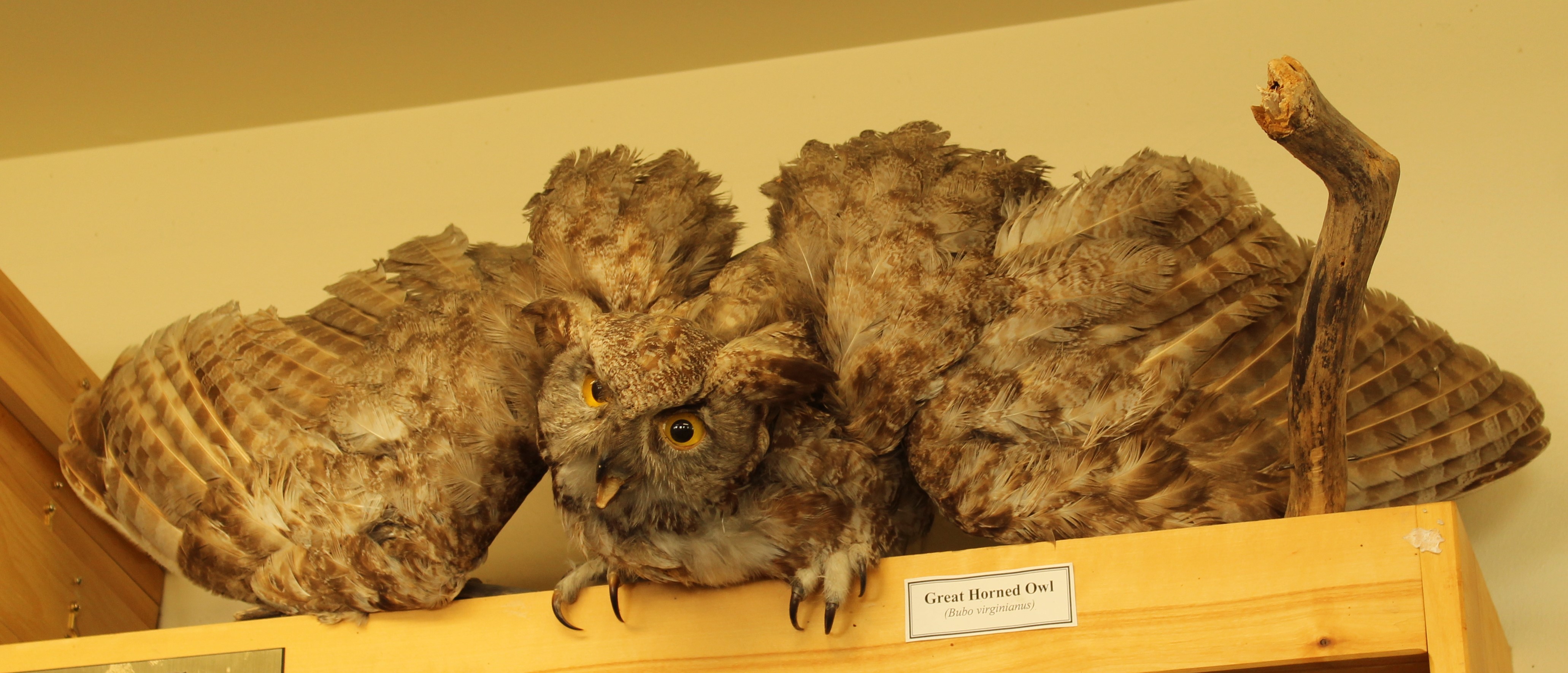
I thought that I would share with you some pictures I took of animals on my recent trip to Alaska.

I hope you have the opportunity to visit Alaska and enjoy its wonderful beauty.

Seasons Greetings

Posted in Uncategorized | Leave a comment

The Third Rebellion

The Third Rebellion is a novel about political and social unrest in the United States of America. The book is a work of fiction. The Third Rebellion is not a prediction of future events, a political manifesto, a condemnation of American society, a denunciation of a political party, or a call to action. It is a story about an American revolution or rebellion which the author created from personal observations during the past 10 years. As I considered writing a novel about a possible third Civil War, I sought events that could lead to such an uprising.

Headlines like these inspired writing of The Third Rebellion.

  • “As Trump refuses to concede defeat, far-right groups plan show of support in Washington” November 13, 2020 – Reuters News Service 
  • “George Floyd’s death was ‘murder’ and the accused officer ‘knew what he was doing,’ Minneapolis police chief says” – June 24, 2020 – CNN
  • “Pride, Black Lives Matter flags burned at Cary church” – August 31, 2022 – WXII News Winston Salem, North Carolina
  • “Was the Jan. 6 Attack on the Capitol an Act of ‘Terrorism?’” – January 7, 2022 – The New York Times

The Third Rebellion is available from Amazon.

Paperback    $10.00

Kindle          $4.00    

Please tell your family and friends about this new novel.

Please post your comment and rating on The Third Rebellion.

Posted in Scratch Pad | Tagged , | Leave a comment

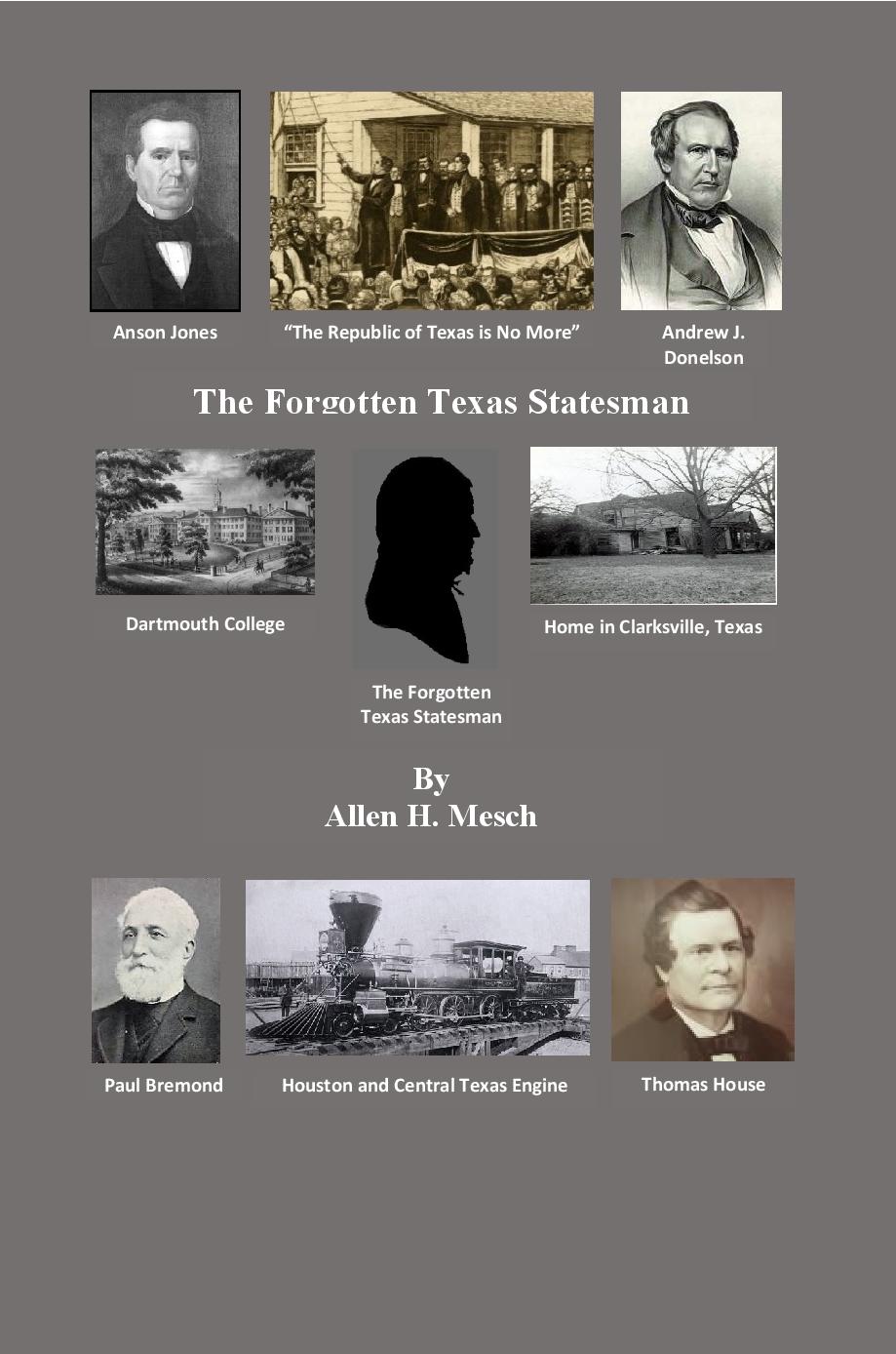
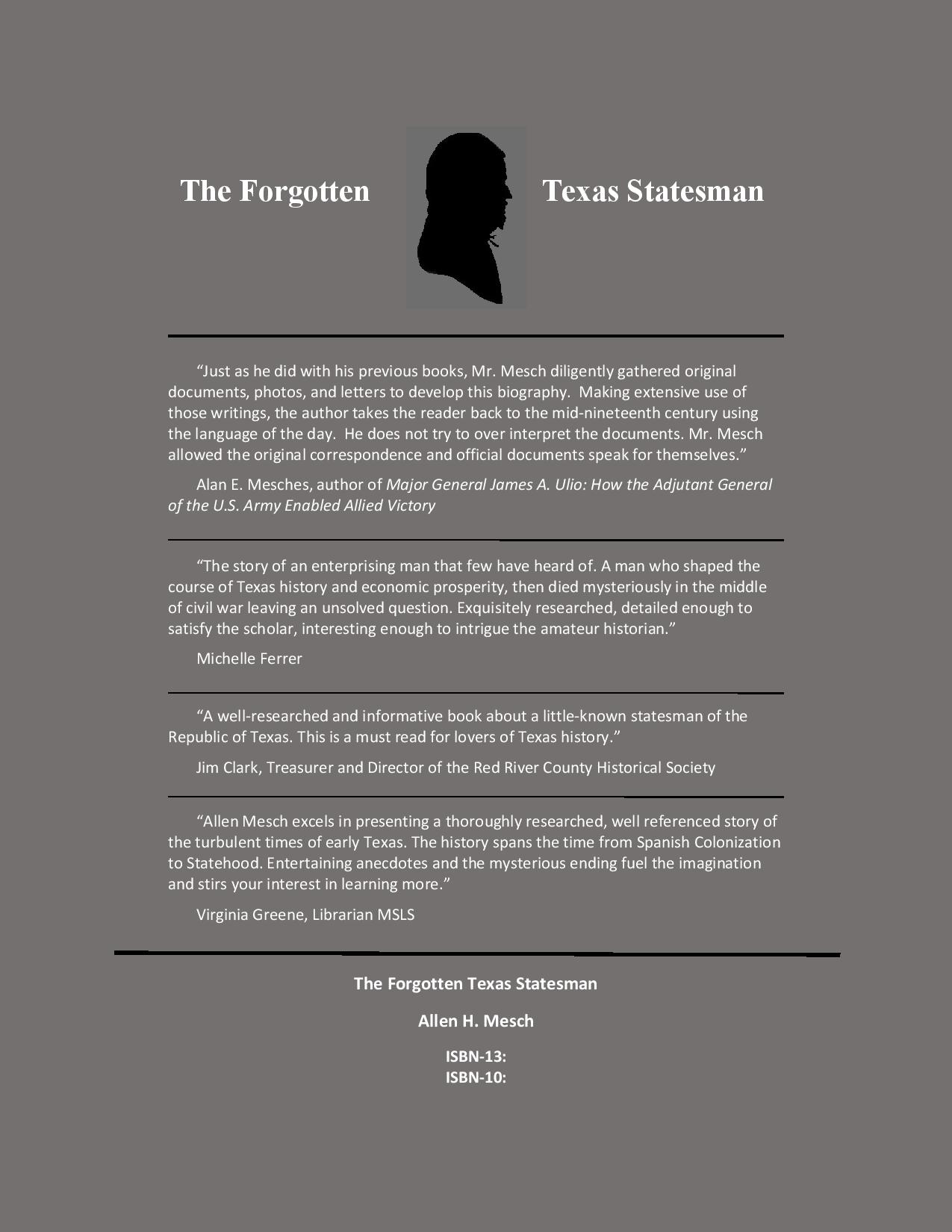
The Forgotten Texas Statesman

The revised and edited version of my biography of Ebenezer Allen is now available from Barnes and Noble Press.

Who was this Man?

  • Appointed Attorney General of the Republic of Texas
  • Served as interim Secretary of State
  • Assisted in the Annexation of Texas to the United States
  • First elected Attorney General of the State of Texas
  • Obtained first railroad charter in Texas
  • A local advocate of Spiritualism
  • Represented engineers and inventors in their dealings with the Richmond government
  • A civilian member of the Confederate Engineering Bureau
  • Died mysteriously in Richmond, Virginia
  • Town in north Texas named after him

Order Book The Forgotten Texas Statesman for $17.00 from Barnes and Noble

Order E-Book The Forgotten Texas Statesman for $2.00 from Barnes and Noble

Posted in Scratch Pad | Tagged , | Leave a comment