Books Make Life Richer

On page E1 of the Saturday, November 27, 2021 issue of The Dallas Morning News, Ms. Tyra Damm authored an article entitled “Books expand our world, make life richer.” Ms. Damm is a Briefing columnist for the paper. Her article describes how reading books influenced her and how “books were [her] friends, my anchor, my escape.”

I thought one particular paragraph was very important.

Where fear drives us to limit ideas available to other people, we are narrowing potential for emotional growth and tangible progress, cutting off access to the power of empathy. When we read authors from different backgrounds and with divergent points of view, we ask deeper questions, make connections, solidify our beliefs or even adjust them if so moved.

Ms. Tyra Damm, “Books expand our world, make life richer, ” The Dallas Morning News, November 27, 2021, p. E1.

Please read her entire article.

Posted in Scratch Pad | Tagged , | Leave a comment

Burning and Banning Books

The first large burning came on 6 May 1933. The German Student Union made an organized attack on Dr. Magnus Hirschfeld’s Institute of Sex Research. Its library and archives of around 20,000 books and journals were publicly hauled out and burned in the street. Its collection included unique works on intersexuality, homosexuality, and transgender topics.

Joseph Goebbels
Reich Minister of Propaganda
By Bundesarchiv, Bild 119-2406-01 / CC-BY-SA 3.0, CC BY-SA 3.0 de, https://commons.wikimedia.org/w/index.php?curid=5337705

On May 10, 1933, the students burned upwards of 25,000 volumes of “un-German” books in the square at the State Opera, Berlin. This action began an era of inflexible state censorship. In many other university towns, nationalist students marched in torch-lit parades against the “un-German” spirit. The scripted rituals of this night called for high Nazi officials, professors, rectors, and student leaders to address the participants and spectators. At the meeting places, students threw the pillaged, banned books into the bonfires with a great joyous ceremony that included live music, singing, “fire oaths,” and incantations. In Berlin, around 40,000 people heard Joseph Goebbels deliver a fiery address: “No to decadence and moral corruption!” Goebbels told the crowd. “Yes [sic] to decency and morality in family and state! I consign to the flames the writings of Heinrich Mann, Ernst Glaeser, Erich Kästner.”

All of the following types of literature, as described by the Nazis, were to be banned:

  • The works of traitors, emigrants, and authors from foreign countries who believe they can attack and denigrate the new Germany
  • The literature of Marxism, Communism, and Bolshevism.
  • Pacifist literature.
  • Literature with liberal, democratic tendencies and attitudes
  • All historical writings whose purpose is to denigrate the origin, the spirit, and the culture of the German People, or to dissolve the racial and structural order of the Volk, or that denies the force and importance of leading historical figures in favor of egalitarianism and the masses, and which seeks to drag them through the mud.
  • Books that advocate “art” which is decadent, bloodless, or purely constructivist
  • Writings on sexuality and sexual education which serve the egocentric pleasure of the individual and destroy the principles of race and Volk
  • Literature by Jewish authors, regardless of the field.
  • Popular entertainment literature that depicts life and life’s goals in a superficial, unrealistic, and sickly-sweet manner, based on a bourgeois or upper-class view of life.
  • Naiveimitation of patriotic literature.
  • Pornography and explicit literature
  • All books that degrade German purity.

Many German students were complicit in the Nazi book burning campaign. They were known as Deutsche Studentenschaft, and when they ran out of books in their libraries they turned to independent bookstores. Libraries were also asked to stock their shelves with material that stood up to Hitler’s standards and destroy anything that did not.

Texas Governor Greg Abbott
By World Travel & Tourism Council – Greg Abbott, Governor of Texas, CC BY 2.0, https://commons.wikimedia.org/w/index.php?curid=54703342

Fast forward to Texas in 2021. In November, Texas Governor Greg Abbott (Republican) told education officials that the Texas Association of School Boards had “attempted to wash its hands clean of the issue by abdicating all responsibility in the matter” to monitor and remove unacceptable books from classrooms and school and public libraries.

Abbott said: “Given this negligence, the State of Texas now calls on you to do what the Texas Association of School Boards refuses to do,” that the standards the entities develop “must ensure transparency about the materials being taught in the classroom and offered in school libraries.”

The heads of the Texas Education Commission (TEA) and State Board of Education (SBOE) said they would work alongside the other to develop those statewide standards as requested by the governor.

The Texas Education Commission “takes seriously” Abbott’s “call for action on this matter of great importance to families of Texas public school students.” The SBOE said Texas public school families “should have the reassurance that their children are not at risk of being confronted with pornographic and obscene material when they are in school.”

Texas State Representative Matt Krause (Fort Worth Republican) launched an inquiry on the question of inappropriate content in public schools and libraries in certain school districts over the types of books students can access. Krause included a roughly 850-book list that included novels about racism and sexuality and asked the districts to identify which of those books were available on school campuses.

Krause asked districts whether they had those books and how much money was spent on them but declined to offer specifics and said he does not want to “compromise” a pending or potential investigation as chair of the House General Investigating Committee.

The 850- booklist is available from the Texas Tribune.

The following topic list includes some sample titles that discuss:

Abortion – Roe vs. Wade, Coping with Birth Control, A Question of Choice, and Abortion: opposing viewpoints

Sexuality – Everything you need to know about growing up female  Everything you need to know about growing up male,The Handmaid’s Tale: The Graphic Novel, LGBT families, and Gender equality

Teen Sex – Teens & sex, Safe sex 101: an overview for teens, S.E.X.: the all-you-need-to-know progressive sexuality guide to get you through high school and college, Do abstinence programs work? Sexually transmitted diseases, and Sexually transmitted infections

Sexual Orientation – The LGBT community, Sexual orientation, Coming out: telling family and friends, A new generation of homosexuality: modern trends in gay and lesbian communities, Identity & gender, and Rainbow revolutionaries: 50 LGBTQ+ people who made history

Racism – What’s racism? The Black power movement and civil unrest, So you want to talk about race, This book is anti-racist : 20 lessons on how to wake up, take action, and do the work, Me and White Supremacy: Combat Racism, Change the World, and Become a Good Ancestor, #BlackLivesMatter : protesting racism, and Race and policing in modern America.

These books allow important discussions about teens that teens are dealing with: Sexuality (Internal conflicts about gender identification and hate crimes against LGBTs), Sexuality and Teen Sex (Just when their hormones are in overdrive these conversations are critical in dealing with family, religion, biology, male and female characteristics changes, and teen pregnancy),  Racism (How can we expect to reconcile treatment of minorities if this topic is not discussed in the classroom? How can society rid itself of hate when teens are prohibited from understanding their prejudices and unequal treatment?), and Abortion – This is a major issue facing our society and teens need to understand its origin, femininity and masculinity, and physical and mental crises young people often face alone).

Currently, some districts in Texas ban: The Tell-tale Heart (Edgar Allan Poe), I Hate My Bow (Hans Wilhelm), To Kill a Mockingbird (Harper Lee), Pugdog (Andrea U’Ren), Drama (Raina Telgemeier), Hunger Games (Suzanne Collins), Brave New World (Aldous Huxley), The Lovely Bones (Alice Sebold) Underpants (Dav Pilkey), and Mirriam-Webster’s Visual Dictionary.

A Dallas Morning News and the University of Texas at Tyler conducted a poll about the Texas government’s role in “identifying which books should be removed.” The results indicated that 35% of respondents have “no confidence” and 31% said “that they had “not too much” confidence. Less than 10% of the respondents said they “trusted state leaders’ judgment on books “a great deal.”

Perhaps by including books and discussing the issues we can prevent suicide, unprepared and unmarried teenage parents, beating an LBGT teen, and harassing a bright classmate who happens to be Asian or Jewish, and stopping a bombing of a church, mosque, or synagogue.

Posted in Scratch Pad | Tagged , | Leave a comment

Ebenezer Allen Presentation

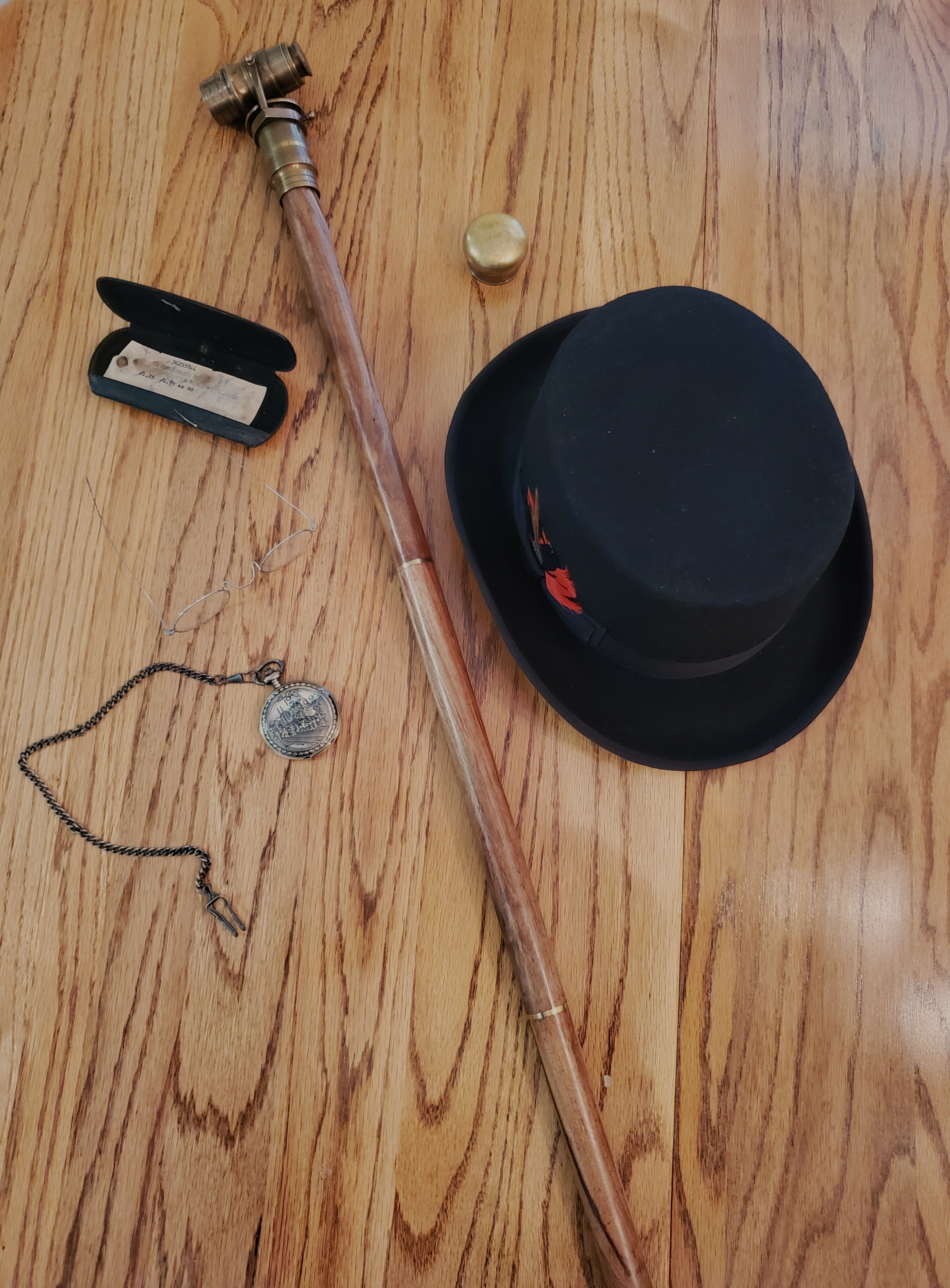
Props Used in Talk

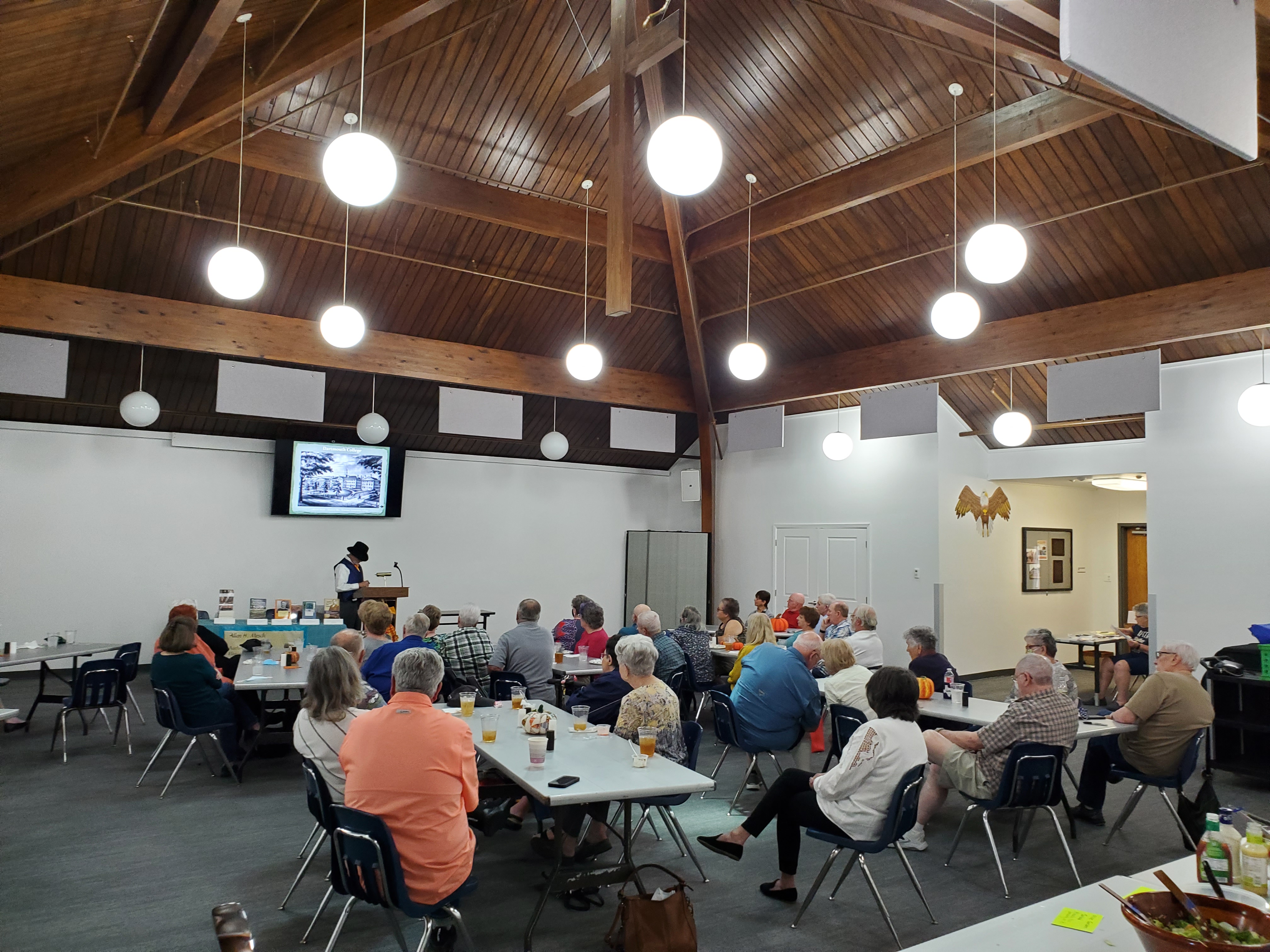
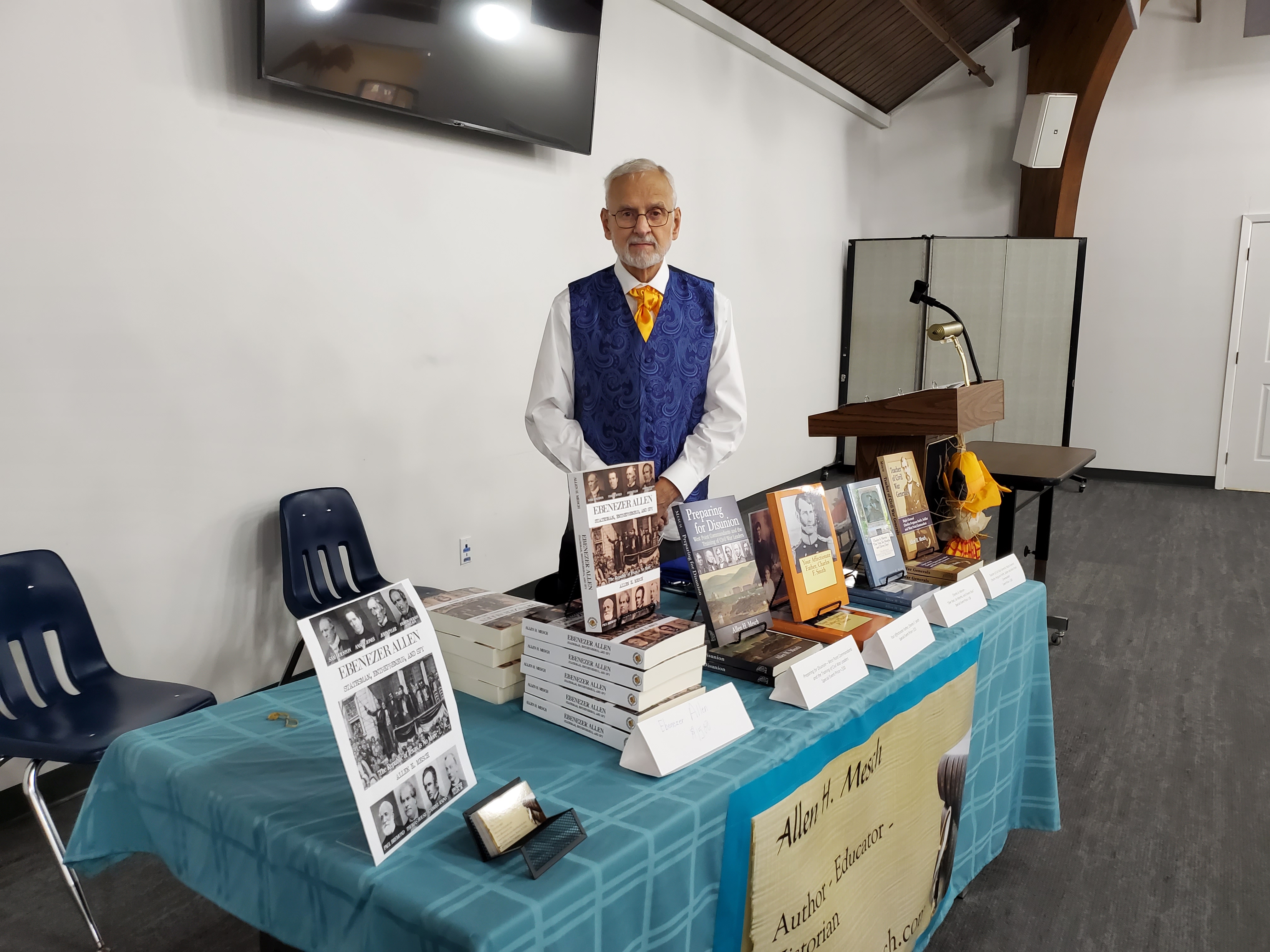
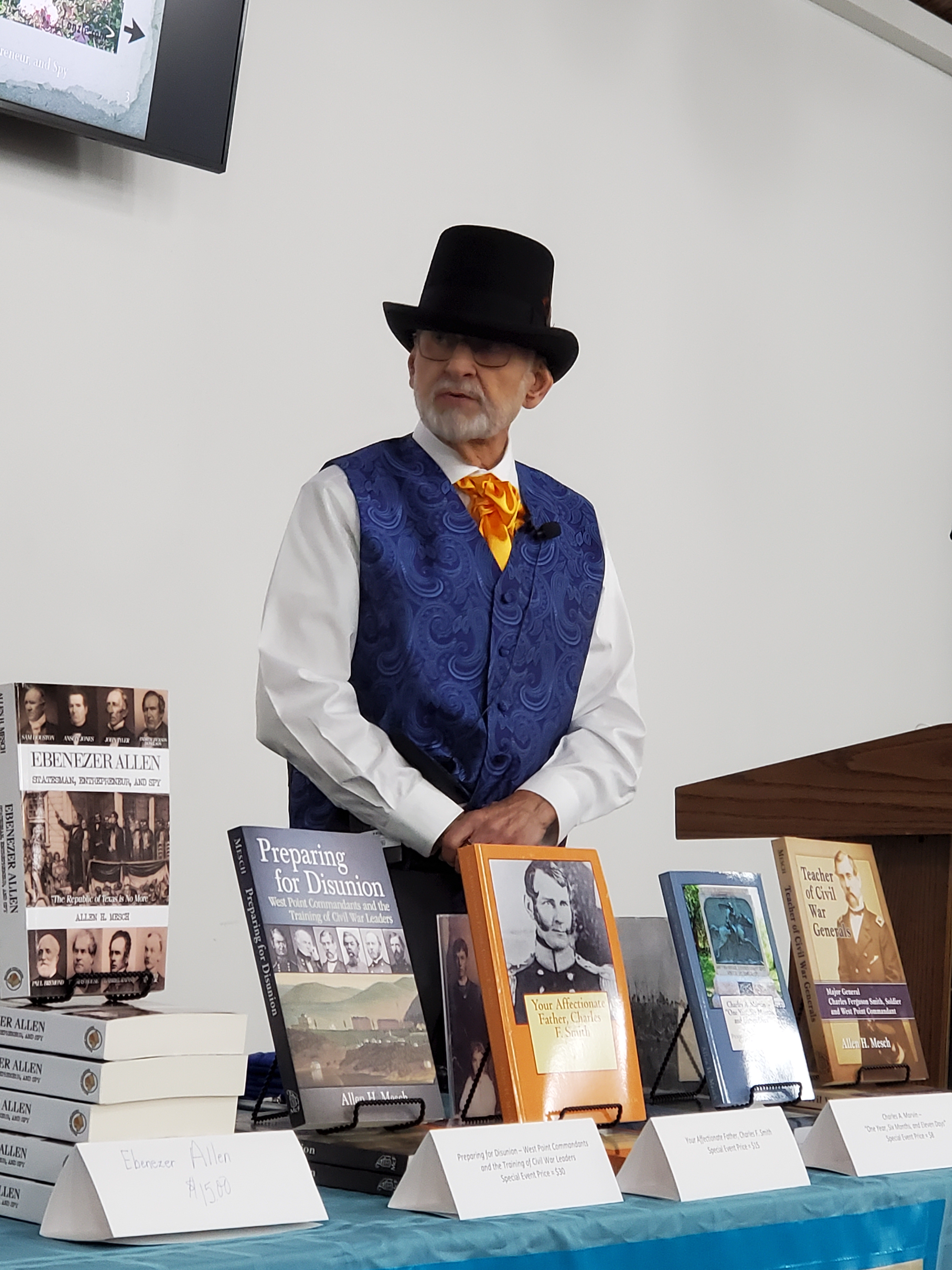
I was pleased to present my living history talk on Ebenezer Allen – Statesman, Entrepreneur, and Spy on October 20, 2021 at the First Methodist Church of Allen.

Thanks to Joann and Richard for all their help.

Posted in Scratch Pad | Tagged | Leave a comment

Different Strokes for Different Folks

Arguments

The different and diverse beliefs which are threatening our democracy illustrate the failure to develop solutions that partially satisfy both Democrats and Republicans. This reminded me of the inherent skills of people. Not all of us are rocket scientists or brain surgeons. I have compiled the following “natural laws” to illustrate my point.

Some people…

… love instead of hate.

… either understand algebra or don’t.

… believe in science while others dismiss it.

… want good lives for everyone but others don’t care for anyone except themselves.

… are professional football receivers and others cannot catch a balloon.

… can speak many languages and for some mastering their native language is difficult.

… have artistic skills in art and music while some folks cannot draw stick figures or play chopsticks.

… believe that God has given us the skills to address life’s challenges and some people stand in the middle of a busy street waiting for God to rescue them.

… select clothes that make them more attractive while others wear two different socks.

… can write books and others think books are something to stand on to reach higher.

… can fix almost everything while others buy tools for the women in their life.

… can cook while others eat fast foods.

… like asparagus while others think that it should be extinct.

… are Republicans and some are Democrats.

… are peacemakers while others are always itching for a fight.

… like the beach and others like the mountains.

… like their steaks rare while others like them burned to a crisp.

… are vegetarians while others are carnivores.

… love Cocoa-Cola and some prefer Pepsi-Cola.

… some choices are politically correct while others could care less.

Men and Women Have Been Arguing Since Prehistoric Times
Men and Women Have Been
Arguing Since Prehistoric Times

I could go on, but in the interest of your time and mine, I will end.  

It is good to have different beliefs and choices. The problems exist because some people try, often in vain, to persuade people they are correct, and they should embrace their preferences. Others refuse to respect other peoples’ views, understand why they feel this way, and refuse to meet in the middle and compromise.

This is an issue that plagues America,  increases our differences, and locks people into unescapable positions.  For our civilization to survive, we must listen, respect, and understand each other’s position. This is the first step in seeking common ground to show us that we are not as different as we thought.

Posted in Scratch Pad | Tagged , | Leave a comment

I Used to Sing in the Shower

Young man is singing in the shower

I don’t know when or why I stopped. Neither do I know when I began. Since I stopped singing the time spent during my showers has decreased dramatically.

Singing was a type of relaxation for me. However, my college roommates and landlords didn’t share my enthusiasm.

Today my showers are methodical contact between soap, washcloth, and skin. I have gone from pleasure to worry. Now my showers are focused on worries, problem solving, and schedule. Oh, what a loss to me and a joy to music lovers.

It’s a widely acknowledged phenomenon that people’s singing voices significantly improve when they’re in the shower. Have you ever been singing whilst having a scrub and thought to yourself, ‘wow, I actually sound pretty good!’ only to mortify yourself on stage that evening at the karaoke bar, as you discover that you still sound like a drowning rat when you try to hit those high notes in Dancing Queen?

Source: https://www.panararmer.co.uk/why-you-sing-better-in-the-shower/

It’s all to do with reverberation and acoustics. Reverberation is the process by which sounds blend together, and the structure of your typical shower provides the ideal environment for this. Essentially, the shower acts as a mixer that modifies your voice, making it sound better. It does this in three ways.

First of all, the volume of your voice is reflected off the hard and smooth surfaces of the bathroom, so it doesn’t fade as quickly as it would in an open space. Secondly, as the sound bounces around the shower, creating reverb – your voice ‘hangs’ in the air longer than usual, giving it an embellished, rich sound. Reverb also evens out pitch as it reverberates off so many surfaces, so even if you’re not hitting those notes, it sounds more like you are when you’re in the shower. Finally, the shower itself acts as a ‘resonant cavity’, naturally amplifying certain frequencies of sounds.

Dear readers, what is your experience with warbling? I have several questions for you.

  • Do you sing in the shower?
  • If you do, what songs do you sing?
  • Do your family, roommates, and friends like, tolerate, or hate your performances?
  • Is a good singing voice necessary to be a shower songbird?
  • Do teenagers sing in the shower?
  • Have electronic devices taken the place of shower vocalists?
  • Does this blog entry encourage to return to singing or discourage you from returning or beginning shower recitals?

Source: https://www.panararmer.co.uk/why-you-sing-better-in-the-shower/

Posted in Scratch Pad | Leave a comment

Freedom of Speech for All

Recently I read a story in the Dallas Morning News about the terrible behavior of people opposed to their school district’s regulations. A young student was beginning to speak about his grandfather’s death when a number of attendees at the school district meeting interrupted the speaker’s two-minute allotment showering the young man with boos, slurs, and signs opposing the speaker’s statement. The simple mention of his grandfather’s death was met with insulting “adult” behavior . My issue with the disruption was not the pros and cons about the issue being discussed but with the violation of the First Amendment of the Bill of Rights. The amendment clearly states that:

Congress shall make no law respecting an establishment of religion or prohibiting the free exercise thereof; or abridging the freedom of speech, or of the press; or the right of the people peaceably to assemble, and to petition the Government for a redress of grievances.

Apparently, the angry members recalled the “freedom to peaceably assemble” portion but not the “freedom of speech” part of the amendment. Their behavior violated the freedom of speech part of the amendment.

Maybe the angry attendees felt their outbursts were provided by the First Amendment which gave them the right to speak. However, they refused to allow this Constitutional right to the young man’s speech. Freedom to speak allows/encourages people to speak, it doesn’t say one side should be allowed to speak but not the opposing side.

Perhaps, their behavior was only being impolite, rude, and disruptive. However, their actions brought the unwelcome attention of the media. They embarrassed their school district, town, state, and others who supported their view.

“Liberty is meaningless where the right to utter one’s thoughts and opinions has ceased to exist.” – Frederick Douglas

“The right to free speech is more important than the content of the speech” – Voltaire

Freedom of speech includes the right:

  • Not to speak.
  • Of students to wear black armbands to school to protest a war.
  • To use certain offensive words and phrases to convey political messages.
  • To contribute money (under certain circumstances) to political campaigns.
  • To advertise commercial products and professional services (with some restrictions).
  • To engage in symbolic speech, (e.g., burning the flag in protest).

Freedom of speech does not include the right:

  • To incite actions that would harm others (e.g., “[S]hout[ing] ‘fire’ in a crowded theater.”).
  • To make or distribute obscene materials.
  • To burn draft cards as an anti-war protest.
  • To permit students to print articles in a school newspaper over the objections of the school administration. 
  • Of students to make an obscene speech at a school-sponsored event.
  • Of students to advocate illegal drug use at a school-sponsored event.

Source: https://www.uscourts.gov/about-federal-courts/educational-resources/

Posted in Scratch Pad | Leave a comment

“Two-Front War” Article in America’s Civil War Magazine

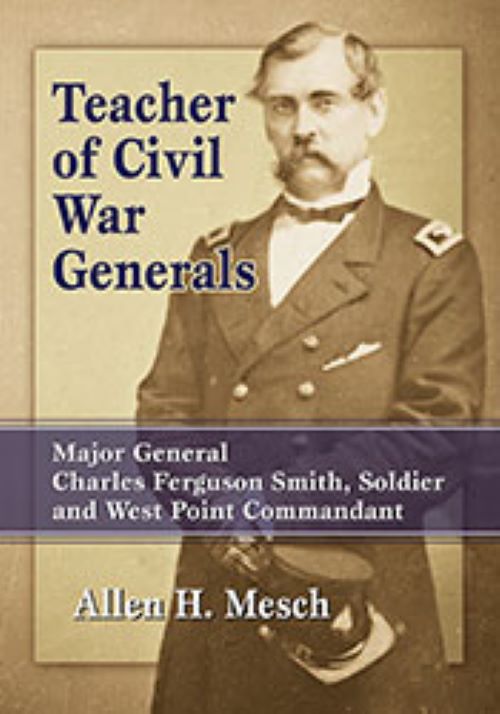
I am delighted to announce the publication of my story, “Two-Front War” on pp. 50-53 of the November 2021 edition of America’s Civil War. The story is based on my research in connection with my biography of General C. F. Smith. Teacher of Civil War Generals – Major General Charles Ferguson Smith, Soldier and West Point Commandant published by McFarland Publishing. The article focuses on Smith’s assignment in Paducah, Kentucky under General Ulysses Grant. During his time in Paducah, a citizen waved a Confederate flag from his residence, The Lloyd Tilghman House. Smith followed Grant’s orders not to disturb peaceful citizens, but the 11th Illinois thought the flag should come down. This resulted in a near mutiny in Smith’s command and widespread criticism as a Southern Sympathizer. The story reveals how Civil War officers often had to fight on two fronts: the enemy and culprits in their command.

Smith Leads Attack at Fort Donelson

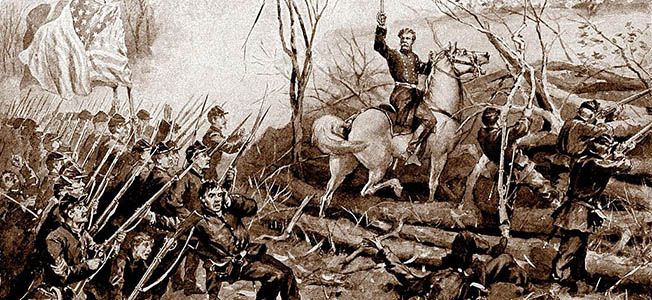
This story led to an article in the magazine’s Grapeshot column (p. 10) about the role General Smith played in the capture of Fort Donelson. Most discussions focus on Grant’s victory and “contributions” made by other officers. Sometimes, these officers are not mentioned, but Generals Grant and  Halleck credited Smith with the victory. Smith’s leadership and bravery at Fort Donelson earned him confirmation as a major general by the Union Senate.

Imagine my surprise when my Editor Chris Howland sent me two copies of the issue addressed to Allen Mesch “Contributing Editor.”

Posted in Scratch Pad | Tagged , | Leave a comment

Defending Freedom

Remembering

The United States military has demonstrated one of its duties during the evacuation of Americans and Afghans who supported U.S. forces. This task was extremely difficult and resulted in the loss of thirteen soldiers. This is not the first time U.S. forces have evacuated Americans and those citizens that supported us. This happened in the Vietnam War. The same evacuation of soldiers and people who assisted us occurred then. However, there are differences between Vietnam and Afghanistan. The Taliban are ruthless religious zealots, and the North Vietnamese were led by a popular revolutionary. During the Vietnamese War, there were protests on college campuses and soldiers were spit upon and called “baby killers.” I don’t recall any protests about the war in the twenty years U.S. troops were in Afghanistan. The soldiers who died in the attack on the Kabul airport were honored as heroes. Both of these conflicts suffered from political interference and questionable decisions. When we send our military abroad, the government should allow the troops to pursue their mission without interference. Let the warriors fight the war, don’t let them be constrained by ever-changing political rules that corrupt and confuse their mission.

So, what is the mission of the U.S. military? Is it winning wars or something else?

The mission statements of the military and its branches provide insight into their responsibilities.

The military fights under the authority of the United States Department of Defense. The Department of Defense is responsible for providing the military forces needed to deter war and protect the security of our country. The major elements of these forces are the Army, Navy, Marine Corps, and Air Force, consisting of about 1.7 million men and women on active duty. During the Civil War, the department was called the War Department.  It obtained its new name the “Department of Defense” on  August 10, 1949.

The mission of the United States military is to preserve peace and security and provide for the defense of the United States, the Commonwealths and possessions, and any areas occupied by the United States, support national policies, implement national objectives, and overcome any nations responsible for aggressive acts that imperil the peace and security of the United States

The Marine Corps mission statement describes the corps as “America’s expeditionary force in readiness since 1775. We are forward deployed to respond swiftly and aggressively in times of crisis. We are soldiers of the sea, providing forces and detachments to naval ships and shore operations.”

The United States Army’s mission statement is to preserve peace and security and provide for the defense of the United States, the Commonwealths and possessions, and any areas occupied by the United States. This mission charges the Army with supporting national policies, implementing national objectives, and overcoming any nations responsible for aggressive acts that imperil the peace and security of the United States.

The U.S. Navy recognizes that the United States is a maritime nation. The Navy’s mission is to protect America at sea. Alongside our allies and partners, the Navy defends freedom, preserves economic prosperity, and keeps the seas open and free. Our nation is engaged in long-term competition. To defend American interests around the globe, the U.S. Navy must remain prepared to execute our timeless role, as directed by Congress and the President. 

The one unifying task in these mission statements is defense. The military is charged with protecting, preserving peace, providing security, defending freedom, supporting national policies, implementing national objectives, and overcoming nations responsible for aggressive acts that endanger the peace and security of the United States. There is no mention of making war or defeating an enemy of the United States.

I salute your bravery in protecting Americans and our allies in Afghanistan and around the world. Your achievements bestow upon you honor and respect. Thank you for your service.

Posted in Scratch Pad | Tagged | Leave a comment

Remembering Cary Maguire

See the source image
Cary M. Maguire Spirit of Ethics Award Announced (Courtesy of ntethic.co)

Dallas businessman and philanthropist, Cary M. Maguire passed away at age 93 on August 10, 2021. Mr. Maguire was born in Ardmore, Pennsylvania on May 30, 1928. He attended the Landon School and graduated from the Wharton School of The University of Pennsylvania with a BS in Economics in 1950. After college, he joined his father in the oil business and moved to Wichita Falls, Texas in 1951 to open a Texas office. Cary married Ann Thompson Maguire on February 27, 1960.

It is difficult not to associate Mr. Maguire with Southern Methodist University. Cary was a major benefactor of the University and served on SMU’s Board of Trustees. A building at the Cox School of Business bears his name. In 1974, Cary founded the Maguire Oil and Gas Institute and established the Maguire Chair in Oil and Gas Management in the Cox School. His commitment to ethics led him to establish the Cary M. Maguire Center for Ethics and Public Responsibility at SMU. The Center offers University-wide ethics-related education and activities to students and faculty. He founded the Cary and Ann Maguire Chair in American History and Ethics at the Library of Congress and funded the Maguire Fellow in Applied Ethics at The American College.

I met Mr. Maguire in 1990 when I was appointed Director of the Maguire Oil and Gas Institute. Cary was a hands-on benefactor and served as Chairman of the Institute’s Board of Advisors. During my time as Director, under Cary’s direction and support, the Institute launched a web page containing numerous oil and gas industry statistics and news. I established an oil and library in the Cox School to provide access to students and faculty. I also published an Institute newsletter with industry stories and an editorial column.  The Institute began a series of conferences on various issues facing the energy industry. We also established the Oil and Gas Education Initiative to explain various parts of the oil and gas industry to academics, government employees, and journalists. It may seem to be bragging, but these accomplishments are more a tribute to Mr. Maguire’s guidance and support. When I suggested to Mr. Maguire that we should rename the Institute The Maguire Energy Institute, Cary liked the more inclusive name.

Some of my colleagues at SMU felt Cary was too demanding. I never saw this side. If you said something would be done, Cary expected you to get it done and get it done right. Cary had a dry sense of humor which I enjoyed over lunches at the Dallas Petroleum Club. However, more than any other trait, Cary was an ethical man who believed that ethics is the foundation of personal integrity.

It’s been over twenty-five years since I talked to Cary, but his lessons of hard work, commitment, honesty, and ethics have been the essence of my creed. Thank you, Mr. Maguire.

Posted in Scratch Pad | Leave a comment

Inside the Rash of Unexplained Deaths at Fort Hood by May Jeong

May Jeong has written an in-depth analysis of the rash of unexplained deaths at Fort Hood. The story appears in the July/August 2021 issue of Vanity Fair. I enthusiastically recommend this article.

I played a small role in the story by providing some background information on Confederate General John Bell Hood.

I have sponsored a a Change.org listing advocating renaming the post after Oveta Culp Hobby. I hope you will add your name to the list.

Posted in Scratch Pad | Tagged , | Leave a comment