We Are Better Than This – Part 1

“Fasten your seatbelts; it’s going to be a bumpy ride.”

The warning from Bette Davis could be applied to the political situation in America.

One political party is content to allow their leader to run “roughshod” over the semblance of democracy. According to an editorial cartoon in the Dallas Morning News, the other party, the unworthy opposition, says, “It’s concerning.”

In response, I ask the following questions:

  1. Does firing or forced resignations in the CIA make you feel more or less protected against international terrorists?
  2. Does eliminating the Department of Education help or hurt American children trying to compete in a global economy?
  3. Will trade tariffs on Canadian and Mexican imports increase or decrease your cost of living?
  4. Do reductions in the Department of Justice increase or decrease your protection from financial fraud?
  5. Are you okay with immigration police invading schools and churches to apprehend illegal immigrants?
  6. Do you approve of a wealthy industrialist who has government contracts and has not been vetted by Congress influencing American democracy? Is this anything new?
  7. Will reducing US Aid and tariffs improve or hurt America’s position as a “ leader?”
  8. Are U.S. threats to leave the UN and NATO helpful or damaging to Russian political expansion?
  9. Are attacks on minorities (Latinos, Blacks, Muslims, Jews, LBGTQ+, etc.) consistent with democratic and religious principles?
  10. Do you believe that Russia invaded the  Ukraine?
  11. Does firing or forced resignations of FBI personnel make you feel more or less protected against crime?
  12. Do you think peace negotiations without Ukraine make any sense?
  13. Do you think that the Gulf of Mexico should be renamed? How about Denali National Park?
  14. Do you think firing top U.S. generals helps or hurts America’s defense?
  15. Do you think Russia exerts too much control over the U.S. chief executive?

I hope you will consider your answers to these questions. Much is at stake. America’s future is in your hands.

Posted in Scratch Pad | Tagged , , | Leave a comment

February 16, 1862 – Fort Donelson

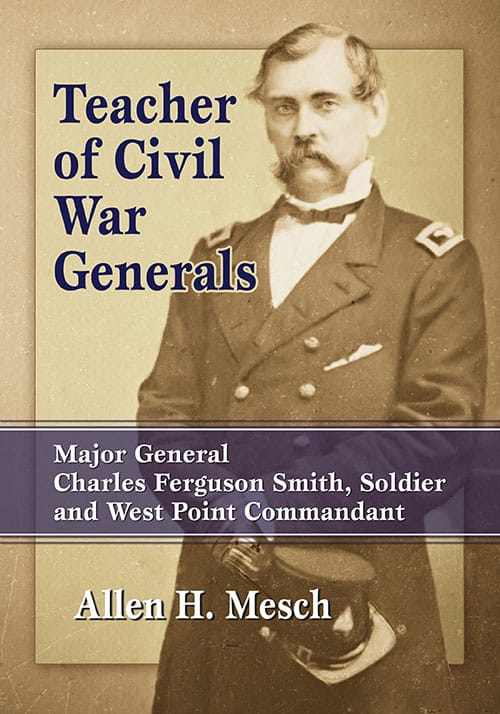
On February 16, 1862, Confederate forces holding Fort Donelson in Tennessee surrendered to Union troops. U. S. Grant’s army captured 12,000 Confederate soldiers. Grant’s terms of surrender were suggested by General Charles F. Smith. Grant agreed with Smith’s recommendation and earned the moniker “Unconditional Surrender.”

You can learn the story in my biography of Major General Charles F. Smith, Teacher of Civil War Generals. The e-book is available on Amazon at https://www.amazon.com/Teacher-Civil-War-Generals-Commandant-ebook/dp/B0134XZD5G.

Posted in Scratch Pad | Tagged , , , , | Leave a comment

Lesons from Aesop, Samuel, and Carter

The Frogs Who Desired a King

According to the story, a group of frogs lived happily and peacefully in a pond. Over time, however, they became discontented with their way of life, and thought they should have a mighty king to rule over them. They called out to the great god Zeus to send them a king.

“The Frogs Who Desired a King,”
illustrated by Milo Winter in a 1919 Aesop anthology

Zeus was amused by the frogs’ request, and cast a large log down into their pond, saying “Behold, your king!” At first, the frogs were terrified of the huge log, but after seeing that it did not move, they began to climb upon it. Once they realized the log would not move, they called out again to Zeus to send them a real king, one that moved.

Annoyed by the frogs, Zeus said, “Very well, here is your new king,” and sent a large stork to the pond. The stork began devouring frogs. In terror, frogs called out to Zeus to save them. Zeus refused, saying the frogs now had what they’d wanted, and had to face the consequences.

To some, the simple lesson of the story is “leave well enough alone,” or “be careful what you wish for.”

More politically minded readers would interpret the story as a warning against giving too much power to a monarch, president, or chief executive of a geographic area. In times of crisis, people may desire a strong ruler to protect them, but a strong ruler can quickly and easily become a tyrant.[1]

Samuel’s Warning Against Kings

Samuel Warns Israelites of the Dangers of Kings
oll.libertyfund.org

So Samuel told all the words of the Lord to the people who were asking for a king from him. He said, “These will be the ways of the king who will reign over you: he will take your sons and appoint them to his chariots and to be his horsemen and to run before his chariots. And he will appoint for himself commanders of thousands and commanders of fifties, and some to plow his ground and to reap his harvest, and to make his implements of war and the equipment of his chariots. He will take your daughters to be perfumers and cooks and bakers. He will take the best of your fields and vineyards and olive orchards and give them to his servants. He will take the tenth of your grain and of your vineyards and give it to his officers and to his servants. He will take your male servants and female servants and the best of your young men and your donkeys, and put them to his work He will take the tenth of your flocks, and you shall be his slaves. And in that day you will cry out because of your king, whom you have chosen for yourselves, but the Lord will not answer you in that day.”[2]

From Judith Evans-Gallagher


[1] “The Frogs Who Desired a King,” Aesop’s Fables,https://aesopsfables.wordpress.com/the-frogs-who-desired-a-king/, retrieved December 24, 2024.

[2] “1 Samuel 8:10-18,”BibleGateway, https://www.biblegateway.com/passage/?search=1%20Samuel%208%3A10-18&version=ESV, retrieved December 24, 2024.

Posted in Scratch Pad | Tagged , , | Leave a comment

Succession? Seriously?

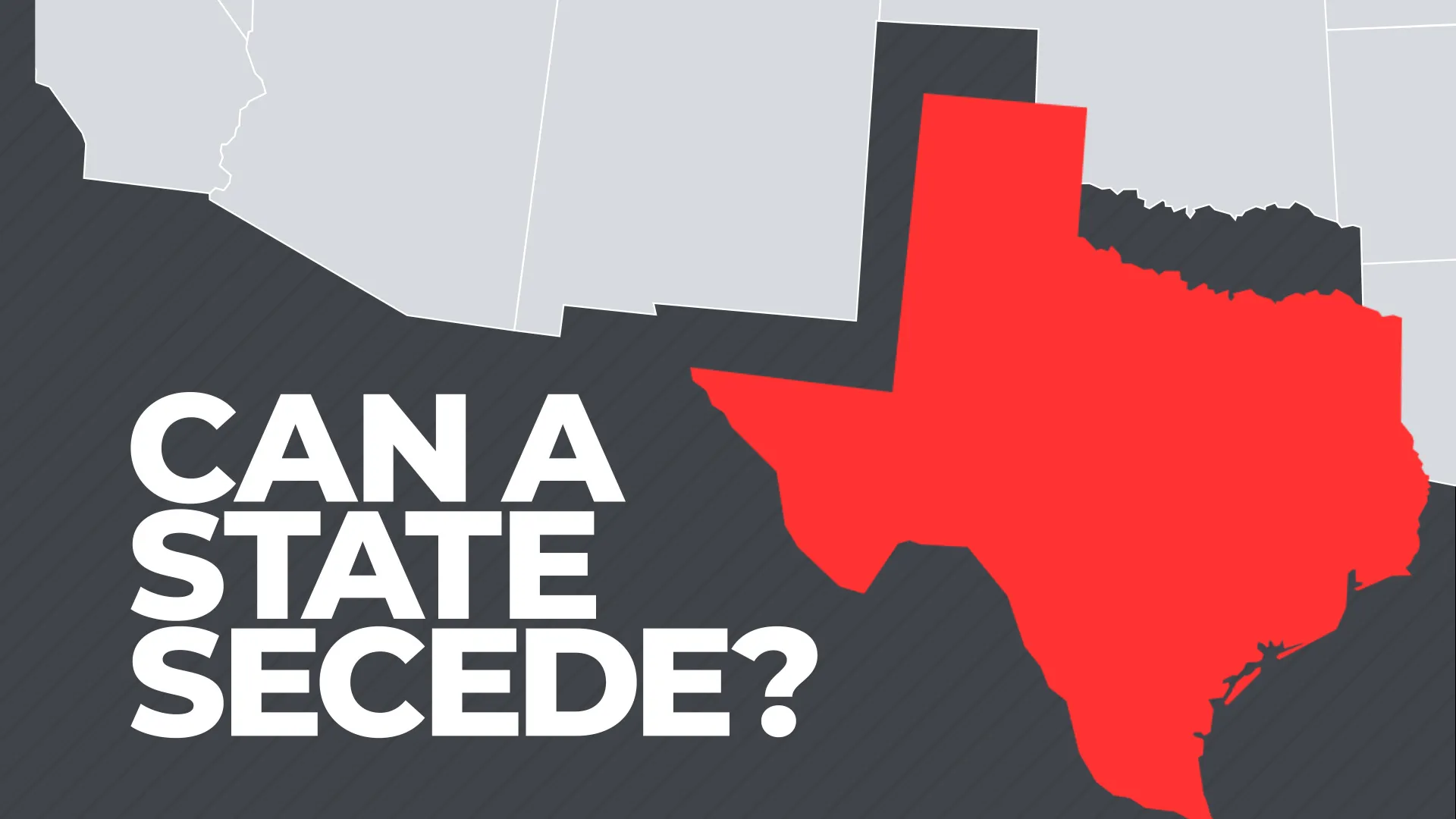
Some Texans are talking about seceding. It is unlikely that the United States government would let Texas steal quietly away. It didn’t happen in 1861, so it’s unlikely that the separation would be viewed cordially. Before considering what Texas would be like after secession, we need to consider the “legality” of Texas leaving the United States.

Can Texas Leave?

An excellent discussion of the subject, Secession on the Ballot This Week … Almost, appeared in a post on the blog Emerging Civil War.

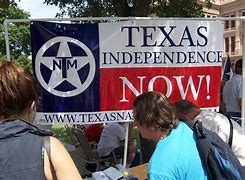
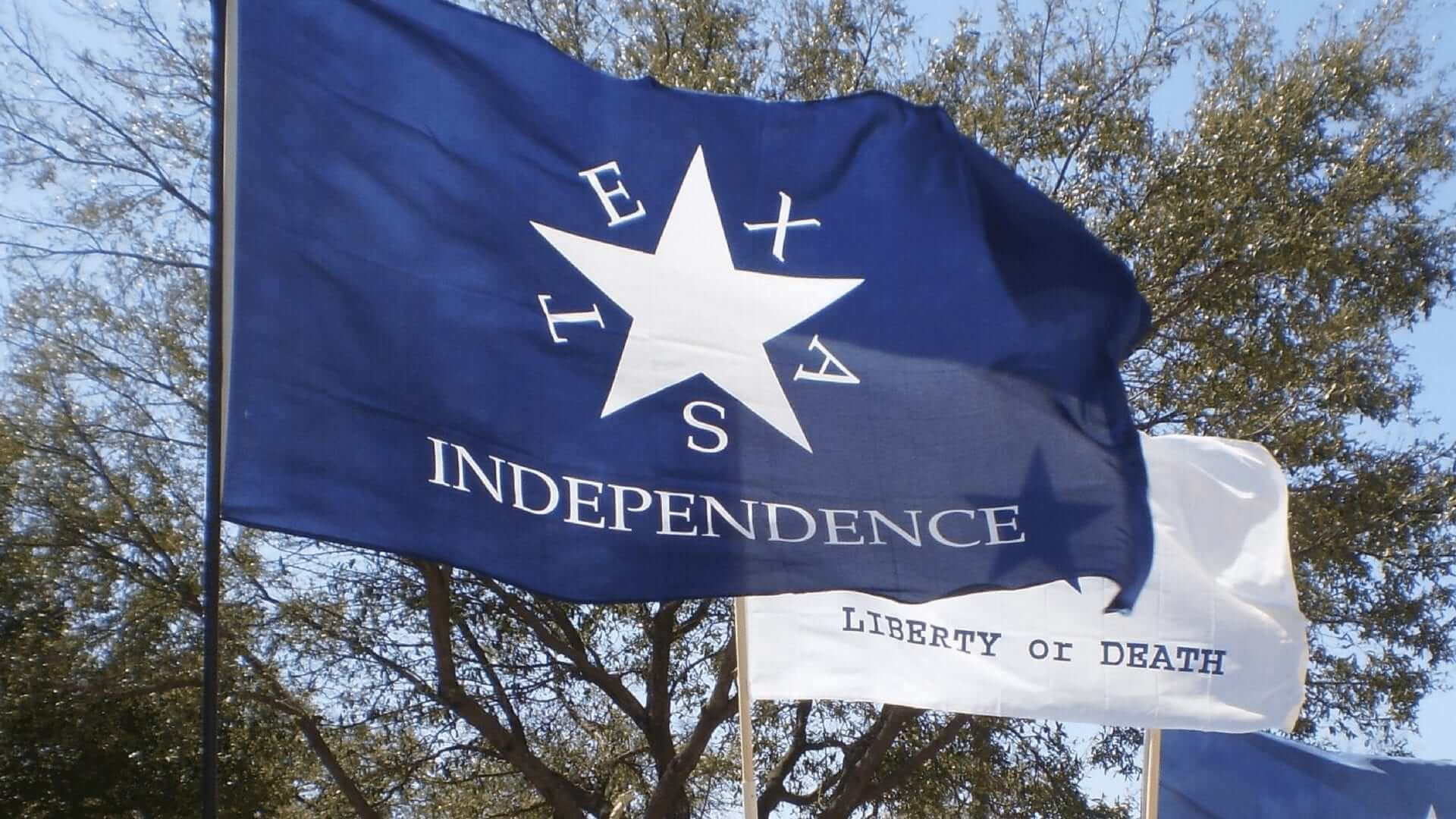
The Texas secession movement is led by the Texas National Movement or TEXIT.

The Texas National Movement’s website says that its mission is to “secure and protect the political, cultural, and economic independence of the nation of Texas and to restore and protect a Constitutional Republic and the inherent rights of the people of Texas.”

The Texas National Movement sought a nonbinding referendum in the Texas Republican primary. TEXIT presented the required number of signatures for the Texas Republican Party to consider the proposal, but the Lone Star Republican Party chose not to add it to the ballot.

According to the post, the Civil War and postbellum actions appear to have settled the issue:

  • The United States won the War of Rebellion to return the Confederate states to the Union.
  • The Supreme Court declared Texas secession illegal in Texas vs. White.
  • In the post-war State of Texas constitution “declared null and void; and the right heretofore claimed by the State of Texas to secede from the Union, is hereby distinctly renounced.”

Please read this excellent post by Neil P. Chatelain and review my class “Rewriting History Revision vs. Negativism.”

Should Texas Leave?

There are widespread implications from creating a new Republic of Texas. Here are a few of the possibilities:

Federal Impact

  • No more federal funds going to Texas. These dollars account for about 30% of the state’s budget.
  • Removal of United States military installations in Texas.

> Kelly Field/Joint Base San Antonio – San Antonio formerly Kelly Air Force Base
> Ellington Field Joint Reserve Base – Houston
> Lackland Air Force Base – San Antonio
> Randolph Air Force Base – San Antonio
> Fort Sam Houston – San Antonio
> Camp Bullis – San Antonio
> Martindale Army Air Field – San Antonio
> Dyess Air Force Base – Abilene
> Goodfellow Air Force Base – San Angelo
> Laughlin Air Force Base – Del Rio
> Sheppard Air Force Base – Wichita Falls
> Fort Cavazos – Killeen
> Fort Bliss – El Paso
> Fort Wolters – Mineral Wells
> Corpus Christi Naval Air Station – Corpus Christi
> Naval Air Station Kingsville – Kingsville
> Naval Air Station Joint Reserve Base Fort Worth – Fort Worth Carswell AFB
> Grand Prairie Armed Forces Reserve Complex – Grand Prairie
> Hensley Field – Grand Prairie
> Camp Mabry – Austin
> Camp Swift – Bastrop
> Camp Bowie – Brownwood
> Coast Guard Air Station Houston – Houston
> Coast Guard Sector Field Office Galveston – Galveston
> Coast Guard Station Aransas Port Aransas
> Coast Guard Station Freeport – Surfside Beach
> Coast Guard Station Port O’Connor – Port O’Connor
> Coast Guard Station Sabine Pass – Port Arthur
> Coast Guard Station Saluria – Matagorda Island
> Coast Guard Station San Luis Pass – Galveston
> Coast Guard Station South Padre Island – South Padre Island
> Coast Guard Station Velasco – Velasco

State military bases support about 235,000 direct jobs and contribute more than $67.6 billion to Texas’ gross domestic product annually. They support an estimated 622,000 Texas workers in some capacity, contributing about $42.3 billion in disposable personal income. <1>

  • No more federal courts or justices.
  • FBI closes Texas offices,
  • No U. S. post offices. Texas would need to develop its own postage and currency systems.
  • No more federal oversight agencies like EOC, OSHA, EPA, and CDC.

> Department of Education
> Department of Energy
> Department of Health and Human Services
> Department of Homeland Security
> Department of Housing and Urban Development
> Department of the Interior
> Department of Justice
> Department of Labor
> Department of State
> United States Department of Transportation
> Department of the Treasury
> Department of Veterans Affairs
> Federal Trade Commission (FTC)
> Consumer Product Safety Commission (CPSC)
> Federal Communications Commission (FCC)
> Federal Housing Finance Agency
> United States International Trade Commission
> Corporation for Public Broadcasting (CPB)
> Public Broadcasting Service (PBS)
> National Public Radio (NPR)
> Voice of America (VOA)
> National Constitution Center
> National Endowment for the Arts (NEA)
> National Endowment for the Humanities (NEH)
> National Aeronautics and Space Administration (NASA)
> National Science Board
> National Science Foundation (NSF)
> National Center for Science and Engineering Statistics
> Nuclear Regulatory Commission (NRC)
> Federal Labor Relations Authority
> Federal Mine Safety and Health Review Commission
> National Labor Relations Board (NLRB)
> Occupational Safety and Health Review Commission
> Federal Reserve System
> Federal Retirement Thrift Investment Board
> Railroad Retirement Board
> Social Security Administration (SSA)

  • No USA passports, but you can be citizens of the United States and the Republic of Texas.
  • No government contracts for Texas companies.
  • No federal funds for interstate road maintenance and expansion.
  • No Pell Grants for medical research.

Colleges and Universities

  • No more federal grants for research
  • No more nationally awarded scholarships
  • Forget about any national college championships. It is the National Collegiate Athletic Association. We don’t allow hockey teams from Canada to compete in tournaments.
  • No more University of Texas or Texas A&M University in the NCAA or SEC.
  • New Republic of Texas collegiate league composed of Texas, Texas A&M, Baylor, Texas Tech, Rice, and Houston. Think of Big or Little Six. Texas teams would probably still be allowed to compete with U. S. universities.
  • Unable to attract top academics, especially those with liberal perspectives. Lack of grant money and republic-imposed restrictions will also affect hiring.
  • Problems with recruiting out-of-state students, especially those in the LGBT community.

Businesses

  • National businesses may leave Texas.
  • Problems in attracting the best talent to the state because of restrictions on personal freedom.
  • Trade tariffs.

Would You Want to Live in the Republic of Texas

  • Where is the money going to come from? From the new Republic of Texas Income Tax of course.
  • Where is the money going to come from to create a national currency, postal system, army, navy, and air force? See the above answer.
  • Texas Rankings

> 37th in health care
> 34th in education
> 15th in the economy category,
> 33rd  in the infrastructure category
> 39th  in the opportunity category
> 12th  in the fiscal stability category
> 33rd in the crime and corrections category
> 40th in the natural environment category.<3>[3]
> 50th in baby wellness checks
> 50th in clinical care for infants
> 50th in uninsured women,
> 43rd in maternal mortality
> 44th in school funding per child,
> 46th in child hunger <4>.[4]
> 1st in personal income tax rate
> 43rd in property tax burden
> 36th in sales tax burden

  • Texas is the World’s 9th Largest Economy<5>[5]
  • If the trends continue, the Republic of Texas could (will) experience

> Increased poverty

> More attacks on minorities

> More constraints on women’s personal freedom.

> Decrease in public school funding which will widen the educational gap between the rich and poor. Texas ranks 42nd in educational funding.<6>[1] According to the Texas Monitor, “Texas consistently ranks in the middle to lower range in terms of overall educational performance.”<7>[2]

  • Right-to-work State – option to join or support a union.
  • Texas is last in personal freedom according to a study done by Cato Institute.<8>[6]

So, would you want to live in the new Republic of Texas?


<1> Comptroller of Texas, https://comptroller.texas.gov/economy/economic-data/military/2021/snap-statewide.php

[1] https://www.raiseyourhandtexas.org/policy/where-we-stand-on-school-funding/#:~:text=When%20it%20comes%20to%20state%20spending%20on%20education%2C,ranking%2042nd%20in%20the%20nation%20in%20per-student%20spending.

[2] https://texasmentor.org/where-does-texas-rank-in-education-compared-to-other-states/

[3] https://www.click2houston.com/news/local/2019/12/09/see-where-texas-ranks-in-best-states-list/

<4>[4] https://www.statesman.com/story/news/politics/2021/09/19/texas-ranks-last-near-last-some-childrens-health-metrics/8378932002/

<5>[5] https://www.prnewswire.com/news-releases/texas-enters-2021-as-worlds-9th-largest-economy-by-gdp-301216400.html

<8>[6] https://www.freedominthe50states.org/personal
Posted in Scratch Pad | Tagged , , , , , | Leave a comment

New Year and the Normal Curve

This is a strange title for my first post of 2025.

Normal Distribution is the most common or normal form of a distribution of random variables. We use this distribution to represent a large number of random variables. It serves as a foundation for statistics and probability theory. It also describes many natural phenomena, forms the basis of the Central Limit Theorem, and supports numerous statistical methods.[1]

Let me explain why this is important as we enter the new year.

The normal distribution is used to describe a variety of conditions. Don’t get hung up on the 1SD, 2SD, and 3SD labels on the axis. They represent the distance away from the mean or average value. For example, if a teacher wants to “curve” test results, she might use this curve. Perhaps the class average on a test is 50 out of 100 percent. She doesn’t want to fail half of the class, so she adjusts or “curve” the results. She selects 75% as the equivalent of 50%. A grade of “C” will be those students who receive a grade between -1SD and + 1SD. A “B” would be awarded to students whose grades are between +1SD and +2SD, and an “A” to those whose grades are equal to or greater than +3SD. On the other end of the curve, a grade between -1SD and -2SD is a “D,” and a grade less than or equal to -3SD is an “F.”

Suppose we want to chart “goodness. We might define a range between earthly angels or saints and earthly monsters or devils. Under the normal curve, we should have an equal number of saints as devils. We could also chart honesty with a range between liars and truthtellers.

This means that we know we have honest and good people in a world where dishonesty and evil prevail. This also means you can choose who you want to be and the people you want to associate with.


[1] “Normal Distribution,”https://www.geeksforgeeks.org/normal-distribution/, retrieved December 22, 2024.

Posted in Scratch Pad | Leave a comment

Happy Holidays

I want to wish you a very happy holiday season. Regardless of your faith or creed, I hope that you will give love and be loved. Let us pray for peace and discussion. We should all try our best to be good and to see good in others. Please remember to call distant friends and relatives. Let us be a beacon of love and understanding, not spread anger and hate.

Have Yourself a Merry Little Christmas

Have yourself a merry little Christmas,
let your heart be light.
From now on,
our troubles will be out of sight

Have yourself a merry little Christmas,
make the Yule-tide gay.
From now on,
our troubles will be miles away.

Here we are as in olden days,
happy golden days of yore.
Faithful friends who are dear to us
gather near to us once more.

Through the years, we all will be together,
if the Fates allow.
Hang a shining star upon the highest bough.
And have yourself A merry little Christmas now.

Allen

Posted in Scratch Pad | Tagged | Leave a comment

Death of Sitting Bull

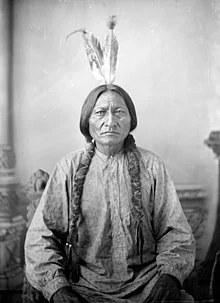
Sitting Bull

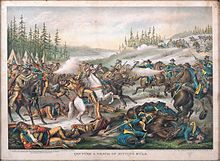
On December 15, 1890, Hunkpapa Lakota Chief Sitting Bull and eleven other tribe members were killed in Grand River, South Dakota, during a confrontation with Indian agency police.

Sitting Bull (1831–1837) was a Hunkpapa Lakota leader who led his people during years of resistance against United States government policies. Sitting Bull was killed by Indian agency police accompanied by U.S. officers and supported by U.S. troops on the Standing Rock Indian Reservation during an attempt to arrest him at a time when authorities feared that he would join the Ghost Dance movement.

Before the Battle of the Little Bighorn, Sitting Bull had a vision in which he saw many soldiers, “as thick as grasshoppers,” falling upside down into the Lakota camp, which his people took as a foreshadowing of a major victory in which many soldiers would be killed. About three weeks later, the confederated Lakota tribes with the Northern Cheyenne defeated the Seventh Cavalry under Lieutenant Colonel George Armstrong Custer on June 25, 1876, annihilating Custer’s battalion and seeming to fulfill Sitting Bull’s prophetic vision. Sitting Bull’s leadership inspired his people to a major victory. In response, the U.S. government sent thousands more soldiers to the area, forcing many of the Lakota to surrender over the next year. Sitting Bull refused to surrender, and in May 1877, he led his band north to Wood Mountain, North-West Territories. He remained there until 1881, when he and most of his tribe returned to U.S. territory and surrendered to U.S. forces.

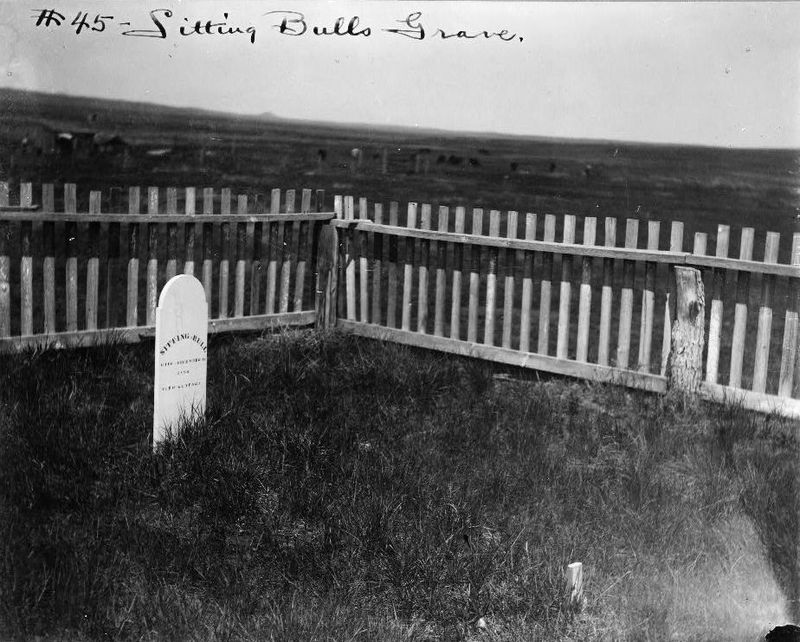
After working as a performer with Buffalo Bill’s Wild West show, Sitting Bull returned to the Standing Rock Agency in South Dakota. Because of fears that Sitting Bull would use his influence to support the Ghost Dance movement, Indian Service agent James McLaughlin at Fort Yates ordered his arrest. During an ensuing struggle between Sitting Bull’s followers and the agency police, Sitting Bull was shot in the chest and head by Standing Rock policemen Lieutenant Bull Head (Tatankapah, Lakota) and Red Tomahawk (Marcelus Chankpidutah, Lakota), after the police were fired upon by Sitting Bull’s supporters. His body was taken to nearby Fort Yates for burial. In 1953, his Lakota family exhumed what were believed to be his remains, reburying them near Mobridge, South Dakota, near his birthplace.

Capture and Death of Sitting Bull, an 1890 lithograph

Sitting Bull’s grave at Fort Yates, c. 1906
Frank Bennett Fiske, 1883-1952, photographer. –
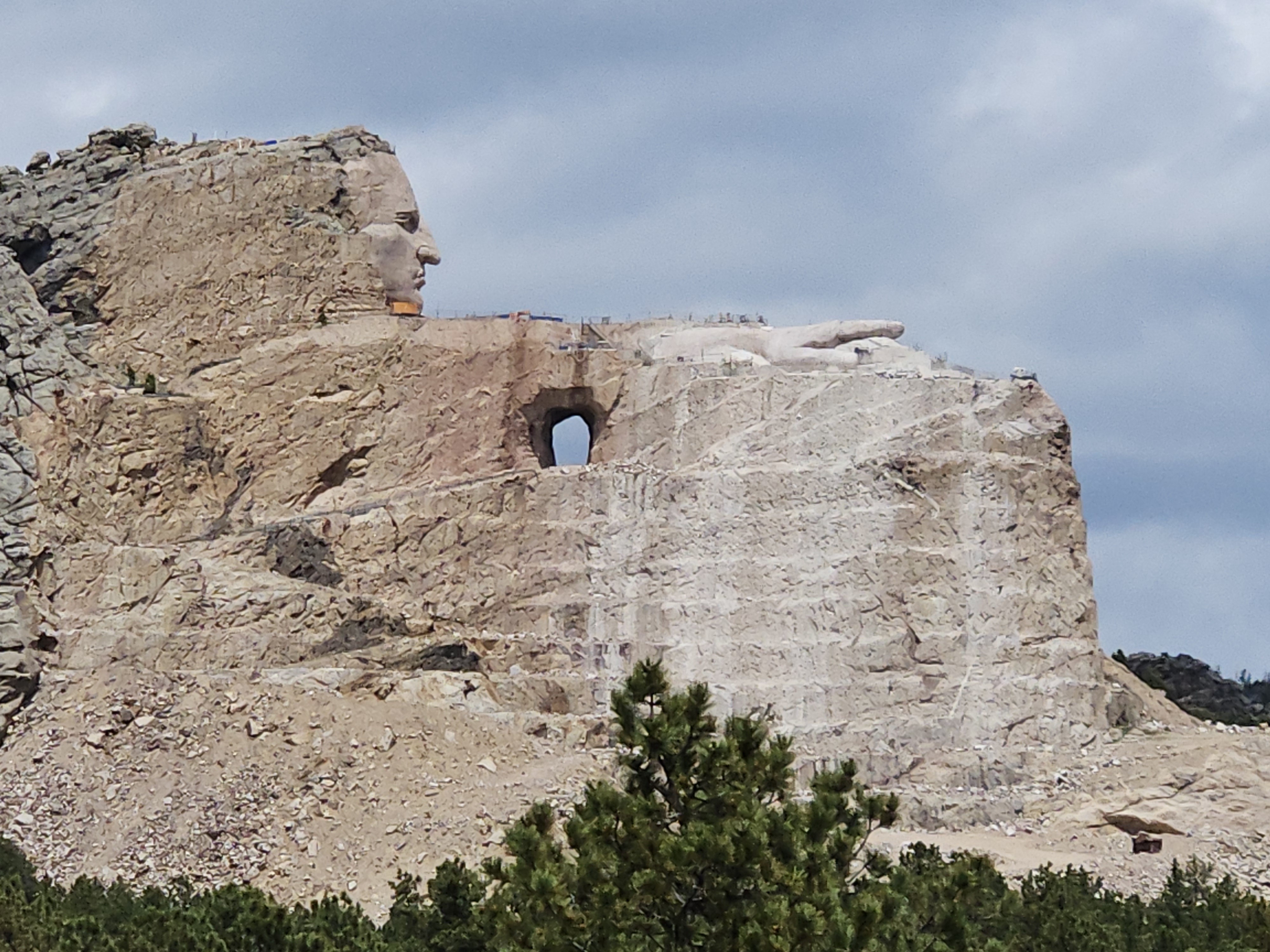
Sitting Bull Monument
(Author’s Photo)

Posted in Scratch Pad | Tagged , , , , , , | Leave a comment

Casa de Albergue de Martina

I had the privilege of touring the Casa de Alberque de Martina, a home for girls in Puerto Plata, the Dominican Republic. The home is a special place for girls who were removed from unsafe conditions and sent to the care and love of the Casa’s staff.

The Casa is supported by The Friends of the Casa de Alberque de Martina, which can be contacted via its Facebook page: https://www.facebook.com/FriendsoftheCasaAlberguedeMartina/. Please check out this group. At this point, I do not know enough about the Facebook group to give my endorsement; however, I hope you learn more about them.

The graduates of this program have obtained professional degrees as nurses and other caregivers.

You only have to look at these beautiful faces to understand how much love they give and need. It’s easy to see how they melted my heart. The girls took my hand, and I missed them already.

Thank you, Moma Maria, for bringing us here and allowing us to meet these gifts from God.

Posted in Scratch Pad | Leave a comment

Democracy

What is Democracy?

The word democracy means “rule by the people,” and empowers individuals to exercise political control over the form and functions of their government.

In a democracy, the people elect representatives to make decisions, policies, laws, etc. according to the law. Therefore, free and fair elections are a hallmark of democracy.

Democracy is a form of government in which the people vote directly against or in favor of decisions, policies, laws, etc.

In a democracy, the people meet and exercise the government in person; in a republic, they assemble and administer it by their representatives and agents.

A democracy is a form of government that empowers the people to exercise political control, limits the power of the head of state, provides for the separation of powers between governmental entities, and ensures the protection of natural rights and civil liberties.

Military Casualties

Americans have fought and died in wars to maintain our democracy. This began with the Revolutionary War and continues today with the conflict in the Middle East.

  • American Revolutionary War – 70,000
  • War of 1812 – 15,000
  • American Civil War – 650,000
  • Spanish-American War – 2,061
  • World War I – 116,516
  • World War II – 405,399
  • Korean War – 36,574
  • Vietnam War – 58,220
  • War in Afghanistan – 2,235
  • Iraq War – 4.492
  • Total Killed in Defense of Democracy – 1,360,497

Sacrifice and Voting

Over 1.360 million men and women died to protect our freedom. However, according to the Pew Research Center, only 37% of eligible citizens voted in all three elections (2018, 2020, and 2022). Thirty percent did not vote in any of the three elections. White adults without a college degree strongly prefer Republican candidates and vote at lower rates than those with degrees. Although 63% of eligible citizens voted in all three elections, only about half of Democrats and Republicans voted in all three elections. Assuming a winning percentage of 51%, a president could be elected with only 32% of the eligible citizens. This is hardly a strong endorsement for either candidate.

The Bottom Line

So, fellow citizens, if you value your freedoms (speech, religion, gun ownership, health care, etc.) and you want to honor those who died defending these freedoms, please VOTE!

Posted in Scratch Pad | Tagged , , , , , | Leave a comment

Boo!

Just for fun, and do we ever need it, please enjoy this collection of Halloween images collected from near and far.*

  • No history lessons, travel pictures, political commentaries, or book promotions.
Posted in Scratch Pad | Leave a comment