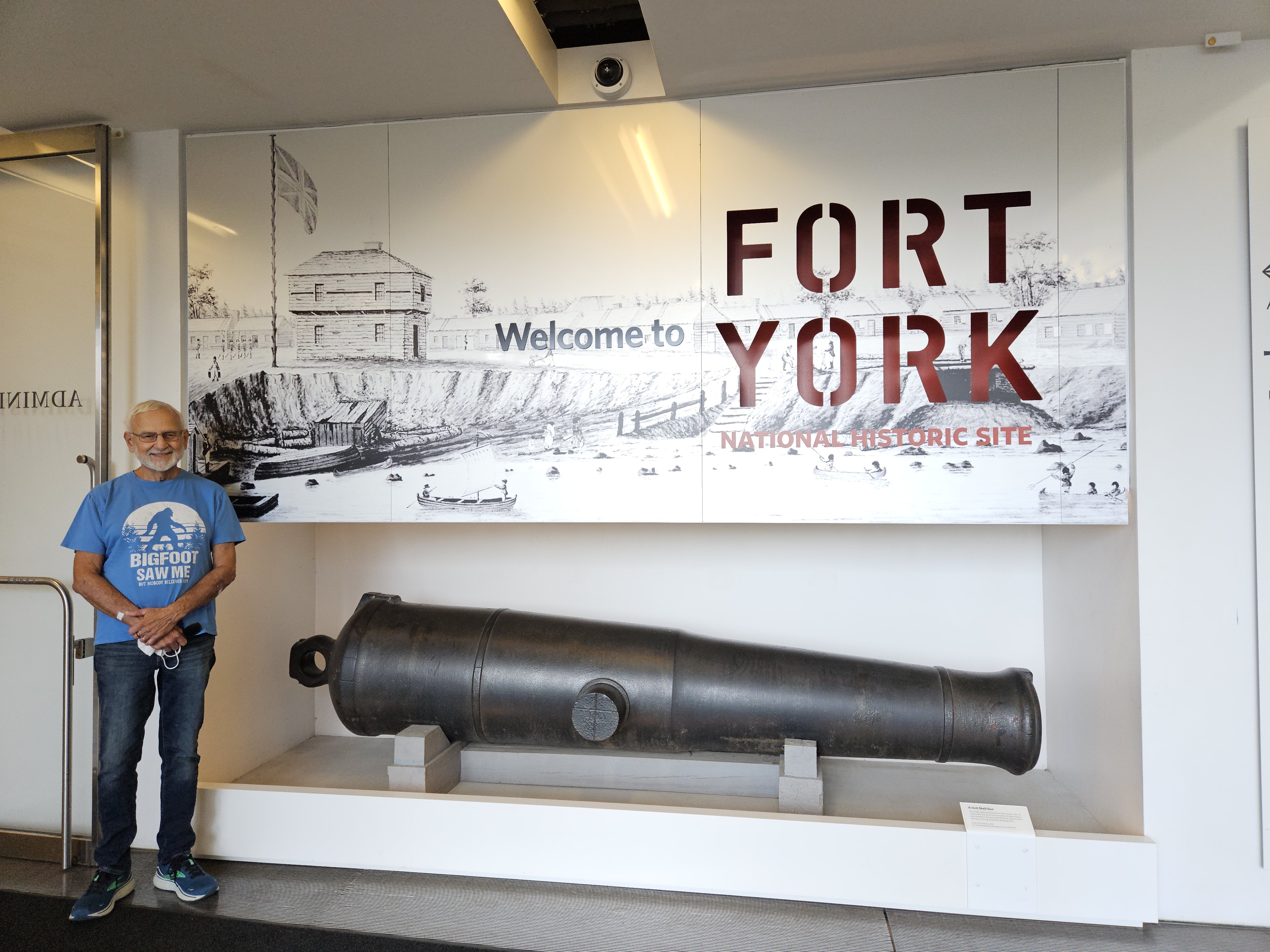
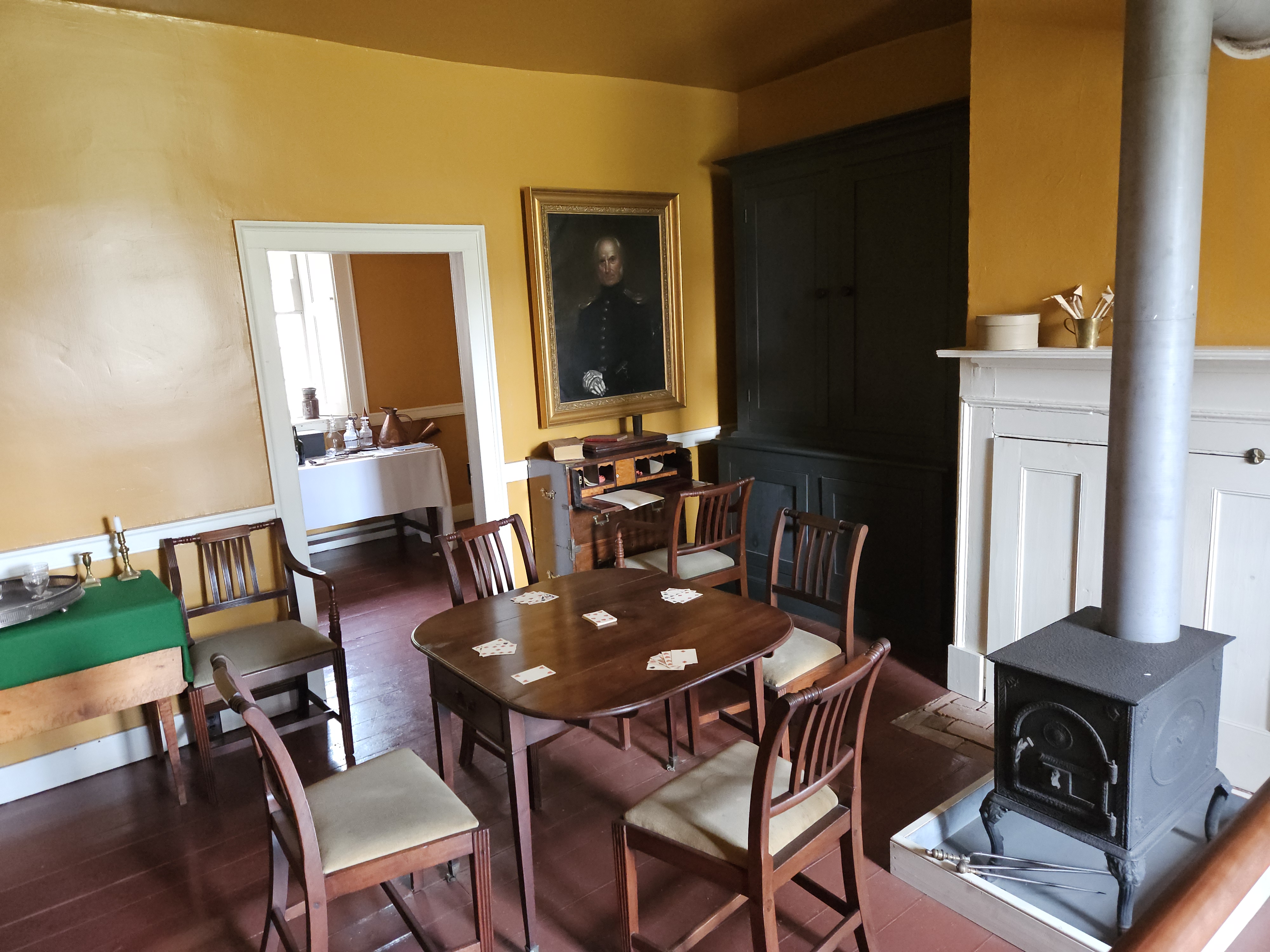
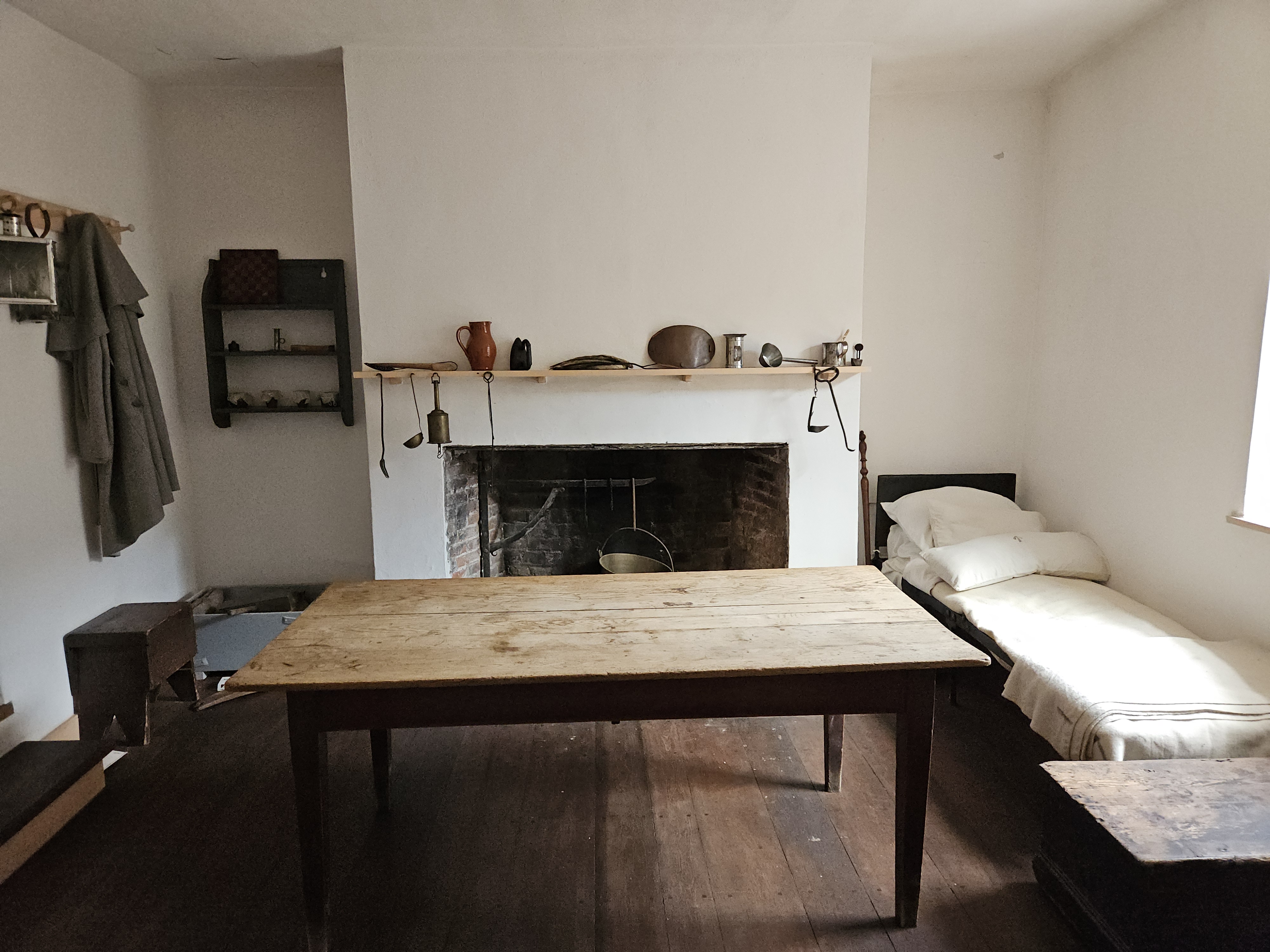
Fort York, Toronto, Ontario, Canada

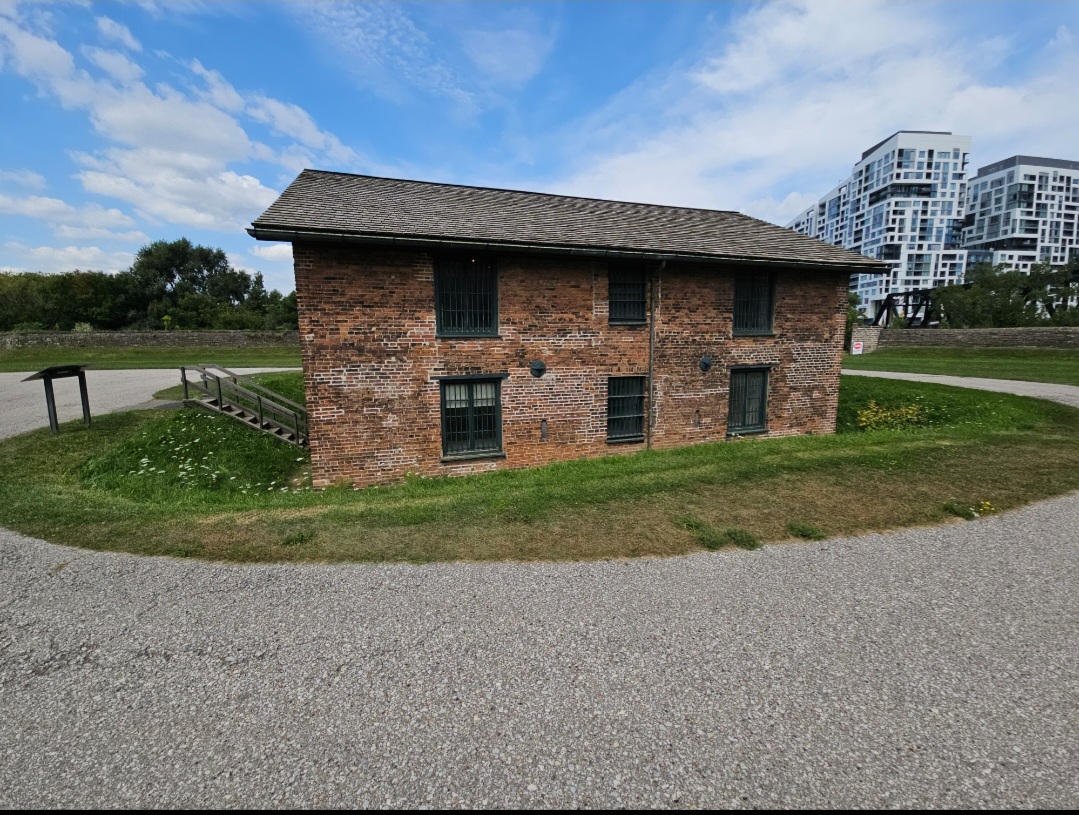
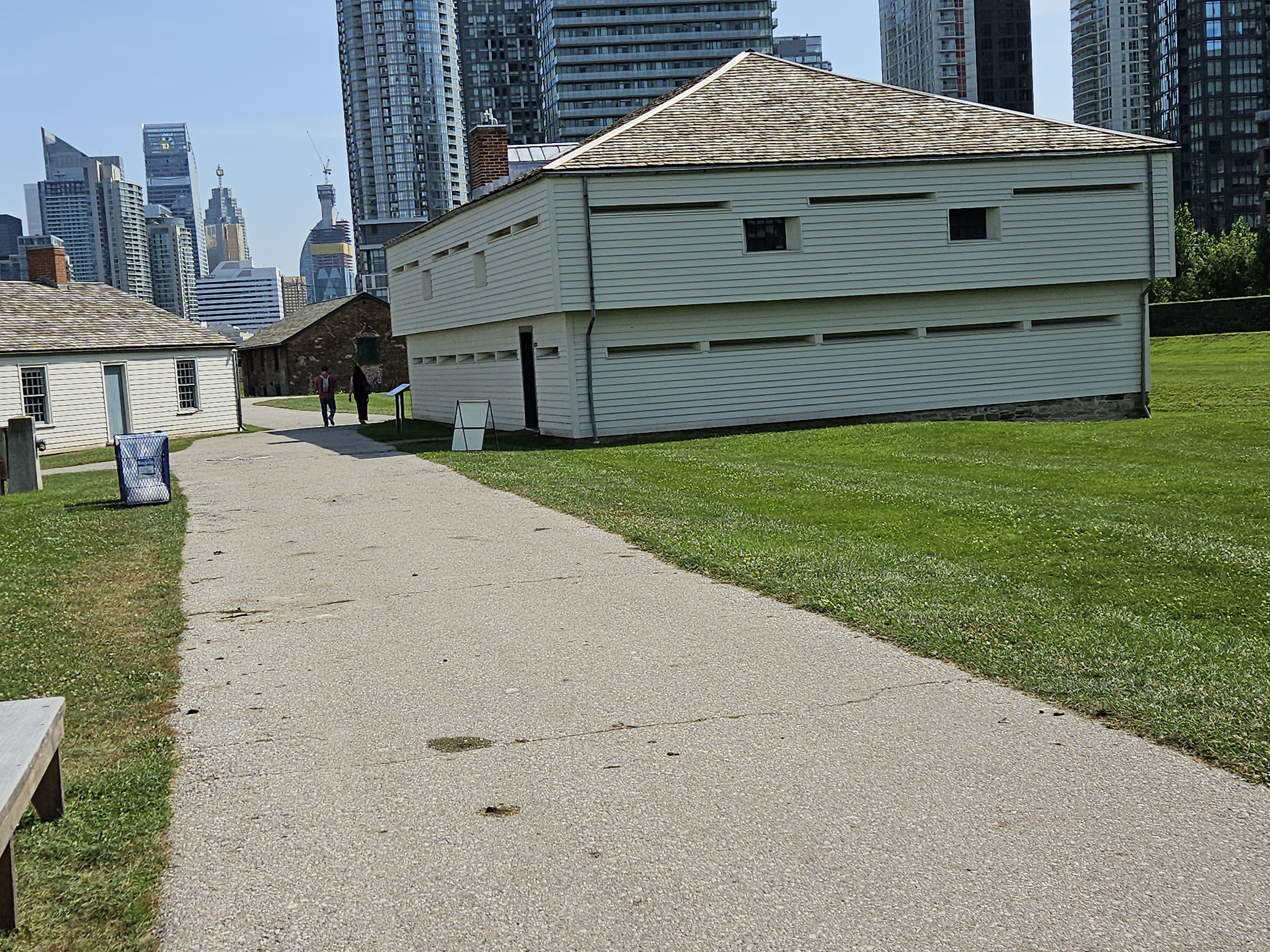
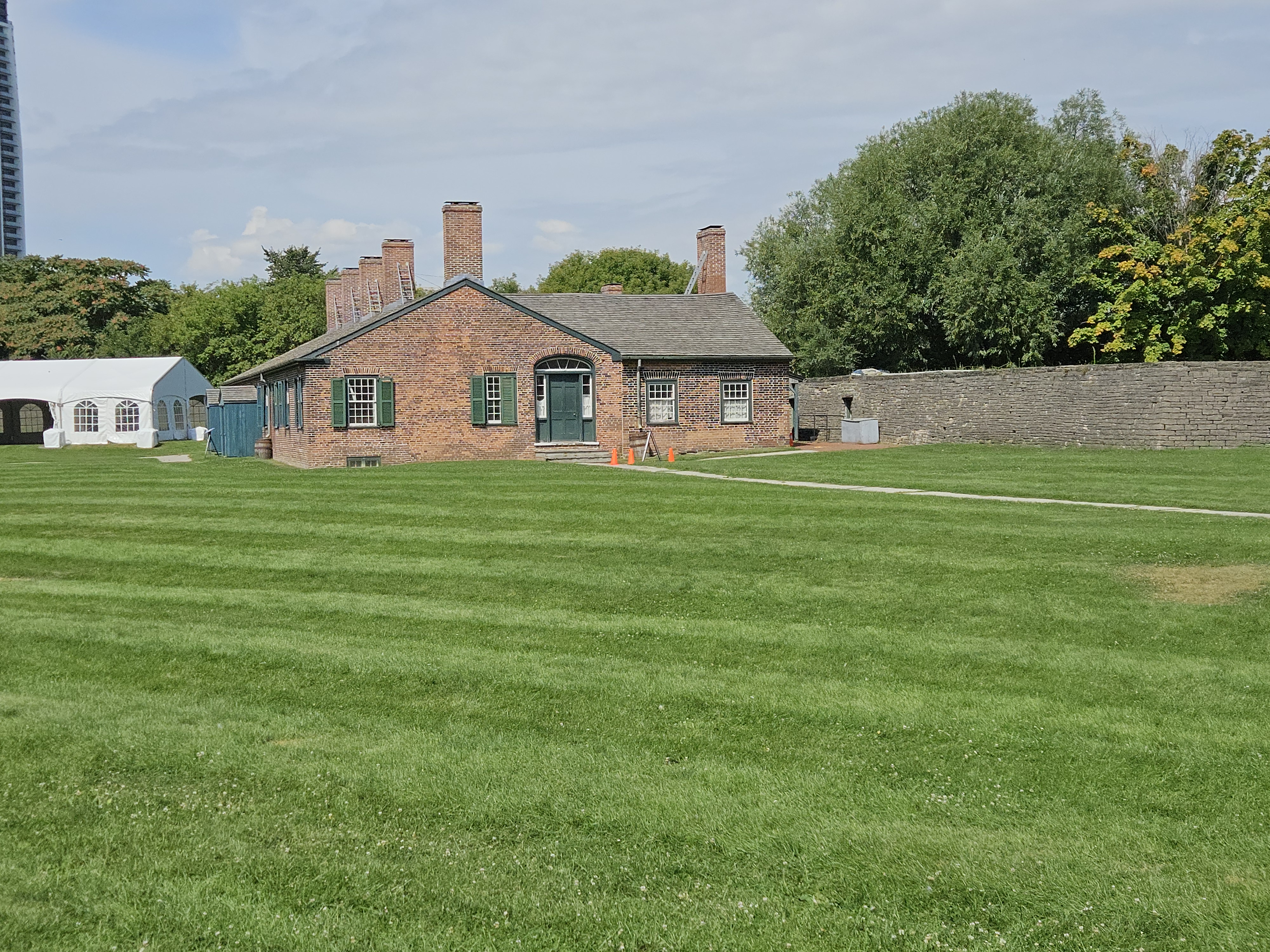
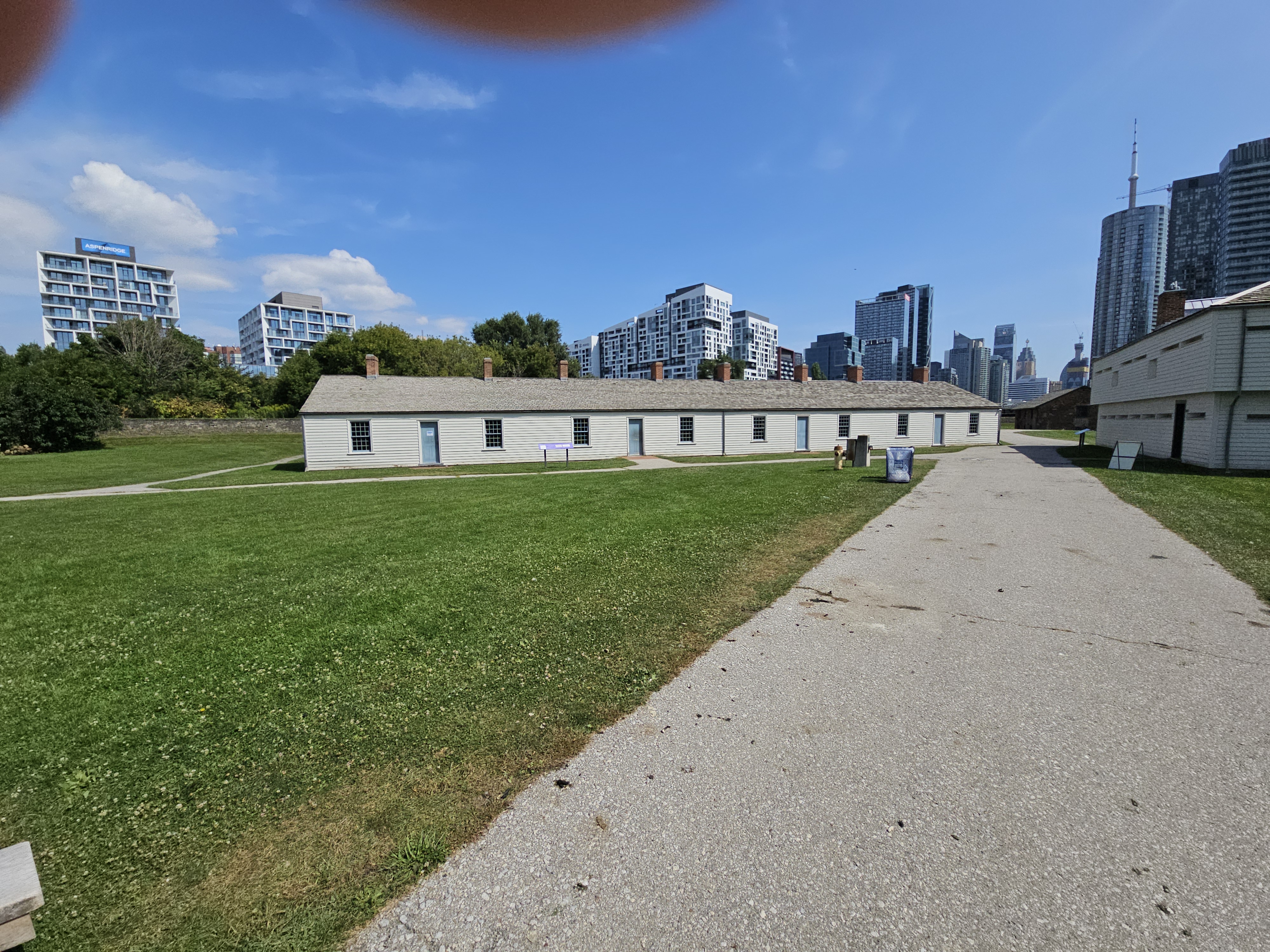
Fort York is an early 19th-century military fortification in Toronto, Ontario, Canada. It was used to garrison British and Canadian soldiers and defend the Toronto Harbor entrance. The fort contains stone-lined earthwork walls and eight historical buildings, including two blockhouses. It is part of Fort York National Historic Site, a 41-acre site that includes the fort, Garrison Common, military cemeteries, and a visitor center.

The fort was developed from a garrison established by John Graves Simcoe in 1793. British-American tensions resulted in additional enhancements to the fort, and it was designated as an official British Army post in 1798. The original fort was destroyed by American forces following the Battle of York in April 1813. Work to rebuild the fort began later in 1813 over the remains of the old fort and was completed in 1815. The rebuilt fort served as a military hospital for the remainder of the War of 1812, It also defended against an American naval vessel in August 1814.

Fort York remained in use with the British Army and the Canadian militia despite the opening of New Fort York to the west in the 1840s. In 1870, the property was formally transferred to the Canadian militia. The municipal government assumed ownership of the fort in 1909, although the Canadian military continued to make sporadic use of it until the end of the Second World War.

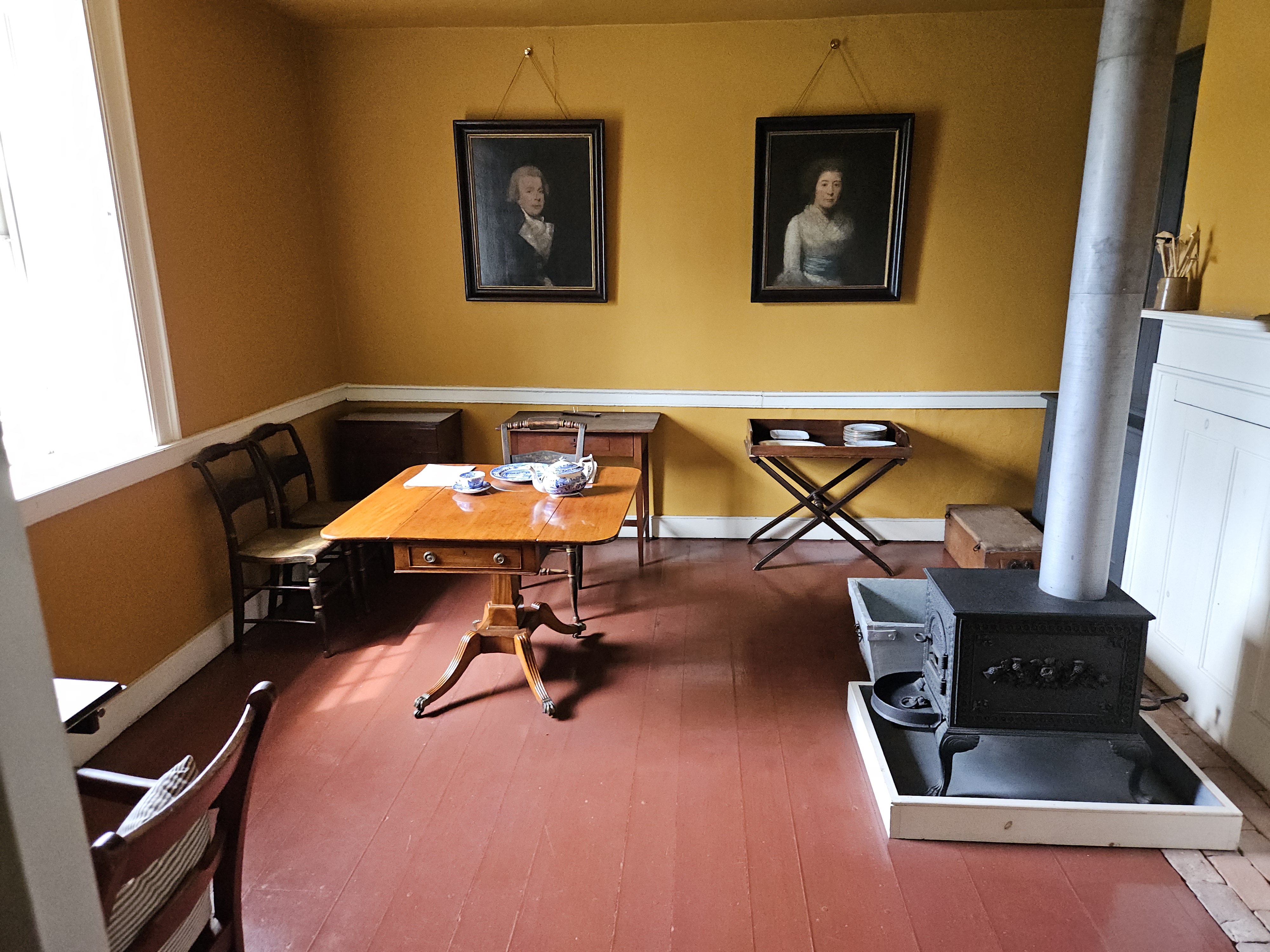
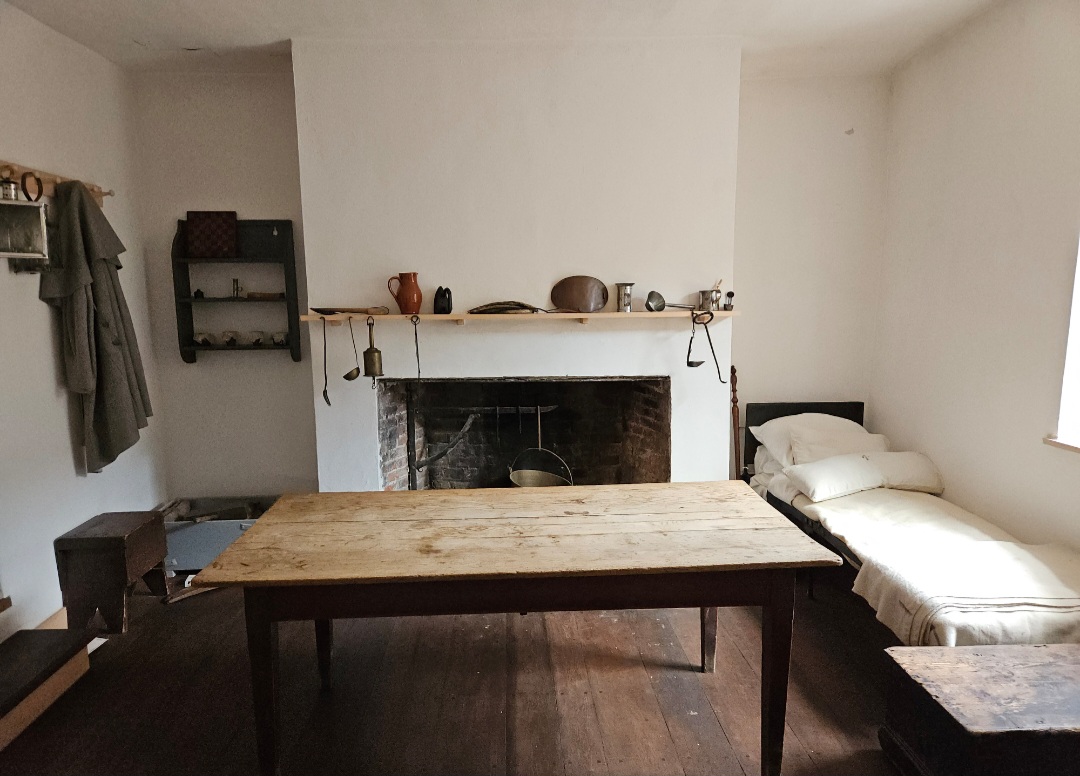
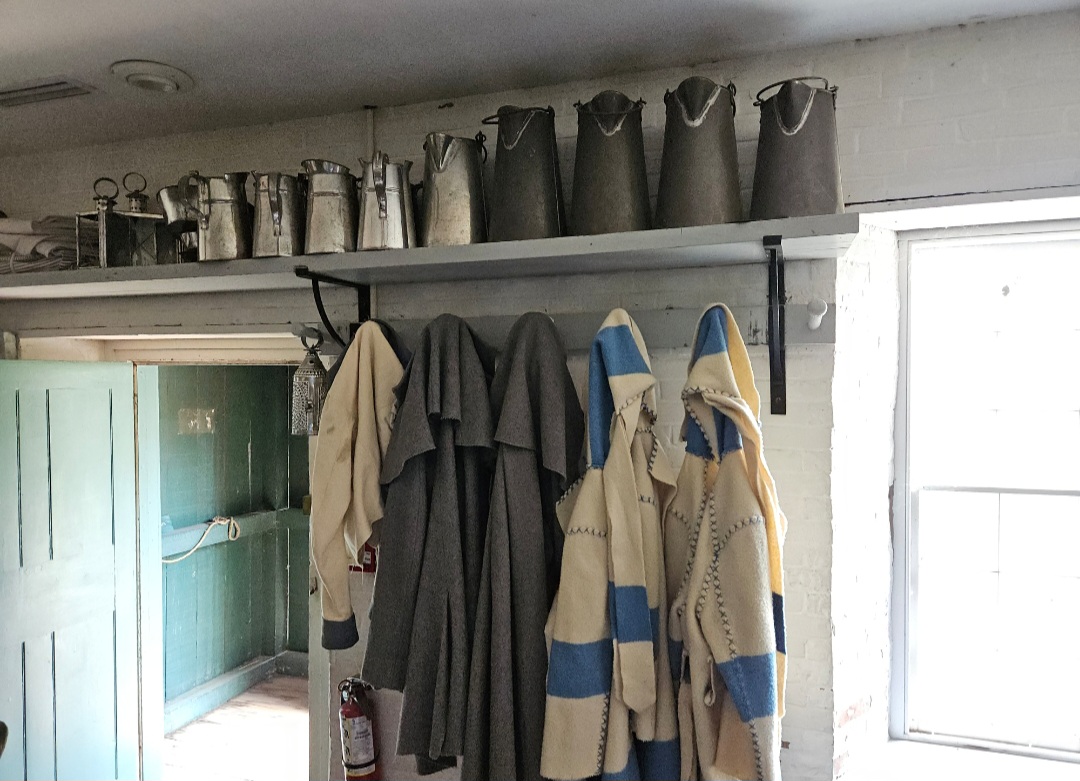
The fort and the surrounding area were designated as a National Historic Site of Canada in 1923. The fort was restored to its early-19th-century configuration in 1934 and reopened as a museum on the War of 1812 and military life in 19th-century Canada.

History

The British first examined Toronto as a potential settlement and military site during the 1780s. However, a permanent military presence was not established in Toronto until 1793, when Anglo-American relations had deteriorated. In the early 1790s, John Graves Simcoe, the lieutenant governor of Upper Canada, began to consider building a fort in Toronto as a part of a larger effort to reposition isolated British garrisons in the U.S. Northwest Territory and near the Canada–United States border to more centralized positions, and to vacate British forces from U.S. territory in an attempt to reduce tensions with the Americans. Simcoe’s decision to base a fort in Toronto was also influenced by his assessment that American forces could overrun its positions in the frontier, including its naval base in Kingston.

Simcoe selected Toronto (renamed York from 1793 to 1834) as the location of a new military garrison due to its proximity to the border and because its natural harbor only had one access point from water, making it easy to defend. Once established, Simcoe envisioned the harbor as a base where British control over Lake Ontario could be exerted and where they could repel a potential American attack from the west into eastern Upper Canada.

He also envisioned the fort serving as the center of a transportation network where British forces could be dispatched throughout the colony. Simcoe planned for the fort to be connected to a network of subsidiary fortifications along a series of east-west roads acting as an alternate transportation route to the Great Lakes, and the north-south portage route that leads to the Georgian Bay. The latter route was vital for maintaining communication with British outposts in lakes Huron, Michigan, and Superior, in the event the routes through Lake Erie and the Detroit River become cut off by the American forces however, many of the planned subsidiary forts were never built, with Simcoe unable to procure the funds needed to build them.

Original fort (1793–1813)

The first permanent British garrison was established in Toronto on 20 July 1793, when 100 soldiers from the Queen’s Rangers landed around Garrison Creek; and erected 30 cabins built from green wood on the site of the fort for wintering quarters; configured in a triangular shape similar to the present fort’s shape. Simcoe planned for Fort York to be a part of a defence complex built around the settlement’s harbour, with the fort situated north of another fortification planned at Gibraltar Point. However, his proposal to further fortify the settlement was rejected by the governor general of the Canadas, Lord Dorchester, who took the position that the money should instead be spent on improving the defences at the naval base in Kingston.

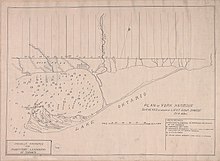
Plan for York, Upper Canada, in 1793, with Fort York, labeled along the northwest shoreline as C., guarding the entrance to York Harbour.

Simcoe continued the construction of Fort York despite the governor general’s objections. He relied on funds from the provincial treasury instead of military funds because the fort was not an official army post. By November 1793, Fort York consisted of two log barracks, a stockade, and a sawmill. Over the next year, the Queen’s Rangers built a guard house and two blockhouses near Gibraltar Point.  The fort defended the harbor’s entrance, the most likely landward approach the Americans would take toward the settlement. British planners believed American forces would land west of the harbor and advance towards the settlement with the support of its naval vessels. Simcoe continued to develop York’s fortifications until the end of 1794, when he realized that York needed more armaments. 

When most of the colony’s administration was relocated to York in 1796, the fort was manned by a 147-man garrison. However, Fort York’s defensive capabilities remained limited. Two other blockhouses were erected around the settlement, including one at Fort York. The blockhouse at Fort York also featured a cupola used to guide ships into the harbor.

Fort York in 1804. Most of the fort’s original structures were renovated or rebuilt at the end of the 18th century.

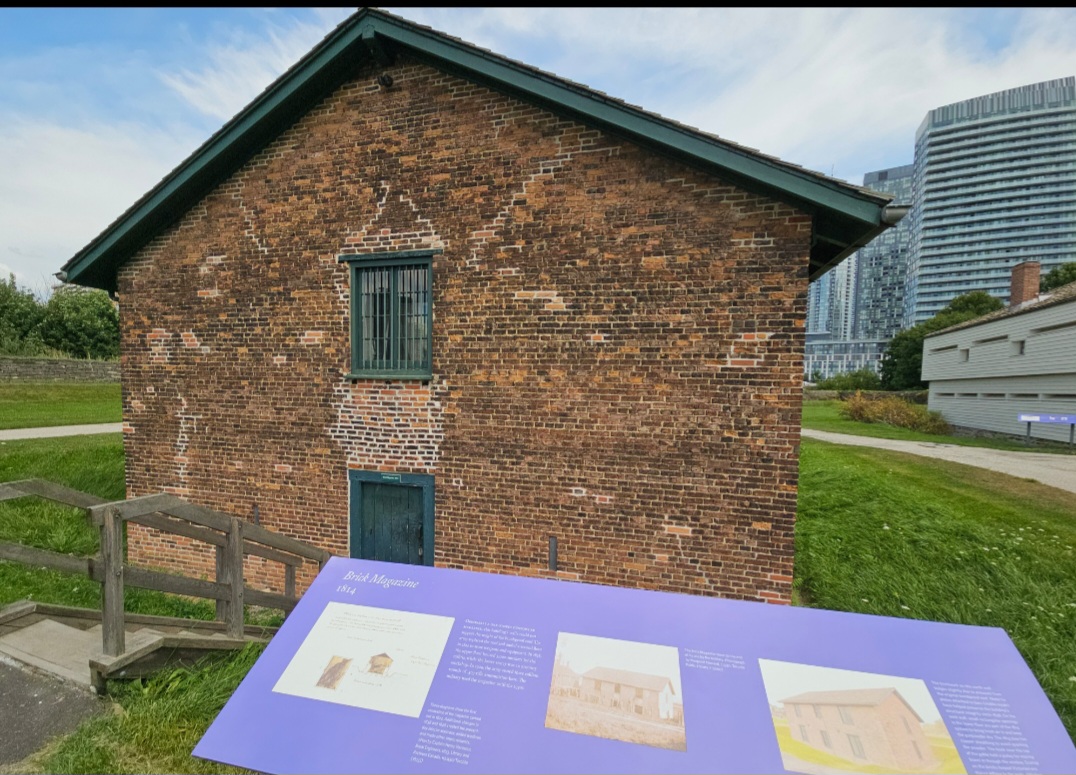
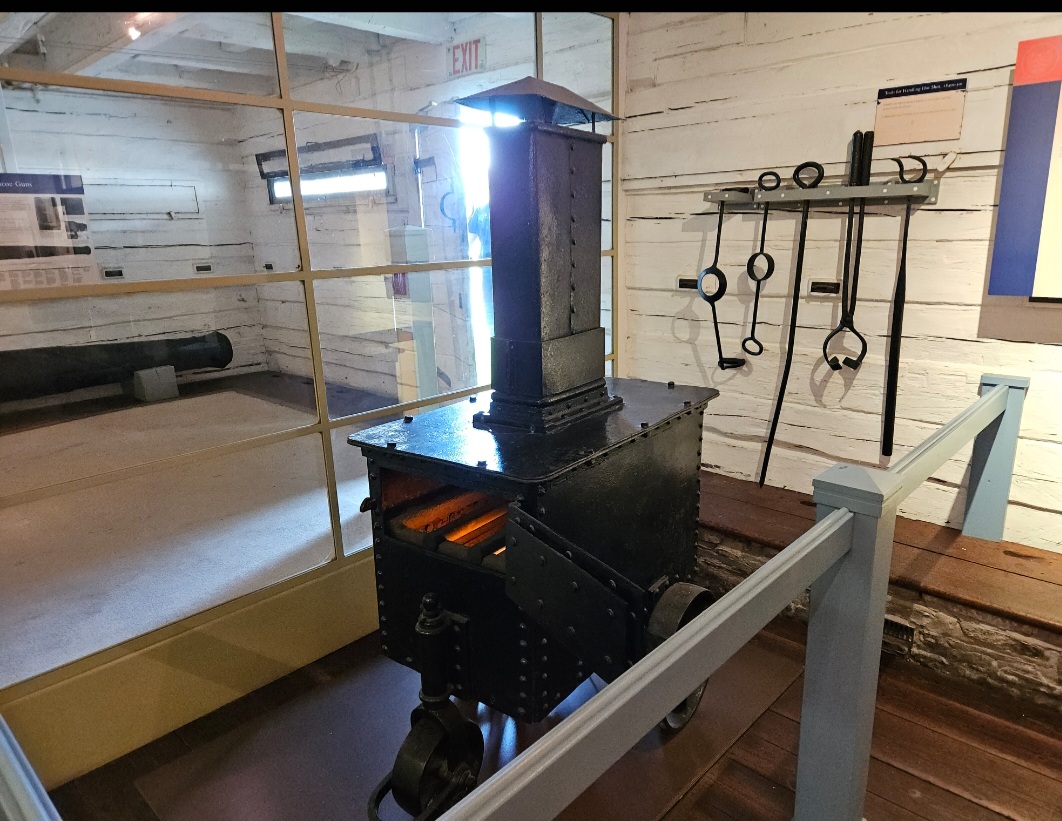
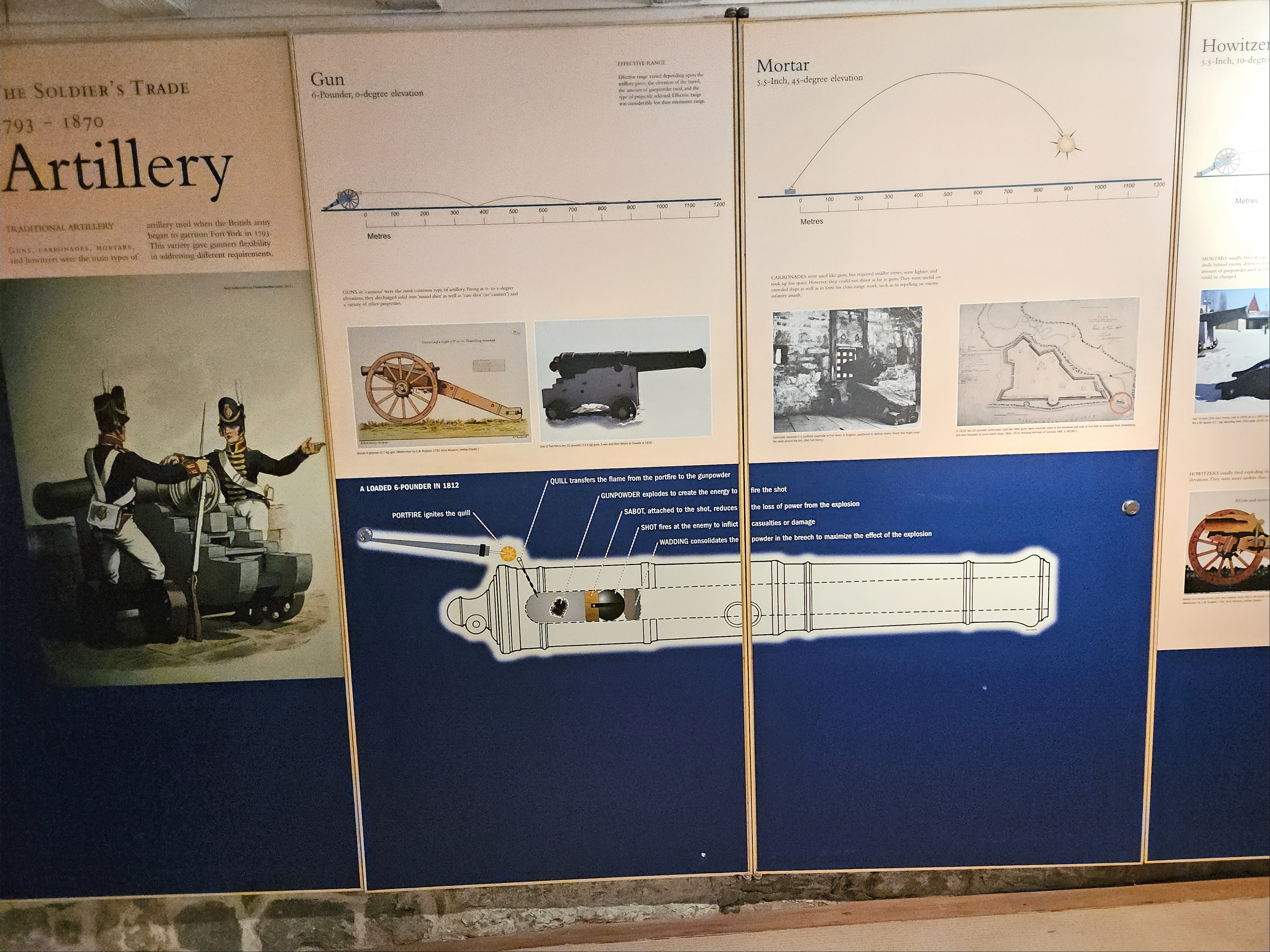
In late 1798, Fort York became an official British Army post, allowing it access to funds reserved for military use. A stockade was built around the fort. Many of its original structures were also replaced with new buildings, including barracks, carriage and engine shed, the colonial government house, guardhouse, gunpowder magazine, and storehouses. As British-American tensions increased again at the beginning of the 19th century, Major-General Isaac Brock ordered the construction of three artillery batteries, and a wall and dry moat on the western boundary of the fort. The batteries were equipped with furnaces, allowing the batteries to fire heated shot, with further 12-pounder guns placed on mobile carriages used to respond to threats outside the fixed ranges of the batteries.

Simcoe’s original proposal of using York as a naval base was also reconsidered during the early 19th century, with plans to expand the fort near Government House to accommodate a naval base. However, as the majority of the naval assets in Upper Canada were based in Kingston, the governor general of the Canadas, George Prévost, planned to make the move to York in phases.

Map of York prior to the Battle of York in 1813. The fort is visible north of the harbor’s entrance.

When news of the American declaration of war arrived at York, the regulars and military cavalry squad of the fort left for the Niagara peninsula, eventually participating in the Battle of Queenston Heights. While its garrison was deployed in the Niagara, Fort York was manned by the Canadian militia. 

Battle of York

The town of York was attacked by American forces in April 1813. The attack formed the first part of Henry Dearborn’s plan to take the Canadas by first attacking York, then the Niagara peninsula, Kingston, and finally Montreal. Fort York formed a part of the settlement’s defences, which included batteries and blockhouses around the town and Gibraltar Point. After reports of approaching American ships reached the settlement, most professional troops in the area, First Nations-allied warriors, and some members of the local militia assembled at the fort.The regulars and militias stationed at the town’s blockhouse were later ordered to reassemble at Fort York once it was made apparent that no landings would occur east of the settlement.

The American naval squadron exchanged fire
with the fort during the Battle of York

Most of the fighting occurred during the American landing, approximately 1.2 miles west of the fort. Canadian forces could not prevent the landings or repel the force at the western battery. The British-First Nations force retreated to the fort. American forces advanced east towards the fort, assembled outside its walls, and exchanged artillery fire with the fort. The American naval squadron also bombarded the fort. Recognizing that the battle was lost, The British commanding officer, Roger Hale Sheaffe, recognized that the battle was lost, ordered a silent withdrawal from the fort, and rigged the fort’s gunpowder magazine to explode to prevent its capture. The two sides continued to exchange artillery fire until Sheaffe’s withdrawal from the fort was complete. Because the British flag was left on the flagpole of the fort, the Americans assembling outside its walls assumed the fort remained occupied.

Death of US Brigadier General Zebulon Pike after the gunpower magazine at Fort York exploded.

The gunpowder magazine contained 74 tons of iron shells and 300 barrels of gunpowder. When the magazine exploded, a massive amount of debris was launched into the air and dropped onto the American forces outside the fort. The explosion caused over 250 American casualties, including Brigadier General Zebulon Pike. Anticipating a counterattack after the blast, American forces regrouped outside the wall and did not advance onto the abandoned fort until after British forces left York.

The fort was occupied by the American forces after the town’s surrender. During the brief occupation, members of the militia were detained in the fort for two days before being released on “parole.” The British dead were buried within the fort in shallow graves, although they were later reburied outside the fort after the Americans left. Before they departed from York on May 1, 1813, the American forces burned several buildings, including most of the structures in the fort, except its barracks.

Rebuilt Fort (1813-1932)

Map of Fort York and the settlement in 1814

Plans to rebuild the settlement’s defences, including the fort, and the surrounding blockhouses were undertaken in the second half of 1813 to defend a four-vessel squadron the Royal Navy planned to station at York’s harbour. Several structures were completed at the fort by November 1813, including the Government House Battery and the Circular Battery, each equipped with two 8 inch mortars; with another two blockhouses nearing completion. The blockhouses were also designed to act as barracks for the town’s garrison, in order to allow for the immediate garrisoning of troops in the settlement.In the following years, the forest around the fort was cleared to deprive Americans of cover in the event of another attack; and the defensive earthworks, barracks, and gunpowder magazine were rebuilt. The fort was not completed until around 1815; due to small numbers of artificer available at York, and a warm 1813–14 winter preventing the use of sleighs to transport supplies during that season.

The fort operated as a hospital centre from the latter half of 1813 to the end of the war, with the naval squadron stationed at York assisting in transporting wounded soldiers from the Niagara front to the town. On August 6, 1814, an American naval squadron arrived near York’s harbor under the suspicion that British vessels were stationed there. The squadron dispatched the USS Lady of the Lake to sail into the harbour under a white flag in a ploy to evaluate the town’s defences. However, the militia stationed in the fort shot at the vessel, resulting in the two sides exchanging fire before the Lady of the Lake withdrew back to its squadron outside the harbour. The American squadron did not attempt another attack on the fort, although remained outside York’s harbour for three days before sailing away.

Post War of 1812

Diagram of Fort York, 1816

Work on the fort stopped at the end of the war. By 1816, the rebuilt fort included eighteen buildings capable of holding a garrison of 650 soldiers. An additional 350 soldiers could also be garrisoned in military facilities adjacent to the fort. After the war, the fort continued to be a point of focus for military planners in the region, with York envisioned as an area that could provide cover for a retreat to Kingston and Lower Canada, or as a rallying point for British forces to defend the Niagara peninsula. The British also continued to use the fort to protect the north-south portage route to the upper Great Lakes.

In the decades after the War of 1812, several buildings within the fort were torn down and replaced. However, the fort’s conditions were primarily shaped by British foreign relations, as it suffered from poor maintenance during times of peace and underwent repairs and reinforcing during perceived signs of hostilities. By the early 1830s, it had become apparent that new fortifications needed to be built to replace the decaying Fort York, with a plan formally approved in 1833. Completed in 1841, New Fort York was situated 2,779 ft. west of Fort York and was initially only connected to a settlement via a pathway through Fort York. Although new fortifications were erected, the military continued to use Fort York’s batteries to help defend the harbor and the adjacent open space for drills and as a rifle range. In addition to its military uses, from 1839 to 1840, the old fort also hosted a Royal Society meteorological and magnetic observatory, before it was relocated to its permanent location at the University of King’s College campus. Plans were in place to also build three martello towers between Fort York and Gibraltar Point, although those plans were abandoned.

Posted in Scratch Pad | Tagged , , , | Leave a comment

National and World Book Day

September 6, 2024, is National and World Book Day. That means it’s time to pick up a book and spend the day in your favorite chair, with your favorite beverage, reading a book. What better time to read one of my books, like …

The Analyst -When Professor Russell Conrad received a call to fly to Washington, he didn’t expect that he would find himself in Saudi Arabia trying to rescue the President and prevent a nuclear war. After Conrad is summoned to Washington, he finds himself on Air Force One as part of an American delegation to a secret peace conference in Saudi Arabia. President Omar Sanjar’s hopes of forming a lasting Middle East peace are shattered when the American delegation is kidnapped. Their captors’ ransom demands present a moral dilemma that threatens to plunge the Middle East into a nuclear war. Conrad’s role is transformed from CIA adviser to an agent as he tries to rescue Sanjar and warn Israel of the impending missile attack.

Teacher of Civil War Generals: Major General Charles Ferguson Smith, Soldier and West Point Commandant – From the training field at West Point to the entrenchments at Fort Donelson, Charles Ferguson Smith was the soldier’s soldier.  The call of duty was a magic sound for which he was always ready to make every sacrifice. He was the very model of a soldier, calm, prudent, self-poised, and bold. During his 40-year military career, these qualities earned him the respect and admiration of his peers.  However, his story is more than an account of battles fought and victories won. Through his correspondence, we discover a man who combined the qualities of a faithful officer, an excellent disciplinarian, an able commander, and a modest, courteous gentleman.

Your Affectionate Father, Charles F. Smith – Letters written to Smith’s daughter, Fanny, during his time as a colonel in the Tenth Infantry Regiment. The letters deal with the expedition to the Red River of the North in the Minnesota Territory and the match to the Utah Territory as part of the Mormon War.

Preparing for Disunion – An examination of the role of military training at the United States Military Academy at West Point in preparing officers for service in the American Civil War. The history examines the impact of the Commandant of Cadets on future generals.

The Forgotten Texas Statesman – Who was this man who 1.) Was appointed Attorney General of the Republic of Texas, 2.) Served as interim Secretary of State, 3.) Assisted in the Annexation of Texas to the United States, 4.) Elected the first elected Attorney General of the State of Texas, 5.) Obtained first railroad charter in Texas, 6.) Became a local advocate of Spiritualism, 7.) Represented engineers and inventors in their dealings with the Richmond government, 8.) Served as a civilian member of the Confederate Engineering Bureau, 8.) Died mysteriously in Richmond, Virginia, and 9.) Had a town in North Texas named after him?

The Third Rebellion is a novel about political and social unrest in the United States of America. The book is a work of fiction. The Third Rebellion is not a prediction of future events, a political manifesto, a condemnation of American society, a denunciation of a political party, or a call to action. It is a story about an American revolution or rebellion which the author created from personal observations during the past 10 years.

The Civil War and the Rise of the American Petroleum Industry The precursors, events, and legacy of the American Civil War have always been deeply intertwined with the nation’s oil and gas industry, from the discovery of oil at the Drake well in Titusville, Pennsylvania, in 1859 to the thousands of veterans who rushed into oil regions to seek their fortunes in the post-war petroleum boom. When Union oilfields became strategic military targets, the demand for kerosene increased, and when the Rebellion ended, Civil War veterans helped to spread the growth of oil exploration. New transportation and production technology saw rapid development, and new uses for petroleum products began to proliferate. This book thoroughly interrogates the relationship between the war and the development of U.S. petroleum, examining the involvement of Civil War officers and soldiers in all areas of the oil and gas industry. Illustrated with over 50 high-quality illustrations from the era, this detailed history demonstrates that while the American oil and petroleum industry existed before the Civil War, its incredible growth and longevity is owed in large part to the contributions of Civil War veterans. [Fall of 2024]

Please check out my books at Allen Mesch on Amazon.

Posted in Scratch Pad | Tagged , | Leave a comment

What’s in a Label?

With the political season in full swing, it seemed a good time to break out the dictionary and read what the words CONSERVATIVE and LIBERAL mean.

Conservative

Conservative adj. 1. Conserving or tending to conserve; preservative. 2. tending to preserve established traditions or institutions and to resist or oppose any changes in these: as, a conservative political party, conservative art. 3. of or characteristic of a conservative; as, conservative views.

Some better-known Conservative Politicians:

  • Donald Trump – U.S. president
  • Mike Pence – U.S. vice president
  • Sarah Palin – Governor of Alaska
  • Dick Cheney – U.S. vice president
  • Ronald Reagan – U.S. president
  • Barry Goldwater – U.S. senator
  • Mitch McConnell – U.S. senator
  • George W. Bush – U.S. president
  • Clarence Thomas – U.S. Supreme Court justice
  • Ted Cruz – U.S. senator
  • Marco Rubio – U.S. senator

Some famous conservative quotes:

  • We don’t have a trillion-dollar debt because we haven’t taxed enough; we have a trillion-dollar debt because we spend too much. — Ronald Reagan
  • Conservatives have excellent credentials to speak about human rights. By our efforts, and with precious little help from self-styled liberals, we were largely responsible for securing liberty for a substantial share of the world’s population and defending it for most of the rest. — Margaret Thatcher
  • Remember that a government big enough to give you everything you want is also big enough to take away everything you have. — Barry Goldwater
  • I hope we have once again reminded people that man is not free unless government is limited. There’s a clear cause and effect here that is as neat and predictable as a law of physics: as government expands, liberty contracts. — Ronald Reagan

Liberal

Liberal adj. 2. giving freely; generous. 3. large or plentiful; ample, abundant: as, a liberal reward. 4. not restricted to the literal meaning; free and unconfined;’ as, a liberal interpretation of the Constitution. 5. tolerant of views differing from one’s own; broad-minded. 6. of democratic or republican forms of government, as distinguished from monarchies, aristocracies, etc. 7. favoring reform or progress, as in religion, education, etc specifically, favoring political reforms tending toward democracy and personal freedom for the individual; progressive: now sometimes distinguished from progressive, as connoting somewhat more conservatism.

Some better-known Liberal Politicians:

  • Franklin D. Roosevelt – U.S. president
  • Harry S. Truman – U.S. president
  • Lyndon B. Johnson – U.S. president
  • John F. Kennedy – U.S. president
  • Jimmy Carter – U.S. president
  • Joe Biden – U.S. president
  • Bill Clinton – U.S. president
  • Barak Obama – U.S. president
  • Kamala Harris – U.S. vice president

Some famous liberal quotes:

  • “We need to reject any politics that targets people because of race or religion. This isn’t a matter of political correctness. It’s a matter of understanding what makes us strong.” – Barack Obama
  • “The rights of every man are diminished when the rights of one man are threatened.” – John F. Kennedy
  • “We need to reject any politics that targets people because of race or religion. This isn’t a matter of political correctness. It’s a matter of understanding what makes us strong.” – Barack Obama
  • “Change will not come if we wait for some other person or some other time. We are the ones we’ve been waiting for. We are the change that we seek.” – Barack Obama
  • “A nation’s greatness is measured by how it treats its weakest members.” – Mahatma Gandhi
  • “The test of our progress is not whether we add more to the abundance of those who have much, it is whether we provide enough for those who have too little.” – Franklin D. Roosevelt

Who do you identify with?

Posted in Scratch Pad | Tagged , , | Leave a comment

The Enchanted Highway

The Enchanted Highway begins at Exit 72 on I-94 near Gladstone and terminates 32 miles down the road in the small town of Regent. Beginning with “Geese in Flight” at Exit 72, large metal sculptures are placed along the county highway, each with a parking area and kiosk, except “Geese in Flight,” which is viewable from the adjacent interstate. Sculptures include “World’s Largest Tin Family,” “Teddy Rides Again,” “Pheasants on the Prairie,” “Grasshoppers in the Field,” “Deer Crossing,” and “Fisherman’s Dream.” The gift shop in Regent has miniatures of each statue and the Enchanted Castle motel and restaurant offer hot meals and a soft bed. .

The First sculpture, “Geese in Flight,” is right on Interstate 94 at Exit 72. If you are headed south, this would be the beginning of the Enchanted Highway. Other sculptures include “Geese in Flight,” “Deer Crossing,” “Grasshoppers in the Field,” “Fisherman’s Dream,” “Pheasants on the Prairie,” “Theodore Roosevelt Rides Again,” and “World’s Largest Tin Family.”

From I-94 Exit 72

Mile 0 – Geese in Flight

Mile 3 – Deer Crossing

Mile 15 – Grasshoppers in the Field

Mile 19 – Fisherman’s Dream

Mile 24 – Pheasants on the Prairie

Mile 26 – Theodore Roosevelt Rides Again

Mile 30 – World’s Largest Tin Family

Mile 32 – Enchanted Castle Gift Shop (Regent)

Mile 32.5 – Enchanted Castle Hotel, Knight and Dragon Sculpture in progress

The man behind this wonder is Gary Greff, and he’s always full of oversized ideas that center on bringing people to one small town in southwest North Dakota. Gary operates an ice cream parlor in Regent, North Dakota. Stop in for a couple of scoops dished out by Gary himself. Please see Gary Greff: Enchanted Highway Sculptor to learn more.

Posted in Scratch Pad | Tagged , , | Leave a comment

National Book Lovers Day

August 9, 2024, is National Book Lovers Day. On National Book Lovers Day, you can celebrate by immersing yourself in a book swap with friends, visiting your local bookstore to support small businesses, or simply curling up with a cup of tea and getting engrossed in a good story. Whether you prefer paperbacks, e-books, or audiobooks, this day is all about embracing the joy of reading in whatever form speaks to you.

Make a plan to set aside some time on August 9th to delve into the world of words. Maybe you’ll reread a childhood favorite, explore a new genre, or finally immerse yourself in that series everyone’s been talking about. National Book Lovers Day is your chance to prioritize your love for reading and celebrate the magic that books bring into our lives. So, mark the date, prepare your reading nook, and get ready to lose yourself in the pages of a good book!

That means it’s time to pick up a book and spend the day in your favorite chair, with your favorite beverage, reading a book. What better time to read one of my books, like …

The Analyst -When Professor Russell Conrad received a call to fly to Washington, he didn’t expect that he would find himself in Saudi Arabia trying to rescue the President and prevent a nuclear war. After Conrad is summoned to Washington, he finds himself on Air Force One as part of an American delegation to a secret peace conference in Saudi Arabia. President Omar Sanjar’s hopes of forming a lasting Middle East peace are shattered when the American delegation is kidnapped. Their captors’ ransom demands present a moral dilemma that threatens to plunge the Middle East into a nuclear war. Conrad’s role is transformed from CIA adviser to an agent as he tries to rescue Sanjar and warn Israel of the impending missile attack.

Teacher of Civil War Generals: Major General Charles Ferguson Smith, Soldier and West Point Commandant – From the training field at West Point to the entrenchments at Fort Donelson, Charles Ferguson Smith was the soldier’s soldier.  The call of duty was a magic sound for which he was always ready to make every sacrifice. He was the very model of a soldier, calm, prudent, self-poised, and bold. During his 40-year military career, these qualities earned him the respect and admiration of his peers.  However, his story is more than an account of battles fought and victories won. Through his correspondence, we discover a man who combined the qualities of a faithful officer, an excellent disciplinarian, an able commander, and a modest, courteous gentleman.

Your Affectionate Father, Charles F. Smith – Letters written to Smith’s daughter, Fanny, during his time as a colonel in the Tenth Infantry Regiment. The letters deal with the expedition to the Red River of the North in the Minnesota Territory and the match to the Utah Territory as part of the Mormon War.

Preparing for Disunion – An examination of the role of military training at the United States Military Academy at West Point in preparing officers for service in the American Civil War. The history examines the impact of the Commandant of Cadets on future generals.

The Forgotten Texas Statesman – Who was this man who 1.) Was appointed Attorney General of the Republic of Texas, 2.) Served as interim Secretary of State, 3.) Assisted in the Annexation of Texas to the United States, 4.) Elected the first elected Attorney General of the State of Texas, 5.) Obtained first railroad charter in Texas, 6.) Became a local advocate of Spiritualism, 7.) Represented engineers and inventors in their dealings with the Richmond government, 8.) Served as a civilian member of the Confederate Engineering Bureau, 8.) Died mysteriously in Richmond, Virginia, and 9.) Had a town in North Texas named after him?

The Third Rebellion is a novel about political and social unrest in the United States of America. The book is a work of fiction. The Third Rebellion is not a prediction of future events, a political manifesto, a condemnation of American society, a denunciation of a political party, or a call to action. It is a story about an American revolution or rebellion which the author created from personal observations during the past 10 years.

The Civil War and the Rise of the American Petroleum Industry The precursors, events, and legacy of the American Civil War have always been deeply intertwined with the nation’s oil and gas industry, from the discovery of oil at the Drake well in Titusville, Pennsylvania, in 1859 to the thousands of veterans who rushed into oil regions to seek their fortunes in the post-war petroleum boom. When Union oilfields became strategic military targets, the demand for kerosene increased, and when the Rebellion ended, Civil War veterans helped to spread the growth of oil exploration. New transportation and production technology saw rapid development, and new uses for petroleum products began to proliferate. This book thoroughly interrogates the relationship between the war and the development of U.S. petroleum, examining the involvement of Civil War officers and soldiers in all areas of the oil and gas industry. Illustrated with over 50 high-quality illustrations from the era, this detailed history demonstrates that while the American oil and petroleum industry existed before the Civil War, its incredible growth and longevity is owed in large part to the contributions of Civil War veterans. [Fall of 2024]

Please check out my books at Allen Mesch on Amazon.

Posted in Scratch Pad | Tagged , | Leave a comment

The Hidden Oil Rigs of L.A.

Before Los Angeles was known for making movies, it was known for making something else; oil.

Believe it or not, L.A. used to be a small seaside town until the late 1800s. In 1892, Edward L. Doheny discovered the first successful oil well near present-day Dodger Stadium. The Los Angeles Oil Field became California’s top-producing oil field and in 1901, there were 200 separate oil companies active there.

Doheny’s success set off a petroleum boom in Southern California and made him a fortune when, in 1902, he sold his properties.

He then began highly profitable oil operations in Tampico, Mexico’s “golden belt,” drilling the first well in the nation in 1901. He expanded operations during the Mexican Revolution and opened large new oil fields in Lake Maracaibo (Venezuela). His holdings developed as the Pan American Petroleum & Transport Company, one of the largest oil companies in the world in the 1920s.

In the 1920s, Doheny was implicated in the Teapot Dome scandal and accused of offering a $100,000 bribe to United States Secretary of the Interior Albert Fall. Doheny was twice acquitted of offering the bribe, but Fall was convicted of accepting it. Doheny and his second wife and widow, Carrie Estelle, were noted philanthropists in Los Angeles, especially regarding Catholic schools, churches, and charities.

Over time, though, the city was being built on top of these oil fields. While Los Angeles doesn’t look like the oil giant it once was, there are still many active drill sites all over the city. These oil rigs are hidden in plain view on high school campuses, attached to shopping malls, and located inside buildings that otherwise look like regular office buildings.

Notes:

<1> Dr. Adnan Albarode, The Arab Petroleum Engineering, https://www.facebook.com/groups/3115499148764319/permalink/3677157015931860/

<2> “Edward L. Doheny,” Wikipedia, https://en.wikipedia.org/wiki/Edward_L._Doheny

Posted in Scratch Pad | Tagged , , , , , | Leave a comment

Pentagon Reviewing Medals of Honor for Wounded Knee

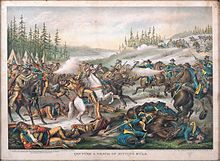
“The opening of the fight at Wounded Knee,” engraved illustration by Frederic Remington – Public Domain

The Wounded Knee Massacre, also known as the Battle of Wounded Knee, occurred on December 29, 1890, near Wounded Knee Creek on the Lakota Pine Ridge Indian Reservation in South Dakota. It was the deadliest mass shooting in American history, during which nearly three hundred Lakota people were shot and killed by U.S. Army soldiers. The United States Congress awarded nineteen Medals of Honor to soldiers and officers who perpetrated the slaughter of from 250 to 300 Native Americans. Adding to the insult, the officer overseeing the attack was reinstated and eventually promoted to major general. This massacre was part of a genocidal government program to remove Native Americans from the United States. The procedure included breaking treaties, spreading diseases, killing bison to reduce food supply, relocating Native Americans like the Trail of Tears, and civilian and military massacres. Some of these actions were due to contact with settlers and soldiers.

According to several sources, most notably The Congressional Medal Society, only eighteen medals were awarded for the Wounded Knee Massacre. Let other sources say nineteen to twenty medals were awarded. Some of the confusion may come from the three medals that were awarded to members of the Seventh Infantry who fought at the Battle of White Clay Creek or the Drexel Mission Fight that took place on December 30, 1890. My addition says twenty-one medals.

Native American organizations have lobbied to remove the medals. In February 2021, the South Dakota Senate unanimously called upon the United States Congress to investigate the twenty medals of honor awarded to members of the Seventh Cavalry for their participation in the massacre. Lawmakers argued that the medals given to the soldiers of the Seventh Cavalry Regiment tarnished Medals of Honor given to soldiers for genuine acts of courage. The “Remove the Stain Act,” proposed on March 26, 2021, outlines the reasons why this bill was introduced in the United States House of Representatives.

The Defense Department will review the Medals of Honor given to 20 U.S. soldiers for their actions in the 1890 battle at Wounded Knee to ensure that their conduct merits such an honorable award.

Defense Secretary Lloyd Austin ordered the review by a special panel of experts after consultation with the White House and the Department of the Interior. Congress recommended such a review in the 2022 defense bill, reflecting a push by some lawmakers to rescind the awards for those who participated in the massacre on South Dakota’s Pine Ridge Indian Reservation near Wounded Knee Creek.

Defense Secretary Lloyd Austin

In a memo signed in July 2024, Austin said the panel would review each award “to ensure no soldier was recognized for conduct that did not merit recognition” and if their conduct demonstrated any disqualifying actions. Those could include rape or murder of a prisoner or attacking a non-combatant or someone who had surrendered.

The history of Wounded Knee is a powerful reminder of the struggles faced by Native American communities and the ongoing efforts to honor their heritage and seek justice.

To learn more, please read my in-depth essay on the Wounded Knee Massacre.

Posted in Scratch Pad | Tagged , , , , , | Leave a comment

President Biden Awards Medal of Honor to Two Union Soldiers

During the Civil War, a group of twenty-four Union soldiers and civilians, known as Andrews’ Raiders, embarked on a daring mission to infiltrate the Confederate States and disrupt railway and communication lines from Georgia to Tennessee. The raiders were told little about their mission to maintain secrecy but understood that success would deal a significant blow to the South while capture meant near-certain death. Of the twenty-four raiders who took part in the Great Locomotive Chase, nineteen were awarded the Medal of Honor. Two additional Union soldiers were posthumously awarded the Medal of Honor one hundred and sixty-two years after the mission.

Gerald Taylor and Theresa Chandler, descendants of U.S. Army Privates George D. Wilson and Phillip G. Shadrach, respectively, receive Medals of Honor on behalf of their ancestors from President Joe Biden during a ceremony at the White House in Washington, D.C., July 3, 2024 (U.S. Army)

On July 3, 2024, President Joe Biden presented the Medal of Honor to the oldest living relatives of Privates George D. Wilson and Phillip G. Shadrach at the White House. “I am humbled to have the opportunity to come and receive the Medal of Honor that was awarded to our relative,” said Gerald Taylor, Shadrach’s great-great-nephew.

 The men traveled in small groups and wore civilian clothes to avoid suspicion, the latter of which made them all spies. Twenty-two raiders rendezvoused outside of Marietta, Georgia, in Big Shanty. There, they commandeered a locomotive named The General and set off north. Along the way, the raiders tore up the tracks behind them, cut telegraph lines, and tried to burn bridges.

The General on display in Kennesaw, Georgia
(The Southern Museum of Civil War & Locomotive History)

Confederate forces gave chase, first on foot and then by handcar and locomotive. Although Andrews’ Raiders had a head start, they were slowed by oncoming trains on the single-track rail. With fuel running low and enemy forces closing behind, the raiders abandoned the locomotive just 18 miles from their intended destination of Chattanooga, Tennessee. By then, thousands of Confederate soldiers and civilians were hunting for the raiders. After 12 days, all 22 men were captured. Andrews and seven soldiers, including Wilson and Shadrach, were tried and convicted as spies; the soldiers were executed on June 18, 1862.

According to historical documents and the Army news release, Wilson addressed the Confederate crowd before he was executed. He reportedly said that he felt no hostility toward them and did not regret dying for his country because he knew the people would soon see the Union flag flying over them once again. “When I read that, I had chills,” said Theresa Chandler, Wilson’s great-great-granddaughter, in the Army news release. “It brought everything home, and you get so much more respect and appreciation for what they did and what they were fighting for.”

An artist’s depiction of the raiders abandoning their stolen locomotive
(Public Domain)

After the executions, the remaining imprisoned raiders staged an escape; only six were recaptured. In March 1863, these six men were released as part of a prisoner exchange. They were awarded the Medal of Honor, the first soldiers in U.S. Army history to receive the medal; the Medal of Honor was signed into law by President Abraham Lincoln less than a year earlier on July 12, 1862. The six recipients were also offered commissions as first lieutenants. Thirteen other raiders were also awarded the Medal of Honor in the following years. Wilson and Shadrach of the Second Ohio Volunteer Infantry Regiment now join their fellow raiders as recipients of the nation’s highest military award. <1>, <2>, <3>, <4>.

The Andrews Raiders Monument at the Chattanooga National Cemetery
(Source: Robert Rynerson, Denver, 2015)

Notes:

<1> “Civil War heroes get long-awaited Medal of Honor recognition,” Christopher Hurd, Army News Service, July 3, 2024, https://www.army.mil/article/277644/civil_war_heroes_get_long_awaited_medal_of_honor_recognition.

<2> “Biden awards 2 Union soldiers posthumous Medals of Honor,” Kathryn Watson, CBS News, https://www.msn.com/en-us/news/us/biden-awards-2-union-soldiers-posthumous-medals-of-honor/ar-BB1pmCXq.

<3> “Biden issues Medal of Honor to Civil War soldiers who helped hijack train in confederacy,” PBS News, https://www.pbs.org/newshour/politics/watch-live-biden-issues-medal-of-honor-to-civil-war-soldiers-who-helped-hijack-train-in-confederacy.

<4> “Biden fixes 161-year-old oversight, awards Medal of Honor to 2 Civil War soldiers,” Jessie Balmert, USA TODAY NETWORK, https://www.msn.com/en-us/news/us/biden-fixes-161-year-old-oversight-awards-medal-of-honor-to-2-civil-war-soldiers/ar-BB1plLfG

For more information, please see “Great Locomotive Chase,” Wikipedia, https://en.wikipedia.org/wiki/Great_Locomotive_Chase.

Posted in Scratch Pad | Tagged , , | Leave a comment

Will Rogers on Democrats and Republicans

Will Rogers

I thought we could use a robust dose of Will Rogers’s humor on political parties with the current political situation and especially the disarray in the Democratic Party over President Biden’s mental health.

Will Rogers’s Quotes on Politics

Will Rogers most famous quote on being a Democrat also trivialized the party:

I belong to no organized party; I am a Democrat.

However, Mr. Rogers also gave equal attention to Republicans as illustrated in these quotes.

It takes nerve to be a Democrat, but it takes money to be a Republican.

Democrats take the whole thing as a joke. Republicans take it serious but run it like a joke.

I will admit it has rained more under Republican administrations. That was partially because they have had more administration than Democrats.

A cannibal is a good deal like a Democrat, they are forced to live off each other.

I generally give the party in power, whether Republican or Democrat, the more digs because they are generally doing the country more damage.

A flock of Democrats will replace a mess of Republicans. It won’t mean a thing. They will go in like all the rest of ’em. Go in on promises and come out on alibis.

The Republicans mopped up, the Democrats gummed up, and I will now try and sum up. Things are terribly dull now. We won’t have any more serious comedy until Congress meets.

If a man wants to stand well socially, he can’t afford to be seen with either the Democrats or the Republicans.

Republicans want a man that can lend dignity to the office. Democrats want a man that will lend some money.

Republicans have always been the party of big business. The Democrats of small business. So you just take your pick. The Democrats have their eye on a dime and the Republicans on a dollar.

The more education he gets the less apt he is to be a Democrat and if he is very highly educated he will see the apple sauce in both parties.

Democrats, you can’t shame them into even dying. They would keep on living just to spite the Republicans.

Will Rogers: Mini-Bio

Rogers was born in 1879 on Native American land that now forms part of Oklahoma, He was of Cherokee descent. As a young man, he worked as a horse-breaker before joining a circus to perform rope tricks. In 1916 he joined the Ziegfeld Follies and gained fame as a wise-cracker. His monologues, delivered in a down-home folksy style, gained national fame. Even so, they were biting and to the point, and the public came to appreciate Rogers as a man of exulted common sense. His most famous remarks were about government and politicians. Rogers typically followed a biting comment with self-effacing humor or a platitude to relieve tension. He had an astonishing work ethic and diverse interests: Rogers appeared in sixty-nine films, undertook exhausting national lecture tours, worked on radio and Broadway, and as a Goodwill Ambassador to Mexico. Rogers wrote numerous books and essays and was a newspaper columnist from 1922 until his death. Rogers had a passion for aviation and was an advocate for the industry. He was killed in a plane crash in Alaska on August 15, 1935. <1>

Notes:

<1> “Will Rogers’ quotes on being a Democrat,” May 14, 2021 by Quotes from the Past, Will Rogers’ quotes on being a Democrat | Quotes from the Past.

Posted in Scratch Pad | Tagged , , , | Leave a comment

America’s Religious Foundations

John Leland

Alan W. Steelman’s editorial “Make America Christian Again?” in the Sunday, July 7, 2024 edition of the Dallas Morning News prompted me to learn more about an American Baptist minister named John Leland.

John Leland (May 14, 1754 – January 14, 1841) was an American Baptist minister who preached in Massachusetts and Virginia. He was an important figure in the struggle for religious liberty in the United States as well as an outspoken abolitionist. Leland also later opposed the rise of missionary societies among Baptists.

During the 1788-89 election, Leland supported James Madison due to Madison’s support for religious liberty in what became the First Amendment to the Constitution, and Madison was seated in the first Congress that same year. Leland returned to Massachusetts in 1791 the year the Bill of Rights was ratified, leaving Virginia after an anti-slavery sermon. Back in New England, Leland helped establish several Baptist congregations in Connecticut, to which President Jefferson later wrote his famous letter to the Baptists of Danbury, Connecticut in 1802 regarding religious freedom.

Steelman quoted Reverend Leland as saying:

Guard against those men who make a great noise about religion in choosing representatives. If they knew the nature and worth of religion, they would not debauch it to such shameful purposes.

Leland was elected to the Massachusetts House of Representatives and represented Cheshire in 1812.

Leland died on January 14, 1841, in North Adams, Massachusetts. His tombstone reads, “Here lies the body of John Leland, of Cheshire, who labored 67 years to promote piety and vindicate the civil and religious rights of all men.”

Leland opposed theological seminaries. Ironically, The John Leland Center for Theological Studies in Virginia is named in his honor. The school was named for Leland for three reasons: his firm stand for religious liberty for all, his opposition to slavery, and his service as a pastor and evangelist.

Excerpts from his writings

The notion of a Christian commonwealth should be exploded forever…Government should protect every man in thinking and speaking freely, and see that one does not abuse another. The liberty I contend for is more than toleration. The very idea of toleration is despicable; it supposes that some have a pre-eminence above the rest to grant indulgence, whereas all should be equally free, Jews, Turks, Pagans and Christians.

‒ A Chronicle of His Time in Virginia.

Every man must give account of himself to God, and therefore every man ought to be at liberty to serve God in a way that he can best reconcile to his conscience. If government can answer for individuals at the day of judgment, let men be controlled by it in religious matters; otherwise, let men be free.

‒ Right of Conscience Inalienable.

Resolved, that slavery is a violent deprivation of rights of nature and inconsistent with a republican government, and therefore, recommend it to our brethren to make use of every legal measure to extirpate this horrid evil from the land; and pray Almighty God that our honorable legislature may have it in their power to proclaim the great jubilee, consistent with the principles of good policy.

‒ Resolution for the General Committee of Virginia Baptists meeting in Richmond, Virginia, in 1789.

Was America Founded on Christianity?

Steelman writes: “The Constitution contains no mention of Christianity or Jesus Christ. It refers to religion only twice: in the First Amendment, which prohibits state-endorsed religion, and in Article VI, which prohibits religious tests for public office.” <1>

The concept of separation of Church and State was described in Thomas Jefferson’s letter to the Danbury Baptists in 1802.

Believing with you that religion is a matter which lies solely between Man & his God, that he owes account to none other for his faith or his worship, that the legitimate powers of government reach actions only, & not opinions, I contemplate with sovereign reverence that act of the whole American people which declared that their legislature should “make no law respecting an establishment of religion, or prohibiting the free exercise thereof,” thus building a wall of separation between Church & State. Adhering to this expression of the supreme will of the nation in behalf of the rights of conscience, I shall see with sincere satisfaction the progress of those sentiments which tend to restore to man all his natural rights, convinced he has no natural right in opposition to his social duties. <2>

Comments from the Bible

Mark 12:17 ‒ “Jesus said to them, “Render to Caesar the things that are Caesar’s, and to God the things that are God’s.”

Titus 3:1-15 ‒ “Remind them to be submissive to rulers and authorities, to be obedient, to be ready for every good work, to speak evil of no one, to avoid quarreling, to be gentle, and to show perfect courtesy toward all people. For we ourselves were once foolish, disobedient, led astray, slaves to various passions and pleasures, passing our days in malice and envy, hated by others and hating one another. But when the goodness and loving kindness of God our Savior appeared, he saved us, not because of works done by us in righteousness, but according to his own mercy, by the washing of regeneration and renewal of the Holy Spirit, …” <3>

Consequences

Creating a (white) Christian nation will destroy the basic rights granted in the First Amendment and will foster discrimination, bigotry, and hate crimes. I believe this possibility is in direct conflict with the teachings of Jesus Christ. Establishing a one religion nation whether it is Christian, Moslem, Jewish, or another belief is bad.

There were 7,759 reported hate crimes in the U.S. in 2023 which was the most in 12 years. Some experts and advocacy groups say the true number is probably even higher.

A Christian nation will encourage prejudice against non-Christians. Most American adults (82%) say Muslims are subject to at least some discrimination in the U.S. today, according to a Pew Research Center survey conducted in March 2019 and a majority (56%) believe Muslims are discriminated against a lot.

Another way to look at discrimination is to try to gauge its practical impact. When asked whether being part of a certain group hurts or helps someone’s “ability to get ahead in our country,” most Americans see Muslims as being disadvantaged, according to a different Pew Research Center survey conducted in January and February of this year. Indeed, more than six-in-ten U.S. adults (63%) say that being Muslim hurts someone’s chances for advancement in American society at least a little, including 31% who say it hurts their chances a lot.

Substantially smaller shares of Americans say that being Jewish or evangelical is a disadvantage. One-in-five U.S. adults say being Jewish hurts someone’s chances of getting ahead, while 15% say the same about being evangelical. In both cases, slim majorities say being Jewish or evangelical neither helps nor hurts. <4>

Will a national Christian religion lead to a type of inquisition? The Spanish Inquisition was originally intended primarily to identify heretics among those who converted from Judaism and Islam to Catholicism. The regulation of the faith of newly converted Catholics was intensified following royal decrees issued in 1492 and 1502 ordering Jews and Muslims to convert to Catholicism or leave Castile, or face death, resulting in hundreds of thousands of forced conversions, the persecution of conversos and moriscos, and the mass expulsions of Jews and of Muslims from Spain. <5>

Will a Christian nation increase attacks on LGBTQ+ people? Within Christianity, there are a variety of views on sexual orientation and homosexuality. The view that various Bible passages speak of homosexuality as immoral or sinful emerged in the first millennium AD, and has since become entrenched in many Christian denominations through church doctrine and the wording of various translations of the Bible.

In the present day, there are a wide variety of views within Christianity on homosexuality and sexual orientation, with some scholars of Christianity contesting the notion that scripture speaks explicitly of homosexuality as a sin against God. Within a Christian denomination, individual believers and the groups they belong to may hold different views, and not all members of a denomination necessarily support their church’s views on homosexuality. Most denominations teach that homosexual behavior and acts are sinful. The Eastern Orthodox and Roman Catholic Churches officially condemn homosexual activity as sin. Various mainline Protestant denominations have taken a stance towards accepting homosexual people and even unions or marriages between same-sex couples while others have not. <6>

Notes:

<1> Alan W. Steelman’s editorial “Make America Christian Again?” in the Sunday, July 7, 2024 edition of the Dallas Morning News.

<2> Jefferson’s Letter to the Danbury Baptists, https://www.loc.gov/loc/lcib/9806/danpre.html.

<3> Separation Of Church And State, https://www.openbible.info/topics/separation_of_church_and_state.

<4> Many Americans see religious discrimination in U.S. – especially against Muslim https://www.pewresearch.org/short-reads/2019/05/17/many-americans-see-religious-discrimination-in-u-s-especially-against-muslims/.

<5> Spanish Inquisition, https://en.wikipedia.org/wiki/Spanish_Inquisition.

<6> Christianity and Homosexuality, https://en.wikipedia.org/wiki/Christianity_and_homosexuality.

Posted in Scratch Pad | Tagged , , , , , , | Leave a comment