During our recent Road Scholar trip, Best of the Pacific Northwest – Exploring Three of Washington’s San Juan Islands, my wife and I had the opportunity to enjoy the beauty, history, and ideas of San Juan Island, Orcas Island, and Lopez Island. This trip provided many stories which I will share with you over the coming weeks.
Lopez Community Land Trust
Lopez Community Land Trust (LCLT) was incorporated in 1989 when the cost of housing on Lopez Island rose 190% in a single year. LCLT is a 501(c)3 non-profit that builds a diverse, sustainable Lopez Island community through affordable housing, sustainable agriculture, and other dynamic rural development programs. LCLT was formed with the following Purposes:
To acquire and hold land in trust to provide for permanently affordable housing. Homes shall be built and lands shall be used in an environmentally sensitive and socially responsible manner
To provide permanently affordable access to land for such purposes as quality housing, sustainable agriculture and forestry, cottage industries, and co-operatives by forever removing the land from the speculative market.
To develop and exercise responsible and ecological practices, which preserve, protect and enhance the land’s natural attributes.
To serve as a model in land stewardship and community development by providing information, resources, and expertise.
As with any organization, LCTC needs contributions to continue its work. You can learn more about this organization by visiting their website or calling them at 360-468-3723.
Dallas Cothrum’s editorial in the April 14, 2024, Dallas Morning News begins by stating:
There is a crisis in our country that threatens our place as the shining beacon on a hill. America is losing its work ethic and probably the only ones who care are people still reading the newspaper. Many employees are no longer grateful for the opportunity to work, believing it’s the responsibility of the employers to satisfy their needs. Teamwork is a threatened species.
Oh, the ungrateful employee. What a crock. Instead of blaming workers, Cothrum might have spent his time considering the causes.
There is an ethical agreement between employer and employee. Both are supposed to behave honestly and respectfully. That has hardly been the history of labor relations. For example,
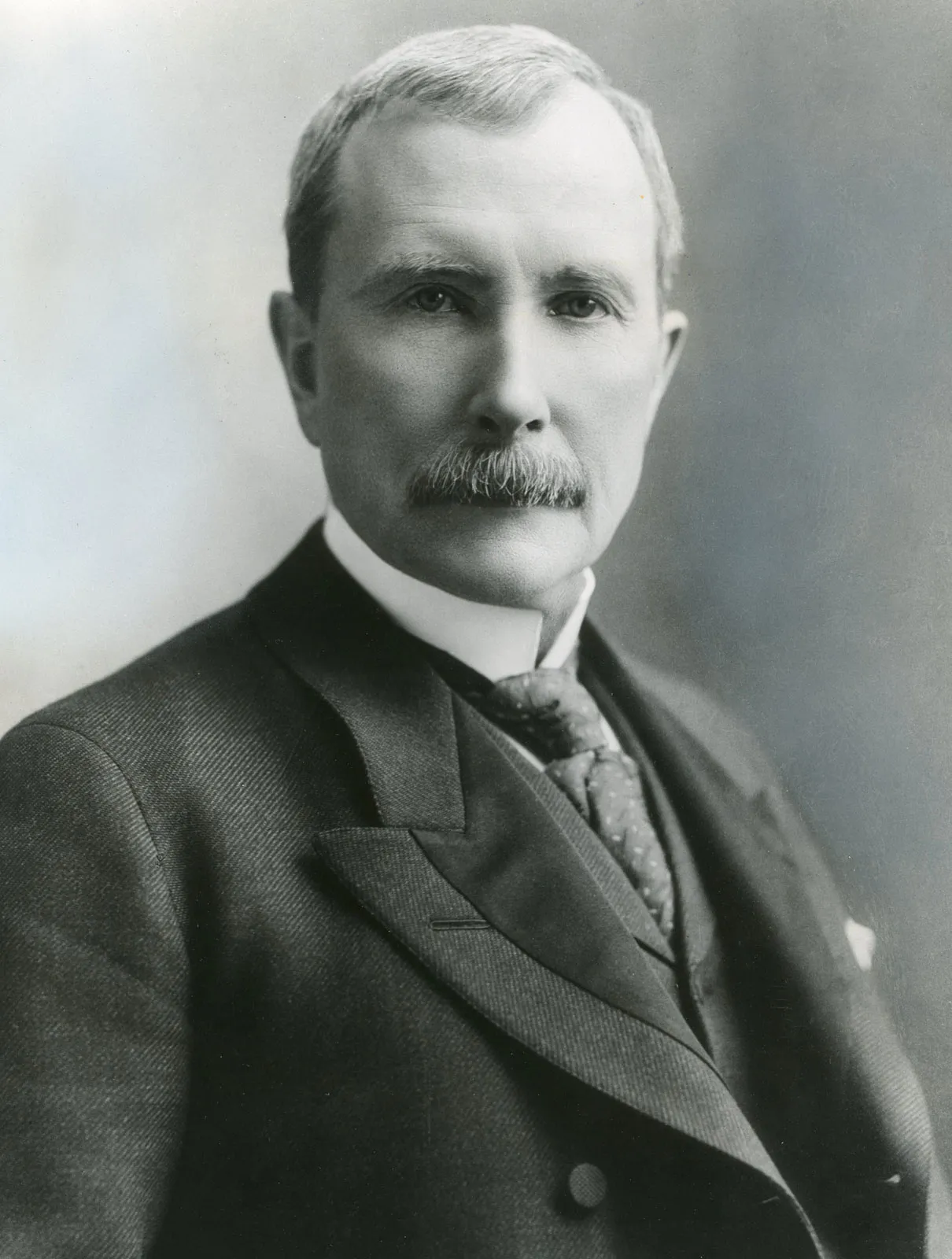
The Industrial Revolution produced mass production and factories where children worked long hours in unsafe conditions. It produced the robber barons who cheated their way to fame and fortune on the backs of workers. The workers banded together to form labor unions. The magnates whined to the government which sent in troops to disburse the strikers.
John D. Rockefeller
The bottom line is all that the bosses cared about in the 1800’s. That singular goal remains in place today as MBAs run major companies with the same ruthlessness that the robber barons would be proud of.
Corporations are exporting jobs to Asia and Latin America. Why? To take advantage of the low labor costs and unsupervised working conditions.
The contract between labor and management is broken even in academia. When the University of Texas at Dallas (UTD) closed its DEI program under orders from the former Republic now the State of Texas, it promised that no one would lose their jobs. Several months after the initial announcement, the school fired the staff.
Mergers seem to come with layoffs like peanut butter and jelly. No wonder workers don’t trust management. Why should they?
The Pareto principle
It is a statistical fact that 20% of the people do 80% of the work. It was that way 60 years ago when I began my career and it is true today. It even holds for any group effort aka teamwork. Remember the 8th Grade Science Project where you did “all” the work and your four classmates did very little?
While teamwork is lauded, competition is fostered. High performers are kept by managers who don’t want to lose their “ace” who has helped the boss garner bonuses and promotions. How many top performers have heard, “Your chance will come soon.” Right. After you win the lottery.
What is the reward for these great contributors? They are assigned to train new employees, given them more work to do, and help teach and do their new bosses’ jobs.
The gap between executives and workers continues to widen. A local airline boasts millionaires in its executive suite while failing to update five-year-old labor agreements with pilots and flight attendants.
Homeschooling
Cothrum also says that “37% of nonworkers identified family caregiving as the primary reason they are not working.” That’s not a bad thing. Caring for an aged parent or young child is more important than getting a bonus or promotion. Many parents stay home or work from home to educate their children. Moms and dads undertake homeschooling, not because it is easy, but because it is critical in helping their kids learn. Public schools are plagued with overcrowded classrooms, untrained teachers, bullying, and shootings. Students at a Dallas high school refused to return to class because a student had brought a gun to school and shot a classmate. Teachers are leaving the classroom because of little or no support from administrations, frenzied school boards, and state-regulated content and books.
Cothrum and I agree on several points. There must be a “clear relationship between effort and reward” and “employees must be compensated appropriately in both dollars and recognition.” The solution to these issues is clearly in the hands of management and their failure to solve the problem already points to indifference and ignorance.
I just added a lengthy commentary entitled “Univeral Liberty and Universal Suffrage, Secured by Universal Education.” It is about the 1875 Ohio election where Rutherford B. Hayes won a third term as governor. The piece, from William D. Howells’ Sketch of the Life and Character of Rutherford B. Hayes, presents the conflict between the Democratic Party and the Republican Party over state-funded parochial schools. It reminded me of the battle currently being fought in the Texas legislature and the attacks on public education.
From Battlefield to Oilfields at McFarland Publishers
I just delivered the final draft of my latest book, From Battlefields to Oilfields to my publisher. The following is a brief description of the non-fiction work.
From before the discovery of oil at the Drake well in Titusville in 1859 to Ida Tarbell’s article in 1909 about how the Northern women “met the experience of war,” there has been a connection between the American oil and gas industry and the Civil War. When the war ended thousands of veterans rushed into the oil regions to start their lives again and seek their fortunes in the new petroleum boom.
From Battlefields to Oilfields explains the relationship between the American Civil War and the development of the United States petroleum industry. After the discovery of oil by Edwin Drake in 1859 in Titusville, Pennsylvania, Union oilfields became strategic targets and attacks on northern whaling ships helped grow the demand for kerosene. After the Rebellion, Civil War veterans helped spread the growth of oil exploration. former soldiers and officers searched for oil and gas, developed new transportation and production technology, and found new uses for petroleum products.
From Battlefields to Oilfields examines the involvement of Civil War officers and soldiers in all areas of the oil and gas industry. Their sacrifices on the battlefield saved the nation. Their contributions to the petroleum industry helped build the country.
You know the question I am referring to. It’s the same one we ask after every shooting, drug overdose, drunken driver manslaughter, beaten or murdered spouse, child poisoning, and immigrant death.
Here and now stop asking the asking the questions and take action. You are not a victim. Wringing your hands and screaming at the TV won’t get it done. By doing nothing you are an enabler.
Call all of your legislators. Contact government agencies. Vote and run for office. Boycott companies that support politicians and lobbyists who put money ahead of life.
Yes, put on your big girl or big guy pants, get off the couch, and be an instrument of positive change.
Get your head out of the sand and be a force of good not a ‘”it’s not my problem.” Build fences, not walls. Have those unpleasant conversations.
Our polarized, divisive culture seems to be without heroes and role models. We are adrift in a dark sea of disillusionment and distrust, and we need “human lighthouses” to give us hope and direct us back to the goodness in each other and in our own hearts.
Steve Pemberton found a lighthouse in an ordinary man named John Sykes, his former high school counselor. John gave Steve a safe harbor after Steve escaped an abusive foster home and together they navigated a new path that led to personal and professional success. Through stories of people like John and several others, you will identify how the hardships you have overcome equip you to be a “human lighthouse”, inspiring those around you.
The humble gestures of kindness that change the course of our lives can shift the course for America, too. With a unique vision for building up individuals and communities and restoring trust, The Lighthouse Effect opens your eyes to those who are quietly heroic. You will reflect on the lighthouses in your own life and be reminded that the greatest heroes are alongside us – and within us.
Time to celebrate our love for family and friends. I have compiled several illustrations from Frank Leslie’s Illustrated Newspaper for your holiday enjoyment.
Happy Holidays and Best Wishes for a Wonderful 2024!
Recently, I watched the movie Shake Hands with the Devil.
Shake Hands with the Devil is a 2007 Canadian war drama film starring Roy Dupuis as Roméo Dallaire, which premiered at the Toronto International Film Festival in August 2007. Based on Dallaire’s autobiographical book Shake Hands with the Devil: The Failure of Humanity in Rwanda, the film recounts Dallaire’s harrowing personal journey during the 1994 Rwandan genocide and how the United Nations didn’t heed Dallaire’s urgent pleas for further assistance to halt the massacre. <Source: Shake Hands with the Devil (2007 film) – Wikipedia>
The movie prompted me to ask the question: “Why isn’t the United Nations interceding in the Ukraine-Russia war and the Israel-Hamas war?” It seems like a reasonable question. So why aren’t the news media asking the United Nations for a response?
Ukrainian President Volodymyr Zelensky asked the UN Security Council the same question. “You need to act immediately,” Zelensky implored the UN during a live-streamed address on April 6 to its members. He begged them to do something to stop the war in his country, criticizing the Security Council’s inaction directly. And he called out the elephant in the room: Russia, one of the five permanent members of the Council, whose status gives it the ability to veto any action it disagrees with.“We are dealing with a state that turns the right of veto in the UN Security Council into a right to die,” Zelensky said.
What about the Israel-Hamas war that is claiming the deaths of thousands of innocent Palestinians?
The U.N. Security Council failed to address the Israeli-Hamas war in Gaza, rejecting rival United States and Russian resolutions.
The council is the U.N.’s most powerful body, charged with maintaining international peace and security, but its divisions have left it impotent and scrambling to try to find a resolution with acceptable language.
The resolution drafted by the United States, Israel’s closest ally, would have reaffirmed Israel’s right to self-defense, urged respect for international laws — especially protection of civilians — and called for “humanitarian pauses” to deliver desperately needed aid to Gaza.
In Wednesday’s vote in the 15-member council, 10 countries voted in favor, Russia, China, and the United Arab Emirates voted against, and Brazil and Mozambique abstained. The resolution was not adopted because permanent council members Russia and China cast vetoes.





















 Allen Mesch