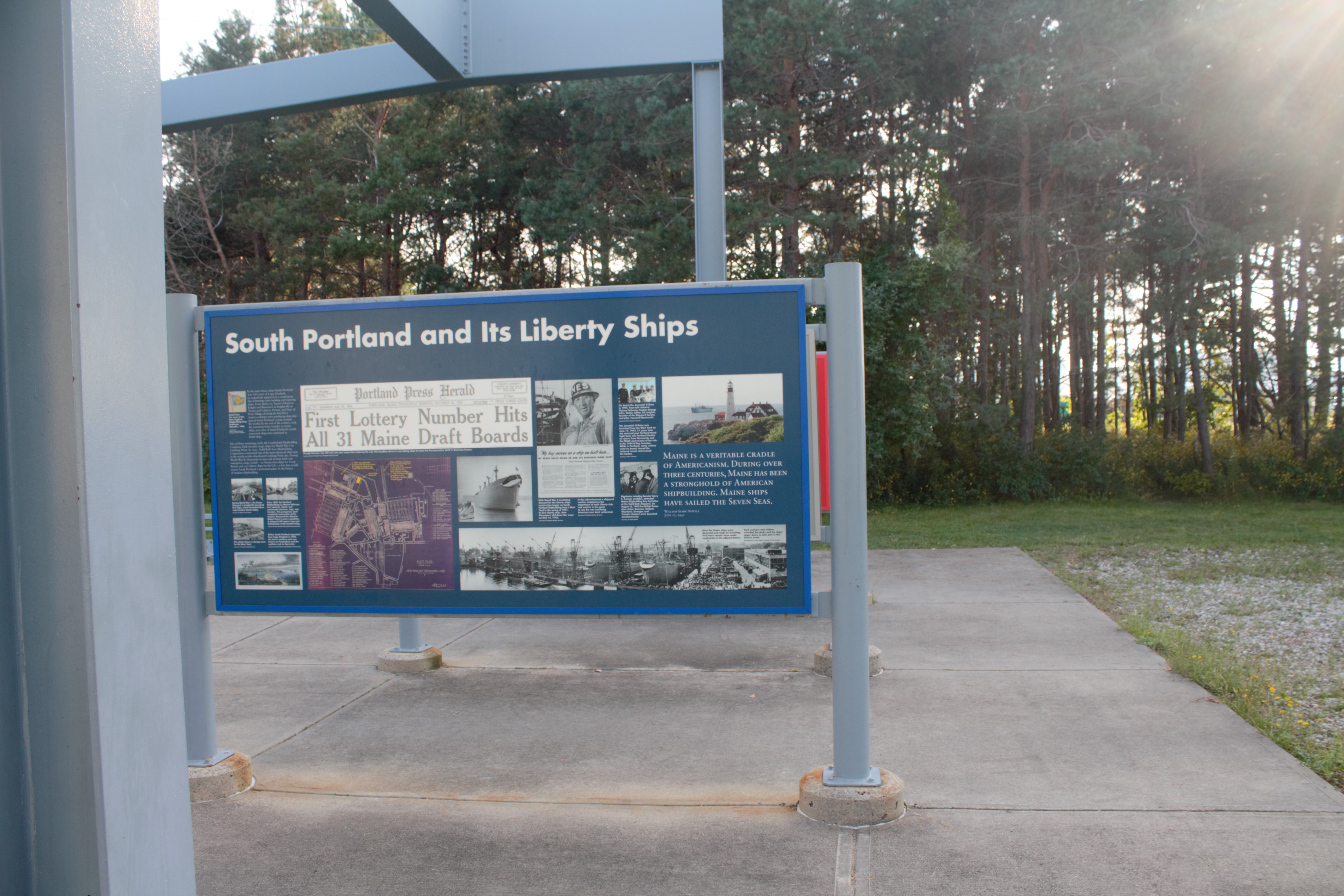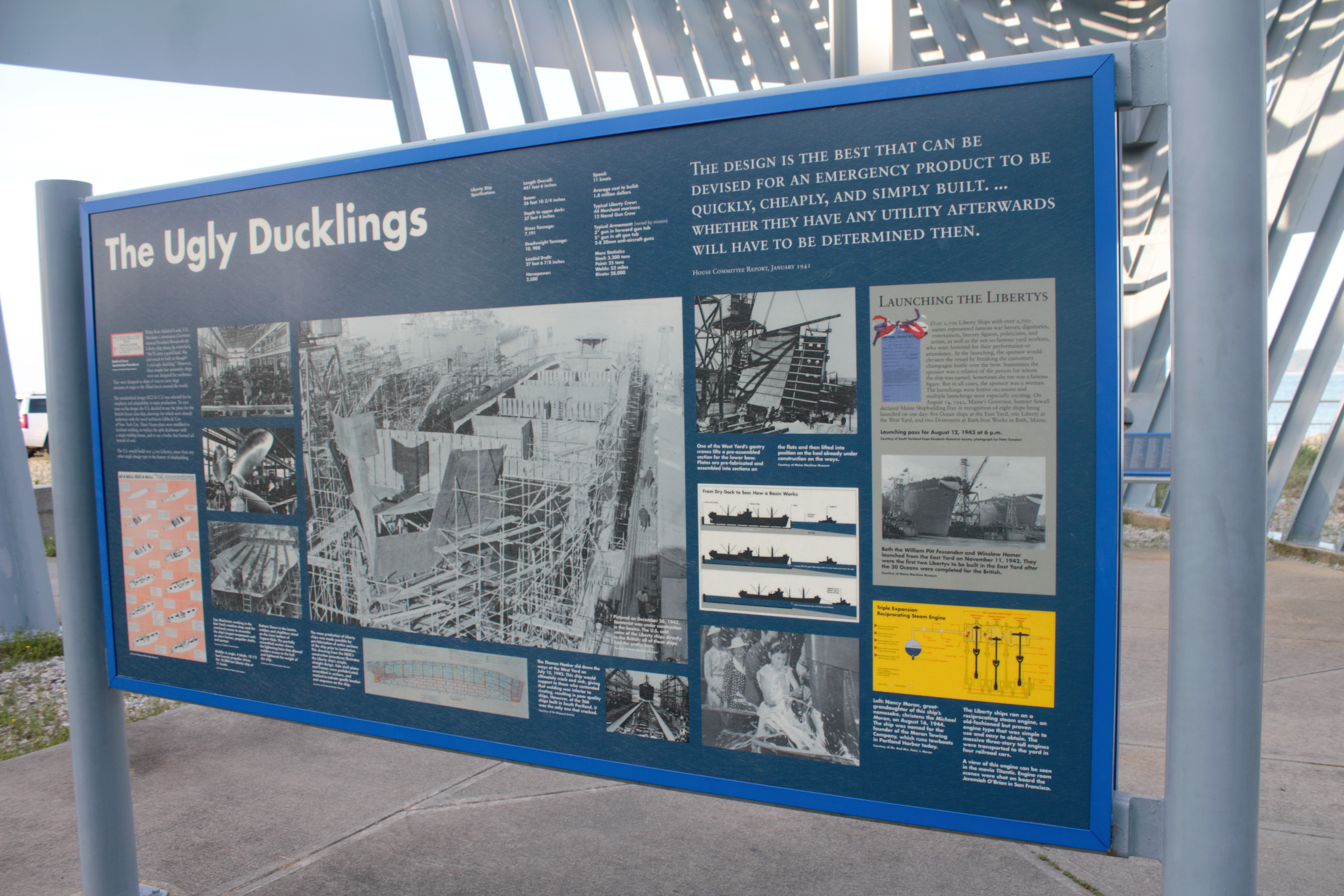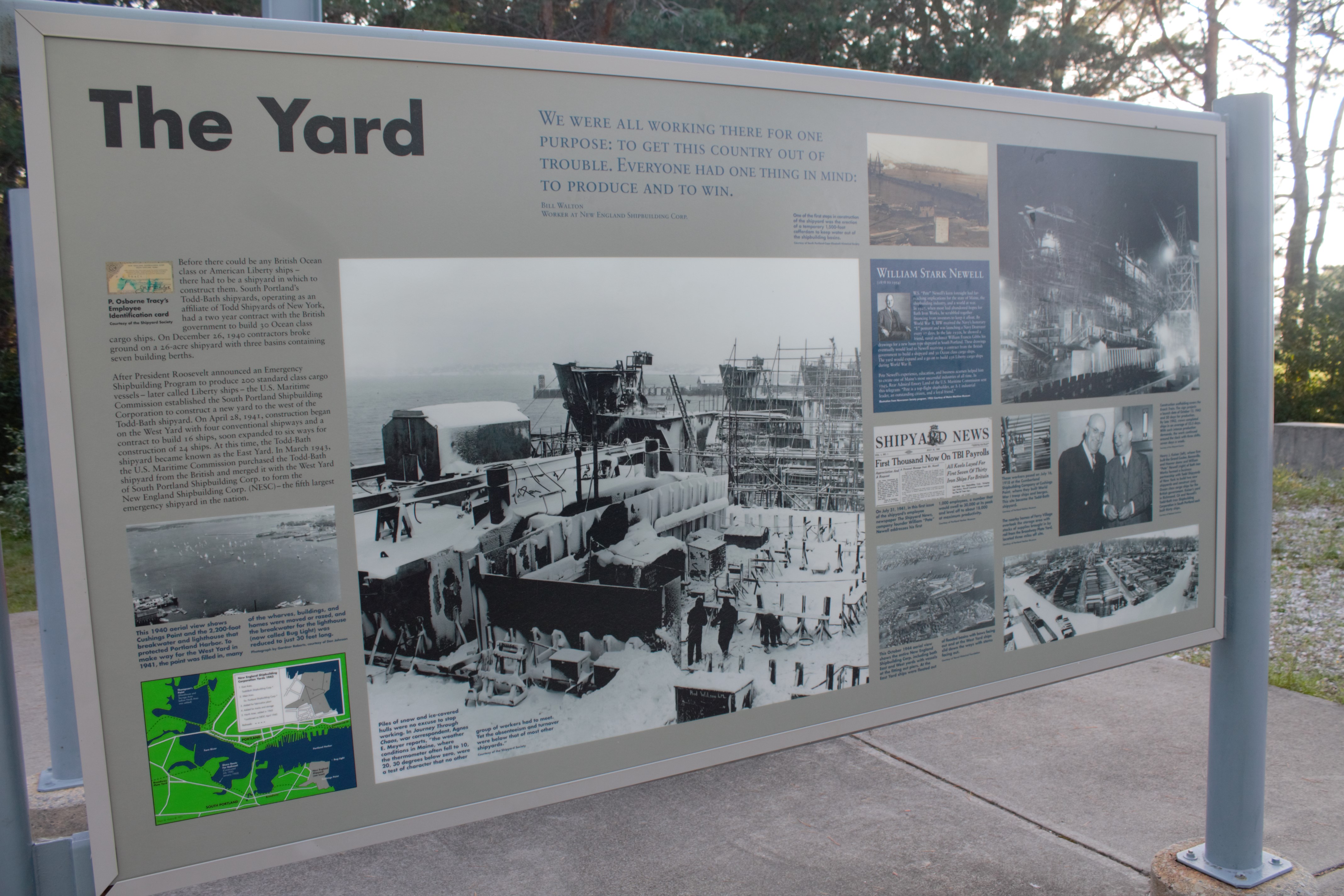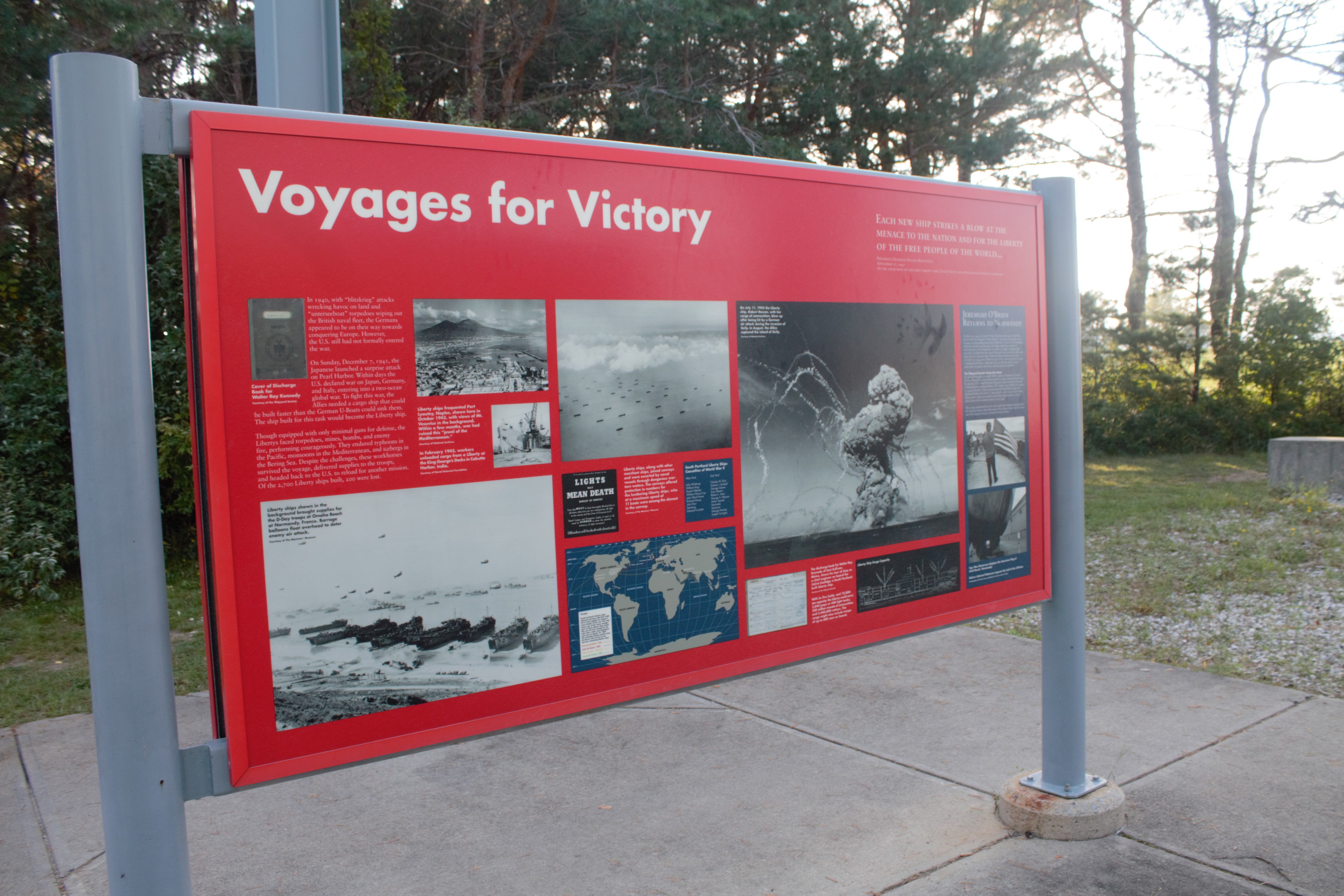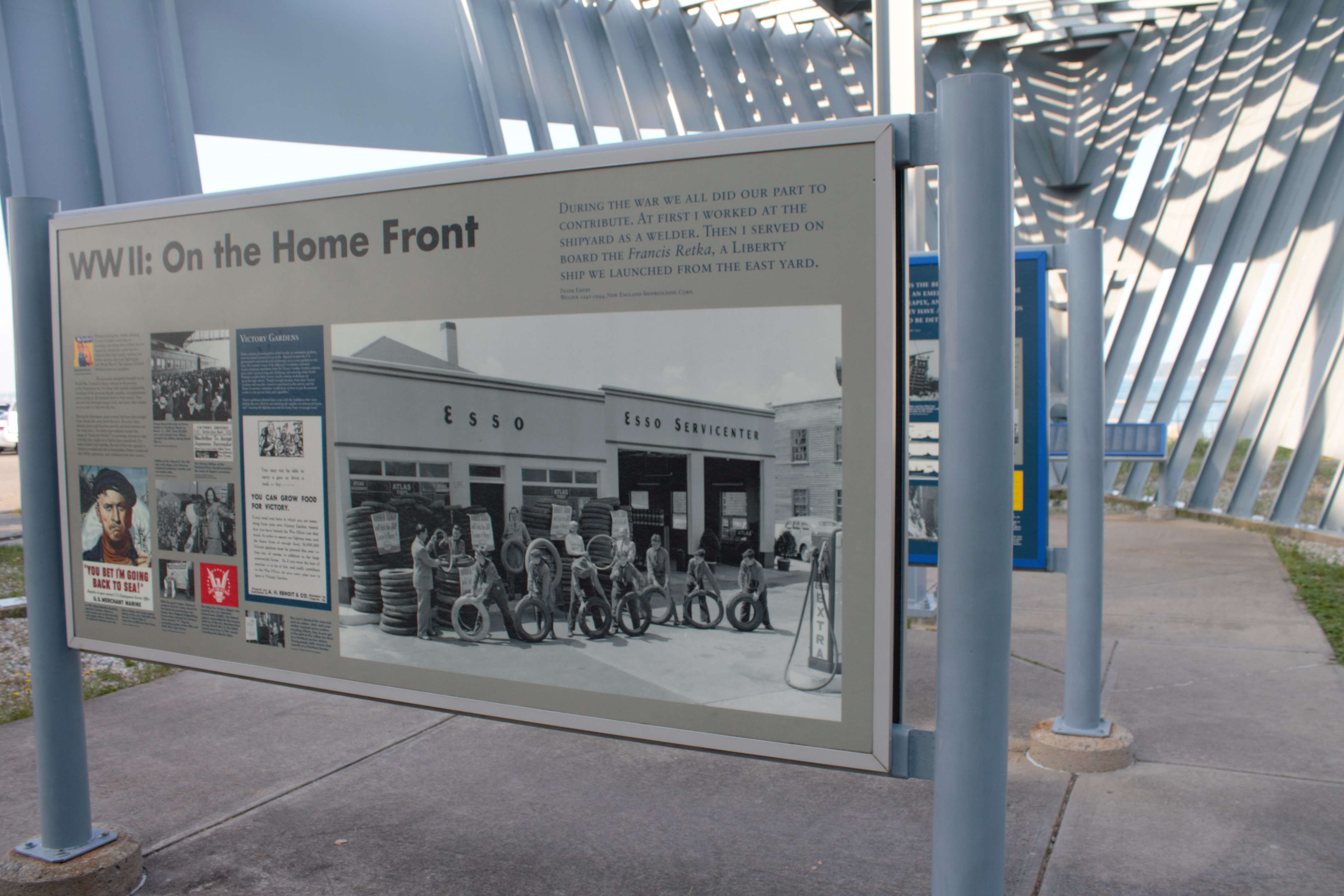
In the mid-1800s, the South Portland waterfront was a continuous line of bustling yards building and repairing ships. All along the Fore River master craftsmen were producing ships that spread South Portland’s name worldwide. By the end of the century, with the transition from wooden to steam ships, just a few of South Portland’s world-renowned shipyards continued to build ships.
One of those remaining yards, the Cumberland Shipbuilding Company, built wooden cargo ships for World War I on Cushings Point. In 1941, Todd-Bath Iron Shipbuilding Corporation constructed one of the most advanced shipyards in the world on this abandoned Cushings Point site. During World War II, thousands of men and women built 266 emergency cargo vessels – 30 ocean-class ships for Great Britain and 236 Liberty ships for the U.S. – a feat that would ensure South Portland a prominent place in the history of modern shipbuilding.
Since 1850, the Portland Shipbuilding Co./Marine Railways has repaired, rebuilt, and constructed steamers, tugs, and trawlers. This prosperous yard completed the construction of the steamer Roosevelt for Admiral Robert Peary’s Arctic expedition. A shipyard still repairs tugs and fishing boats at this location today.
With World War II escalating demand for the Liberty ships, construction began on South Portland Shipbuilding Corps’ West Yard in the spring of 1941. Its first Liberty ship, John Davenport, slid down the ways on May 15, 1942.
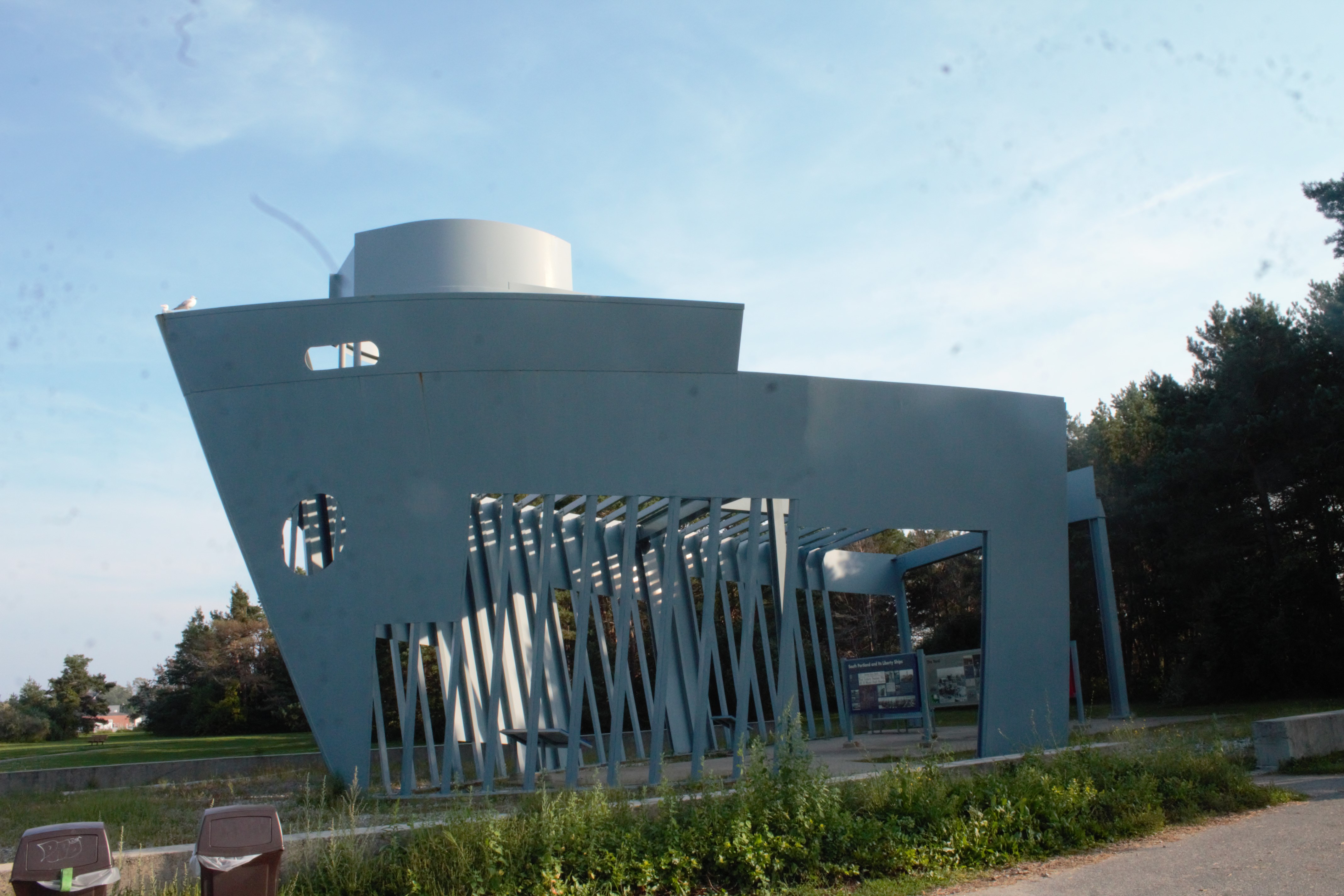
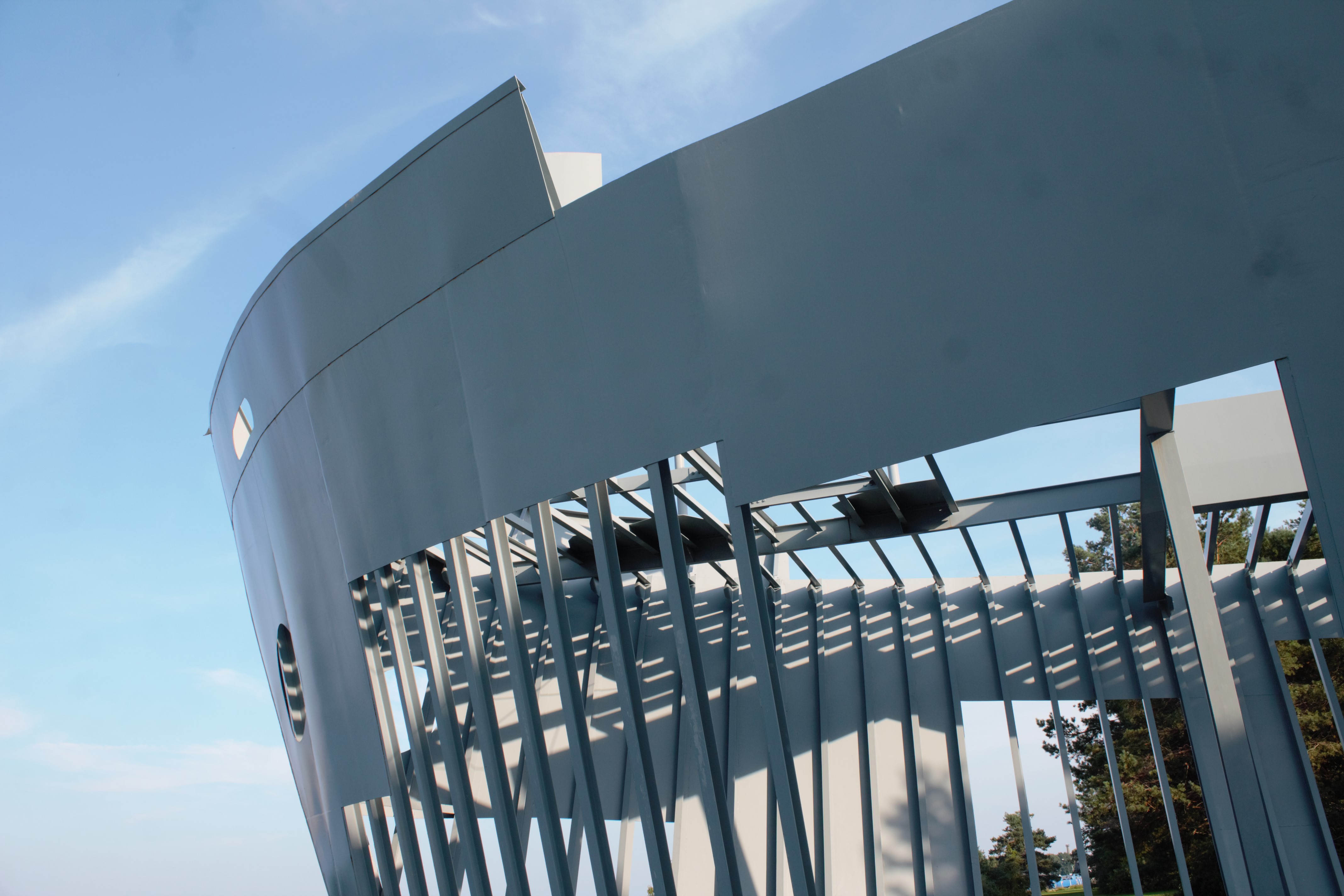
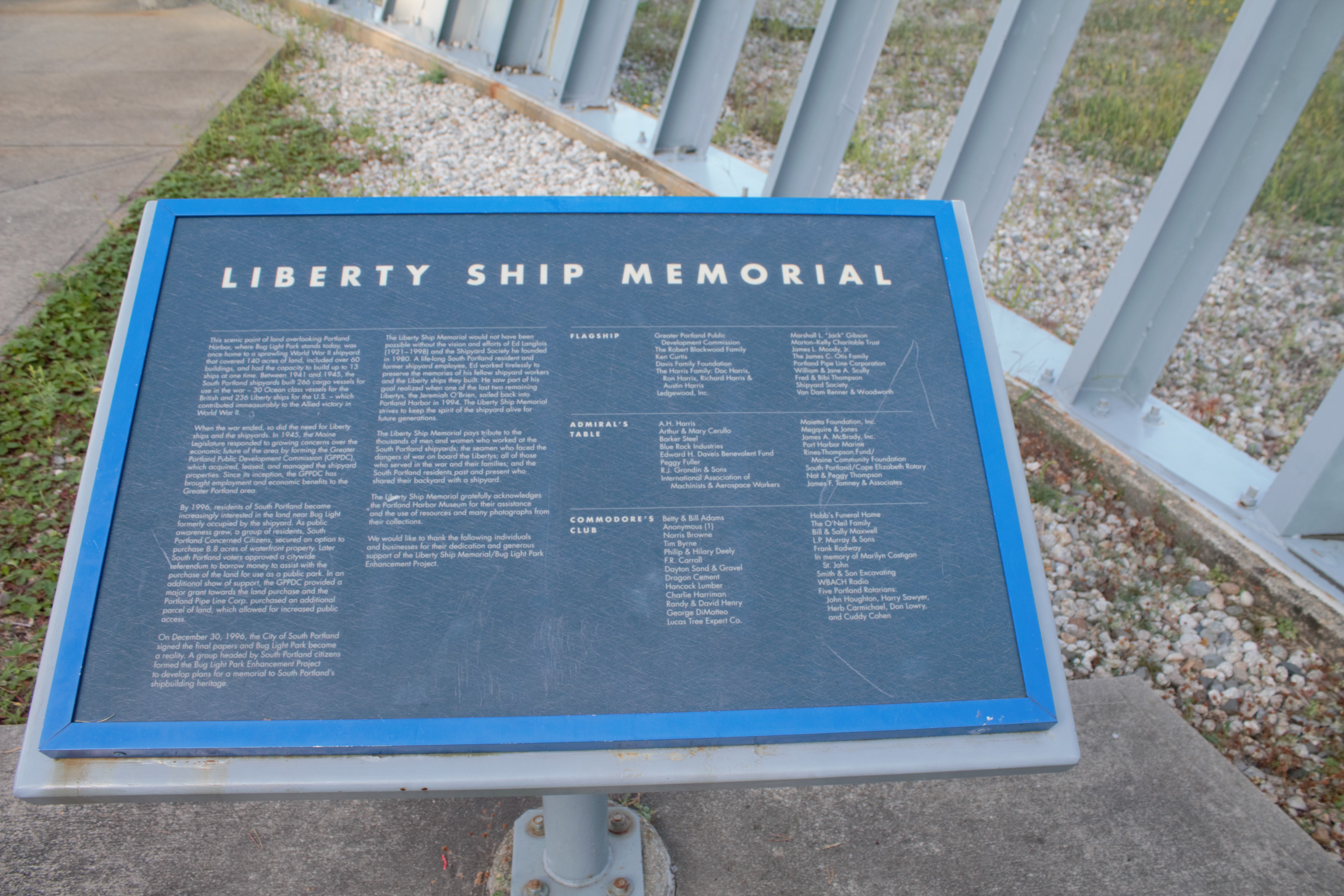
A historical marker commemorates the construction of the Liberty ships.
In the mid-1800s, when South Portland was still a part of Cape Elizabeth, its waterfront appeared to be a continuous line of bustling yards building and repairing ships. From Butler on Turner’s Island to Knight and Blanchard in Knightville to Turner and Cahoon, Pickett, and Dyer of Ferry Village, all along the Fore River master craftsmen were producing ships that spread South Portland’s name around the world. By the end of the century, with the transition from wooden to steam ships, just a few of South Portland’s world-renowned shipyards continued to build ships.
One of those remaining yards, the Cumberland Shipbuilding Company, built wooden cargo ships for World War I on Cushings Point. In 1941, Todd-Bath Iron Shipbuilding Corporation constructed one of the most advanced shipyards in the world on this abandoned Cushings Point site. During World War II, thousands of men and women built 266 emergency cargo vessels – 30 ocean-class ships for Great Britain and 236 Liberty ships for the U.S. – a feat that would ensure South Portland a prominent place in the history of modern shipbuilding.
Maine is a veritable cradle of Americanism.
During over three centuries, Maine has been a stronghold of American shipbuilding. Maine ships have sailed the Seven Seas.
William Stark Newell
Source: South Portland and its Liberty Ships,” The Historical Marker Database, https://www.hmdb.org/m.asp?m=50413 and the South Portland-Cape Elizabeth Historical Society
June 13, 1941
The following photographs were taken during my September 2023 trip to Maine.