
Why History Is Important

History is Relevant
(BombayMuseum.org)
History is far more than a list of dates and events. It provides a way of thinking that helps us understand ourselves, our societies, and the world we live in.
Studying history is important because it:
- Builds critical thinking and analytical skills – History teaches us to analyze causes, effects, and perspectives of events, helping us evaluate information logically and make informed decisions.
- Enhances cultural awareness and empathy – Learning about different cultures, traditions, and historical experiences helps us develop respect for diversity and a deeper understanding of others’ perspectives.
- Provides context for the present and future – Understanding past events and relationships helps explain current societal structures, political systems, and global issues, and can help guide future decisions.
- Molds identity and belonging – History connects us to our personal and collective past, helping us understand our roots, family stories, and how we fit into the broader human experience.
- Offers lessons from the past – By examining successes, failures, and turning points, we can avoid repeating mistakes and learn from the strategies and resilience of those who came before us.
- Encourages perspective and problem-solving – History shows how societies have adapted to challenges, offering models for addressing modern problems like public health crises, economic shifts, and social justice issues.
History is a mirror, a guidebook, and a compass reflecting our past, explaining the present, and helping us shape a better future.
Why People Are Losing Interest in History
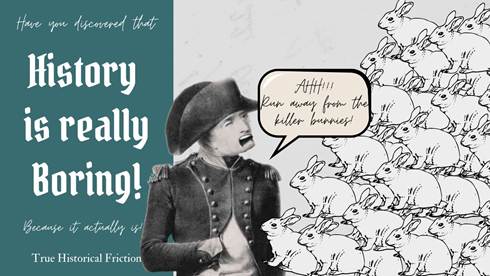
History is Really Boring
(Youtube)
Interest in history has declined for several interconnected reasons, including how it’s taught, its political framing, and how it’s perceived in modern culture.
- Teaching methods and presentation. Many history courses are still taught in a dry, memorization-focused way, emphasizing dates, names, and facts rather than storytelling. This can make history feel mechanical and disconnected from students’ lives. When lessons start with tedious details before a compelling hook, student engagement drops quickly. Without an engrossing lead or narrative, students may tune out before they even understand the material.
- Politicalization and ideological framing – History has become increasingly politicized, with some courses presenting events through a single ideological perspective rather than offering balanced views. This can alienate students who already hold strong political ideas and want to avoid being “taught” what to think.
- Perceived irrelevance – Students often struggle to see how ancient civilizations, wars, or political movements connect to their own lives. Without clear relevance, history can feel like a series of unrelated facts rather than a living story of human experience.
- Cultural and media influence – Popular media often portray history as boring or irrelevant, reinforcing the stereotype. When history is only shown in a detached, factual way, it can shape public perception. Conversely, when history is woven into engaging stories or films, it tends to stick in people’s minds.
- Generational shifts and trust in institutions – The 1960s-1980s saw a generation disillusioned with government and traditional institutions, leading to a preference for alternative interpretations of history. This skepticism has carried into modern education, where students may be more selective about which histories they engage with.
People aren’t interested in history because it’s often taught in a way that feels dull, politically biased, or disconnected from their lives, and because cultural portrayals reinforce the idea that it’s irrelevant. To rebuild interest, educators and communicators need to make history more narrative-driven, context-rich, and relevant to contemporary issues.
Why Students Often Don’t Like History
Students’ dislike of history often comes from a mix of teaching methods, subject perception, and shifting academic priorities.
- Boring or outdated teaching methods – Many history classes rely on long lectures, dense textbooks, and old documentaries, which can feel disconnected from students’ interests. Without interactive elements like role-playing, debates, or multimedia, history can seem static and unengaging.
- Perception of being “boring” or “about dead people.” – A common stereotype is that history is just memorizing names, dates, and events from the past. This can make it seem irrelevant or dull, especially if it’s taught in a way that emphasizes rote learning rather than critical thinking.
- Specialization and political slant – In higher education, some history courses have become overly specialized or politically charged, which can alienate students who want a broad, neutral education.
- Declining academic interest and career perception – Since the 1960s–1980s, history majors have declined in number, partly because students now prioritize STEM or pre-professional fields. Even at institutions that still offer history, departments often have to market the major to dismiss myths about job prospects.
- Lack of connection to students’ lives – If history isn’t linked to current events, pop culture, or students’ personal interests, it can feel abstract. Connecting historical content to modern issues, technology, or other passions (e.g., sports history, engineering history) can make it more relatable.
- Overemphasis on memorization – While memorizing facts is part of history, students often associate the subject with endless lists of dates and places. Effective teaching should focus on understanding context, cause-and-effect, and interpretation, not just recall.
How to improve Student Engagement
- Use interactive methods like role-play, debates, and case studies.
- Connect history to current events, pop culture, and students’ interests.
- Incorporate visuals, maps, and multimedia to make content more vivid.
- Emphasize critical thinking and multiple perspectives rather than just facts.
- Show the relevance of history to careers, cultural literacy, and global understanding.
Students often dislike history because it’s taught in ways that feel disconnected, outdated, or irrelevant. Changing the approach by making it interactive, relevant, and engaging can help students see its value and enjoy it more.
As any college student realizes, professors got their position by virtue of their research and publications. They were never taught to teach. In many cases, professors treat teaching like an onerous task that allows them to “pay the bills” and write books.
Personal Experience
I had my own experience with history education. I was acting as a historical reenactor at the city of Allen, Texas, 150th Anniversary celebration. I planned to inform visitors about how the city got its name. Ebenezer Allen was a railroad entrepreneur, and a replica of the engine, The Ebenezer Allen, is located at the Allen Railroad Depot. The depot is maintained by the Allen Heritage Guild. Another gentleman who is an expert on Allen’s early history was also in attendance. Neither of us was provided a platform to educate the visitors on Allen’s history. Instead, the City of Allen chose to make the event a carnival. The Allen Heritage Guild also failed to provide a venue to tell the community about the city’s history.
My thought is that organizations need to provide a platform to let the “experts” explain history. If history is “irrelevant, “it’s because people don’t think that it’s “interesting” and don’t take advantage of situations where historians could try to make it fun.
Your Turn
- What do you do to make history more relevant?
- How do you get students interested in your subject?
- How do you bridge the time gap between yesterday and today?
- How do you make history “sexy?”
I used CoPilot Search to prepare this blog.


