Book Burnings
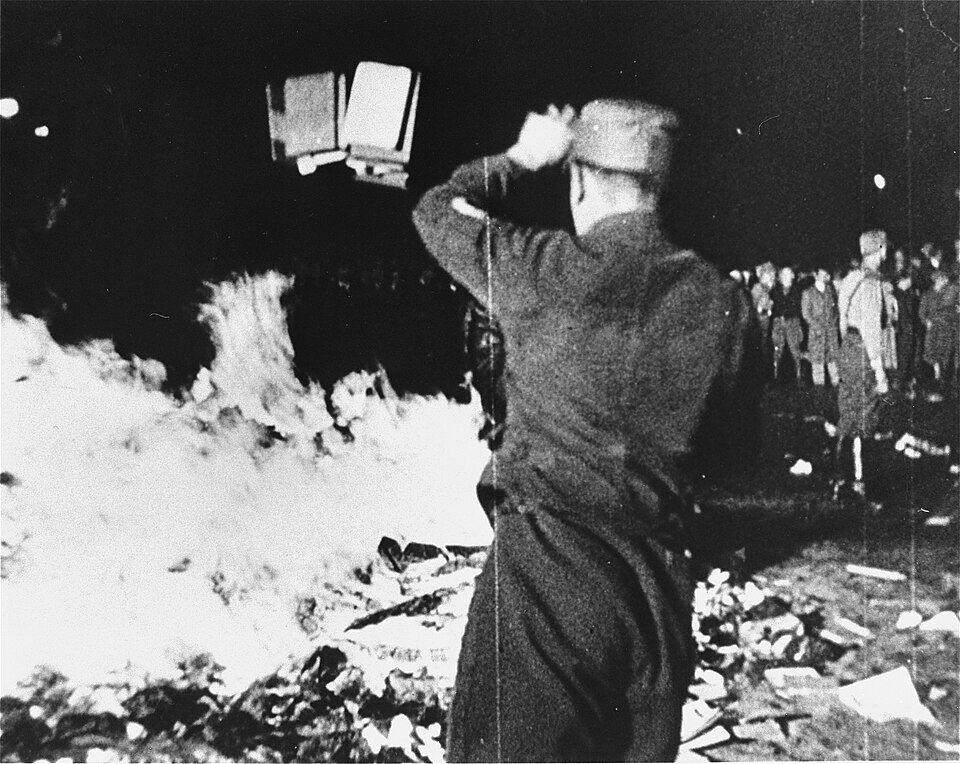
The Nazi book burnings were a campaign conducted by the German Student Union to ceremonially burn books in Nazi Germany and Austria in the 1930s. The books targeted for burning were those viewed as being subversive or as representing ideologies opposed to Nazism. These included books written by Jewish, half-Jewish, communist, socialist, anarchist, liberal, pacifist, and sexologist authors, among others. The initial books burned were those of Karl Marx and Karl Kautsky, but the burned books came to include other authors, including the works of Albert Einstein, Helen Keller, H.G. Wells, and effectively any book incompatible with Nazi ideology. The first burning consisted mainly of LGBTQ books from the Institute of Sexual Research, founded by the pioneering Jewish sexologist Magnus Hirschfeld as the first medical center devoted to the study of gender and sexuality. In a campaign of cultural genocide, books were also burned en masse by the Nazis in occupied territories. <1>
Texas Leads the U.S. in School Book Bans
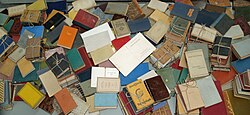
According to PEN America, Texas schools removed 8,193 books from their libraries in the 2025-2026 school year. In 2023, the Texas Legislature passed H.B. 900, which required booksellers to rate materials for sexual content. A federal judge declared the rating system unconstitutional and permanently blocked sections of the law. Texas legislators passed S.B. 13 to increase oversight of public-school library materials using advisory councils and parental supervision. Lt. Governor Dan Patrick threatened penalties for school districts that did not remove prohibited books. The districts used AI to evaluate the books and decide which to remove. The trend has been to remove books about LGBT people and “people of color.” <2>
The following titles are among the notable books on Lt. Gov. Patrick’s list: “Night” by Elie Wiesel, “American Like Me” by America Ferrera, “I Know Why the Caged Bird Sings” by Maya Angelou, and “Beloved” by Toni Morrison. These books were written by a Jewish author, a Mexican American author, and a Black author. <3>
Conclusions
As an author, I am distressed by the state’s heavy-handed censorship. I am not opposed to parents restricting books that their children read. However, a parent’s censorship should not be applied broadly to all parents. Children of color and young people struggling with sexual identity should not be barred from reading books about other people dealing with life’s problems. Books are meant to elicit strong feelings. They illustrate problems in our society that need solving. Hiding the bad things that happen to people is wrong. Our children already face the dangers of school shootings.
Left uncontested, we face widespread censorship of what we read, view, and hear. What will happen to these banned volumes? They will probably be burned. It sounds like something that happened before.
Footnotes:
<1> “Nazi book burnings,” Wikipedia, Nazi book burnings – Wikipedia, retrieved October 25, 2026.
<2> “Texas led the U.S. in school book bans,” The Dallas Morning News, October 19, 2026, pp. 1B and 2B.
<3> “Books on Patrick’s school library ban list,” The Dallas Morning News, October 24, 2026, p. 4A.


