From Bookstore to Bestseller

Colleen Hoover is an American author who writes novels in the romance and young adult fiction genres. She is best known for her 2016 romance novel, It Ends with Us. She self-published many of her works before she was picked up by a publishing house. Colleen Hoover has written 25 books in her 12-year career as an author. She is the founder of Book Bonanza with 2,700 readers, authors, and volunteers. She was named one of the 100 most influential people in the world by Time magazine in 2023.

Early and Personal Life

Hoover was born on December 11, 1979, in Sulphur Springs, Texas. She grew up in Saltillo, Texas, and she graduated from Saltillo High School in 1998. She married Heath Hoover in 2000 and they have three sons. Hoover graduated from Texas A&M-Commerce with a degree in social work. She worked various social work and teaching jobs before starting her career as an author.

Colleen Hoover

Career

In November 2011, Hoover began writing her debut novel, Slammed, with no intention of getting published. She was inspired by a lyric, “decide what to be and go be it,” from an Avett Brothers song, “Head Full of Doubt/Road Full of Promise,” and she incorporated Avett Brothers lyrics throughout the story. Hoover self-published Slammed in January 2012. Hoover states that she published the novel so her mother, who had just gotten an Amazon Kindle, could read it.

A sequel, Point of Retreat, was published in February 2012. After a few months, Slammed was reviewed and given five stars by book blogger Maryse Black, and afterward, sales rocketed for Hoover’s first two books. Slammed and Point of Retreat reached #8 and #18, respectively, on the New York Times Best Seller list in August of that year. Atria Books picked up the novels and republished them on August 10, 2012. A third book in the series, This Girl, was published in April 2013. After the success of Slammed, Hoover quit her job in the social work field to become a full-time writer.

Hoover’s novel, Hopeless, was self-published in December 2012. The plot line, which is that of a girl who was home-schooled throughout her elementary education, before going to a public high school, reached #1 on the New York Times Best Seller list on January 20. It was the first self-published novel to ever top the list. A companion novel, Losing Hope, was published that July.

Finding Cinderella is a free novella that Hoover published in 2014. It features several of the characters from her novels, Hopeless and Losing Hope. A paperback was released with several bonus features, such as a new epilogue and Hoover’s own “Cinderella story.” Maybe Someday, published in March 2014, was the first novel in a small series about a boy and a girl who write music together and fall in love. Musician Griffin Peterson created a soundtrack to accompany the novel. Links in the e-book or a scannable QR code in the paperback led to a website, where readers could listen to the music.

Never Never, a 2015 collaboration with Tarryn Fisher, was originally split into three parts and sold as three separate books. The work was later republished as one complete book.

Hoover’s novel, It Ends with Us, was published in 2016. Hoover described it as “the hardest book I’ve ever written.” The novel concerns domestic violence, and, according to Hoover, it was written with the intention of advocating for domestic violence victims. The story was inspired by Hoover’s personal experience as a child growing up in a household with domestic violence, which carried through her adult life. The book’s main character, Lily, experiences domestic violence at a young age, witnessing her father’s abuse towards her mother, on top of experiencing it firsthand. Then, she ends up in a violent relationship, as an adult. In 2021, Hoover experienced a surge in popularity, due to attention from the #BookTok community on TikTok. As a result, in January 2022, It Ends with Us was #1 on The New York Times best sellers list. As of 2019, the novel had sold over a million copies worldwide, and it has been translated into over twenty languages. Filming of a movie adaption of It Ends with Us began in May 2023.

A sequel to It Ends with Us, titled, It Starts with Us, was published by Atria Books on October 18, 2022. Simon and Schuster released the details of the extensive marketing campaign for the novel, which became the publisher’s most pre-ordered book of all time.

In October 2022, Simon and Schuster UK acquired two standalone novels by Hoover, which are to be published in 2024 and 2026.

Alexandra Alter of The New York Times wrote, “To say she’s currently the best-selling novelist in the United States, to even compare her to other successful authors who have landed several books on the best seller lists, fails to capture the size and loyalty of her audience.”

Writing Style

“I can’t work on more than one thing.”

“Once I start and I get really into it, that’s my hyper-focus. And that’s all I do – just write 18 hours a day and sleep.”

Ms. Hoover’s success gives hope to all aspiring authors. Just because the big publishing houses ignore you doesn’t mean you can’t strike it rich by self-publishing your book.

Sources:

“From Bookstore to bestseller,” Dallas Morning News, June 24, 2023, pp 1B & 2B.

“Colleen Hoover,” Colleen Hoover – Wikipedia, retrieved June 26, 2023.

Posted in Scratch Pad | Leave a comment

Emancipation and Juneteenth

Did Lincoln Free the Slaves?

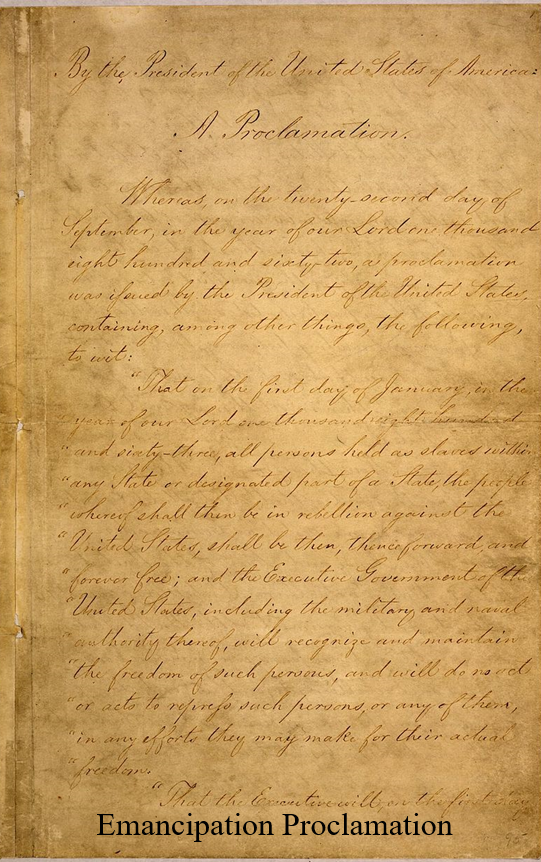
The Emancipation Proclamation, officially Proclamation 95, was a presidential proclamation and executive order issued by President Abraham Lincoln on January 1, 1863, during the Civil War. The Proclamation changed the legal status of more than 3.5 million enslaved African Americans in the secessionist Confederate states from enslaved to free. As soon as slaves escaped the control of their enslavers, either by fleeing to Union lines or through the advance of federal troops, they were permanently free. In addition, the Proclamation allowed for former slaves to “be received into the armed service of the United States.”

On January 1, 1863, Lincoln issued the final version of the Emancipation Proclamation.

I, Abraham Lincoln, President of the United States, by virtue of the power in me vested as Commander-in-Chief, of the Army and Navy of the United States in time of actual armed rebellion against authority and government of the United States, and as a fit and necessary war measure for suppressing said rebellion, do … order and designate as the States and parts of States wherein the people thereof respectively, are this day in rebellion, against the United States, the following, to wit:

Lincoln then listed the ten states still in rebellion, excluding parts of states under Union control, and continued:

I do order and declare that all persons held as slaves within said designated States, and parts of States, are, and henceforward shall be free… [S]uch persons of suitable condition, will be received into the armed service of the United States… And upon this act, sincerely believed to be an act of justice, warranted by the Constitution, upon military necessity, I invoke the considerate judgment of mankind and the gracious favor of Almighty God.

The proclamation provided that the executive branch, including the Army and Navy, “will recognize and maintain the freedom of said persons.” Even though it excluded areas not in rebellion, it still applied to more than three and a half million of the four million enslaved people in the country. Around 25,000 to 75,000 were immediately emancipated in those regions of the Confederacy where the US Army was already in place. It could not be enforced in the areas still in rebellion, but, as the Union army took control of Confederate regions, the Proclamation provided the legal framework for the liberation of more than three and a half million enslaved people in those regions by the end of the war. The Emancipation Proclamation outraged white Southerners and their sympathizers, who saw it as the beginning of a race war. It energized abolitionists and undermined those Europeans who wanted to intervene to help the Confederacy. The Proclamation lifted the spirits of African Americans, both free and enslaved. The proclamation encouraged many to escape from their masters and flee toward Union lines to obtain their freedom and to join the Union Army. [1]

The Emancipation Proclamation became a historic document because it “would redefine the Civil War, turning it [for the North] from a struggle [solely] to preserve the Union to one [also] focused on ending slavery, and set a decisive course for how the nation would be reshaped after that historic conflict.”[2]

Juneteenth

Juneteenth (officially Juneteenth National Independence Day) is a federal holiday in the United States commemorating the emancipation of enslaved African Americans. Deriving its name from combining June and nineteenth, it is celebrated on the anniversary of the order, issued by Major General Gordon Granger on June 19, 1865, proclaiming freedom for slaves in Texas. The celebration began in Galveston, Texas. Juneteenth has since been observed annually in various parts of the United States, often broadly celebrating African-American culture. The day was first recognized as a federal holiday in 2021 when President Joe Biden signed the Juneteenth National Independence Day Act into law after the efforts of Lula Briggs Galloway, Opal Lee, and others.

Despite the surrender of Confederate General-in-Chief Robert E. Lee at Appomattox Court House on April 9, 1865, the Western Confederate Army of the Trans-Mississippi did not surrender until June 2. On the morning of June 19, 1865, Union Major General Gordon Granger arrived on the island of Galveston, Texas to take command of the more than 2,000 federal troops recently landed in the Department of Texas to enforce the emancipation of its slaves and oversee Reconstruction, nullifying all laws passed within Texas during the war by Confederate lawmakers. The order informed all Texans that, in accordance with a Proclamation from the Executive of the United States, all slaves were free:

The people of Texas are informed that, in accordance with a proclamation from the Executive of the United States, all slaves are free. This involves an absolute equality of personal rights and rights of property between former masters and slaves, and the connection heretofore existing between them becomes that between employer and hired labor. The freedmen are advised to remain quietly at their present homes and work for wages. They are informed that they will not be allowed to collect at military posts and that they will not be supported in idleness either there or elsewhere.

Urban legend places the historic reading of General Order No. 3 at Ashton Villa; however, no existing historical evidence supports such claims. Although widely believed, it is unlikely that Granger or his troops proclaimed the Ordinance by reading it aloud: it is more likely that copies of the Ordinance were posted in public places, including the Negro Church on Broadway since renamed Reedy Chapel A.M.E. Church. On June 21, 2014, the Galveston Historical Foundation and Texas Historical Commission erected a Juneteenth plaque where the Osterman Building once stood signifying the location of Major General Granger’s Union Headquarters and subsequent issuance of his general orders.

Although this event has come to be celebrated as the end of slavery, emancipation for the remaining enslaved in two Union border states (Delaware and Kentucky), would not come until several months later, on December 18, 1865, when the Thirteenth Amendment was ratified. The freedom of former slaves in Texas was given state law status in a series of Texas Supreme Court decisions between 1868 and 1874.[3]


[1] “Emancipation Proclamation,” Wikipedia, Emancipation Proclamation – Wikipedia, retrieved June 17, 2023.

[2] “Emancipation Proclamation – Definition, Dates & Summary,” History, Emancipation Proclamation – Definition, Dates & Summary – HISTORY (archive.org) retrieved June 17, 2023.

[3] “Juneteenth,” Wikipedia, Juneteenth – Wikipedia, retrieved June 17, 2023.

Posted in Scratch Pad | Tagged | Leave a comment

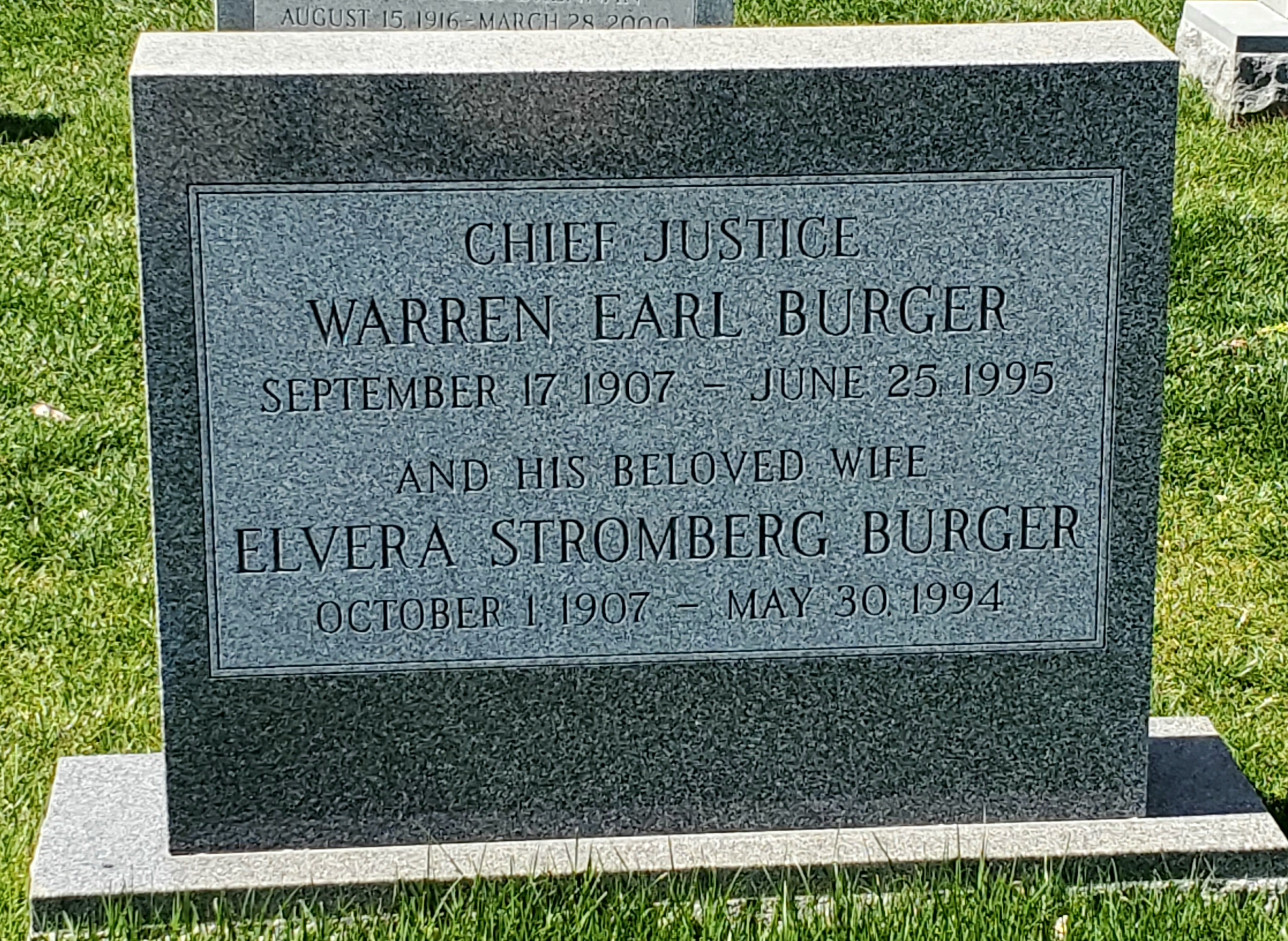
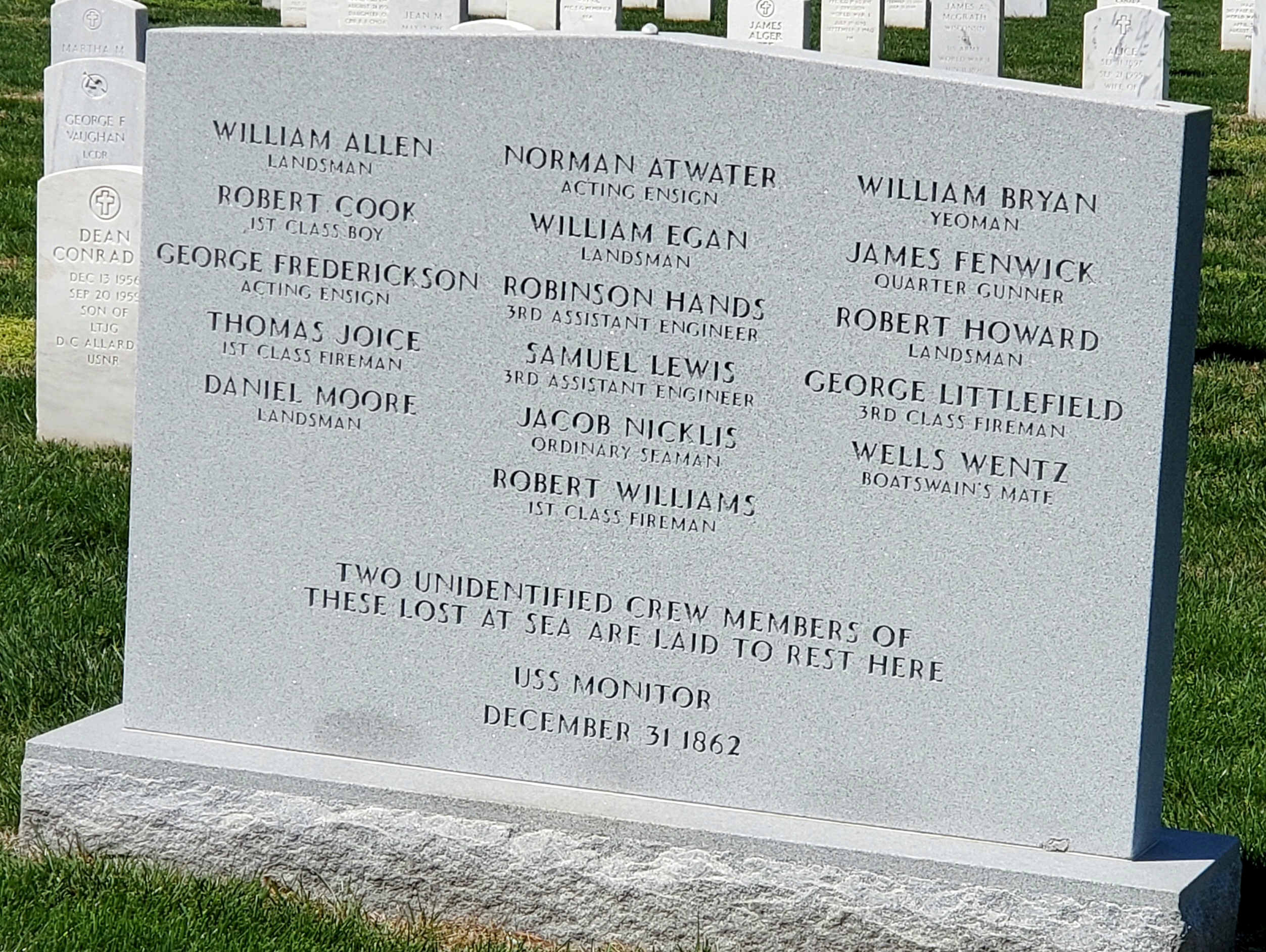
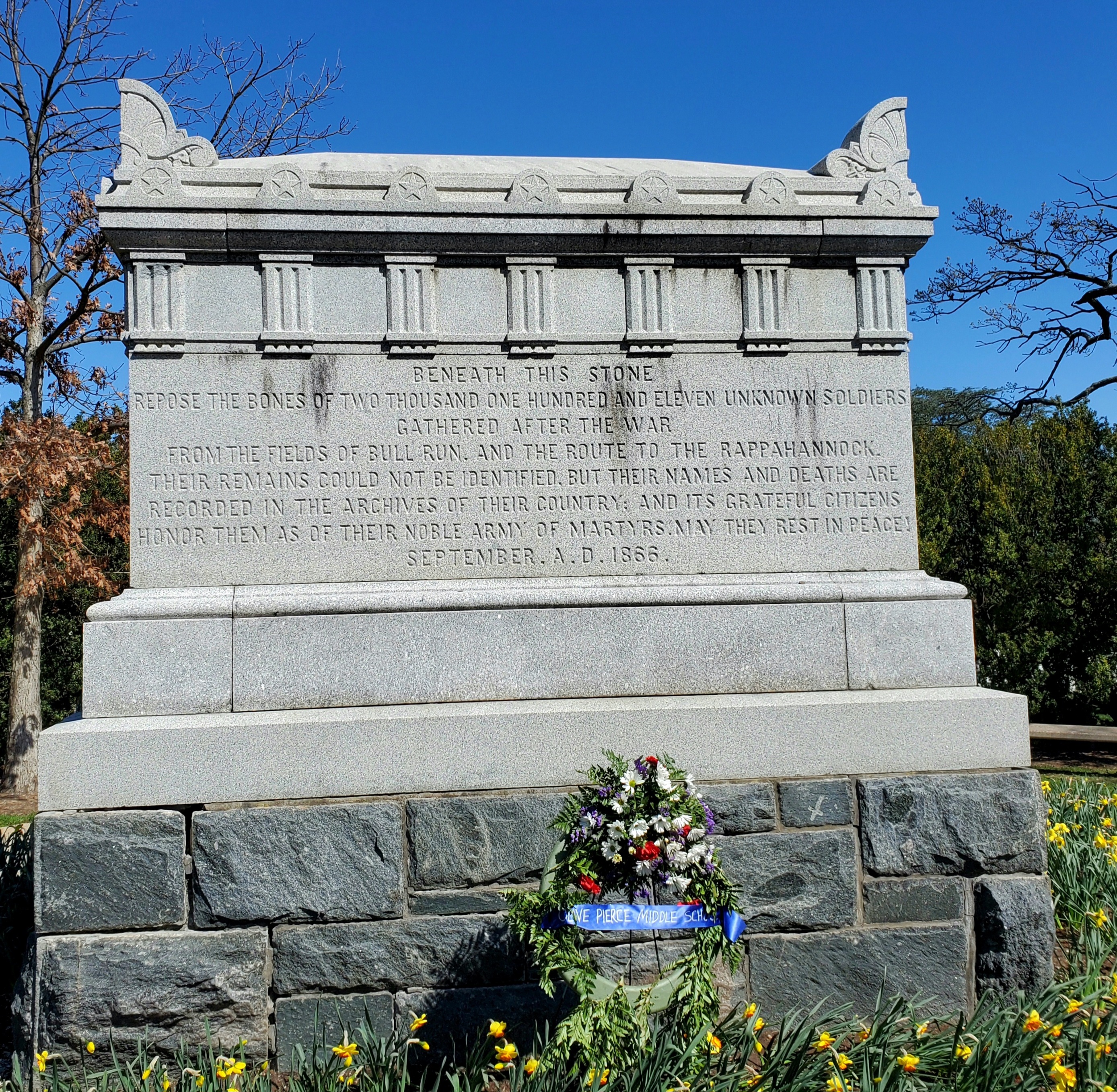
Arlington National Cemetery

Arlington National Cemetery, the most famous cemetery in the country, is the final resting place for many of our nation’s greatest heroes, including more than 300,000 veterans of every American conflict, from the Revolutionary War to Iraq and Afghanistan.  Since its founding in 1866, Arlington National Cemetery has provided a solemn place to reflect upon the sacrifices made by the men and women of the United States Armed Forces in the name of our country.

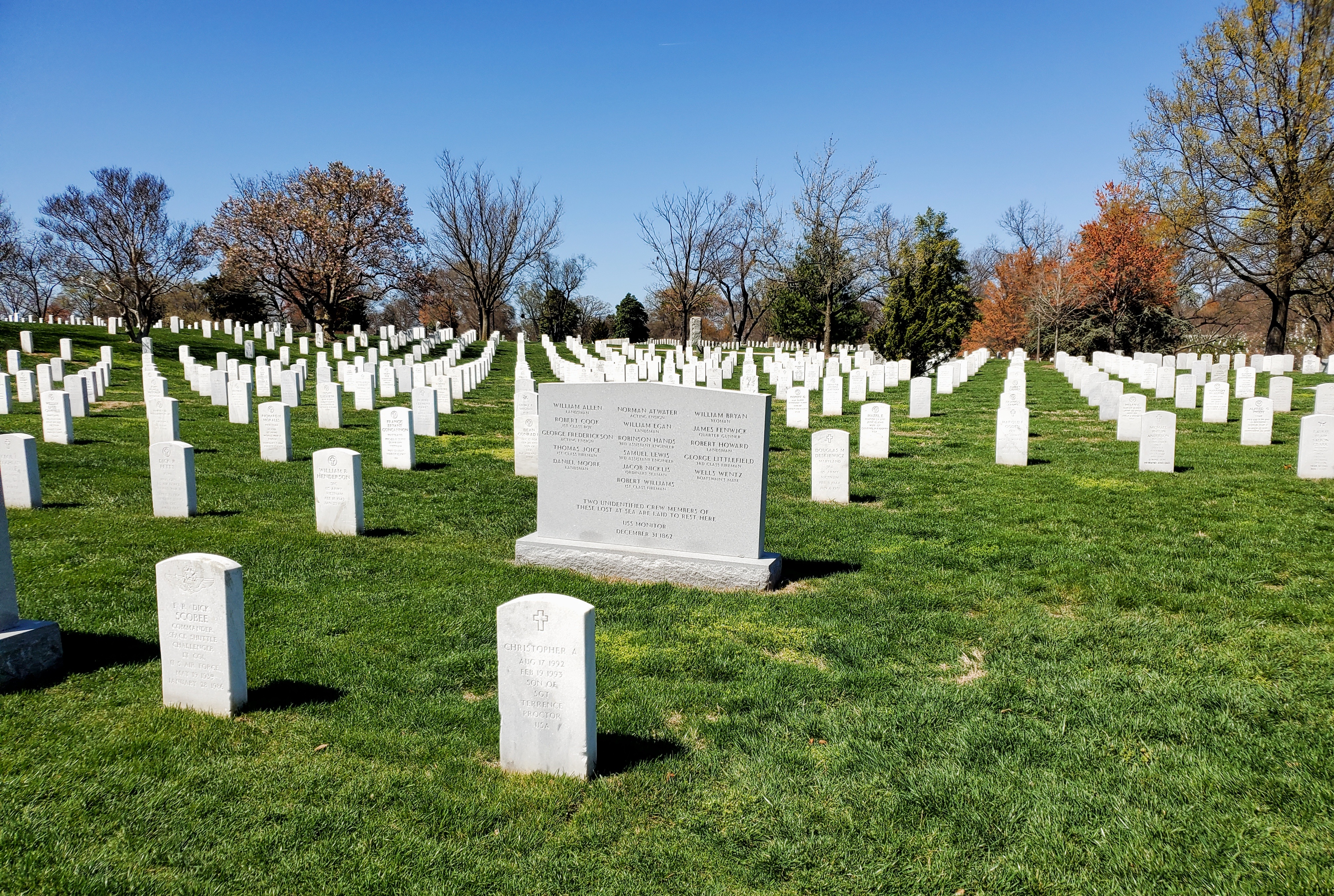
The following pictures were taken in April 2023 during a visit to the cemetery. Unfortunately, I was unable to share my videos of the Tomb of the Unknown Soldier. Please see Arlington National Cemetery for more information.

There are several memorials on the grounds of the cemetery. However, due to the lack of space for burials and the large amount of space that memorials take up, the U.S. Army now requires a joint or concurrent resolution from Congress before it will place new memorials at Arlington.

The USS Maine Memorial

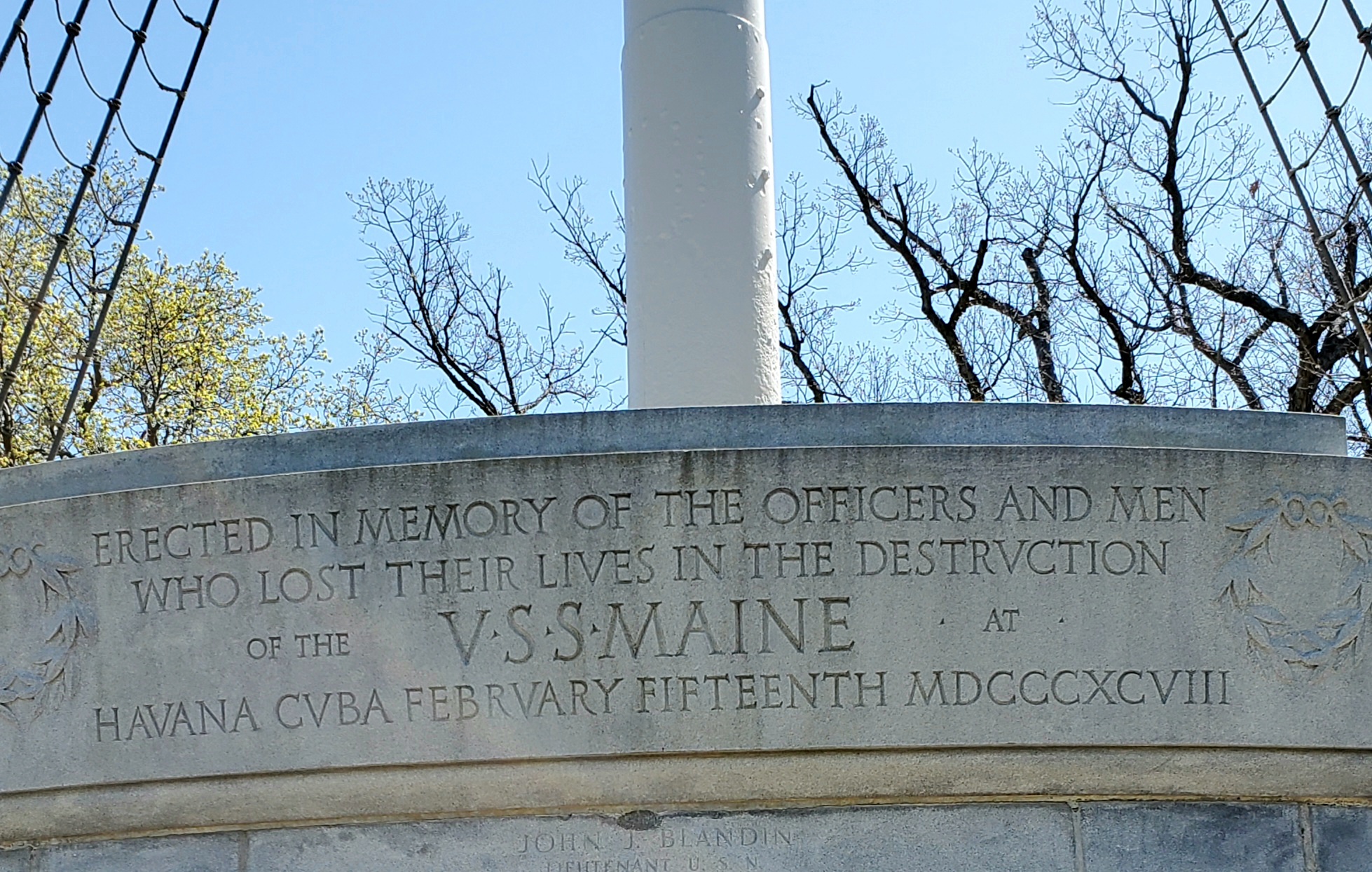
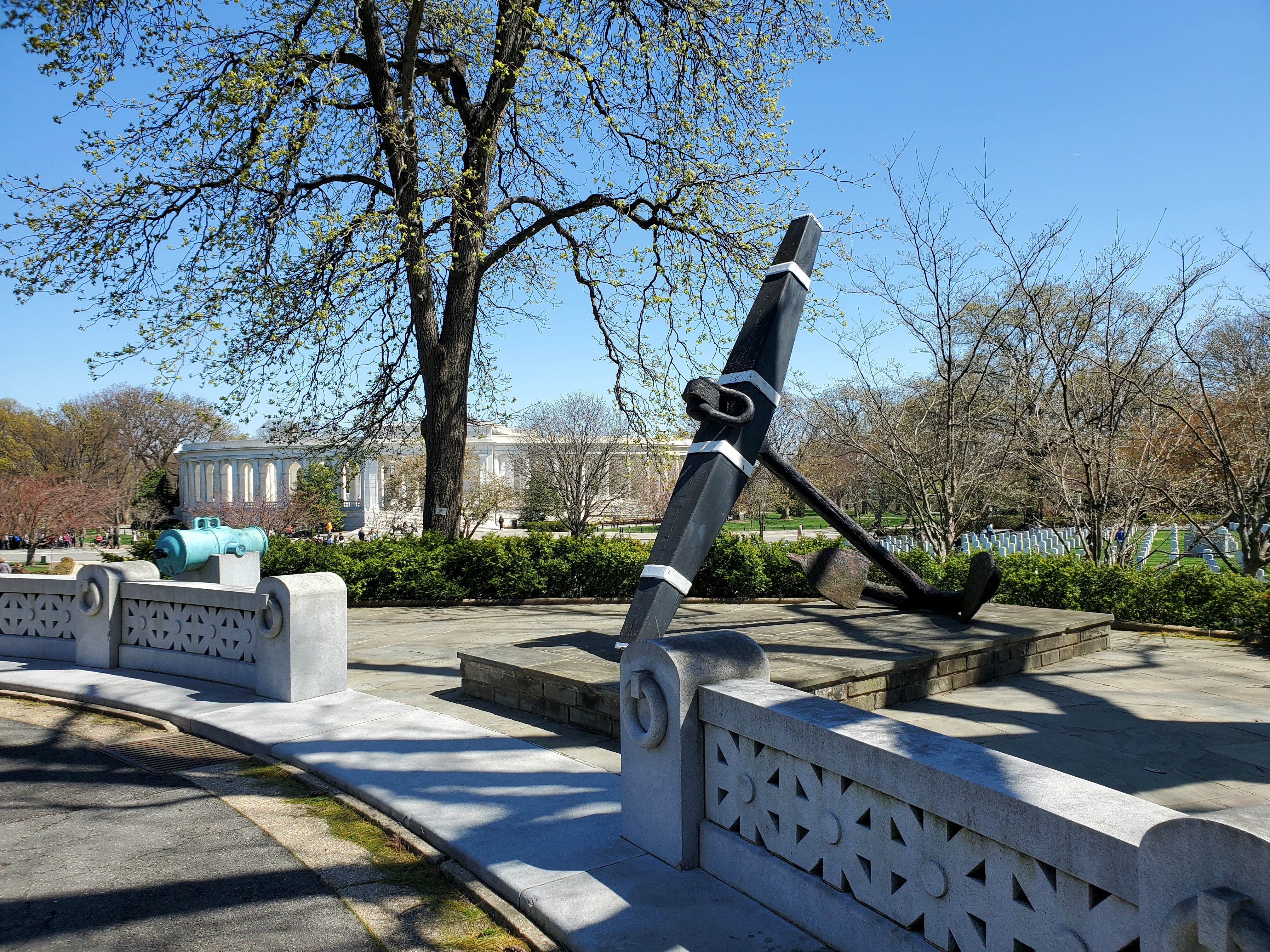
Near the Tomb of the Unknowns stands the USS Maine Mast Memorial, which commemorates the 266 men who died aboard the USS Maine. The memorial is built around a mast salvaged from the ship’s wreckage.

The Space Shuttle Challenger Memorial

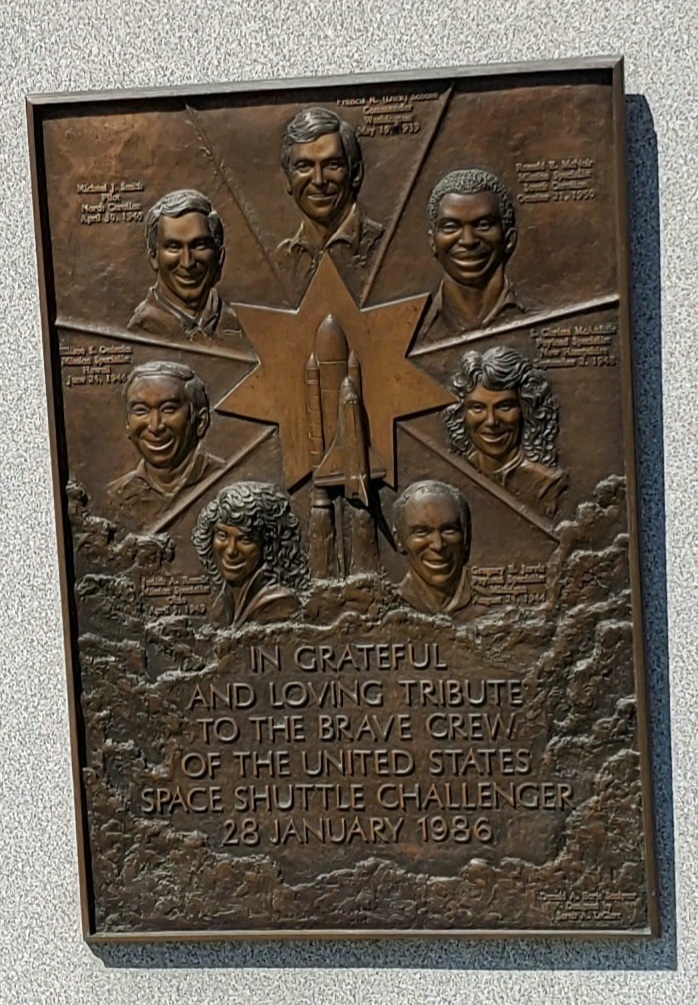
The Space Shuttle Challenger Memorial was dedicated on May 20, 1986, in memory of the crew of flight STS-51-L, who died during launch on January 28, 1986. Transcribed on the back of the stone is the text of the John Gillespie Magee, Jr. poem High Flight, which was quoted by then President Ronald Reagan when he addressed the disaster. Although many remains were identified and returned to the families for a private burial, some were not and were laid to rest under the marker. Two crew members, Dick Scobee, and Michael Smith, are buried in Arlington.

Shuttle Columbia Memorial

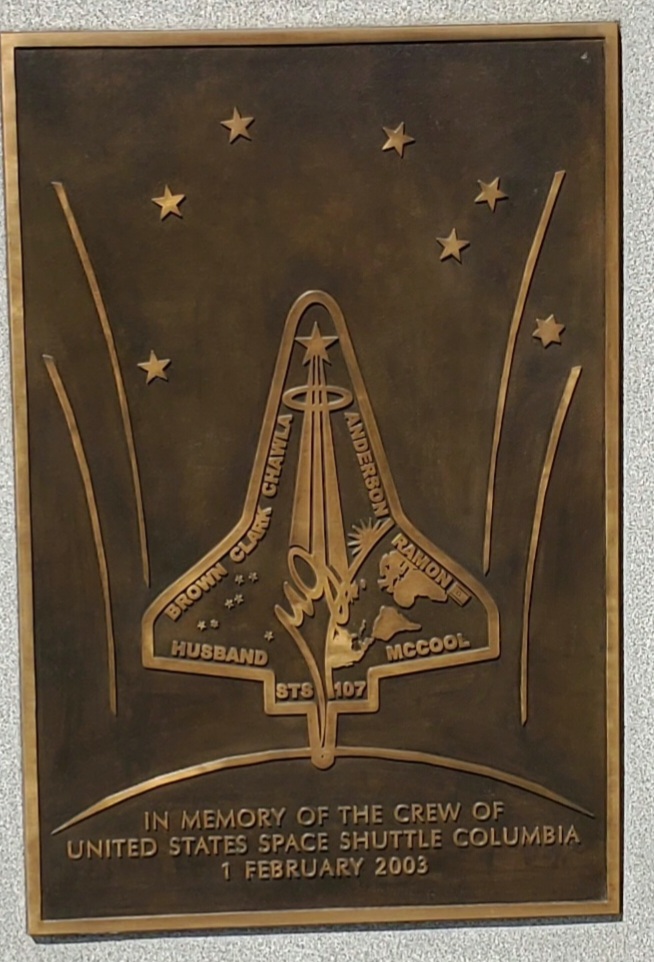
On February 1, 2004, NASA Administrator Sean O’Keefe dedicated a similar memorial to those who died when the Shuttle Columbia broke apart during reentry on February 1, 2003. Astronauts Laurel Clark, David Brown, and Michael Anderson, who were killed in the Columbia disaster, are also buried in Arlington.

In section 64, a memorial to the 184 victims of the September 11 attacks on the Pentagon was dedicated on September 11, 2002. The memorial takes the shape of a pentagon and lists the names of all the victims that were killed. Unidentified remains from the victims are buried beneath it.

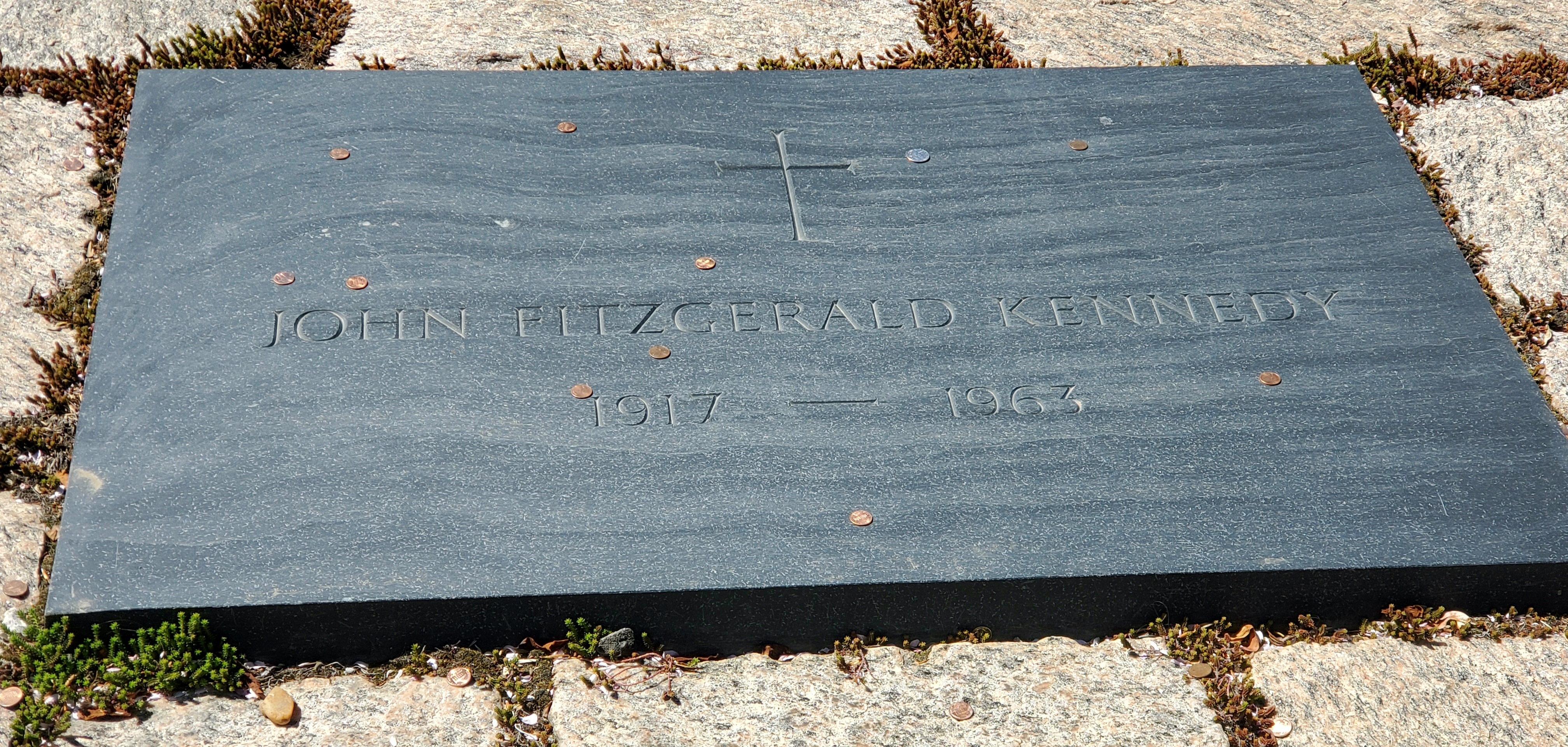
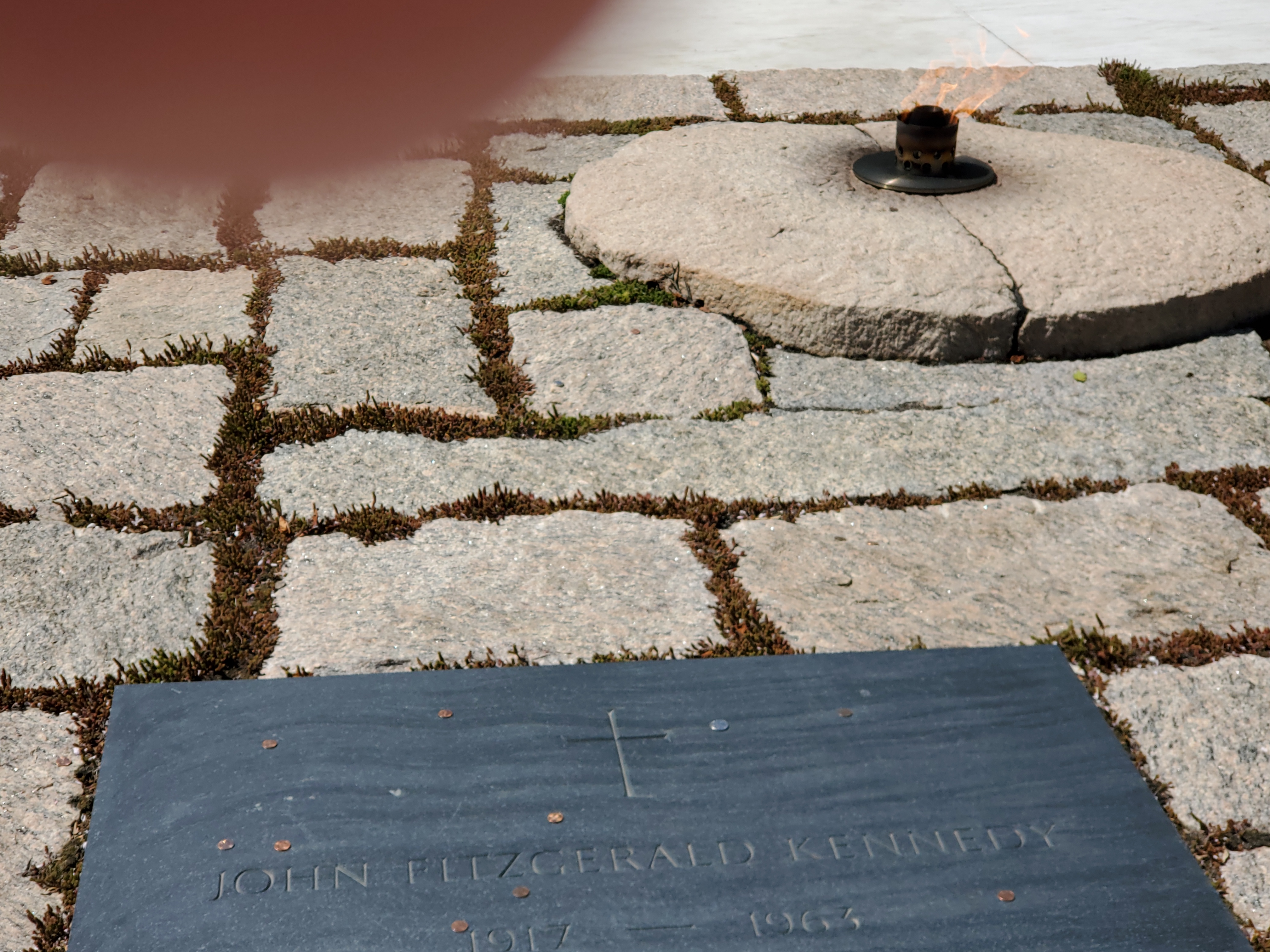
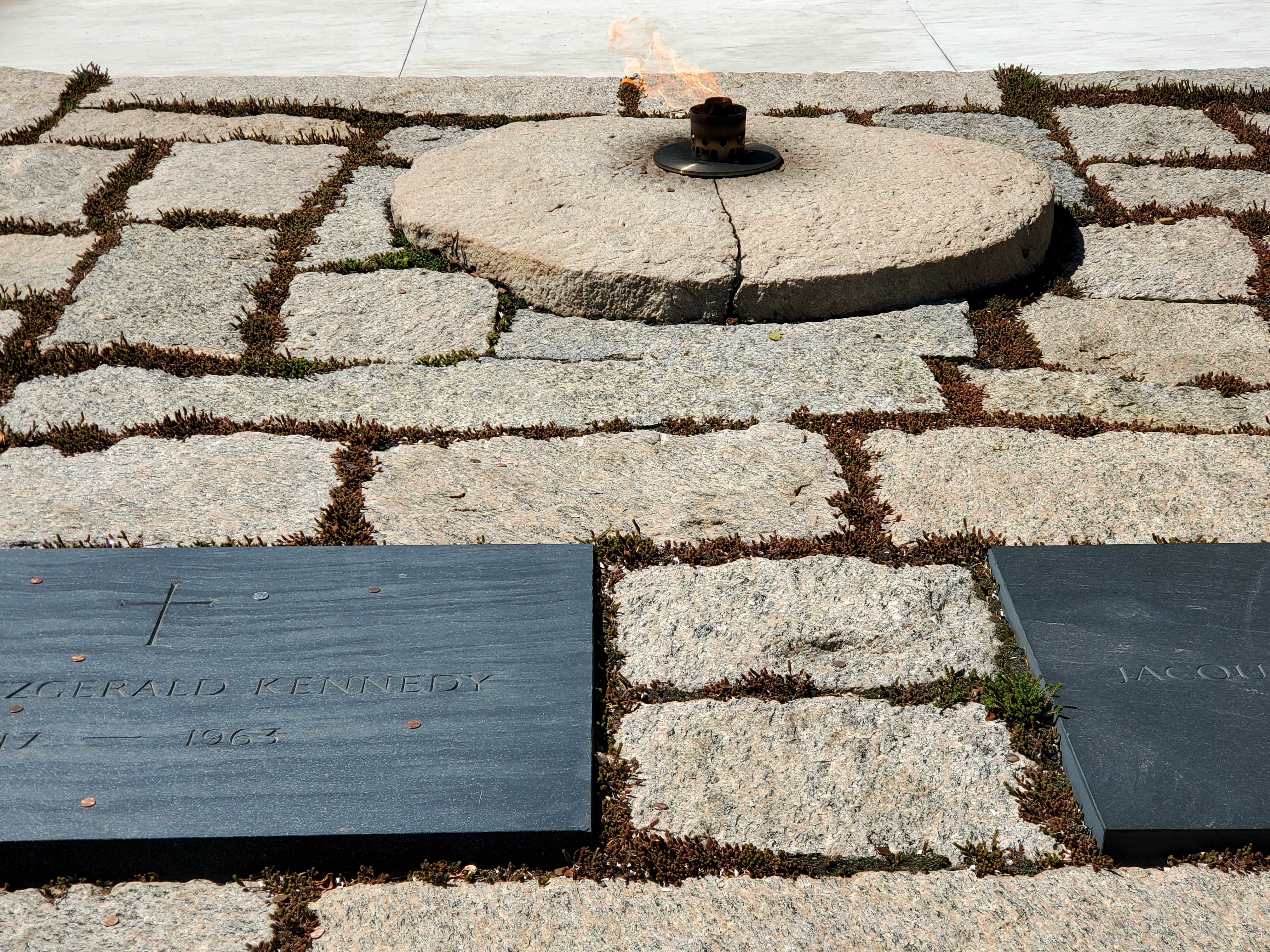
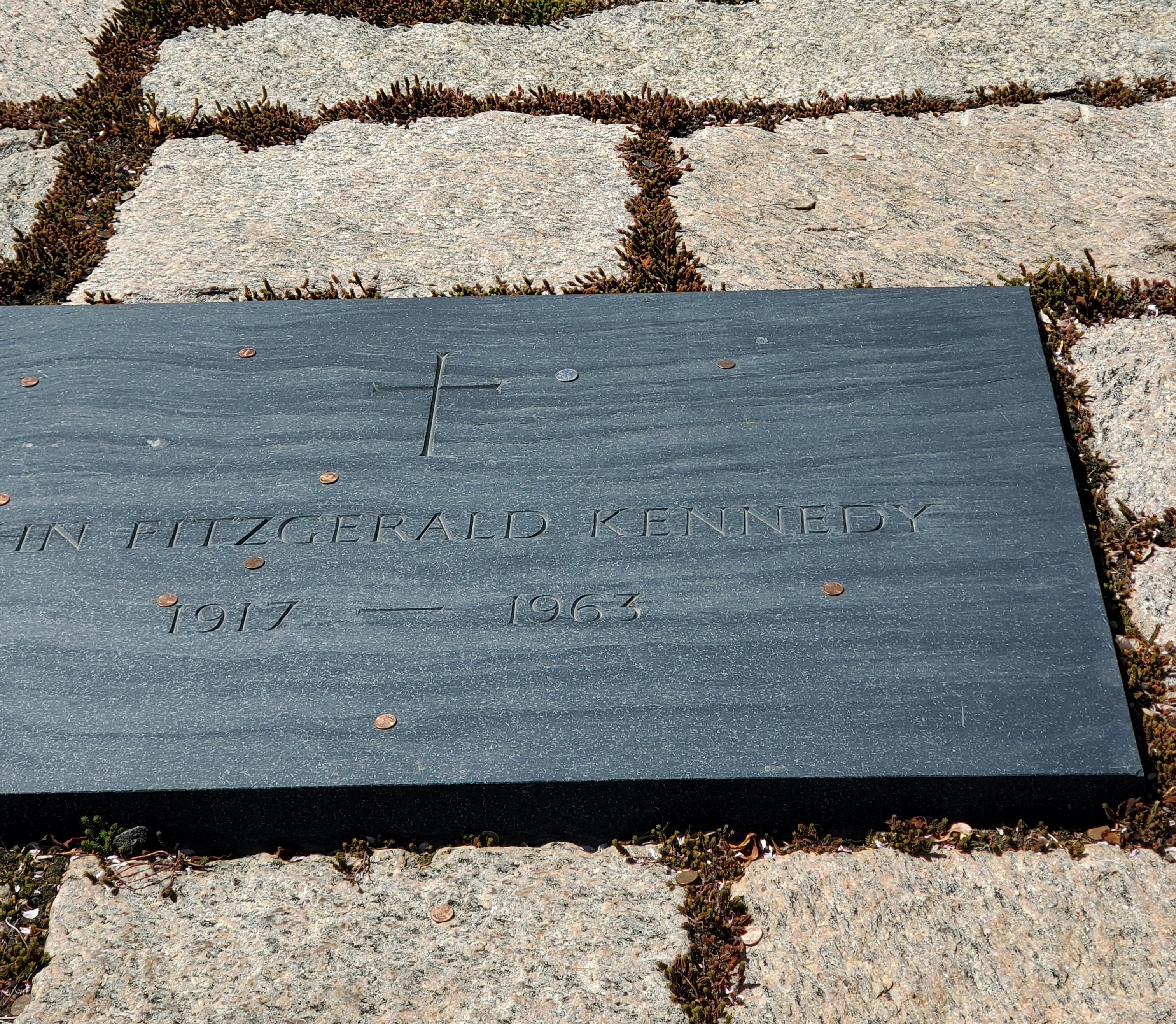
Eternal Flame Memorial to President John F. Kennedy

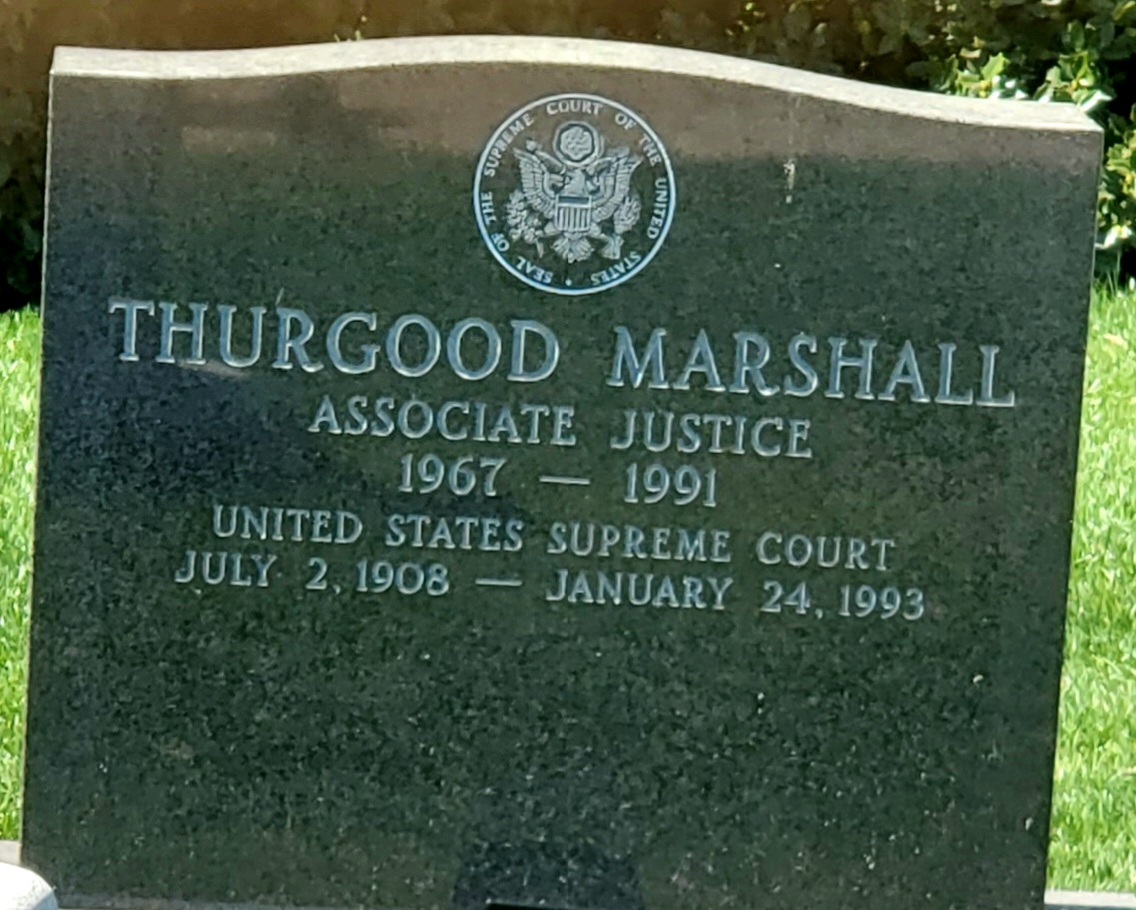
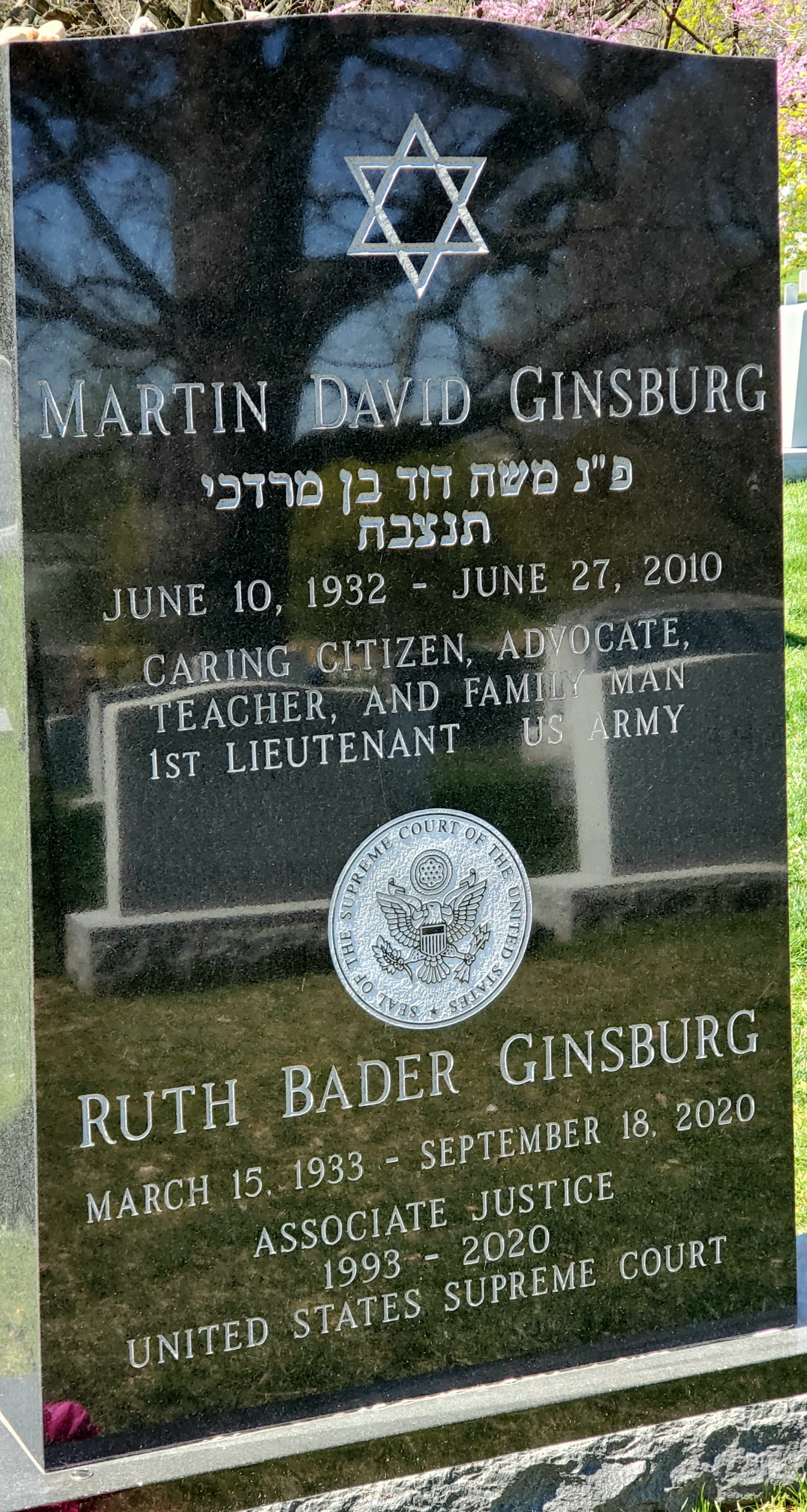
Other Notable Gravesites and Memorials

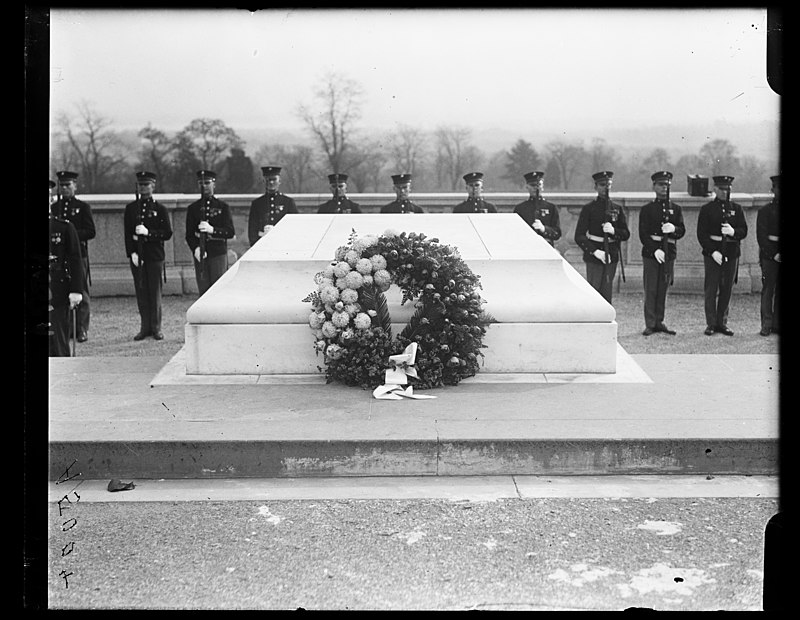
The Tomb of the Unknown Soldier

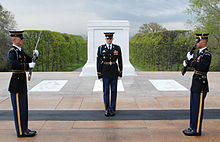
The Tomb of the Unknown Soldier stands atop a hill overlooking Washington, D.C. One of the more well-attended sites at the cemetery, the tomb is made from Yule marble quarried in Colorado. It consists of seven pieces, with a total weight of 79 tons. The tomb was completed and opened to the public on April 9, 1932, for $48,000.

Tomb of the Unknown Soldier in 1922
Honor Guards (2005)

Other unknown servicemen were later placed in crypts there, and it also became known as the Tomb of the Unknowns, though it has never been officially named. The soldiers entombed there are:

  • Unknown Soldier of World War I, entombed November 11, 1921.
  • Unknown Soldier of World War II, interred May 30, 1958.
  • Unknown Soldier of the Korean War was also interred on May 30, 1958.
  • Unknown Soldier of the Vietnam War, interred May 28, 1984. The remains of the Vietnam Unknown were disinterred, under the authority of President Bill Clinton, on May 14, 1998, and were identified as those of Air Force First Lieutenant Michael J. Blassie, whose family had them reinterred near their home in St. Louis, Missouri. It has been determined that the crypt at the Tomb of the Unknowns that contained the remains of the Vietnam Unknown will remain empty.

Guarding the Tomb of the Unknown Soldier video.

The Tomb of the Unknown Soldier has been perpetually guarded since July 2, 1937, by the U.S. Army. The 3rd U.S. Infantry Regiment (“The Old Guard”) began guarding the Tomb on April 6, 1948. The guard follows a meticulous routine when watching over the graves. The Tomb Guard:

  1. Marches 21 steps southward down the black mat behind the Tomb
  2. Turns left, facing east for 21 seconds
  3. Turns left, facing north for 21 seconds
  4. Takes 21 steps down the mat
  5. Repeats the routine until the soldier is relieved of duty at the changing of the guard

After each turn, the Guard executes a sharp “shoulder-arms” movement to place the weapon on the shoulder closest to the visitors to signify that the Guard stands between the Tomb and any possible threat.

Twenty-one was chosen because it symbolizes the highest military honor that can be bestowed – the 21-gun salute.

At each turn, the guard makes precise movements followed by a loud click of the heels as the soldier snaps them together. The guard is changed every half-hour during daylight in the summer, and every hour during daylight in the winter, and every two hours at night (when the cemetery is closed to the public), regardless of weather conditions.

Freedman’s Village

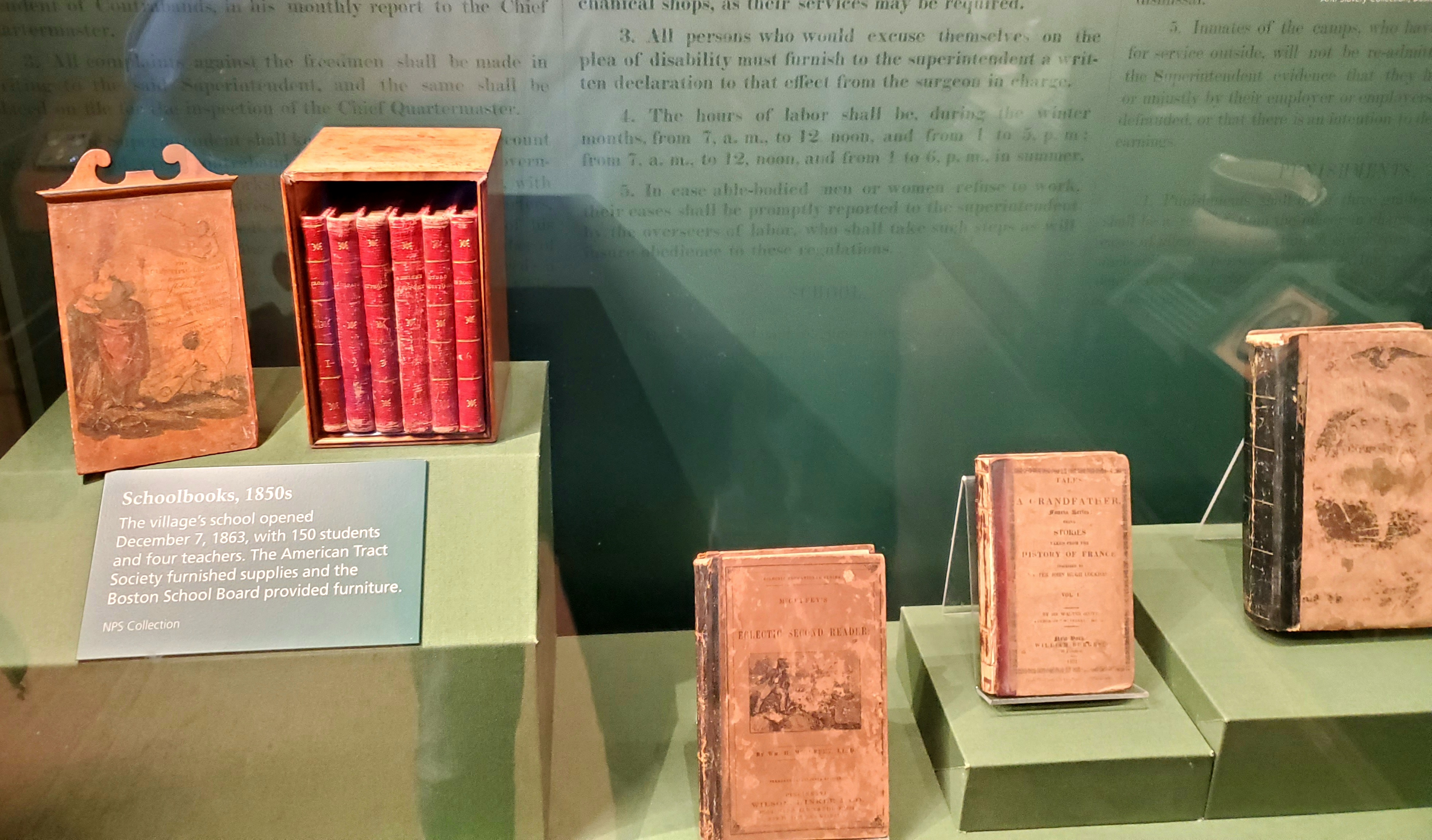
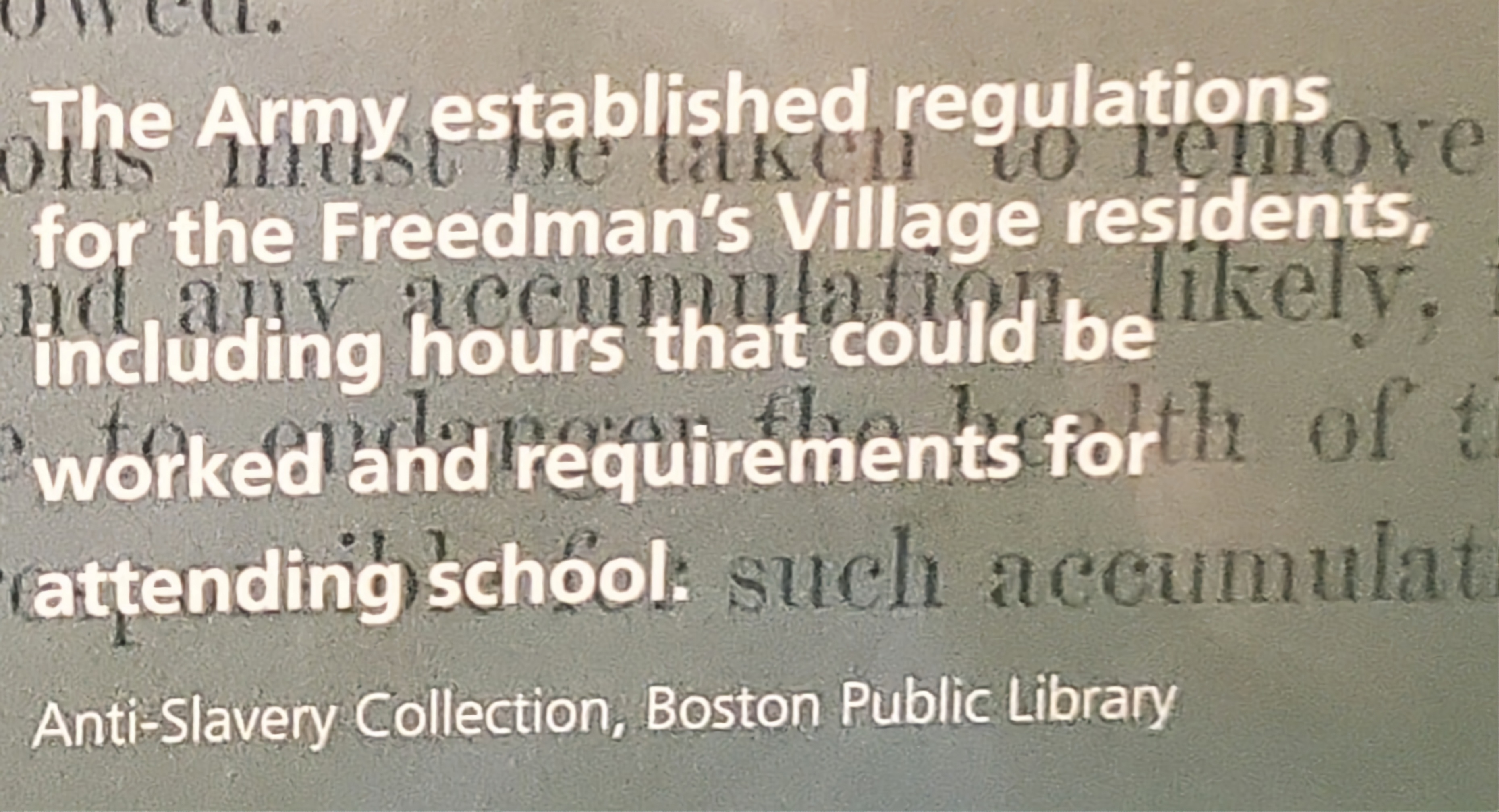
Beginning in 1863, the federal government used the southern portion of the land now occupied by the cemetery as a settlement for freed slaves, giving the name “Freedman’s Village” to the ground. The government constructed rental houses that 1,100 to 3,000 freed slaves eventually occupied while farming 1,100 acres of the estate and receiving schooling and occupational training during the Civil War and after the War’s end.

Posted in Scratch Pad | Leave a comment

Using Grammarly Can Be Helpful

Writing without the help of a computer is hard, but with the right desktop software, it can be made easier. Grammarly is one such tool that helps you write better and faster. It has a range of features to aid in your writing process and gives you an edge when you’re working on important projects. Grammarly is available for both Windows and Mac operating systems.

Grammarly Features

Grammarly for Windows is a desktop software application that helps you with your grammar. It checks for grammar mistakes and gives you suggestions on how to improve your writing. The software is available in both free and paid versions. The free version offers basic features, while the paid version provides more advanced features.

Grammarly for Windows has a user-friendly interface and is easy to use. It also integrates with Microsoft Word, so you can check your grammar as you type. The software includes a grammar checker, spell checker, punctuation checker, and plagiarism detector. It also offers a thesaurus, dictionary, and style guide. The paid version of Grammarly for Windows includes additional features, such as a sentence “rephraser,” vocabulary builder, and advanced proofreading tools.

The main difference between Grammarly Chrome Extension and Grammarly for Windows (When I used Grammarly it cited “with” and wanted me to change it to “between.” Good catch Grammarly. – Mesch)

If you’re a fan of the Grammarly Chrome Extension, you might wonder what the difference is between that and the Grammarly for Windows desktop software. Here’s a quick rundown of the main differences:

First, the most obvious difference is that Grammarly for Windows is a standalone program that you install on your computer, while the Grammarly Chrome Extension is just an extension that you add to your Google Chrome browser.

Second, Grammarly for Windows has many more features than the Chrome Extension. (When I used Grammarly it cited “the Chrome” and wanted me to change it to “Chrome.” – Mesch) For example, it can check for more than 250 types of grammar errors, whereas the Chrome Extension only checks for about 150. Additionally, Grammarly for Windows can checks for plagiarism and provides more detailed explanations of errors than the Chrome Extension. (When I used Grammarly it cited “checks” and wanted me to change it to “check.” Good catch Grammarly. – Mesch)

Third, because Grammarly for Windows is a standalone program, it can work offline whereas the Chrome Extension requires an internet connection to work. This means that you can use Grammarly for Windows even when you’re not connected to the internet.

Fourth, Grammarly for Windows integrates with Microsoft Word, so you can check your grammar as you type in Word documents. The Chrome Extension does not have this feature.

Finally, Grammarly for Windows costs $11.66 per month (or $139 per year), while the Chrome Extension is free to use. So if you’re looking for a more comprehensive grammar-checking tool and don’t mind paying a monthly fee, then Grammarly for Windows might be a good choice.

Tips for Using Grammarly Windows Version.

If you’re a fan of the Grammarly app but haven’t yet made the switch to the desktop version, now is the time! The Grammarly for Windows app is every bit as good as the web-based version, and it offers some additional features that can come in handy. Here are a few tips for getting the most out of Grammarly for Windows:

1. Use the app offline. One of the best things about Grammarly for Windows is that you can use it even when you’re not connected to the internet. This means you can continue working on your writing even if you’re on an airplane or in a remote location with spotty internet service. Simply enable offline mode in the settings and you’ll be all set.

2. Take advantage of keyboard shortcuts. If you’re someone who likes to work quickly, you’ll be happy to know that Grammarly for Windows supports keyboard shortcuts. For example, pressing Ctrl+Shift+1 will open up a new document, Ctrl+Shift+2 will open up a saved document, and so on. Check out the full list of shortcuts in the help menu so you can start using them right away.

3. Customize your settings. Not everyone needs or wants the same things from their grammar checker, which is why Grammarly for Windows lets you customize your settings to suit your needs.

Pros & Cons

When it comes to grammar checking tools, Grammarly is one of the most popular choices out there. (When I used Grammarly it cited “grammar checking” and wanted me to change it to “grammar-checking.” Good catch Grammarly. – Mesch). Grammarly is mostly accurate, user-friendly, and affordable. But like any software, it has its pros and cons. Here’s a detailed look at Grammarly for Windows desktop software so you can decide if it’s the right fit for you.

Pros:

1. Accuracy: Grammarly uses artificial intelligence to identify errors in your writing and suggest corrections. This means that it can catch errors that other grammar checkers would miss, making it one of the most accurate options on the market.

2. User-friendly interface: The Grammarly for Windows interface is clean and easy to use. It’s intuitive and straightforward, so you won’t waste time trying to figure out how to use the software.

3. Affordable: Grammarly offers a variety of pricing plans to fit different budgets. (When I used Grammarly it cited “fit” and wanted me to change it to “suit.” Good catch Grammarly. – Mesch)

And if you sign up for a yearly plan, you’ll get a significant discount. This makes Grammarly an affordable option for both individuals and businesses.

Cons:

1. Limited features on the free plan: If you want to take advantage of all that Grammarly offers, you’ll need to sign up for a paid plan. The free plan only gives you basic grammar checking and doesn’t include features.[1]

What are the Disadvantages of Grammarly?

Writers ask lots of questions about Grammarly, including the following: How does Grammarly fix human writing? What are the disadvantages of automated editing? Is Grammarly worth it? Is Grammarly legit? These are especially important questions.

As you proofread and edit your documents, know that there are several disadvantages of Grammarly. So, when weighing pros and cons of Grammarly, make a wise decision. (When I used Grammarly it cited “pros” and wanted me to change it to “the pros.” Good catch Grammarly. – Mesch)

Before using Grammarly for your documents, let’s consider a handful of the disadvantages. (When I used Grammarly it cited “the” and wanted me to change it to “its.” Good catch Grammarly. – Mesch)

Disadvantage 1: Automation

Let’s start with the obvious: Grammarly is automated. You do not get help from a human being, and if you want full service, which means paying more money.

This is problematic because computers have limitations. While computers have advanced, and continue to advance, they will never “be human.”

Despite advances in AI, computers cannot write as well as human beings. This means you are “limiting your writing quality, according to the limitations of the automation.”

Rhetoric is a key example of Grammarly’s limitations. Computers can analyze grammar and sometimes even tone. However, they cannot always match words to the proper context. Being nimble rather than programmed, a human is much more able to adjust and consider real-life situations.

Grammarly and ChatGPT have some similar downsides because automation has limits. While AI has a place, we strongly recommend going beyond that and asking a human editor to help. That way, you’ll receive personalized assistance from a real person.

Even if you like the idea of automation, you should use both – that is, start with automation but then ask a professional editing service to check your document. That way, you still benefit from a human reviewer. We have a number of clients who come to us after automation has failed them, and we welcome them, too!

Disadvantage 2: Price

Grammarly charges a hidden price for extra, premium service. This means the free service is limited. In other words, for full service, you need to pay money. In that case, you are better off going with a professional editing company in the first place – since you will save time as well.

As you consider the disadvantages of Grammarly, know that price can be a problem. When you need more advanced help, it is better to use human editing rather than automated editing. You’ll end up saving money in the long run since professionals will increase the overall quality – which can then lead to more sales, job promotions, higher pay, and much more.

Your words deserve investment. Paying for editing can be very beneficial. However, if you’re going to pay, you might as well pay for real editing rather than automated editing.

Disadvantage 3: Speed

Sure, Grammarly seems to be quick, as it offers “real time” feedback. However, “real time” does not mean “no time.” (When I used Grammarly it cited “real time” twice and wanted me to change it to “real-time.” Good catch Grammarly. – Mesch). This distinction is significant.

After Grammarly provides corrections and feedback, the writer still need to review, assess, and apply all the “errors” some of which may be unclear or incorrect. This can be a very time consuming process. (When I used Grammarly it cited “time consuming” and wanted me to change it to “time-consuming.” Good catch Grammarly. – Mesch)

Contrast that with PaperBlazer, for example, which applies all necessary changes for you, only leaving “author only” decisions. (When I used Grammarly it cited “author only” and wanted me to change it to “author-only.” Good catch Grammarly. – Mesch). The remaining choices will be far less than Grammarly, so you end up saving time. (When I used Grammarly it cited “less” and wanted me to change it to “fewer.” Good catch Grammarly. – Mesch)

Disadvantage 4: Vagueness

Another disadvantage of Grammarly is vagueness. (When I used Grammarly it cited “vagueness” and wanted me to change it to “its vagueness.” Good catch Grammarly. – Mesch) You must make most changes yourself. (When I used Grammarly it cited “most” and wanted me to change it to “the most.” I would rewrite the sentence as “most of the.”- Mesch) If you’re asking Grammarly for help, then some choices might be too complex. Vague suggestions are not very helpful.

In other words, Grammarly makes suggestions, but you need to implement them yourself. However, if you are overwhelmed and limited on time? (When I used Grammarly it cited “on” and wanted me to change it to “in.” – Mesch)

“What if you don’t want to read all the explanations? Grammarly requires some knowledge on the writer’s part. If you’re confused by grammar, automation does not always help. You end up doing additional work yourself.”

“In contrast, a service like PaperBlazer does most of the edits for you. Our human editors can “know” what you mean and then implements for you. (When I used Grammarly it cited “for” and wanted me to change it to “it for.” Good catch Grammarly. – Mesch) Of course, some review might be required, but in comparison, PaperBlazer saves you time. (When I used Grammarly it cited “review” and wanted me to change it to “reviews.” – Mesch)”

According to the PaperBlazerweb page

We simplify proofreading and editing.Upload your document, and our professional editors will correct, change, and commenton your document. Just upload your document, and you’re good to go.

Best of all, we offer world-class support and avoid technical jargon (no “dangling participles” here!), so anyone can use our services. With PaperBlazer, there’s also no need to mess with AI or proprietary software. In short, we make editing easier for you.

We do the hard work required for the best-quality editing. Unlike automated services, PaperBlazer provides help from a real editorfor personalized service. We are considered the “best online editor” because we make better edits and answer unlimited follow-up questions.

However, PaperBlazer comes with a cost. The cheapest plan with a 72-hour turnaround is $0.025 per word. That translates to $2,500 for a 100,000-word book. If the price of your book is $20 and you have a 30% royalty, you would need to sell 417 books to pay for the service. Most self-published authors will likely sell around 250 books or less.[2]

Disadvantage 5: Mistakes

Grammarly makes mistakes. Computers err and “have a mind of their own.” Don’t take our word for it. As one writer explained: (When I used Grammarly it cited “err and” and wanted me to change it to “errand” – Mesch)

It sometimes gets simple things wrong. On several occasions, for instance, I’ve written a grammatically correct phrase which Grammarly then wants to “correct” into nonsense. (When I used Grammarly it cited “which” and wanted me to change it to “that.” Good catch Grammarly. – Mesch)

Take this sentence:

This was, I decided, my house. I couldn’t trust this to anyone else: I searched its every nook and cranny by myself.

Stilted? No doubt. Incorrect? Well, you tell me. If you run it by Grammarly now, the software will suggest a revision to “I searched it is every nook and cranny […].”

So don’t just take our word for it. Consider the problems that other writers have noticed. The errors can be very problematic.

Rather than struggling with the disadvantages of Grammarly, try another way. Use a professional editing service with professional editors who can help you.[3]

I use Grammarly and will continue to use the free version. It helps me from committing dumb mistakes in everything I write. I don’t always agree with their suggestions and use my judgment. That’s why God gave me a brain. I try to exercise it as often as possible. My biggest peeve with the software is how it treats quoted material. It corrects errors in the quoted text, despite the requirement to maintain grammatical errors and misspellings in the material. This causes a problem for authors of non-fiction books.

If you like this post, please follow me at http://www.allenmesch.com.


[1] “Grammarly for Desktop,” APPCONNER, https://www.appconner.com/windows/grammarly-desktop?utm_source=bing&utm_medium=cpc&utm_campaign=407_grammarly_cpc&utm_term=app%20grammarly&utm_content=10110_grammarly_windows, retrieved May 2, 2023.

[2] “How Many Books Can You Expect to Sell? The Truth About Book Sales and the Keys to Generating Income from Publishing,” Non-fiction Authors Association, https://nonfictionauthorsassociation.com/how-many-books-can-you-expect-to-sell-the-truth-about-book-sales-and-the-keys-to-generating-income-from-publishing/, retrieved May 3, 2023.

[3] “Four Disadvantages of Grammarly,” PaperBlazer, https://paperblazer.com/four-disadvantages-of-grammarly/, retrieved May 2, 2023.
Posted in Scratch Pad | Tagged | Leave a comment

Words Cannot Describe the Murders at Allen Premium Outlets

The tragic events in Allen, Texas incited me to explore words that were used in reports and comments about the murderous attack. My daughter-in-law was at Allen Premium Outlets and escaped harm. It was a terrifying experience that will take days, if not weeks, for all of us touched by this terrible violence.

Neutralize

This word was used by police about the killing of the shooter.

Merriam-Webster says “neutralize” is to counteract the activity or effect of or make ineffective; kill; or destroy.

Neutralize can mean captured, wounded, surrounded, as well as killed. Plain language would have helped here.

Condolences

Political figures used condolences to describe their response to the shooting.

Merriam-Webster says “condolence and condolences” means sympathy with another in sorrow or an expression of sympathy.

Senator John Cornyn: “I am grieving with the Allen community tonight, and I send my gratitude to the brave officers, Collin County first responders, and all of those involved in responding to this afternoon’s horrific incident.” The senator’s comments focus on the “first responders” (25 words) and not “grieving with the community (8 words).

Senator Ted Cruz: “Heidi and I are praying for the families of the victims of the horrific mall shooting in Allen, Texas. We pray also for the broader Collin County community that’s in shock from this tragedy.” Senator Cruz’s comments are more specific. He categorizes the shooting as “horrific” and tragic.

President Joe Biden said the Allen shooting is “too shocking to be so familiar.” Biden urges an assault weapon ban. President Joe Biden on Sunday urged Congress to send him a bill that bans assault weapons and high-capacity magazines. Biden said in a statement that the gunman who killed eight people at the Allen Premium Outlets used an AR-15-style semiautomatic rifle.

Keith Self, the United States representative for Texas’ third congressional district, made a statement shortly after the tragic shooting. The third congressional district encompasses areas north and northeast of Dallas, including Allen.

We are devastated by the tragic news of the shootings that took place at the Allen Premium Outlets today. Our prayers are with the victims and their families and all law enforcement on the scene. This is an ongoing situation, but Allen PD has full control of the scene. A shooter is down and there are multiple casualties. They are continuing to work to ensure the scene is safe. The public is being asked to stay away from that area while this investigation continues.

Representative Self’s comments focus on “law enforcement” (56 words) and not “tragic news” and “prayers” (28 words).

State Rep. Jeff Leach (R-McKinney) said, “There are many, many people in our community tonight who are hurting, whose lives have been shattered and who need and deserve our collected prayers.”

State Sen. Angela Paxton, who also represents the city of Allen, tweeted a statement that said in part, “We will never get over something like this, but we will get through it by being there for each other.”

Gov. Greg Abbott issued a statement saying, “I have been in contact with Mayor Fulk and DPS Director McCraw as well as other state and local leaders and offered the full support of the State of Texas to local officials.”

Our hearts are with the people of Allen, Texas tonight during this unspeakable tragedy. I have been in contact with Mayor Fulk and DPS Director McCraw as well as other state and local leaders and offered the full support of the State of Texas to local officials to ensure all needed assistance and resources are swiftly deployed, including DPS officers, Texas Rangers, and investigative resources.

Governor Abbott’s comments focus on law enforcement (51 words) and not “unspeakable tragedy” (14 words).

Lt. Governor Dan Patrick said in a statement, “Please join me in mourning the victims of the unspeakable tragedy in Allen. We are grateful for our brave first responders who were deployed to stop the shooter.”

Please join Jan and me in mourning the victims of the unspeakable tragedy in Allen. Please also join us in prayer for the victims’ families and friends along with the residents of Allen. We are grateful for our brave first responders who were deployed to stop the shooter and investigate this hideous crime. We are thankful for their bravery and courage.

Lt. Governor Patrick’s comments are more balanced.

State Rep. Rhetta Bowers (D-Garland), issued a statement that said in part, “It must be said that these tragedies will continue to occur so long as Texas fails to enact common sense gun safety reforms and invests in mental healthcare and the social safety net.”

California Governor Gavin Newsom urged Congress to pass gun control legislation, writing, “We have become a nation that is more focused on the right to kill than the right to live.”

Texas state Senator Roland Gutierrez, whose district includes the site of the Robb Elementary School Shooting, also called for more gun control, writing, “There is a special place in hell for people who watch all this happen and choose to do nothing.”

Representative

Merriam-Webster defines representative as serving to represent, standing, or acting for another, especially through delegated authority, and of, based on, or constituting a government in which the many are represented by persons chosen from among them usually by election.

Accessory

I believe that it is time to change the description of politicians as representatives of the people, but rather as accessories. Merriam-Webster defines accessory as a person not actually or constructively present but contributing as an assistant or instigator to the commission of an offense (also called accessory before the fact) and a person who knowing that a crime has been committed aids or shelters the offender with intent to defeat justice (also called accessory after the fact).

Condemning

The public has condemned the statements made by Texas politicians. This seems an appropriate response because Merriam-Webster defines condemning to declare to be reprehensible, wrong, or evil usually after weighing evidence and without reservation.


Please pray for the families affected and for all who have been touched by this monstrous killing.

I hope you will consider these words as you try to understand these murders and the failure of the accessories to take measures to decrease these tragic events.


If you like this post, please follow me at http://www.allenmesch.com


Posted in Scratch Pad | Tagged , | Leave a comment

Authors Relax – Artificial Intelligence is Not Ready to Replace You

Artificial intelligence is used in many ways today. It is used to provide personalized recommendations to people based on their previous searches and purchases or other online behavior1. It is also used in web searches, digital personal assistants, machine translations, smart homes, cities and infrastructure, and fighting disinformation. AI is also used in facial recognition technology, spam detection, credit card fraud detection, and more.[1]

You can use CPT-3 to write books. The rise of widely available, easy-to-use artificial intelligence tools is creating a new genre of robot-generated literature. Amazon already offers over 200 books (and climbing) with GPT-3 listed as an author or co-author.

GPT-3 is a machine learning model and not a substitute for your own creativity and writing skills. GPT-3 can provide you with a lot of information and inspiration that you can use to write your book.[2]

If you’re supposed to write a summary for school or work on a body of text, AI chatbots like GPT-3 can be used to make summarizing long articles, research papers, and books an easier task.

It is not possible to cite your sources with GPT-3. You can create citations, but it isn’t designed for this task and it tends to make up sources that don’t exist or present information in the wrong format. GPT-3 also cannot add citations to direct quotes in your text. If you’re looking for a more reliable source for your research, I would recommend using a database or search engine that specializes in academic sources such as Google Scholar or JSTOR.[3]

Here are some tips on how to write effective GPT-3 prompts12:

  • Start with a clear goal of what you want the output to accomplish.
  • Keep it simple and concise.
  • Use keywords strategically.
  • Provide ample context.
  • Use examples when possible.

GPT-3 can be used to write blogs. However, it is important to note that GPT-3 is not at a point where you can click a button and magically have a great blog post. It is also important to keep in mind that the content generated by GPT-3 may not always be accurate or reliable.[4]

Historians can use GPT-3 to generate summaries of historical events or write articles about historical figures. However, it is important to keep in mind that the content generated by GPT-3 may not always be accurate or reliable.[5]

CPT-3 is an AI language model that can generate human-like text. It is designed to generate text that is similar to human writing. Wikipedia is a free online encyclopedia that anyone can edit. It contains articles on almost every topic and is written by volunteers from around the world.

While CPT-3 can generate text on any topic, it may not always be accurate or reliable. Wikipedia articles are written by volunteers who may not be experts in the field, but they are usually reviewed by other editors and are often based on reliable sources.[6]

I wrote this blog using CPT-3 as offered by Microsoft Bing.  The questions I asked are shown below. One of the most used responses to my questions was CPT-3 “may not always be accurate or reliable.” That seems a very bad start for any non-fiction writing. I also didn’t like that “it is not possible to cite your sources with GPT-3.”

So for now, this author will not jump into the AI pool.


[1] How do we use artificial intelligence today?

[2] Can you use CPT-3 to write books?

[3] Can CPT-3 generate sources and citations?

[4] Can you use GPT-3 to write blogs?

[5] How can historians use CPT-3?

[6] How does CPT-3 compare with Wikipedia?

Posted in Scratch Pad | Tagged | Leave a comment

One Hundred Books You Must Read Before You Die

I watched The Enforcer recently and was intrigued by the hero’s goal of reading a hundred books you must read. In response, I obtained the following list of books you must read.

[CHILD] – 33 titles are suitable for children and adults.

[READ] – I have read 16 of the titles. I’ve got a lot of work ahead of me.

[BANNED] – 22 books are banned in Texas and other states.

1. 1984 by George Orwell [BANNED]

2. Adventures of Huckleberry Finn by Mark Twain [CHILD] [READ] [BANNED]

3. The Adventures of Sherlock Holmes by Arthur Conan Doyle

4. The Alchemist by Paulo Coelho

5. The Aleph and Other Stories by Jorge Luis Borges

6. Animal Farm by George Orwell [BANNED]

7. Aesop’s Fables by Aesop [CHILD] [READ]

8. Alice’s Adventures in Wonderland by Lewis Carroll [CHILD]

9. Anna Karenina by Leo Tolstoy

10. Anne of Green Gables by L.M. Montgomery

11. As I Lay Dying by William Faulkner [BANNED]

12. Beloved by Toni Morrison [BANNED]

13. The Book Thief by Markus Zusak [CHILD]

14. Brave New World by Aldous Huxley [BANNED]

15. The Brothers Karamazov by Fyodor Dostoevsky [READ]

16. Catch-22 by Joseph Heller

17. The Catcher in the Rye by J.D. Salinger [BANNED]

18. Charlie and the Chocolate Factory by Roald Dahl [CHILD]

19. Charlotte’s Web by E. B White [CHILD] [BANNED]

20. The Call of the Wild by Jack London [CHILD]

21. A Clockwork Orange by Anthony Burgess [BANNED]

22. The Code of the Woosters by P.G. Wodehouse

23. The Collected of Edgar Allan Poe by Edgar Allan Poe

24. The Color Purple: A Novel by Alice Walker [BANNED]

25. Coraline by Neil Gaiman [CHILD]

26. The Count of Monte Cristo by Alexandre Dumas [CHILD]

27. Crime and Punishment by Fyodor Dostoyevsky [READ]

28. The Curious Incident of the Dog in the Night-Time by Mark Haddon [CHILD]

29. The Death of Artemio Cruz by Carlos Fuentes

30. Diary of a Madman and Other Stories by Lu Xun

31. Anne Frank: The Diary of a Young Girl by Anne Frank [CHILD] [BANNED]

32. The Divine Comedy by Dante Alighieri

33. Don Quixote by Miguel de Cervantes Saavedra [READ]

34. Dracula by Bram Stoker

35. Emma by Jane Austen

36. Fahrenheit 451 by Ray Bradbury [BANNED]

37. Frankenstein by Mary Shelley

38. The Giver by Lois Lowry

39. The Golden Compass by Philip Pullman [CHILD]

40. Goodnight Moon by Margaret Wise Brown [CHILD]

41. Great Expectations by Charles Dickens

42. The Great Gatsby by F. Scott Fitzgerald [BANNED]

43. Grimm’s Fairy Tales by Jacob and Wilhelm Grimm [CHILD] [READ]

44. Gulliver’s Travels by Jonathan Swift [CHILD] [READ]

45. Hamlet by William Shakespeare [READ]

46. The Handmaid’s Tale by Margaret Atwood [BANNED]

47. Harry Potter by J.K. Rowling [CHILD] [BANNED]

48. Heart of Darkness by Joseph Conrad [READ]

49. Here’s to You, Jesusa! by Elena Poniatowska

50. The Hitchhiker’s Guide to the Galaxy by Douglas Adams

51. The Hobbit by J. R. R. Tolkien [CHILD]

52. Holes by Louis Sachar [CHILD]

53. Hopscotch by Julio Cortázar

54. The Iliad by Homer [READ]

55. Invisible Man by Ralph Ellison [BANNED]

56. Jane Eyre by Charlotte Brontë

57. Journey to the Center of the Earth by Jules Verne [CHILD]

58. Les Misérables by Victor Hugo

59. Life of Pi by Yann Martel

60. The Lion, the Witch and the Wardrobe by C. S. Lewis [CHILD]

61. The Little Prince by Antoine de Saint-Exupéry [CHILD]

62. Little Women by Louisa May Alcott [CHILD]

63. Lolita by Vladimir Nabokov [BANNED]

64. The Lord of the Rings by J.R.R. Tolkien [CHILD] [BANNED]

65. Love in the Time of Cholera by Gabriel Garcia Marquez

66. Madame Bovary by Gustave Flaubert

67. Metamorphosis by Franz Kafka

68. Moby-Dick by Herman Melville [READ]

69. Mrs. Dalloway by Virginia Woolf

70. Murder on the Orient Express by Agatha Christie

71. Of Mice and Men by John Steinbeck [BANNED]

72. The Old Man and the Sea by Ernest Hemingway [CHILD] [READ]

73. Oliver Twist by Charles Dickens [CHILD]

74. One Hundred Years of Solitude by Gabriel Garcia Marquez

75. One Thousand and One Nights by Unknown

76. A Passage to India by E.M. Forster

77. Pedro Páramo by Juan Rulfo

78. The Phantom Tollbooth by Norton Juster [CHILD]

79. Pippi Longstocking by Astrid Lindgren [CHILD]

80. Pride and Prejudice by Jane Austen

81. The Remains of the Day by Kazuo Ishiguro

82. Romeo and Juliet by William Shakespeare [READ]

83. A Series of Unfortunate Events by Lemony Snicket [CHILD]

84. The Shadow of the Wind by Carlos Ruiz Zafón

85. Slaughterhouse-Five by Kurt Vonnegut

86. The Sound of the Mountain by Yasunari Kawabata

87. The Stranger by Albert Camus

88. The Tale of Genji by Murasaki Shikibu

89. Things Fall Apart by Chinua Achebe

90. The Three Musketeers by Alexandre Dumas [CHILD]

91. To Kill a Mockingbird by Harper Lee [CHILD] [READ] [BANNED]

92. Treasure Island by Robert Louis Stevenson [CHILD] [READ]

93. Ulysses by James Joyce

94. War and Peace by Leo Tolstoy [READ]

95. Watership Down by Richard Adams [CHILD]

96. Winnie-the-Pooh by A. A. Milne [CHILD]

97. The Woman in White by Wilkie Collins

98. The Wonderful Wizard of Oz by L. Frank Baum [CHILD]

99. A Wrinkle in Time by Madeleine L’Engle

100. Wuthering Heights by Emily Brontë

Of the 1,648 titles on the PENN AMERICA banned book list for the 2021-2022 school year:

41% explicitly address LGBTQ+ themes or have protagonists or prominent secondary characters who are LGBTQ+ (this includes a specific subset of titles for transgender characters or stories – 145 titles, or 9%)

40% contain protagonists or prominent secondary characters of color;

21% directly address issues of race and racism;

22% contain sexual content of varying kinds, including novels with some level of description of the sexual experiences of teenagers, stories about teen pregnancy, sexual assault, and abortion as well as informational books about puberty, sex, or relationships.

PEN AMERICA INDEX OF SCHOOL BOOK BANS – 2021-2022, https://pen.org/banned-book-list-2021-2022/, retrieved April 18, 2023.

Posted in Scratch Pad | Tagged , | Leave a comment

“My undertaking is not difficult, essentially… I should only have to be immortal to carry it out.”

Jorge Luis Borges (August 24, 1899 – June 14, 1986) was an Argentine writer who is considered one of the foremost literary figures of the Twentieth Century. He is famous for his short stories and fictive essays, Borges was also a poet, critic, translator, and man of letters.

I became acquainted with Mr. Borges from a LinkedIn posting of one of his quotes.

Of all man’s instruments, the most wondrous, no doubt, is the book. The other instruments are extensions of his body. The microscope, the telescope, are extensions of his sight; the telephone is the extension of his voice; then we have the plow and the sword, extensions of the arm. But the book is something else altogether: the book is an extension of memory and imagination.


(Source: Jorge Luis Borges, Wikiquote, https://en.wikiquote.org/wiki/Jorge_Luis_Borges, Retrieved April 10, 2023)

I have selected several of Mr. Borges quotes to contemplate and inspire my fellow authors.

On Writing

It is worth remembering that every writer begins with a naively [sic naïve] physical notion of what art is. A book for him or her is not an expression or a series of expressions, but literally a volume, a prism with six rectangular sides made of thin sheets of papers which should include a cover, an inside cover, an epigraph in italics, a preface, nine or ten parts with some verses at the beginning, a table of contents, an ex libris with an hourglass and a Latin phrase, a brief list of errata, some blank pages, a colophon and a publication notice: objects that are known to constitute the art of writing.

Writing is nothing more than a guided dream.

A writer — and, I believe, generally all persons — must think that whatever happens to him or her is a resource. All things have been given to us for a purpose, and an artist must feel this more intensely. All that happens to us, including our humiliations, our misfortunes, our embarrassments, all is given to us as raw material, as clay, so that we may shape our art.

The central problem of novel-writing is causality.

Writing long books is a laborious and impoverishing act of foolishness: expanding in [sic into] five hundred pages an idea that could be perfectly explained in a few minutes. A better procedure is to pretend that those books already exist and to offer a summary, a commentary.

Reading … is an activity subsequent to writing: more resigned, more civil, more intellectual.

Every novel is an ideal plane inserted into the realm of reality.

Imprecision is tolerable and verisimilar in literature, because we always tend towards it in life.

Ts’ui Pe must have said once: I am withdrawing to write a book. And another time: I am withdrawing to construct a labyrinth. Every one imagined two works; to no one did it occur that the book and the maze were one and the same thing.

Like every writer, he measured the virtues of other writers by their performance, and asked that they measure him by what he conjectured or planned.

(Source: Jorge Luis Borges, Wikiquote, https://en.wikiquote.org/wiki/Jorge_Luis_Borges, Retrieved April 10, 2023)

On History

That history should have imitated history was already sufficiently marvellous; that history should imitate literature is inconceivable….

Perhaps universal history is the history of the diverse intonation of some metaphors.

It may be that universal history is the history of the different intonations given a handful of metaphors.

One literature differs from another, either before or after it, not so much because of the text as for the manner in which it is read.

(Source: Jorge Luis Borges, Wikiquote, https://en.wikiquote.org/wiki/Jorge_Luis_Borges, Retrieved April 10, 2023)

On Books

A book is more than a verbal structure or series of verbal structures; it is the dialogue it establishes with its reader and the intonation it imposes upon his voice and the changing and durable images it leaves in his memory. A book is not an isolated being: it is a relationship, an axis of innumerable relationships.

A book is not an autonomous entity: it is a relation, an axis of innumerable relations. One literature differs from another, be it earlier or later, not because of the texts but because of the way they are read: if I could read any page from the present time — this one, for instance — as it will be read in the year 2000, I would know what the literature of the year 2000 would be like.

In the beginning of literature there is myth, as there is also in the end of it.

(Source: Jorge Luis Borges, Wikiquote, https://en.wikiquote.org/wiki/Jorge_Luis_Borges, Retrieved April 10, 2023)

Posted in Scratch Pad | Leave a comment

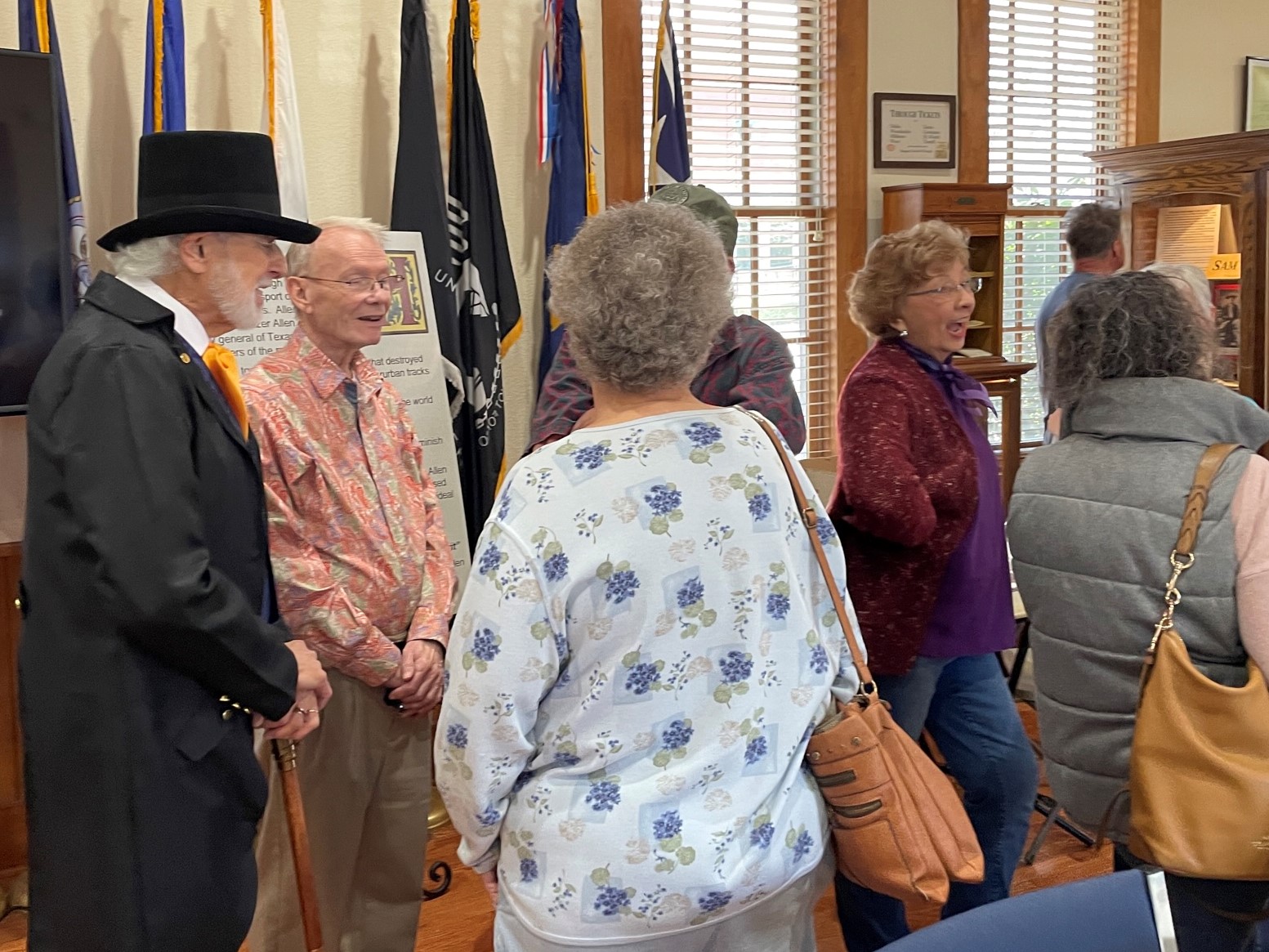
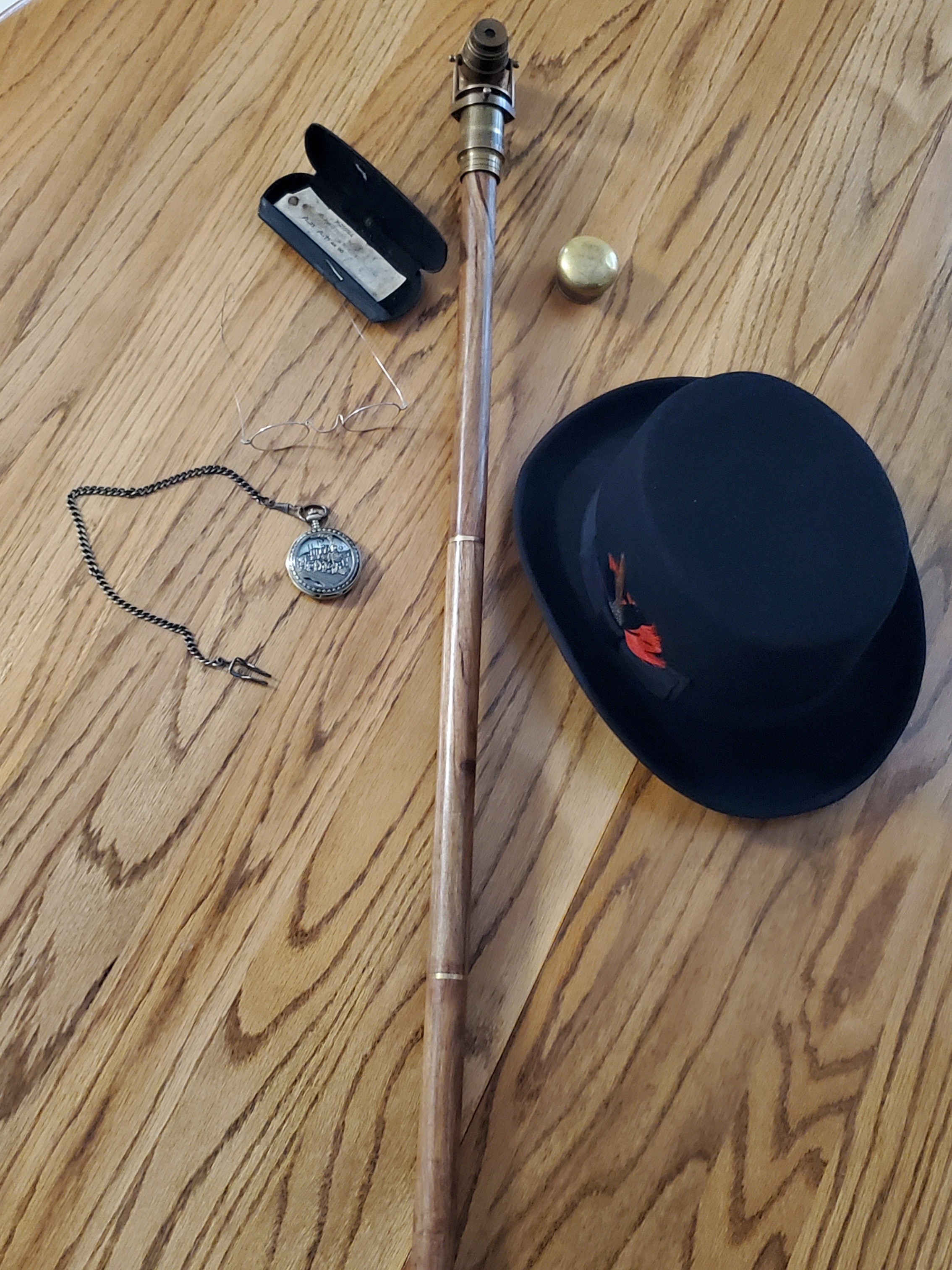
Ebenezer Allen Living Historian at Allen Heritage Depot

On March 25, 2023, I had the pleasure of appearing as Ebenezer Allen at the Allen Heritage Depot. I told the visitors about Allen’s life and his contributions as an entrepreneur and statesman.

Check out these pictures of me from November 2019 at the depot.

Other images of the depot and the Houston and Texas Central Railroad.

Here are a few pictures from the event.

Mr. Ed Byran of the Allen Historical Guild provided some additional photos.

Posted in Scratch Pad | Tagged | Leave a comment

Speaking Events and Classes

Beginning in March, I will speak at several events in north Texas.

Ebenezer Allen at Allen Depot Museum

From 1:00-3:00 pm on March 25, 2023, I will be at Allen Train Depot Museum to discuss my biography of Ebenezer Allen, The Forgotten Texas Statesman. I will be dressed in my living historian costume and sell copies of the first edition of my biography of Mr. Allen.

A Visit with Ebenezer Allen

From 10:30-11:30 am on June 22, 2023, I will be presenting a PowerPoint presentation on Ebenezer Allen. I will be dressed in my living historian costume. The presentation is being hosted by SAIL.

Contact SAIL for further information. SAIL members are invited to bring a guest.

Writing Class – Class One – Starting Writing

I will be conducting an introduction to writing class for the Plano Parks and Recreation Department in July 2023. The class will be presented at the Sam Johnson Senior Center in Plano.

Class One – Starting Writing

  • Session 1 – Reasons to Write
  • Session 2 – Structure, Plot, and Save the Cat
  • Session 3 – Observation and Research
  • Session 4 – Sloppy Writing

If this class is successful, I will conduct two other four session classes: From Writer to Author and Getting Published.


Posted in Scratch Pad | Leave a comment