Are Book Bans Un-American?

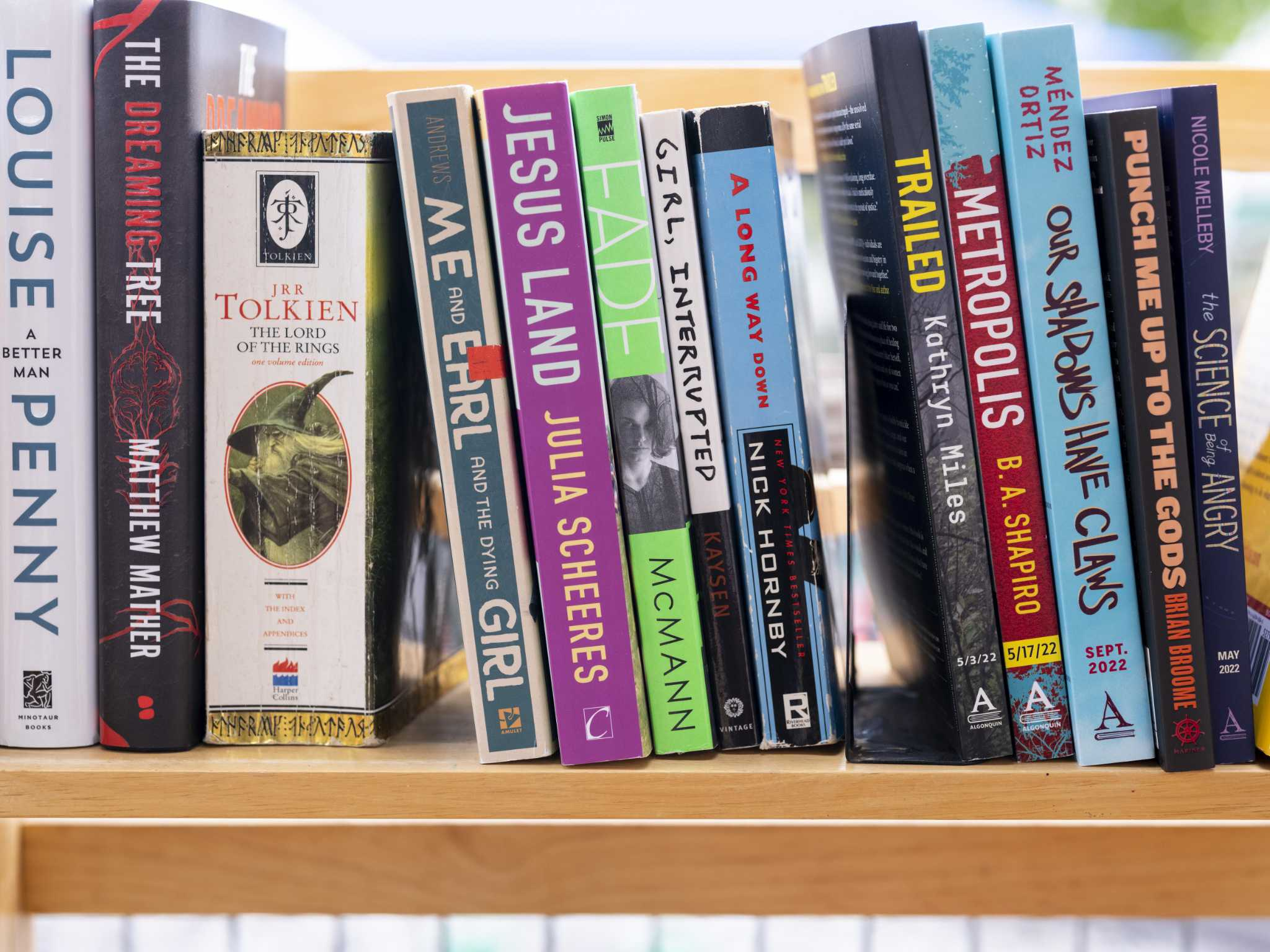
Louis A. Bedford IV writes “Book bans are un-American” in an editorial in the March 5, 2023 edition of The Dallas Morning News. As in all things in Texas, book banning is the biggest in the Lone Star state. Texas leads the nation with 800 books. Dan Solomon’s article in the September issue of Texas Monthly reports that Texas, Florida, Pennsylvania, and Tennessee accounted for more than 85% of the total book bans.

Mr. Bedford cites two Supreme Court cases that ruled against book banning as a violation of students’ right to books.

Bedford writes that book banning restricts “the free access of the most powerful tool at our disposal: information.” He adds that banning books because the “views they include … goes against the ideals of Americanism.”

“The banning of books and information paves a dangerous road toward tyranny.”

“By standing up for intellectual freedom and opposing book banning and other limits to information, we can help ensure that our society remains one that values knowledge, critical thinking, and individual autonomy – the true values of America.”[1]

Why Are Books Banned?
Banned books are books or other printed works such as essays or plays which are prohibited by law or to which free access is not permitted by other means. The practice of banning books is a form of censorship, for political, legal, religious, moral, or (less often) commercial motives. The Freedom to Read Website lists notable banned books and works with a brief explanation of why the books were prohibited. Banned books include fictional works such as novels, poems, and plays and non-fiction works such as biographies and dictionaries.

Historically, banning books or censoring texts are often seen when authoritarian regimes try to suppress certain messages it does not want to spread. Pre-World War II Germany saw mass book burnings and bans that tried to remove any statements which positively portrayed Jewish people. Banning and censoring texts is often portrayed as a restriction of First Amendment rights.[2]

The Freedom to Read Website provides “a selective timeline of book bannings, burnings, and other censorship activities.”

First Ammendment Protection
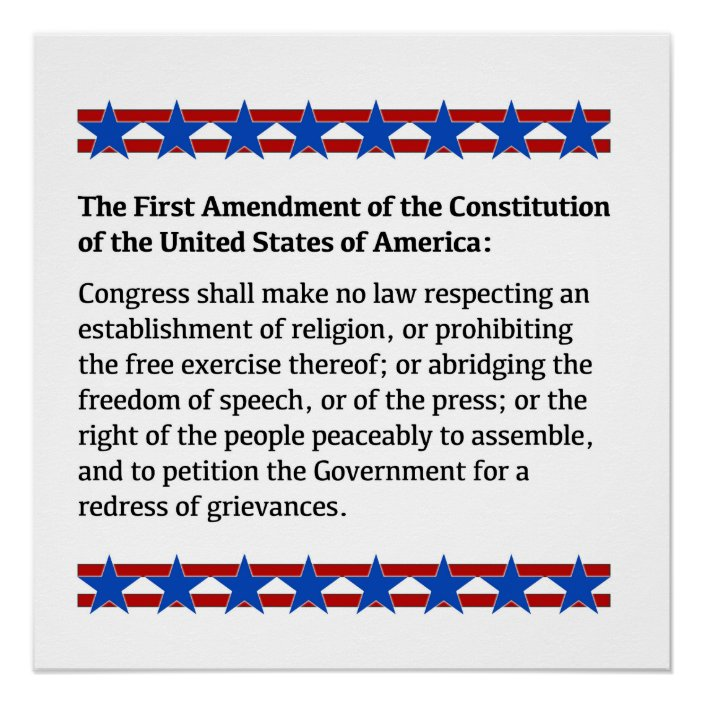
The First Amendment protects individuals against the government’s “abridging the freedom of speech.” However, government actions that are sometimes labeled as censorship may not be violations of these constitutional rights. Banning books by schools and libraries is not always classified as constitutional or unconstitutional, because “censorship” is a colloquial term, not a legal term.

Colloquialism which is also called colloquial language, everyday language, or general parlance, is the language style used for casual or informal communication. It is the most common functional style of speech. It is the language that is normally used in conversation and other informal contexts.[3]

Some principles can illuminate whether and when book banning is unconstitutional.

Censorship does not violate the Constitution unless the government does it.

For example, if the government tries to forbid certain types of protests solely because of the viewpoint of the protesters, that is an unconstitutional restriction on speech. The government cannot create laws or allow lawsuits that keep you from having particular books on your bookshelf unless the substance of those books fits into a narrowly defined unprotected category of speech such as obscenity or libel. Even these unprotected categories are defined in precise ways that are still very protective of speech.

However, the government may enact reasonable regulations that restrict the “time, place or manner” of your speech. It must do so in ways that are content- and viewpoint-neutral. The government cannot restrict an individual’s ability to produce or listen to speech based on the topic of the speech or the ultimate opinions expressed.

If the government does try to restrict speech in these ways, it is probably unconstitutional censorship.

What is Not Unconstitutional

In contrast, when private individuals, companies, and organizations create policies or engage in activities that suppress people’s ability to speak, these private actions don’t violate the Constitution.

Private actions can have a major impact on a person’s ability to speak freely and the creation and distribution of ideas. Book burning or the actions of private universities in punishing faculty for sharing unpopular ideas prohibits free discussion and unrestrained development of ideas and knowledge.

When Schools Can Ban Books
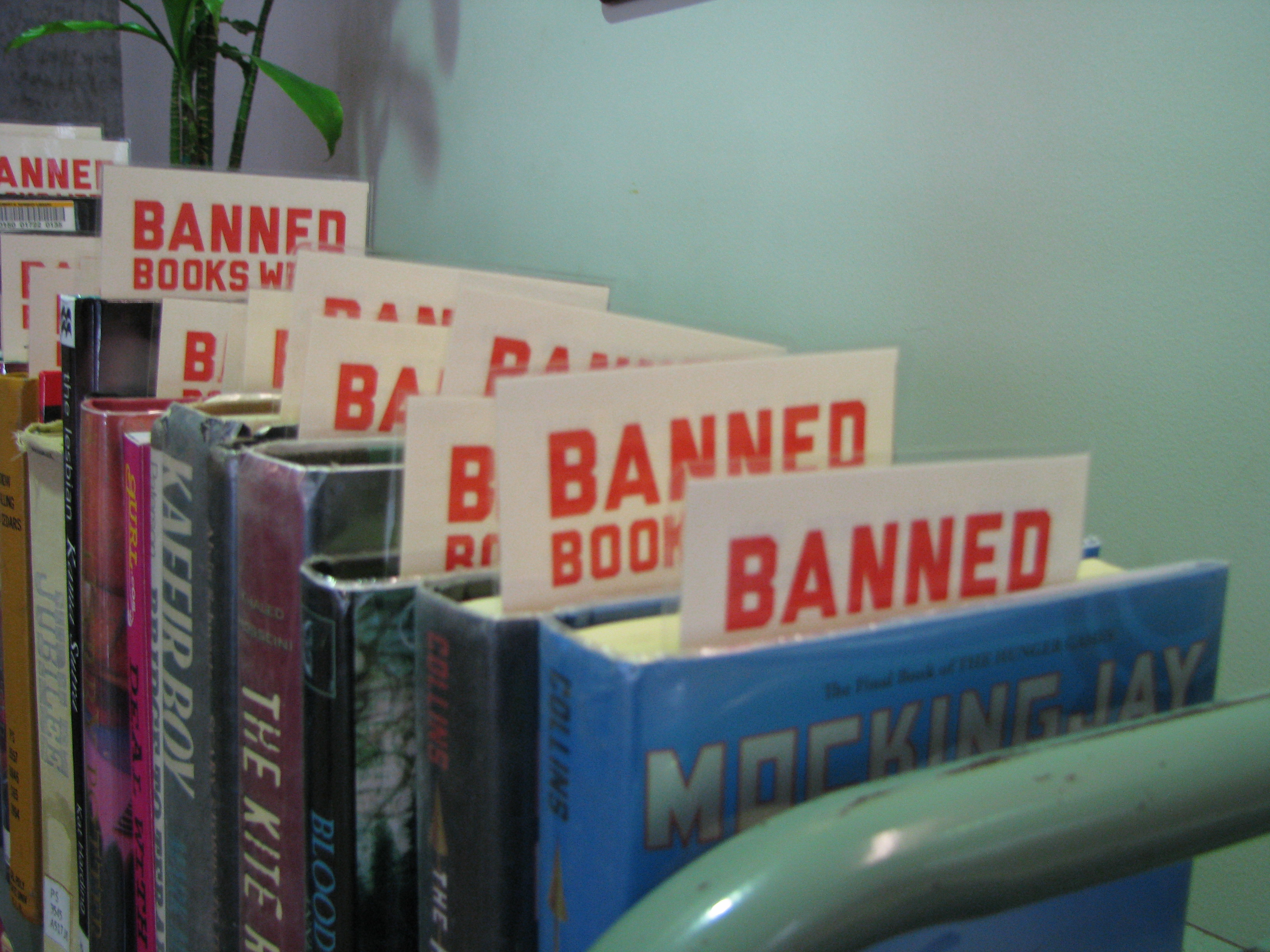
It’s hard to definitively say whether the current incidents of book banning in schools are constitutional. This is because decisions made in public schools are analyzed by the courts differently from censorship in nongovernment contexts.

According to the Supreme Court, control over public education is for “the most part” given to “state and local authorities.” The government has the power to determine what is appropriate for students and thus the curriculum at their school.

However, students retain some First Amendment rights. Public schools may not censor students’ speech, either on or off campus, unless it is causing a “substantial disruption.”

Government and school officials may exert control over the school curriculum without violating students’ or educators’ free-speech rights.

There are exceptions to the government’s power over the school curriculum. The Supreme Court ruled that a state law banning a teacher from covering the topic of evolution was unconstitutional because it violated the establishment clause of the First Amendment, which prohibits the state from endorsing a particular religion.

School boards and state legislators usually have the final decision over what schools teach. State regulation of curriculum is generally constitutionally permissible unless they violate some other provision(s) of the Constitution.

Schools with limited resources have the discretion to determine which books to add to their libraries. However, several members of the Supreme Court have written that removal is constitutionally permitted only if it is done based on the educational appropriateness of the book, not because it was intended to deny students access to books with which school officials disagree.

The Next Step

Even though the government has the option to control what’s taught in school, the First Amendment ensures the right of free speech to those who want to protest what’s happening in schools.[4]

Parents have the right to prohibit their children from reading specific books or discussing certain topics. This authority has been in effect for many years. I object when a parent or group of parents enforces their wishes on all students. Parents have the right to complain about this because it denies their student(s) access to books. Students also have the right to read and discuss books outside of school.

I am also alarmed at the book-banning techniques used by groups to attack, slander, and threaten teachers, librarians, school board members, and other individuals who oppose their actions. These heavy-handed measures have no place in public discourse.  

Groups Fighting Book Bans


[1] Louis A. Bedford IV, “Book bans are un-American,” The Dallas Morning News, March 5, 2023.

[2] Bannings and Burnings in History, Freedom to Read Website,  retrieved March 5, 2023.

[3] Colloquialism, Wikipedia, retrieved March 5, 2023.

[4]When are book bans unconstitutional? A First Amendment scholar explains,” The Free Speech Center at Middle Tennessee University, retrieved March 5, 2023.

Posted in Scratch Pad | Tagged , | Leave a comment

Americans Agree on Teaching Our Achievements and Failures

In an editorial in The Dallas Morning News on February 26, 2023, Dan Vallone writes “there is significant common ground in how Americans feel our history should be taught.”

Dan Vallone’s report by his organization, More in Common,  concludes “most Americans agree on the basic principles of how we learn about our nation’s past, including how to teach issues surrounding America’s history of racism.” Defusing the History Wars: Finding Common Ground in Teaching America’s National Story study also revealed: “Americans, irrespective of their demographic or ideological backgrounds, mistakenly believe the country is split into two hostile camps with irreconcilable beliefs on how to teach American history.”

Vallone says that there are perception gaps between what other Americans believe compared to what we think they believe. He believes: “Such perception gaps — the difference between what other Americans believe vs. what we think they believe — turn potential allies into enemies.”

The report provides the following examples:

Democrats believe that only 30% of Republicans feel we should teach both our shared national history as well as the history of specific groups of Americans such as Black, Hispanic, and Native Americans.  An overwhelming majority of Republicans, 72%, hold this view. Similarly, Republicans believe that only 42% of Democrats think that George Washington and Abraham Lincoln should be admired for their roles in American history when in fact, close to 90% of Democrats feel this way.

There are important areas where Americans diverge on the topic of history.

72% of Republicans believe the history of minority groups is prioritized over history that elevates a common identity while 72% of Democrats say this is not the case.

However, I wonder what is more critical in going forward: perceptions or reality? Political discussions seem to be void of facts or reality. The merits of elected officials are distorted to create the desired political perception. Was Donald Trump a good president? Is Joe Biden a bad president? The achievements and failures of both chief executives are riddled with lies. Another example is the 2020 Presidential Election. There are some who believe Donald Trump was reelected and his defeat was caused by election fraud. They are convinced, despite the evidence to the contrary, that Donald Trump was robbed. Clearly, for these believers, perception is more important than reality.

Mr. Vallone’s desire that “Civil society organizations, faith institutions, businesses, and veterans’ groups along with parents, students, and educators should collaborate to bring Americans of different backgrounds and views together to talk about how to teach history, reduce perception gaps and build solutions that have durable support across communities.” I am skeptical that this will happen because discussion and compromise appear to be absent in today’s society.

I hope that Mr. Vallone’s ideas may move forward to achieve a national dialogue on teaching history.

Dan Vallone, Sunday, February 26, 2023, p. 4P, The Dallas Morning News.

Posted in Scratch Pad | Leave a comment

Will Your Book Be Published?

Jonah Winter’s editorial, “My books are banned by the right and the left – State politicians aren’t the only ones silencing voices,” on page 5P of the February 19, 2023 issue of The Dallas Morning News is an alarming report on the state of book banning and publishing.

In my February 2, 2023 post, School District Bans Books, I asked how publishers will respond to these restrictions. Will they print your book if it has an unsuitable passage? Jonah Winter’s editorial sheds new light on my question.

Roberto Clemente in 1965

Mr. Winter is the author of more than 40 nonfiction children’s books. He wrote that before this year he had never experienced the “sort of media attention this latest right-wing book ban” has received. Winter’s children’s books on baseball legend Roberto Clemente were banned from public schools in Duval County, Florida. The largest city in Duval County is Jacksonville which until recently was the home of Nathan Bedford Forrest High School.

Nathan Bedford Forrest was the founder of the Ku Klux Klan. His name stayed there, on a public high school, until 2014. So I wasn’t surprised to hear that Duval County was banning books about successful people of color. Nor would I be surprised that any book of mine had been banned in Florida generally. In 2016, my book Hillary, about former presidential candidate, first lady and U.S. Secretary of State Hillary Clinton, was banned in two Miami schools.

Jonah Winter, “My books are banned by the right and the left – State politicians aren’t the only ones silencing voices,” The Dallas Morning News, February 19, 2023, p. 5P

My Book is Banned

In my book about Clemente, a tiny part of the story involves the racism he encountered. This came mainly from sports journalists who made references to his being a hothead and lazy, both of which were inaccurate characterizations of him, derived from racist stereotypes about Latinos. The fact I included this in my book is probably why it got banned by the Duval County school district, which banned 175 other books as well. No specific reasons were given, leaving us to guess. And those books weren’t just banned. It is a felony for any teacher to show those books to students.

Jonah Winter, “My books are banned by the right and the left – State politicians aren’t the only ones silencing voices,” The Dallas Morning News, February 19, 2023, p. 5P
Jonah Winter

Winter’s book on Clemente has sold consistently since it was published in 2005. This recent book ban has only increased the book’s visibility and the book “was selling better than ever” according to its Amazon sales rank. “When my book on U.S. Supreme Court Justice Sonia Sotomayor was banned in York County, Pa., last year, the news had a similar impact on sales. Book-banning, the “cancel culture” of the right, doesn’t hurt a book or an author.”

My Book is Not Publishable

I’ve had two book contracts canceled because of my identity in relation to the subject matter. I am a white man. The irony of the big to-do being made over the banning of my Clemente book by conservative activists is that, were I to try and publish that exact same book today, I would not be able to get it published because of progressive activists.

In today’s world of children’s books, governed by the ideological mantra of “own voices,” I am not allowed to tell the story of anyone who’s not white or male.

Jonah Winter, “My books are banned by the right and the left – State politicians aren’t the only ones silencing voices,” The Dallas Morning News, February 19, 2023, p. 5P

According to Winter,

It matters not to the publishers that my books on Clemente, Sotomayor and Frida Kahlo are still selling well, years after their publication dates. Those books, were I to submit them today, would not be published. Nor would my award-winning book from 2015, Lillian’s Right to Vote, about the history of racism in America through the lens of voting rights and the eyes of a 100-year-old Black woman. The editor of that book told me, when I asked her, that she would absolutely not publish that book were I to submit it to her now — nor any other books on people of color or women, which account for most of the books I have written.

The publishing community wants books to be written by the appropriate or own voices.  An Own Voices book means being confident that the worlds created or described in a book are represented as authentically as possible. “Own Voices authors and illustrators create not with an observer’s gaze, but with the cultural nuance from being an active member of that culture.”  According to the website Little Feminist, “Writing characters of color with white gaze, as well as writing books about a disabled character by an able-bodied person, and so forth, can be demeaning and sorely inaccurate if you are not immersed in that culture.” Own voices means that books about Blacks can only be written by Blacks, Hispanics by Hispanics, and women by women.

Jonah Winter, “My books are banned by the right and the left – State politicians aren’t the only ones silencing voices,” The Dallas Morning News, February 19, 2023, p. 5P

I have expressed my concern about my ability to write a book on Blacks or racism because I don’t know what it is to be Black and have never experienced racism.

Mr. Winter concludes his editorial by asking which kind of censorship is worse for authors,

Mr. Winter concludes his editorial by asking which kind of censorship is worse for authors,

The kind that increases the visibility of a book and sells more copies, or the kind that silences an author quietly, behind the scenes. The kind that restricts an author from writing about the subject matter he’s always written about, or the kind that robs a book’s right to exist. There’s no question mark, because there’s no question.

Jonah Winter, “My books are banned by the right and the left – State politicians aren’t the only ones silencing voices,” The Dallas Morning News, February 19, 2023, p. 5P

Posted in Scratch Pad | Tagged , | Leave a comment

Black History Month – The 1619 Project and Critical Race Theory

This blog is the most controversial of my posts. I discuss how The 1619 Project and Critical Race Theory are being used to attack the study of Black History. Critics of these two programs focus on historical errors and white guilt to dismiss discussion of race in America and threaten to remove Black History Month from schools. — Allen Mesch


The 1619 Project

The 1619 Project is a journalistic program developed by Nikole Hannah-Jones and writers from The New York Times, and The New York Times Magazine. The 1619 Project  “aims to reframe the country’s history by placing the consequences of slavery and the contributions of Black Americans at the very center of the United States’ national narrative.” 

The project’s first publication was in The New York Times Magazine in August 2019 to commemorate the 400th anniversary of the arrival of the first enslaved Africans in the English colony of Virginia. The project prepared an educational curriculum accompanied by a broadsheet article, live events, and a podcast. 

Historians, journalists, and commentators have described The 1619 Project as a reinterpretation of accepted history that takes a negative view of traditionally recognized events and people in American history. The project criticizes the patriots in the American Revolution, the Founding Fathers, and Abraham Lincoln and the Union during the Civil War. 

Among the more controversial elements of the 1619 Project are the claims that “1619 is the true founding of America” and “one of the primary reasons the colonists decided to declare their independence from Britain was because they wanted to protect the institution of slavery.”

The 1619 Project was criticized by several historians who question its historical accuracy. In a letter published in The New York Times in December 2019, five important historians expressed “strong reservations” about the project and requested factual corrections, accusing the project’s creators of “putting ideology before historical understanding.” The scholars disputed the project’s claim that slavery was essential to the beginning of the American Revolution because colonists wanted to protect their right to own slaves. The scholars and political scientists specializing in the American Civil War wrote to the Times saying that “The 1619 Project offers a historically-limited view of slavery.” While agreeing to the importance of examining American slavery, they objected to what they described as the portrayal of slavery as a uniquely American phenomenon, to construing slavery as a capitalist venture, and to presenting out-of-context quotes from a conversation between Abraham Lincoln and “five esteemed free black men.”

Some articles written in conjunction with the project discuss important events in Black history including Crispus Attucks the first American killed in the revolutionary war, Phillis Wheatley Peters the first African-American author of a published book of poetry, the Fugitive Slave Act of 1793 guaranteed a right for a slaveholder to recover an escaped slave, the Act Prohibiting Importation of Slaves of 1807 provided that no new slaves were permitted to be imported into the United States,  and The New Orleans Massacre of 1866 when a peaceful demonstration of mostly Black Freedmen was set massacred by a mob of white rioters.

[SOURCE: The 1619 Project, Wikipedia]


Critical Race Theory (CRT)

Critical Race Theory (CRT) is a cross-disciplinary examination by social and civil-rights scholars and activists of how laws, social and political movements, and media shape and are shaped by social conceptions of race and ethnicity. The goals of CRT include challenging all mainstream and “alternative” views of racism and racial justice, including conservative, liberal, and progressive. The word critical in the name is an academic reference to critical thinking, critical theory, and scholarly criticism, and NOT criticizing or blaming people.

CRT is also used in sociology to explain social, political, and legal structures and power distribution through a “lens” focusing on the concept of race, and experiences of racism. For example, the CRT conceptual framework examines racial bias in laws and legal institutions, such as highly disparate rates of incarceration among racial groups in the United States. A key CRT concept is intersectionality or how different forms of inequality and identity are affected by interconnections of race, class, gender, and disability. Scholars of CRT view race as a social construct with no biological basis. One principle of CRT is that racism and disparate racial outcomes are the results of complex, changing, and often subtle social and institutional dynamics, rather than explicit and intentional prejudices of individuals. CRT scholars argue that the social and legal construction of race advances the interests of white people at the expense of people of color, and that the liberal notion of U.S. law as “neutral” plays a significant role in maintaining a racially unjust social order, where formally color-blind laws continue to have racially discriminatory outcomes.

Critical race theory has stirred controversy in the United States for promoting the use of narrative in legal studies, advocating “legal instrumentalism” as opposed to ideal-driven uses of the law, and encouraging legal scholars to promote racial equity.

In the 2020 U.S. presidential election, opposition to critical race theory was adopted as a campaign theme by Donald Trump and various conservative commentators on Fox News and right-wing talk radio shows. Trump issued an executive order directing agencies of the United States federal government to cancel funding for programs that mention “white privilege” or “critical race theory”, on the basis that it constituted “divisive, un-American propaganda” and that it was “racist”.

Opposition to what was alleged to be critical race theory was subsequently adopted as a major theme by several conservative think tanks and pressure groups. According to The Washington Post, conservative lawmakers and activists have used the term as “a catchall phrase for nearly any examination of systemic racism.”

[SOURCE: Critical Race Theory, Wikipedia]


Bans on Critical Race Theory and Associated Topics

In April 2021, the Idaho legislature passed a law that effectively banned any educational entity from teaching or advocating sectarianism, including critical race theory or other programs involving social justice.

In June 2021, the Florida State Board of Education unanimously voted to ban public schools from teaching critical race theory at the urging of Governor Ron DeSantis. The Florida Stop W.O.K.E. Act, standing for “Wrong to Our Kids and Employees”, also known as the Individual Freedom Act, prohibits instruction and teaching that “espouses, promotes, advances, inculcates, or compels” certain topics of race and gender.

In May 2021, the Tennessee state legislature passed a law that prohibits the teaching of 14 concepts surrounding race and gender discrimination, including the concept of systemic racism. The law “bar(s) any lesson that causes an individual “discomfort, guilt, anguish, or another form of psychological distress” because of their race or sex. As of July 2021, 10 US states had introduced bills or taken other steps that would restrict how teachers discuss racism, sexism, and other “divisive issues”, and 26 other states were in the process of doing so. As of November 9, 2021, 28 US states had introduced such bills–all by Republican lawmakers. As of December 2021, 66 educational gag orders had been filed for the year in 26 state legislatures (12 bills had already been passed into law) that would inhibit teaching any race theory in schools, universities, or state agencies, by teachers, employers, or contractors. Penalties vary but predominantly include loss of funding for schools and institutions. However, in some cases, the bills mandate the firing of employees.

In January 2022, the governor of Virginia signed an executive order banning critical race theory in Virginia schools. 

Other state government officials and State Boards of Education (SBOE) also adopted similar measures in 2021. Montana attorney general prohibited teachers from asking students to “reflect on privilege.” Utah’s SBOE restricted the teaching of racism and sexism. Alabama’s SBOE banned the “teaching of concepts that impute fault, blame, a tendency to oppress others, or the need to feel guilt or anguish to persons solely because of their race or sex.” Georgia’s SBOE banned teaching that “indoctrinates” students. Florida’s SBOE prohibited teaching about critical race theory or the 1619 Project.

[SOURCE: Censorship of school curricula in the United States, Wikipedia.]


Observations

I reached several conclusions after reviewing the programs and their criticism:

Any study of Black history should be based on facts approved by historians. This includes misrepresentations of history in educational material. This information should be modified/corrected/updated based on new data and facts.

Attacks on presentations and the discussion of Black history actually promote racism. The bans on minority history perpetuate a false narrative that some use in order to suppress minorities.

We must understand our history with all its horrors to not repeat mankind’s past sins.

Allowing suppression of historical facts will lead to more attacks on other minorities. We have witnessed increased assaults on Asians, Muslims, Jews, LGBTQ+s, Blacks, and Hispanics. What minority will be the target of future hate crimes?

I believe that we have an unrecognized epidemic in the United States. The disease is composed of the “Three Is” of Intolerance, Ignorance, and Indifference. This epidemic threatens our country as much as any virus.

Posted in Scratch Pad | Tagged , , | Leave a comment

Black History Month – Nat Turner and Slave Literacy

Nat Turner

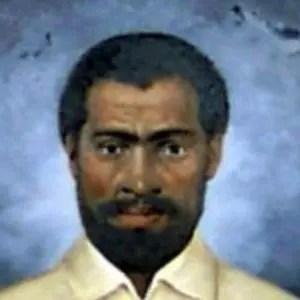
On August 21, 1831, enslaved Virginian Nat Turner led a bloody revolt, which changed the course of American history. The uprising in Southampton County led to the murder of an estimated 55 white people, the execution of about 55 Black people, and the beating of hundreds of Blacks by white mobs. 

Rebellion Produces Backlash

Although the rebellion only lasted about 24 hours, it triggered a renewed wave of oppressive legislation prohibiting enslaved people’s movement, assembly, and education.

At the same time, abolitionists saw an opening for the argument that the system of slavery was untenable. Lawmakers in Virginia argued over which path to take. A vote to free slaves through gradual emancipation gained support from the state’s leaders.

Ultimately Virginia and other southern states decided to keep slavery in place and tighten control of Blacks’ lives, including their literacy. In the antebellum South only about 10 % of enslaved people were literate. For many slave owners, even this rate was too high. Many Southerners believed that an educated slave was a dangerous person.

Biblical Justification Promoted

The 1831 revolt confirmed this view. Turner was a passionate preacher guided by spiritual visions. His ability to read the Bible allowed him to find stories of divine support for fights against injustice. Slave owners and their clergy controlled the Biblical account justifying slavery given to illiterate slaves. However, educated Blacks, like Turner, refuted this “sanitized” version which tried to legitimize slavery. Abolitionists Agitate Through Written Word.

African American literacy wasn’t just problematic to slave owners because of the potential for enlightening Biblical readings. “Anti-literacy laws were written in response to the rise of abolitionism in the north,” One of the most threatening abolitionists of the time was Black New Englander, David Walker. From 1829-1830, he distributed the Appeal, a pamphlet calling for uprisings to end slavery. Black sailors secretly brought Walker’s text to the South.

William Lloyd Garrison in 1833

Adding to such fears was William Lloyd Garrison’s abolitionist paper, The Liberator, which began publishing on January 1, 1831. Although it was edited by Garrison, who was described as a “radical” white abolitionist, it was primarily seen as a “Black newspaper,” because most of its readers were Blacks. Other readers were a “few radical whites who believed in antislavery and antiracism.” Southern enslavers saw this paper as another example of outsiders’ spreading agitation through the written word.

Literacy Threatens Justification of Slavery

Women Learning to Read

Black Americans’ literacy also threatened a major justification of slavery that Black people were “less than human, permanently illiterate and dumb.” Educated Blacks would disprove that characterization would undermine the logic of the system.

States fighting to hold on to slavery began tightening literacy laws in the early 1830s. In April 1831, Virginia declared that any meetings to teach free Blacks to read or write were illegal. New codes also outlawed teaching enslaved people.

Other southern states passed similarly strict anti-literacy laws around this time. In 1833, an Alabama law declared that “any person or persons who shall attempt to teach any free person of color, or slave, to spell, read, or write, shall upon conviction thereof of indictment be fined in a sum not less than two hundred and fifty dollars.”

Despite the consequences, many enslaved people continued to learn to read. Numerous enslavers may have supported teaching Blacks to read. Many slaves performed “sophisticated work, including management of operations,” which required literacy. Barring Blacks from reading and writing was not a practical strategy for the slave owners. 

Sources: How Literacy Became a Powerful Weapon in the Fight to End Slavery, History, accessed February 8, 2023.

 Includes quotes from:

Patrick Breen, author of The Land Shall Be Deluged in Blood: A New History of the Nat Turner Revolt.
Clarence Lusane, a professor of political science at Howard University.
Sarah Roth, professor of history at Meredith College and creator of The Nat Turner Project. 

Posted in Scratch Pad | Tagged | Leave a comment

Black History Month – Corinth Contraband Camp

As Federal forces occupied significant portions of the South, enslaved people escaped from farms and plantations and fled to safety behind Union lines. The number of freedom seekers increased considerably in Union-occupied Corinth after President Abraham Lincoln’s Preliminary Emancipation Proclamation was issued in September 1862.

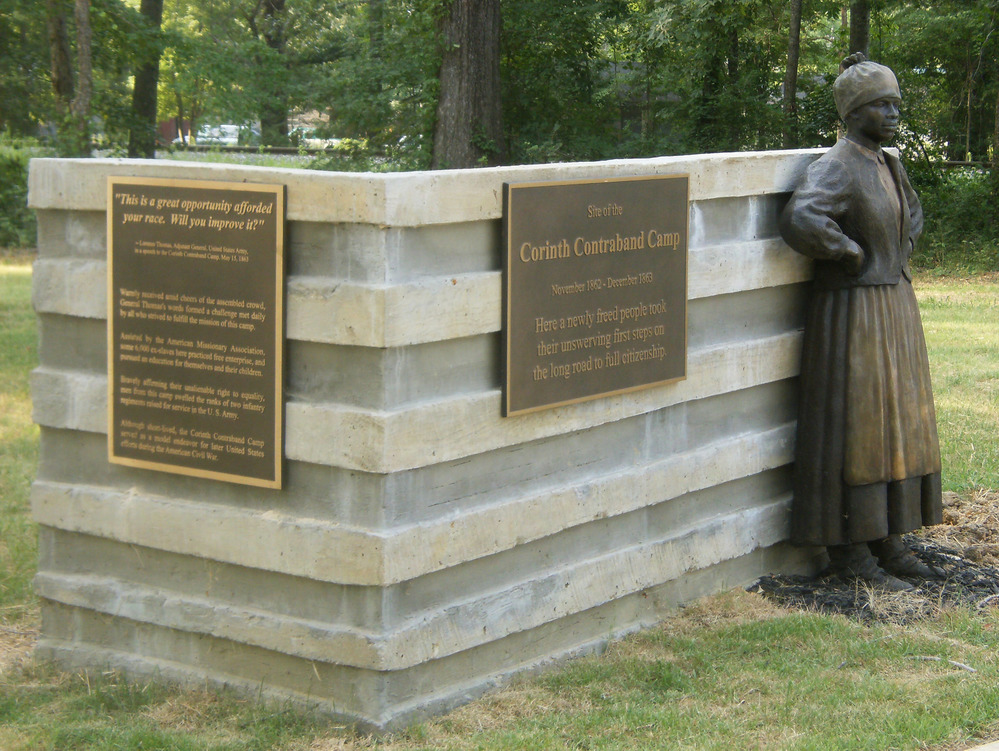
The Corinth Contraband Camp was established by Union General Grenville M. Dodge to help these refugees. The camp included homes, a church, a school, and a hospital. The freedmen cultivated and sold cotton and vegetables in a progressive cooperative farm program. By May 1863, the camp was making a profit of $4,000 to $5,000 from its operations. By August, over 1,000 Black children and adults learned to read through the efforts of various benevolent organizations. Although the camp had a modest beginning, it became a model camp and permitted approximately 6,000 former slaves to establish their own identities.

Once the Emancipation Proclamation was implemented, nearly 2,000 newly freed men at the Corinth Contraband Camp had their first opportunity to protect their way of life and they formed a new regiment in the Union army. Since most of the men came from Alabama, the unit was named the 1st Alabama Infantry Regiment of African Descent, which was later re-designated to the 55th United States Colored Troops.

In December 1863, the camp was moved to Memphis and the freedmen lived in a more traditional refugee facility for the remainder of the war. The Corinth Contraband Camp was the first step on the road to freedom and the struggle for equality for thousands of former slaves.

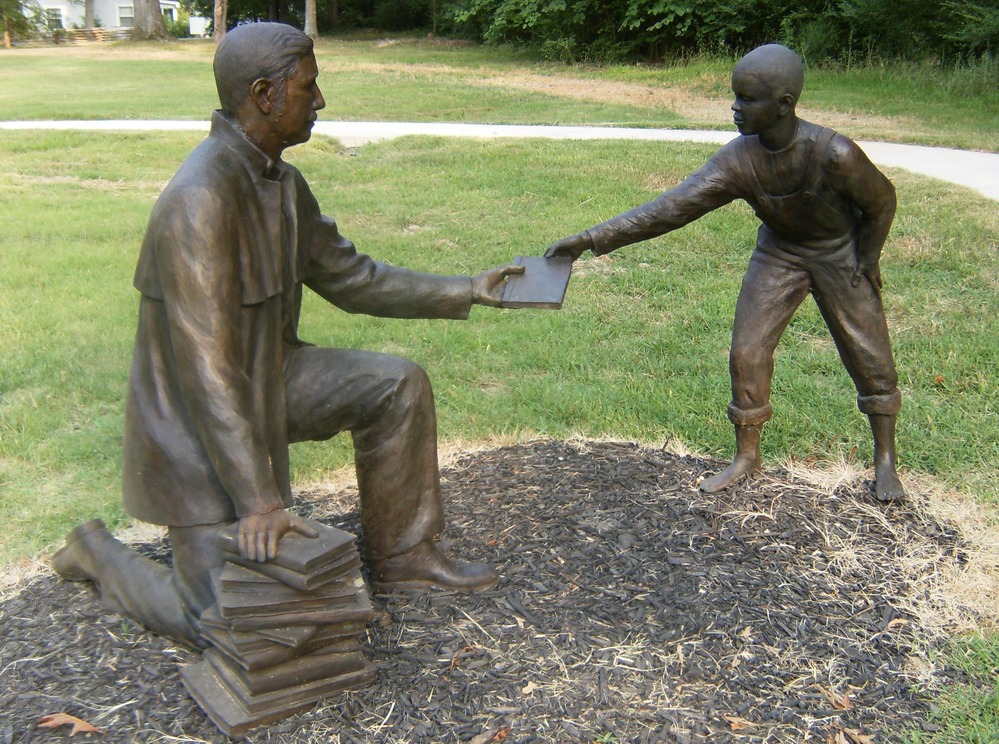
Today a portion of the historic Corinth Contraband Camp is preserved to commemorate those who began their journey to freedom there in 1862-1863. This land now hosts a quarter-mile walkway that exhibits six life-size bronze sculptures depicting the men, women, and children who inhabited the camp.

The following images from the site illustrate the interest and desire that the emancipated Blacks had to learn to read and write.

Please see the Corinth Contraband Camp for more information on this historic site.

Posted in Scratch Pad | Leave a comment

School District Bans Books

Authors beware! Your book may be banned by school districts.

Will Your Book be Banned?

A letter to the editor in the January 30, 2023 Dallas Morning News caught my eye this morning. According to the writer, McKinney ISD changed its review process to remove books based on a review of “specific passages.” The new McKinney ISD library review process allows for the “review and removal of books based on only an individual paragraph or passage.” The first book removed under the new policy is The Bluest Eye which won the Nobel Prize for literature.

This form of censorship indicates that a simple Grammarly check will need to be augmented by a “suitability” check.

For authors, this means that the audience for your book may be significantly reduced. This ban may have started with a school district, but it may soon spread to local public libraries, book stores, and online retailers. Your audience is now about twenty-five readers. How will publishers respond to these restrictions? Will they print your book if it has an unsuitable passage? They are in business to make money and loss of market may make it tough or impossible to get your manuscript published.

While parents want and should be able to exercise control of what their children read, these blanket rules place an academic institution or government in charge of their child’s education.

Houston Chronicle Publishes List of Banned Books

Posted in Scratch Pad | Leave a comment

Desperate Writers Can Become Publishers’ Victims

After spending two years researching and writing my book, I was anxious to find a publisher willing to print and distribute my manuscript. Of course, I hoped to find a “match made in heaven,” but instead I ended up “shaking hands with the devil.” No information on sales! Low to negligible royalties! I learned my lesson and I want to share some information I have discovered to help you avoid my experience.

Some publishers fail to pay authors on time or in full or are non-responsive to authors’ requests. There is a growing number of publishers that have been not paying authors their royalties. There are many lawsuits currently in the works that seek to get compensation, but it’s a long and dark road.

The Authors Guild – Publishers That Have Failed To Pay Authors On Time

The Authors Guild – Reported Publishing Scams

The Authors Guild – Avoiding Publishing Scams

Red Alert Checklist

Here are some guidelines before you leap into a contract that becomes a nightmare:

  1. If the publisher asks for money for any reason – run
  2. If the publisher asks you to sign a contract that is more than two pages – run
  3. If the publisher pressures you to provide a manuscript, biography, and/or picture – run
  4. If the publisher is listed on any list of worse publishers – run
  5. If the publisher approaches you – run
  6. If the publisher has bad reviews – run

Undoubtedly there are other red flags.

The Authors Guild – Avoiding Publishing Scams has some tips to avoid publishing scams.

The Authors Guild – Things Every Writer Should Know Before Signing a Book Contract presents some ideas about what to do before saying “I do.”

Lists of “Best” and “Worst” Publishers

I found these sites which list the “best” and “worst” self-publishing companies. I particularly like the information provided by the Alliance of Independent Authors.

Posted in Scratch Pad | Leave a comment

“The Pale Blue Eye” and the “Real” Edgar Allan Poe.

The Netflix movie The Pale Blue Eye is a murder mystery that takes place at the United States Military at West Point.

The Movie

By Netflix – Netflix., Fair use, https://en.wikipedia.org/w/index.php?curid=72253321

The Pale Blue Eye is a gothic mystery thriller film written and directed by Scott Cooper, adapted from the 2003 novel of the same name by Louis Bayard.[1] The film features an ensemble cast that includes Christian Bale, Harry Melling, Gillian Anderson, Lucy Boynton, Charlotte Gainsbourg, Toby Jones, Harry Lawtey, Simon McBurney, Timothy Spall, and Robert Duvall. Its plot follows veteran detective Augustus Landor in 1830 West Point, New York, as he investigates a series of murders at the United States Military Academy with the aid of Edgar Allan Poe, a young military cadet.

In 1830, alcoholic retired detective Augustus Landor is asked by the military to investigate the hanging of Cadet Leroy Fry at the United States Military Academy at West Point, New York. Landor is a widower who lives alone since his daughter Mathilde ran off a few years previously.

After Fry was hanged, his heart was removed from his body. In the morgue, examining the corpse, Landor finds a small fragment of a note clutched tightly in Fry’s hand. Also, marks on Fry’s neck and fingers suggest that he did not hang himself, but was murdered.

With the officers’ permission, Landor enlists the help of Edgar Allan Poe, another cadet at the academy who has expressed an interest in the case. Poe and Landor deduce from the writing on the note fragment that it was summoning Fry to a secret meeting. After a cow and a sheep are found in the area, butchered and with their hearts removed, it is deduced that the murder could be linked to black magic rituals.

Another cadet, Ballinger, goes missing and is later found hanged, with both his heart and his genitals removed. A third cadet, Stoddard, who was a colleague of the two victims, then disappears, and it is presumed by Landor that this man had reason to believe he was next in line to be killed.

Landor and Poe begin to suspect the family of Dr. Daniel Marquis, who was first brought into the investigation to perform the autopsy on Fry. Particular suspicion is placed on his son Artemus and his daughter Lea (who suffers from random seizures).

While visiting Dr. Marquis’s house, Landor finds an old officer’s uniform; a man impersonating an officer had been involved in the mutilation of Fry’s body. Landor confronts Dr. Marquis, who admits that he had resorted to black magic to cure Lea of her seizures, and initially she appeared to improve.

Poe is enchanted by Lea and volunteers to do whatever she wants. However, he is drugged and wakes to find that Artemus and Lea are about to cut out his heart, in accordance with the ritual to cure Lea. Landor manages to arrive in time to rescue Poe, but the building catches fire and Lea and Artemus die.

Thinking that the case is now solved, the military thanks Landor for his service. However, Poe, recovering from his near-death experience, notices that the handwriting on the note fragment found in Fry’s hand matches that of Landor. Threading together all the information that he has gathered, it becomes apparent that Landor was in fact the killer of the cadets. Poe confronts Landor with his conclusion.

It transpires that two years previously, Landor’s daughter Mathilde was raped by Fry, Ballinger, and Stoddard after attending her first ball. Traumatized by the experience, she later killed herself by jumping off a cliff. Landor did not disclose this to anyone but pretended that she had run away.

Distraught, Landor set out to avenge his daughter. He left the note for Fry, luring him to a lonely spot before hanging him. However, a patrol happened to walk by, so Landor was forced to leave the body there. Lea and Artemus later stole the heart for their ritual. After killing Ballinger, Landor mutilated his corpse to make it appear that the cadet had been murdered by the same “madman” who had desecrated Fry’s body.

Poe tells Landor he has two notes with handwriting samples that can link Landor directly to the murders, but before leaving, Poe burns them. Landor is later seen standing at the cliff where his daughter leapt to her death. He lets her hair ribbon float away in the wind, saying “Rest, my love”.

West Point References

Although the story is fiction, it does contain accurate references to West Point.

The “Real” Edgar Allan Poe at West Point

The following is an excerpt from Teacher of Civil War Generals – Major General Charles Ferguson Smith, Soldier and West Point Commandant:

By Unknown author; Restored by Yann Forget and Adam Cuerden – Derived from File:Edgar Allan Poe, circa 1849, restored.jpg; originally from http://www.getty.edu/art/gettyguide/artObjectDetails?artobj=39406, Public Domain, https://commons.wikimedia.org/w/index.php?curid=77527076

There are many stories, anecdotes, and fantasies about Poe’s exploits at West Point. He became notorious for cutting mandatory drills, skipping classes, and making “nocturnal visits to Benny Havens.” One night Poe stumbled back to his barracks and sprawled on his back on the steps of his tactical officer’s quarters. “When the tactical officer awoke and inquired as to who might be outside his door, Poe allegedly responded in verse: On Linden when the sun was low/All bloodless lay the untrodden snow/And dark as winter was the flow/Of I SIR, rolling rapidly!” Cadet Poe was eventually court-martialed and dismissed from the Academy. Some attribute his discharge to his frequent trips to Benny Havens or his “uncontrollable urge to hurl baked potatoes across the Academy mess hall.” Another story blamed his dismal on reporting to a parade naked except for his crossed white ammunition belts and hat. One account said that Poe, in a fit of rage, threw his tactical officer off a cliff into the Hudson River and was subsequently charged with murder.[i]


[i] William F. Hecker, editor, Private Perry and Mister Poe, The West Point Poems, 1831, Facsimile Edition (Baton Rouge: Louisiana State University Press, 2005), Introduction xvii-xviii..
Posted in Scratch Pad | Tagged | Leave a comment

Sam’s Club Awards Grant to Plano Kiwanis

The Plano Kiwanis’ “Books and Buddies” program received a $500 grant from Sam’s Club. The grant, along with Plano Kiwanis funds, will be used to purchase bilingual books that will be given to Head Start children at an open house in February. Over the past two years, the Books & Buddies project has supplied bilingual books for school events, after-school programs, and libraries.

The program’s goal is to support efforts to connect parents and children with books.

Some medical offices have also received bilingual books through the program, which presents an opportunity for a parent to spend a few minutes reading a book with their child.

To learn more about this program, please contact the Plano Kiwanis [http://www.kiwanisplano.org/]

Also, please check out the other programs supported by the Plano Kiwanis [http://www.kiwanisplano.org/what-we-do-new.html]

Posted in Scratch Pad | Tagged | Leave a comment