Will Rogers on Democrats and Republicans

Will Rogers

I thought we could use a robust dose of Will Rogers’s humor on political parties with the current political situation and especially the disarray in the Democratic Party over President Biden’s mental health.

Will Rogers’s Quotes on Politics

Will Rogers most famous quote on being a Democrat also trivialized the party:

I belong to no organized party; I am a Democrat.

However, Mr. Rogers also gave equal attention to Republicans as illustrated in these quotes.

It takes nerve to be a Democrat, but it takes money to be a Republican.

Democrats take the whole thing as a joke. Republicans take it serious but run it like a joke.

I will admit it has rained more under Republican administrations. That was partially because they have had more administration than Democrats.

A cannibal is a good deal like a Democrat, they are forced to live off each other.

I generally give the party in power, whether Republican or Democrat, the more digs because they are generally doing the country more damage.

A flock of Democrats will replace a mess of Republicans. It won’t mean a thing. They will go in like all the rest of ’em. Go in on promises and come out on alibis.

The Republicans mopped up, the Democrats gummed up, and I will now try and sum up. Things are terribly dull now. We won’t have any more serious comedy until Congress meets.

If a man wants to stand well socially, he can’t afford to be seen with either the Democrats or the Republicans.

Republicans want a man that can lend dignity to the office. Democrats want a man that will lend some money.

Republicans have always been the party of big business. The Democrats of small business. So you just take your pick. The Democrats have their eye on a dime and the Republicans on a dollar.

The more education he gets the less apt he is to be a Democrat and if he is very highly educated he will see the apple sauce in both parties.

Democrats, you can’t shame them into even dying. They would keep on living just to spite the Republicans.

Will Rogers: Mini-Bio

Rogers was born in 1879 on Native American land that now forms part of Oklahoma, He was of Cherokee descent. As a young man, he worked as a horse-breaker before joining a circus to perform rope tricks. In 1916 he joined the Ziegfeld Follies and gained fame as a wise-cracker. His monologues, delivered in a down-home folksy style, gained national fame. Even so, they were biting and to the point, and the public came to appreciate Rogers as a man of exulted common sense. His most famous remarks were about government and politicians. Rogers typically followed a biting comment with self-effacing humor or a platitude to relieve tension. He had an astonishing work ethic and diverse interests: Rogers appeared in sixty-nine films, undertook exhausting national lecture tours, worked on radio and Broadway, and as a Goodwill Ambassador to Mexico. Rogers wrote numerous books and essays and was a newspaper columnist from 1922 until his death. Rogers had a passion for aviation and was an advocate for the industry. He was killed in a plane crash in Alaska on August 15, 1935. <1>

Notes:

<1> “Will Rogers’ quotes on being a Democrat,” May 14, 2021 by Quotes from the Past, Will Rogers’ quotes on being a Democrat | Quotes from the Past.

Posted in Scratch Pad | Tagged , , , | Leave a comment

America’s Religious Foundations

John Leland

Alan W. Steelman’s editorial “Make America Christian Again?” in the Sunday, July 7, 2024 edition of the Dallas Morning News prompted me to learn more about an American Baptist minister named John Leland.

John Leland (May 14, 1754 – January 14, 1841) was an American Baptist minister who preached in Massachusetts and Virginia. He was an important figure in the struggle for religious liberty in the United States as well as an outspoken abolitionist. Leland also later opposed the rise of missionary societies among Baptists.

During the 1788-89 election, Leland supported James Madison due to Madison’s support for religious liberty in what became the First Amendment to the Constitution, and Madison was seated in the first Congress that same year. Leland returned to Massachusetts in 1791 the year the Bill of Rights was ratified, leaving Virginia after an anti-slavery sermon. Back in New England, Leland helped establish several Baptist congregations in Connecticut, to which President Jefferson later wrote his famous letter to the Baptists of Danbury, Connecticut in 1802 regarding religious freedom.

Steelman quoted Reverend Leland as saying:

Guard against those men who make a great noise about religion in choosing representatives. If they knew the nature and worth of religion, they would not debauch it to such shameful purposes.

Leland was elected to the Massachusetts House of Representatives and represented Cheshire in 1812.

Leland died on January 14, 1841, in North Adams, Massachusetts. His tombstone reads, “Here lies the body of John Leland, of Cheshire, who labored 67 years to promote piety and vindicate the civil and religious rights of all men.”

Leland opposed theological seminaries. Ironically, The John Leland Center for Theological Studies in Virginia is named in his honor. The school was named for Leland for three reasons: his firm stand for religious liberty for all, his opposition to slavery, and his service as a pastor and evangelist.

Excerpts from his writings

The notion of a Christian commonwealth should be exploded forever…Government should protect every man in thinking and speaking freely, and see that one does not abuse another. The liberty I contend for is more than toleration. The very idea of toleration is despicable; it supposes that some have a pre-eminence above the rest to grant indulgence, whereas all should be equally free, Jews, Turks, Pagans and Christians.

‒ A Chronicle of His Time in Virginia.

Every man must give account of himself to God, and therefore every man ought to be at liberty to serve God in a way that he can best reconcile to his conscience. If government can answer for individuals at the day of judgment, let men be controlled by it in religious matters; otherwise, let men be free.

‒ Right of Conscience Inalienable.

Resolved, that slavery is a violent deprivation of rights of nature and inconsistent with a republican government, and therefore, recommend it to our brethren to make use of every legal measure to extirpate this horrid evil from the land; and pray Almighty God that our honorable legislature may have it in their power to proclaim the great jubilee, consistent with the principles of good policy.

‒ Resolution for the General Committee of Virginia Baptists meeting in Richmond, Virginia, in 1789.

Was America Founded on Christianity?

Steelman writes: “The Constitution contains no mention of Christianity or Jesus Christ. It refers to religion only twice: in the First Amendment, which prohibits state-endorsed religion, and in Article VI, which prohibits religious tests for public office.” <1>

The concept of separation of Church and State was described in Thomas Jefferson’s letter to the Danbury Baptists in 1802.

Believing with you that religion is a matter which lies solely between Man & his God, that he owes account to none other for his faith or his worship, that the legitimate powers of government reach actions only, & not opinions, I contemplate with sovereign reverence that act of the whole American people which declared that their legislature should “make no law respecting an establishment of religion, or prohibiting the free exercise thereof,” thus building a wall of separation between Church & State. Adhering to this expression of the supreme will of the nation in behalf of the rights of conscience, I shall see with sincere satisfaction the progress of those sentiments which tend to restore to man all his natural rights, convinced he has no natural right in opposition to his social duties. <2>

Comments from the Bible

Mark 12:17 ‒ “Jesus said to them, “Render to Caesar the things that are Caesar’s, and to God the things that are God’s.”

Titus 3:1-15 ‒ “Remind them to be submissive to rulers and authorities, to be obedient, to be ready for every good work, to speak evil of no one, to avoid quarreling, to be gentle, and to show perfect courtesy toward all people. For we ourselves were once foolish, disobedient, led astray, slaves to various passions and pleasures, passing our days in malice and envy, hated by others and hating one another. But when the goodness and loving kindness of God our Savior appeared, he saved us, not because of works done by us in righteousness, but according to his own mercy, by the washing of regeneration and renewal of the Holy Spirit, …” <3>

Consequences

Creating a (white) Christian nation will destroy the basic rights granted in the First Amendment and will foster discrimination, bigotry, and hate crimes. I believe this possibility is in direct conflict with the teachings of Jesus Christ. Establishing a one religion nation whether it is Christian, Moslem, Jewish, or another belief is bad.

There were 7,759 reported hate crimes in the U.S. in 2023 which was the most in 12 years. Some experts and advocacy groups say the true number is probably even higher.

A Christian nation will encourage prejudice against non-Christians. Most American adults (82%) say Muslims are subject to at least some discrimination in the U.S. today, according to a Pew Research Center survey conducted in March 2019 and a majority (56%) believe Muslims are discriminated against a lot.

Another way to look at discrimination is to try to gauge its practical impact. When asked whether being part of a certain group hurts or helps someone’s “ability to get ahead in our country,” most Americans see Muslims as being disadvantaged, according to a different Pew Research Center survey conducted in January and February of this year. Indeed, more than six-in-ten U.S. adults (63%) say that being Muslim hurts someone’s chances for advancement in American society at least a little, including 31% who say it hurts their chances a lot.

Substantially smaller shares of Americans say that being Jewish or evangelical is a disadvantage. One-in-five U.S. adults say being Jewish hurts someone’s chances of getting ahead, while 15% say the same about being evangelical. In both cases, slim majorities say being Jewish or evangelical neither helps nor hurts. <4>

Will a national Christian religion lead to a type of inquisition? The Spanish Inquisition was originally intended primarily to identify heretics among those who converted from Judaism and Islam to Catholicism. The regulation of the faith of newly converted Catholics was intensified following royal decrees issued in 1492 and 1502 ordering Jews and Muslims to convert to Catholicism or leave Castile, or face death, resulting in hundreds of thousands of forced conversions, the persecution of conversos and moriscos, and the mass expulsions of Jews and of Muslims from Spain. <5>

Will a Christian nation increase attacks on LGBTQ+ people? Within Christianity, there are a variety of views on sexual orientation and homosexuality. The view that various Bible passages speak of homosexuality as immoral or sinful emerged in the first millennium AD, and has since become entrenched in many Christian denominations through church doctrine and the wording of various translations of the Bible.

In the present day, there are a wide variety of views within Christianity on homosexuality and sexual orientation, with some scholars of Christianity contesting the notion that scripture speaks explicitly of homosexuality as a sin against God. Within a Christian denomination, individual believers and the groups they belong to may hold different views, and not all members of a denomination necessarily support their church’s views on homosexuality. Most denominations teach that homosexual behavior and acts are sinful. The Eastern Orthodox and Roman Catholic Churches officially condemn homosexual activity as sin. Various mainline Protestant denominations have taken a stance towards accepting homosexual people and even unions or marriages between same-sex couples while others have not. <6>

Notes:

<1> Alan W. Steelman’s editorial “Make America Christian Again?” in the Sunday, July 7, 2024 edition of the Dallas Morning News.

<2> Jefferson’s Letter to the Danbury Baptists, https://www.loc.gov/loc/lcib/9806/danpre.html.

<3> Separation Of Church And State, https://www.openbible.info/topics/separation_of_church_and_state.

<4> Many Americans see religious discrimination in U.S. – especially against Muslim https://www.pewresearch.org/short-reads/2019/05/17/many-americans-see-religious-discrimination-in-u-s-especially-against-muslims/.

<5> Spanish Inquisition, https://en.wikipedia.org/wiki/Spanish_Inquisition.

<6> Christianity and Homosexuality, https://en.wikipedia.org/wiki/Christianity_and_homosexuality.

Posted in Scratch Pad | Tagged , , , , , , | Leave a comment

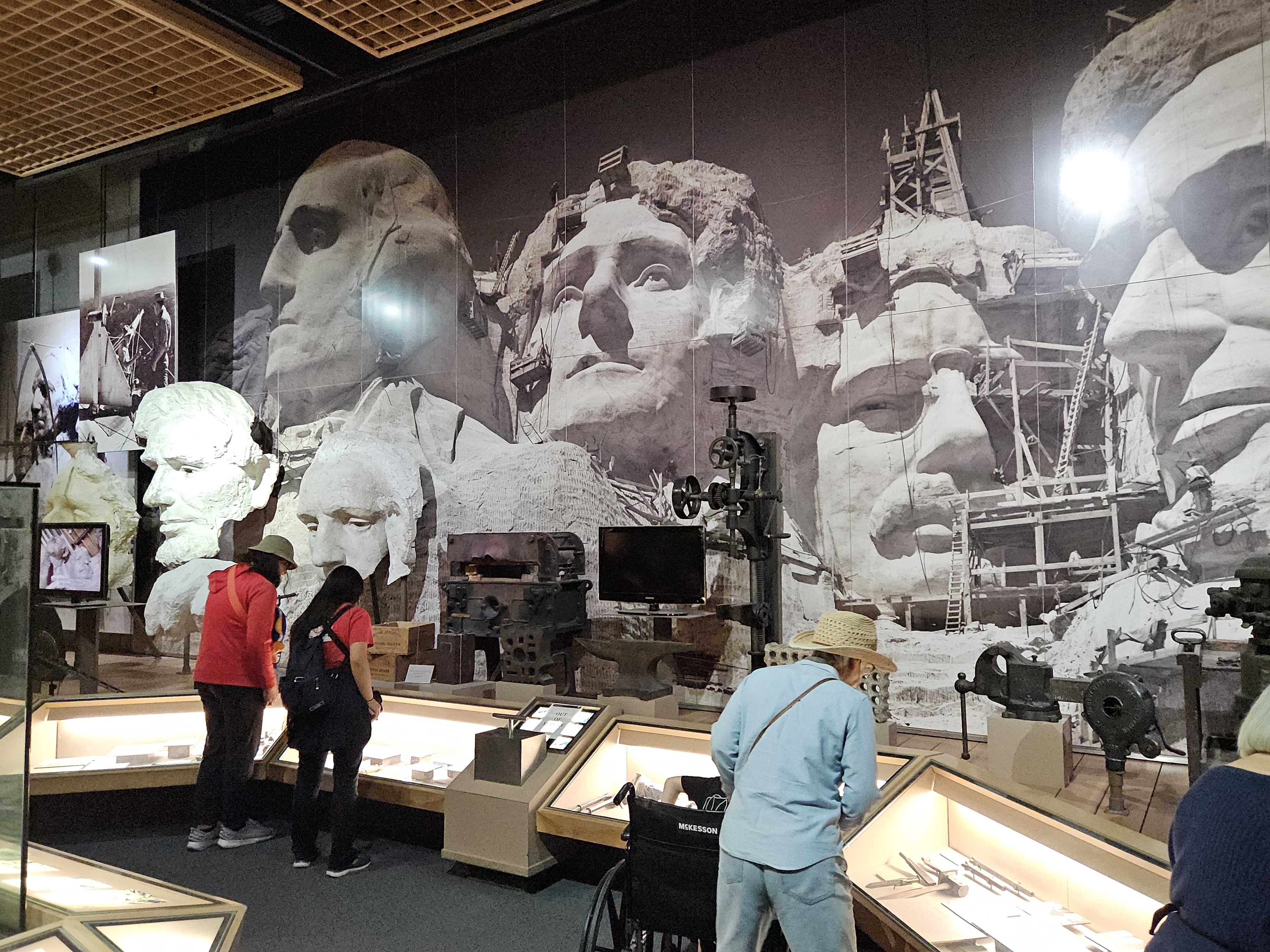
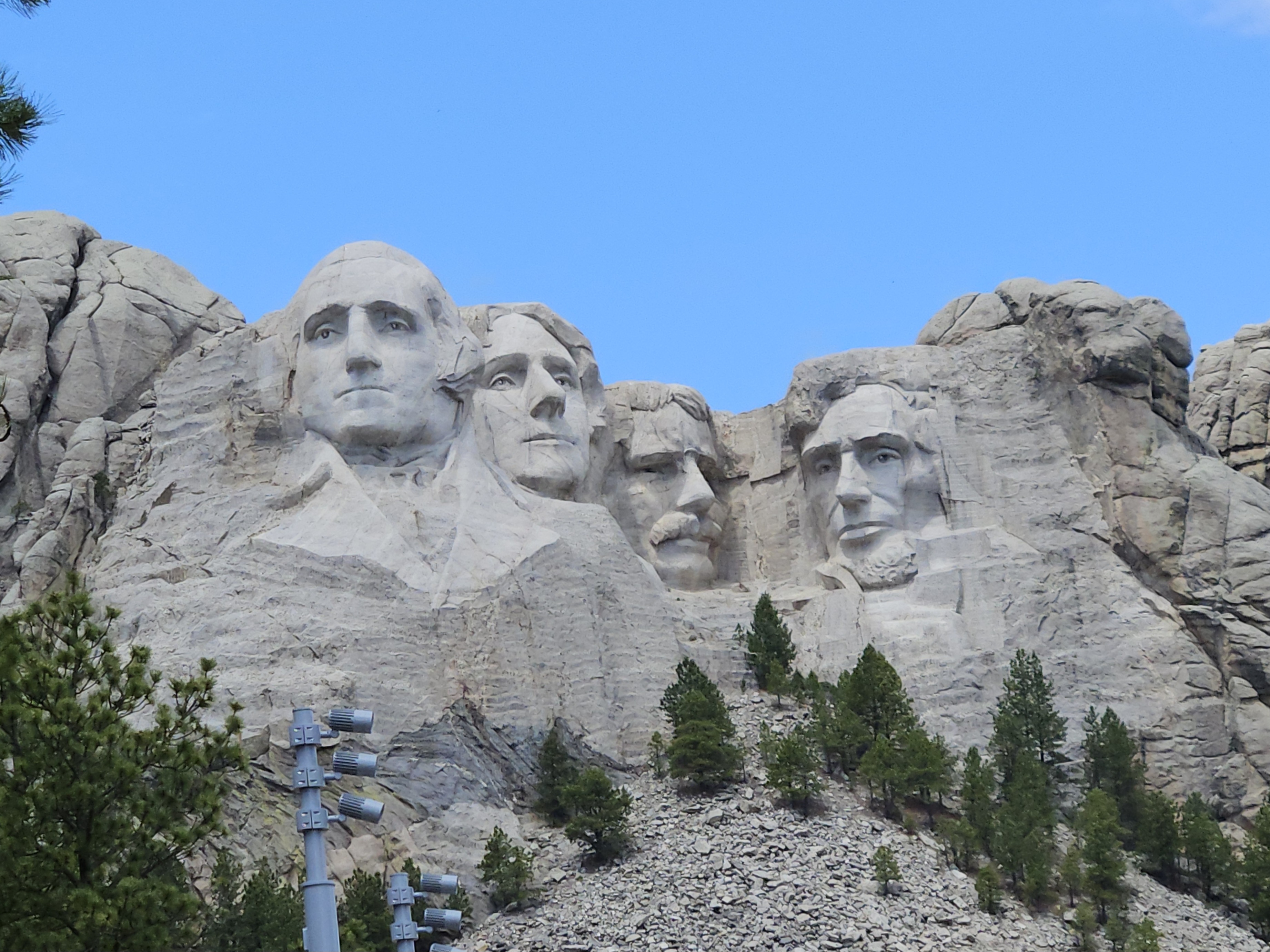
The Faces on Mount Rushmore

On the eve of July 4, 2024, I wanted to share why the following four men were chosen to represent America on a mountainside in South Dakota. Gutzon Borglum, the sculptor behind the project, selected these four presidents because, from his perspective, they represented the most important events in the history of the United States.

“The preservation of the sacred fire of Liberty, and the destiny of the Republican model of Government, are justly considered as deeply, perhaps as finally staked, on the experiment entrusted to the hands of the American people.” 
— George Washington

“We act not for ourselves but for the whole human race. The event of our experiment is to show whether man can be trusted with self-government.” 
— Thomas Jefferson

“I leave you hoping that the lamp of liberty will burn in your bosoms until there shall no longer be a doubt that all men are created free and equal.” 
— Abraham Lincoln

“The first requisite of a good citizen in this Republic of ours is that he shall be able and willing to pull his weight – that he shall not be a mere passenger.” 
— Theodore Roosevelt

As we celebrate the birth of our nation and its democracy, let us remember the characteristics that Borglum celebrated and use them to select men and women to lead our country who demonstrate them in their words and actions.

Posted in Scratch Pad | Leave a comment

David Grann – Truthseeker

On April 2, 2024, my wife and I attended a presentation by David Grann at Southern Methodist University. Mr. Grann discussed two of his books: The Killers of the Flower Moon and The Wager: A Tale of Shipwreck, Mutiny and Murder. I just finished his earlier work: The Lost City of Z.

The Man

He graduated from Connecticut College in 1989 with a B.A. in Government. While in college, Grann received a Thomas J. Watson Fellowship and conducted research in Mexico, where he began his career as a freelance journalist.

He received a master’s degree in international relations from the Fletcher School of Law and Diplomacy at Tufts University in 1993. At this time, Grann was primarily interested in fiction and hoped to develop a career as a novelist.

In 1994 he was hired as a copy editor at The Hill, a Washington, D.C.-based newspaper covering the United States Congress. The same year, Grann earned a master’s degree in creative writing from Boston University, where he taught classes in creative writing and fiction. He was named The Hill’s executive editor in 1995. In 1996, Grann became a senior editor at The New Republic. He joined The New Yorker in 2003 as a staff writer. He was a finalist for the Michael Kelly Award in 2005.

In 2009, he received the George Polk Award and Sigma Delta Chi Award for his New Yorker piece “Trial By Fire”, about Cameron Todd Willingham. Another New Yorker investigative article, “The Mark of a Masterpiece”, raised questions about the methods of Peter Paul Biro, who claimed to use fingerprints to help authenticate lost masterpieces. Biro sued Grann and The New Yorker for libel, but the case was summarily dismissed. The article was a finalist for the 2010 National Magazine Award.

The Truthseeker

One thing that stands out about Mr. Grann’s work is his obsession with going the extra mile to uncover the truth. His commitment to risk his health and well-being, please see The Lost City of Z, to find answers is amazing. Even when the story seems to be over, Mr. Grann continues his quest for the truth, please see The Killers of the Flower Moon, and discovers new information.

Mr. Grann is an inspiration to other non-fiction writers. His efforts drive us to continue our research with a passion that may come close to Grann’s crusade. In an age of fake news and AI-generated events, he is Quiotic in his quest.

Thank you David Grann.

Follow Mr. Grann at https://www.davidgrann.com/.

“The Ongoing Adventures of David Grann” – The Atlantic

Follow David Grann on Facebook

Posted in Scratch Pad | Leave a comment

Lime Kiln Lighthouse

In the fourth post about our Road Scholar trip, Best of the Pacific Northwest – Exploring Three of Washington’s San Juan Islands, I report about our visit to the Lime Kiln Lighthouse on San Juan Island.

Lime Kiln Lighthouse is located on the west side of San Juan Island. Its name comes from the lime kilns built in the 1860s. For approximately sixty years, the area surrounding the kilns was quarried for limestone and harvested for logs to fuel the fires that transformed the limestone into lime. The resulting lime was used in mortar. <1>

The Lime Kiln Light is located on Lime Kiln Point overlooking Dead Man’s Bay on the western side of San Juan Island. The light guides ships through the Haro Straits and is part of Lime Kiln Point State Park. <1>

The Lime Kiln Light was established in 1914 when acetylene lights were placed on Lime Kiln Point, a name derived from the lime kilns built there in the 1860s. It was the last major lighthouse established in Washington. The light was updated five years later with a 38-foot octagonal concrete tower above the fog signal building. Two keeper’s houses and other structures were also built during this time. A fourth-order Fresnel lens was first exhibited from the new tower on June 30, 1919. The Coast Guard automated the Lime Kiln Lighthouse in August 1962, using photoelectric cells to turn the light on at dusk and off during daylight hours. In 1998, the drum lens was replaced with a modern optic, flashing a white light once every 10 seconds. Sitting on the rocky shoreline at 55 feet, the beacon is visible for 15 nautical or 17 land miles. <2>

For more information, please visit Lime Kiln Lighthouse.

Sources:

<1> Lime Kiln Lighthouse,” https://lighthousefriends.com/light.asp?ID=105.

<2> “Lime Kiln Light,” Wikipedia, https://en.wikipedia.org/wiki/Lime_Kiln_Light.

Posted in Scratch Pad | Tagged , , , , , | Leave a comment

RoozenGaarde Tulip Gardens

This is the third installment of our adventures on the Road Scholar trip, Best of the Pacific Northwest – Exploring Three of Washington’s San Juan Islands. Today’s post deals with our visit to the RoozenGaarde Tulip Gardens as part of the Skagit Valley Tulip Festival.

RoozenGaarde is a world renowned spring destination and the biggest of the tulip gardens in Skagit Valley. The fields are planted with tens of millions of bulbs creating endless rows of incredible color while the garden is annually redesigned, and lovingly hand-planted with over one million bulbs – creating spectacular scenes of floral color and creativity! Stunning photo opportunities, hand-picked daily tulip bouquets, and a charming gift shop are sure to delight.

Without further ado…

Posted in Scratch Pad | Tagged , , , | Leave a comment

Crow Valley School Museum

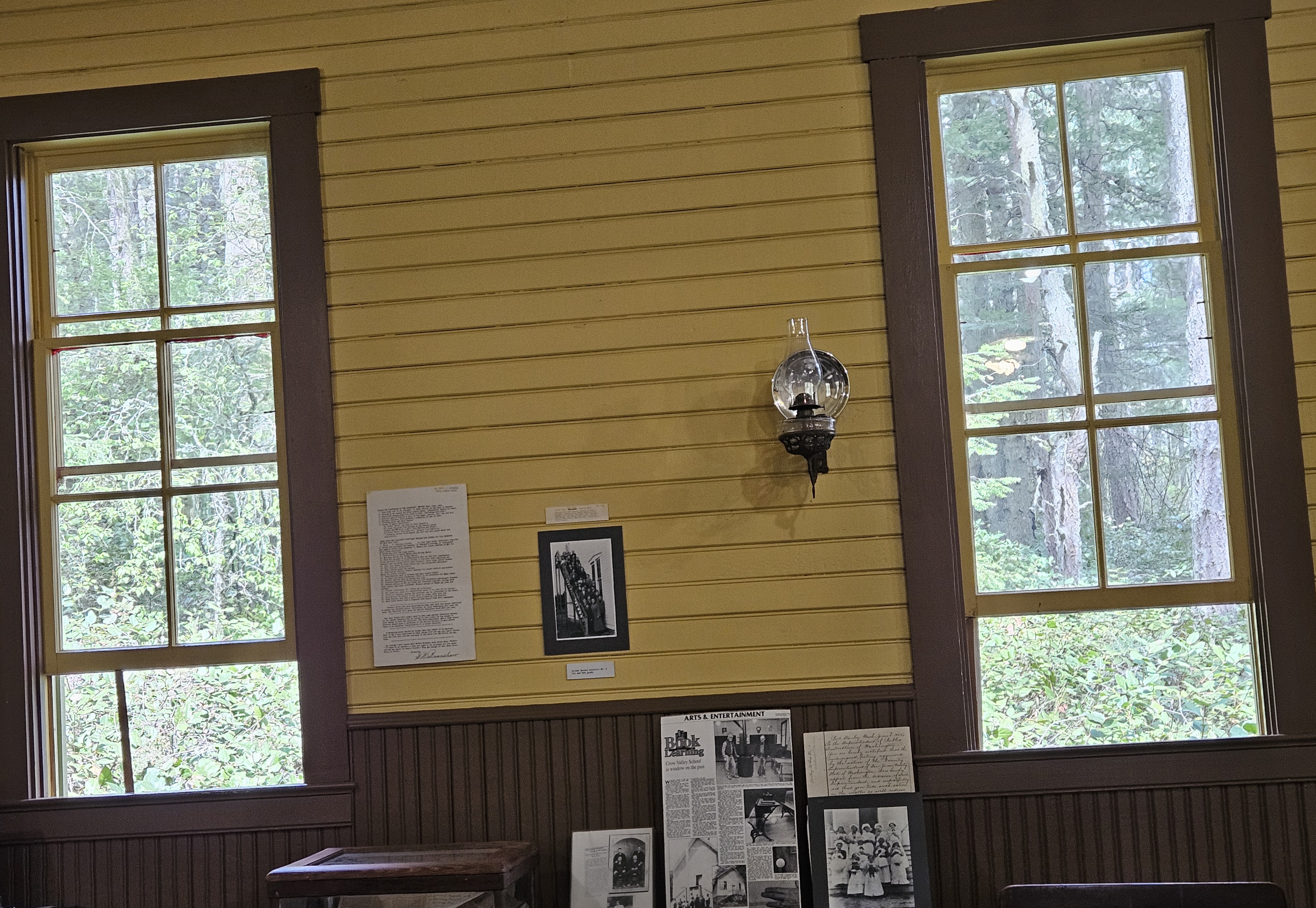
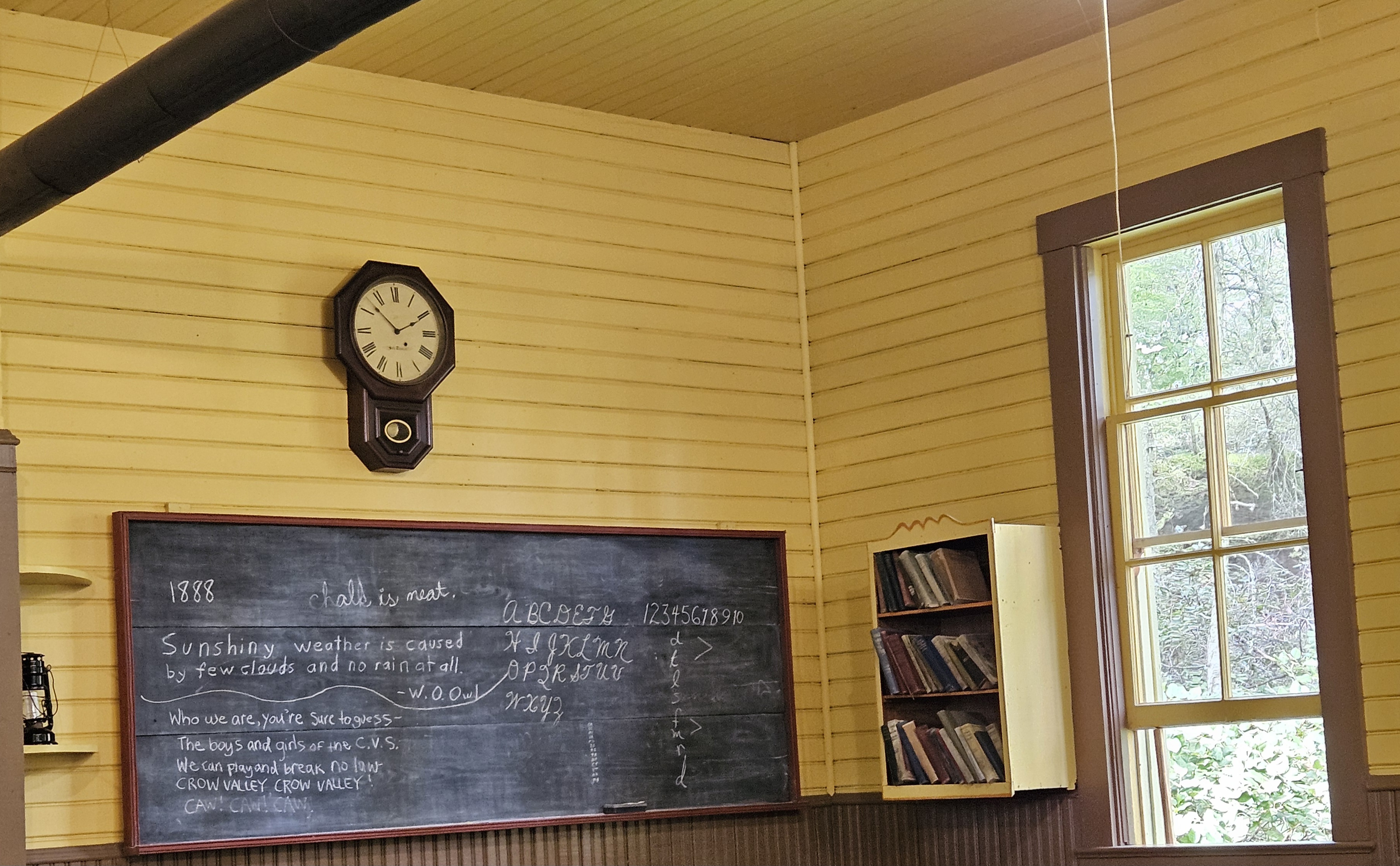
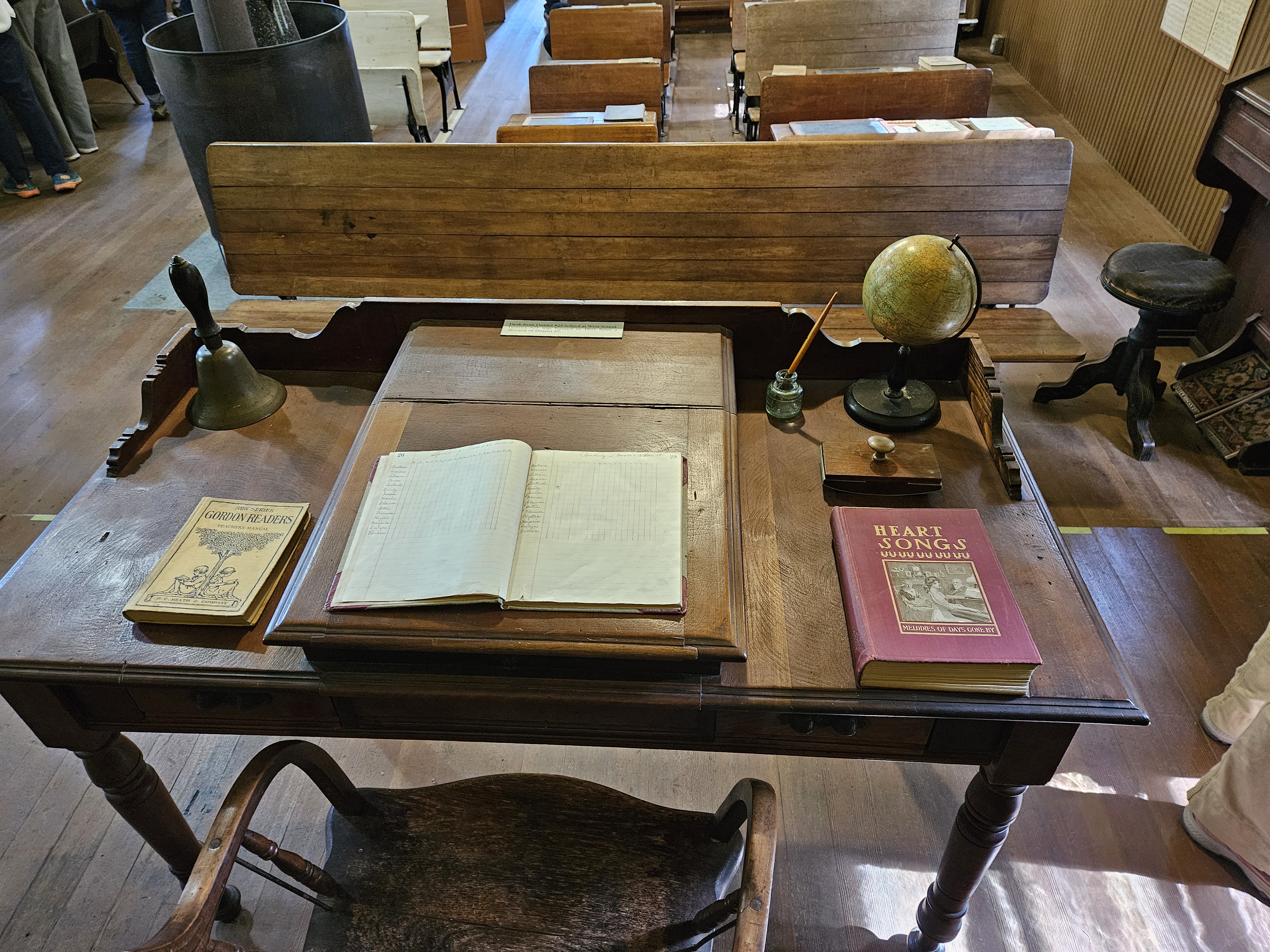
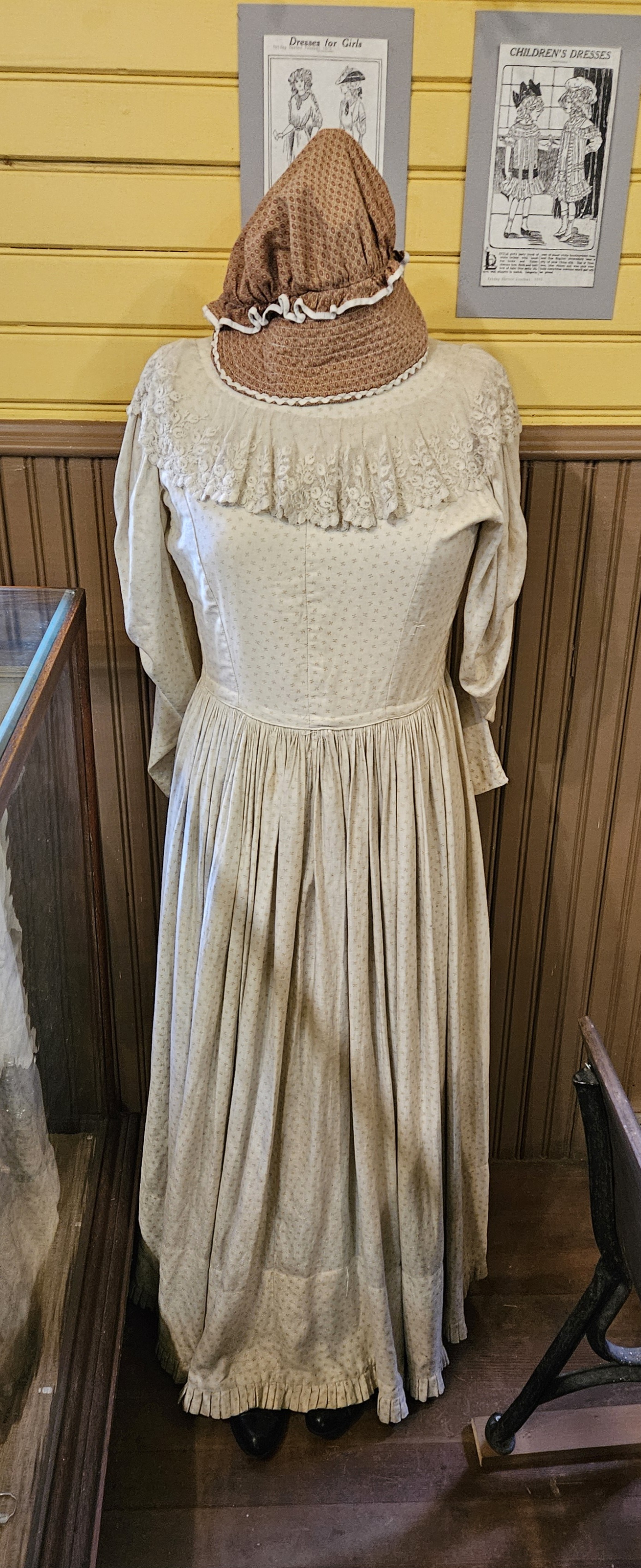
In the second post about our Road Scholar trip, Best of the Pacific Northwest – Exploring Three of Washington’s San Juan Islands, I report about our visit to the Crow Valley School Museum on Orcas Island.

Crow Valley School Museum

Crow Valley School, originally called Pleasant Valley, was built in 1888, one year before the Territory of Washington was admitted to the Union as the State of Washington. It was built on an acre of land donated by settler Peter Frechette. Students from grades one through eight were taught in the school house, which had a capacity of 57 (though most years saw about 27 students in attendance.) In 1893 there were 63 days of school compared with a State minimum of 180 today.

The length of school terms depended on the availability of funds and teachers. Teachers were paid about $50 per month. Some teachers would move from one school district to another, and sometimes their pupils would follow.

Crow Valley School was closed in 1918, after which students attended the consolidated Eastsound School. The building continued to be used as a community meeting place, a church, and a Sunday School. In 1929 the schoolhouse was purchased by “The Willing Workers” women’s club, many of whom were former students, and became The Crow Valley Club. This club made a few changes to the schoolhouse, including an opening to the main room which served as their kitchenette. Using a kerosene stove they held community dinners and entertained in this space.

In 1987 the school house was placed on the National Register of Historic Places. Shortly later it was painstakingly restored over hundreds of hours by Richard Schneider and Bud McBride, the founders of Crow Valley Pottery.

Crow Valley School is one of the finest examples of an intact one-room schoolhouse in Washington state.

Please visit Crow Valley School Museum to learn more and donate to Orcas Island Historical Museums

Posted in Scratch Pad | Tagged , | Leave a comment

What I Like and Don’t Like About Texas

Living in the Lone Star State has its pluses and minuses just like everywhere else.

I got thinking about what I like and don’t like about Texas. I’ve lived here for over fifty years so I think I am allowed to give my opinion,

Texas Bluebonnets

What I Like

What I Don’t Like

Posted in Scratch Pad | Leave a comment

Lopez Community Land Trust

During our recent Road Scholar trip, Best of the Pacific Northwest – Exploring Three of Washington’s San Juan Islands, my wife and I had the opportunity to enjoy the beauty, history, and ideas of San Juan Island, Orcas Island, and Lopez Island. This trip provided many stories which I will share with you over the coming weeks.

Lopez Community Land Trust

Lopez Community Land Trust (LCLT) was incorporated in 1989 when the cost of housing on Lopez Island rose 190% in a single year. LCLT is a 501(c)3 non-profit that builds a diverse, sustainable Lopez Island community through affordable housing, sustainable agriculture, and other dynamic rural development programs. LCLT was formed with the following Purposes:

  • To acquire and hold land in trust to provide for permanently affordable housing. Homes shall be built and lands shall be used in an environmentally sensitive and socially responsible manner
  • To provide permanently affordable access to land for such purposes as quality housing, sustainable agriculture and forestry, cottage industries, and co-operatives by forever removing the land from the speculative market.
  • To develop and exercise responsible and ecological practices, which preserve, protect and enhance the land’s natural attributes.
  • To serve as a model in land stewardship and community development by providing information, resources, and expertise.

Here are some images of communities built by LCTC.

As with any organization, LCTC needs contributions to continue its work. You can learn more about this organization by visiting their website or calling them at 360-468-3723.

Posted in Scratch Pad | Tagged , , , , , | Leave a comment

Best Movies About the Civil War

Mr. Thomas West of Yardbarker has picked his “20 Best Movies of the Civil War.”

Here’s his list:

  1. Major Dundee (1965)
  2. Gangs of New York (2002)
  3. Little Women ( 2019)
  4. How the West Was Won (1962)
  5. The Horse Soldiers (1959)
  6. The General (1926)
  7. The Outlaw Josey Wales (1976)
  8. Andersonville (1996)
  9. Friendly Persuasion (1956)
  10. Shenandoah (1965)
  11. Ride with the Devil (1999)
  12. The Red Badge of Courage (1951)
  13. Dances with Wolves (1990)
  14. ‘CSA: Confederate States of America’ (IFC Films )
  15. Cold Mountain (2003)
  16. Emancipation (2022)
  17. Gone with the Wind (1939)
  18. Lincoln (2012)
  19. Glory (1989)
  20. Gettysburg (1993)

Here’s mine

  1. The Civil War – Ken Burns series (1990)
  2. Gettysburg (1993)
  3. Gods and Generals (2003)
  4. Lincoln (2012)
  5. Glory (1989)
  6. Andersonville (1996)
  7. The Red Badge of Courage (1951)
  8. Gone with the Wind (1939)
  9. The Free State of Jones (2016)
  10. North and South (1986)
  11. Friendly Persuasion (1956)
  12. The Conspirator (2011)
  13. Ride with the Devil (1999)
  14. Shenandoah (1965)
  15. Field of Lost Shoes (2015)
  16. Cold Mountain (2003)
  17. Emancipation (2022)
  18. The Great Locomotive Chase (1956)
  19. The Hunley (1999)
  20. The Birth of a Nation (1915)
  • What are your favorites?
Posted in Scratch Pad | Tagged | Leave a comment