The Kew Gardens contains several unique buildings in addition to the collection of flowers and plants.
The Davies Alpine House houses Kew’s collection of alpine plants.
Nash Conservatory was formerly known as the Aroid House No. 1 and was used to display species of Araceae. The building is now used for various exhibitions, weddings, and private events.
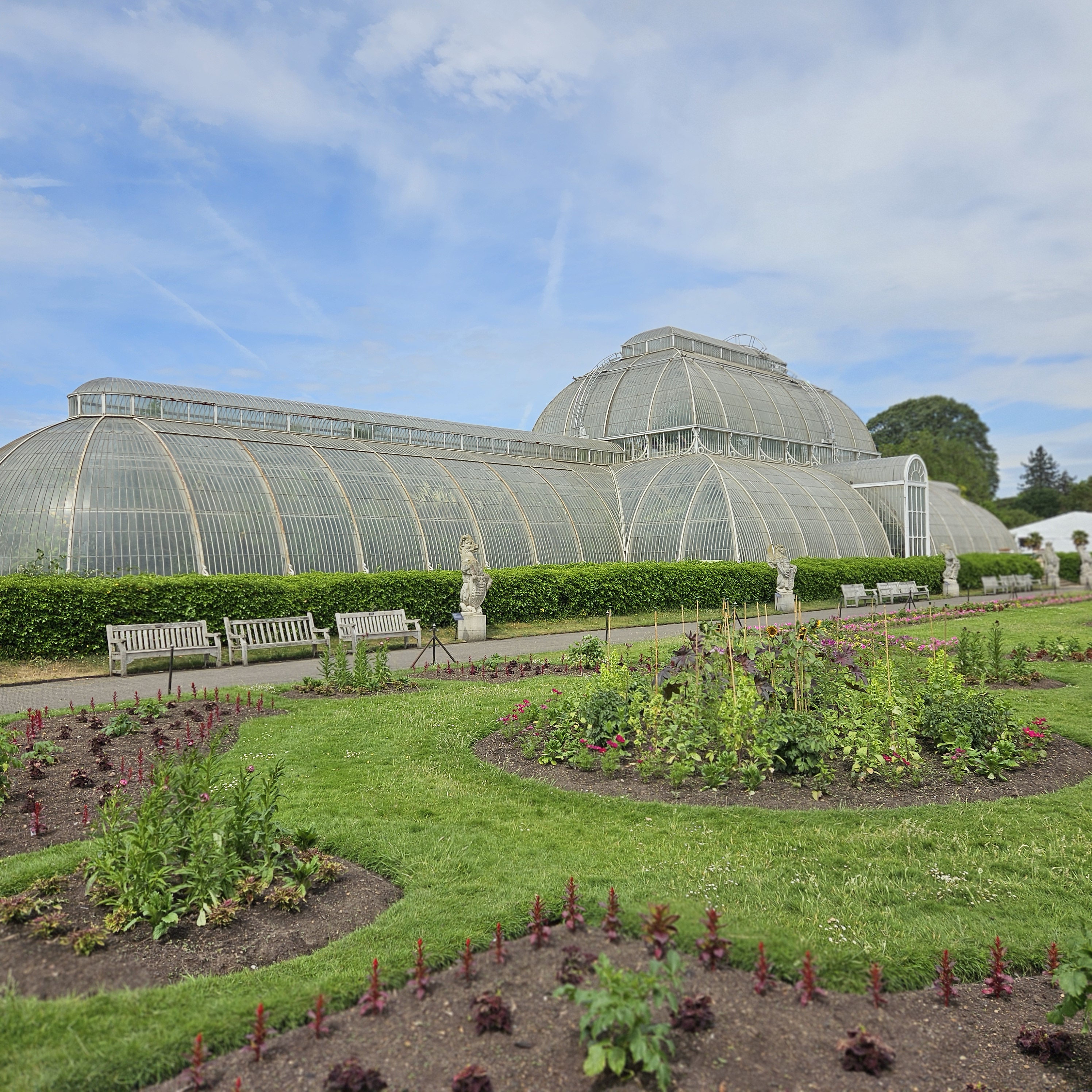
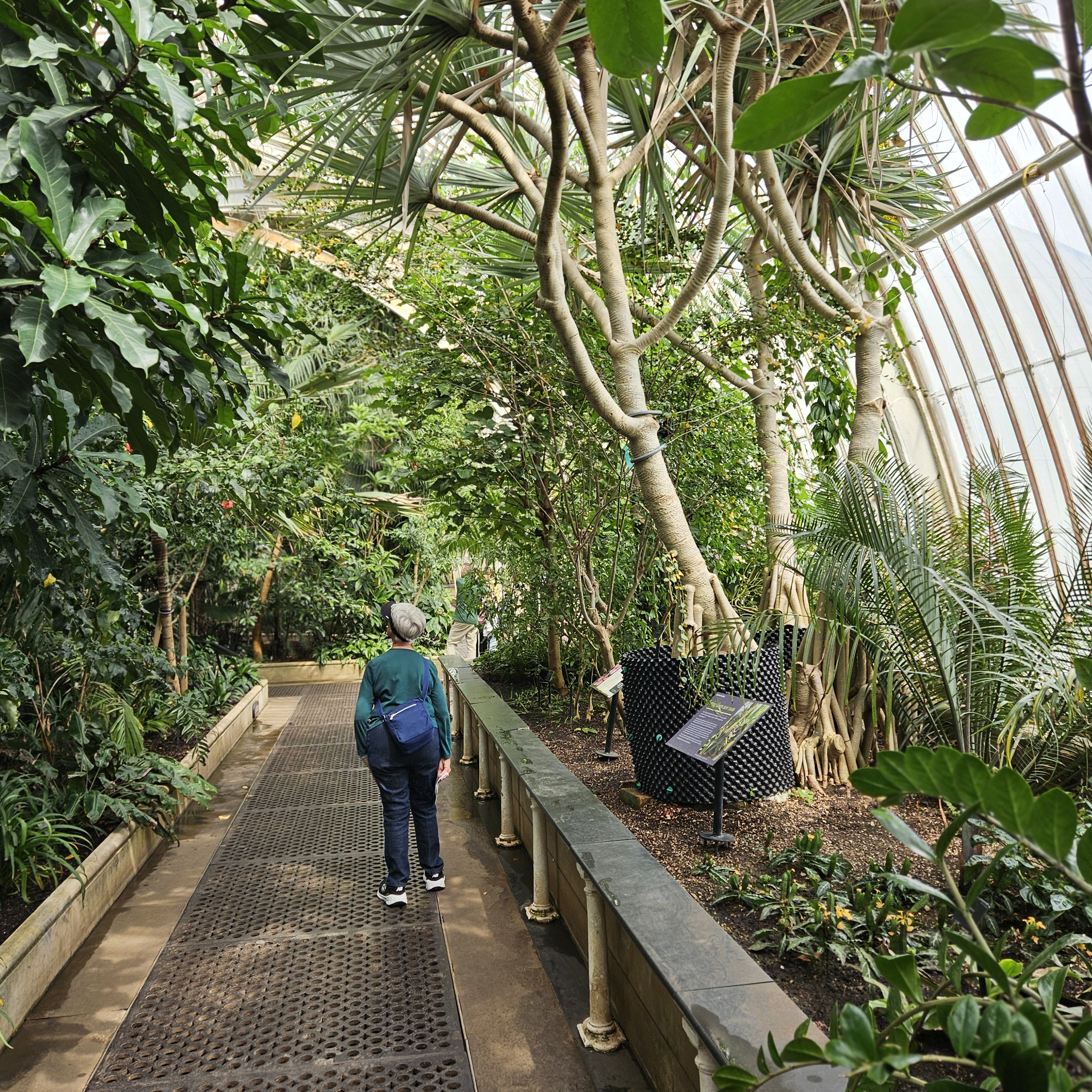
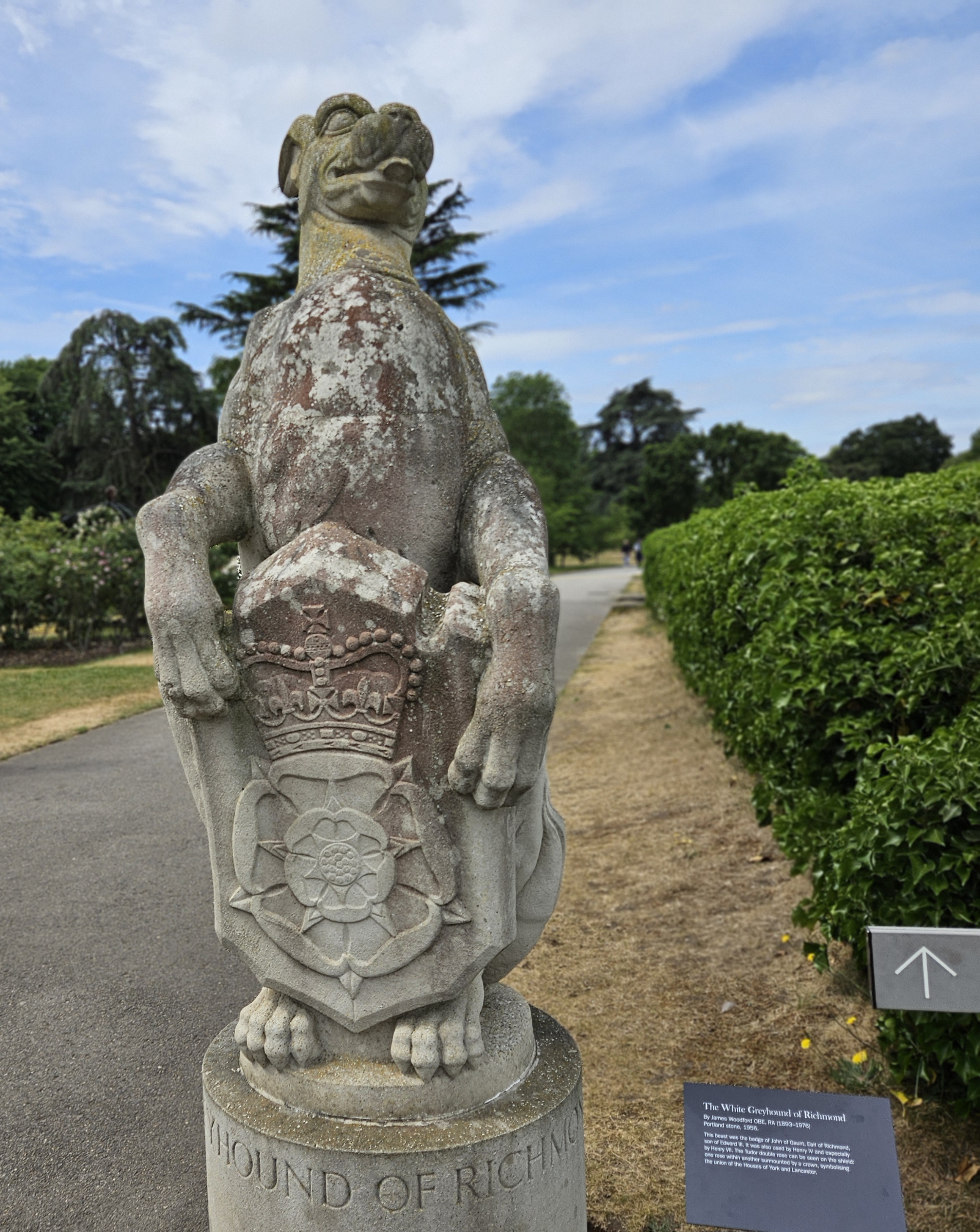
The Palm House is a glass house with a frame of wrought-iron arches, held together by horizontal tubular structures containing long prestressed cables that support glass panes. The glass was originally tinted green with copper oxide to reduce the significant heating effect. In front of the Palm House on the east side are the Queen’s Beasts, ten statues of animals bearing shields.
Kew’s third major conservatory, the Princess of Wales Conservatory, was opened in 1987 by Diana, Princess of Wales. The greenhouse contains a collection of dry tropics and wet tropics plants and features many orchids, water lilies, cacti, lithops, carnivorous plants, and bromeliads.
The Temperate House is the world’s largest surviving Victorian glass structure. It contains plants and trees from all the temperate regions of the world, some of which are extremely rare.
The Waterlily House is the hottest and most humid of the houses at Kew and contains a large pond with varieties of water lilies, surrounded by a display of economically important heat-loving plants.
The Bonsai House contains Kew’s bonsai collection of around eighty specimens. Some of the trees are displayed seasonally in the House. The smallest tree is only ten centimeters tall, and the oldest is around 200 years old.
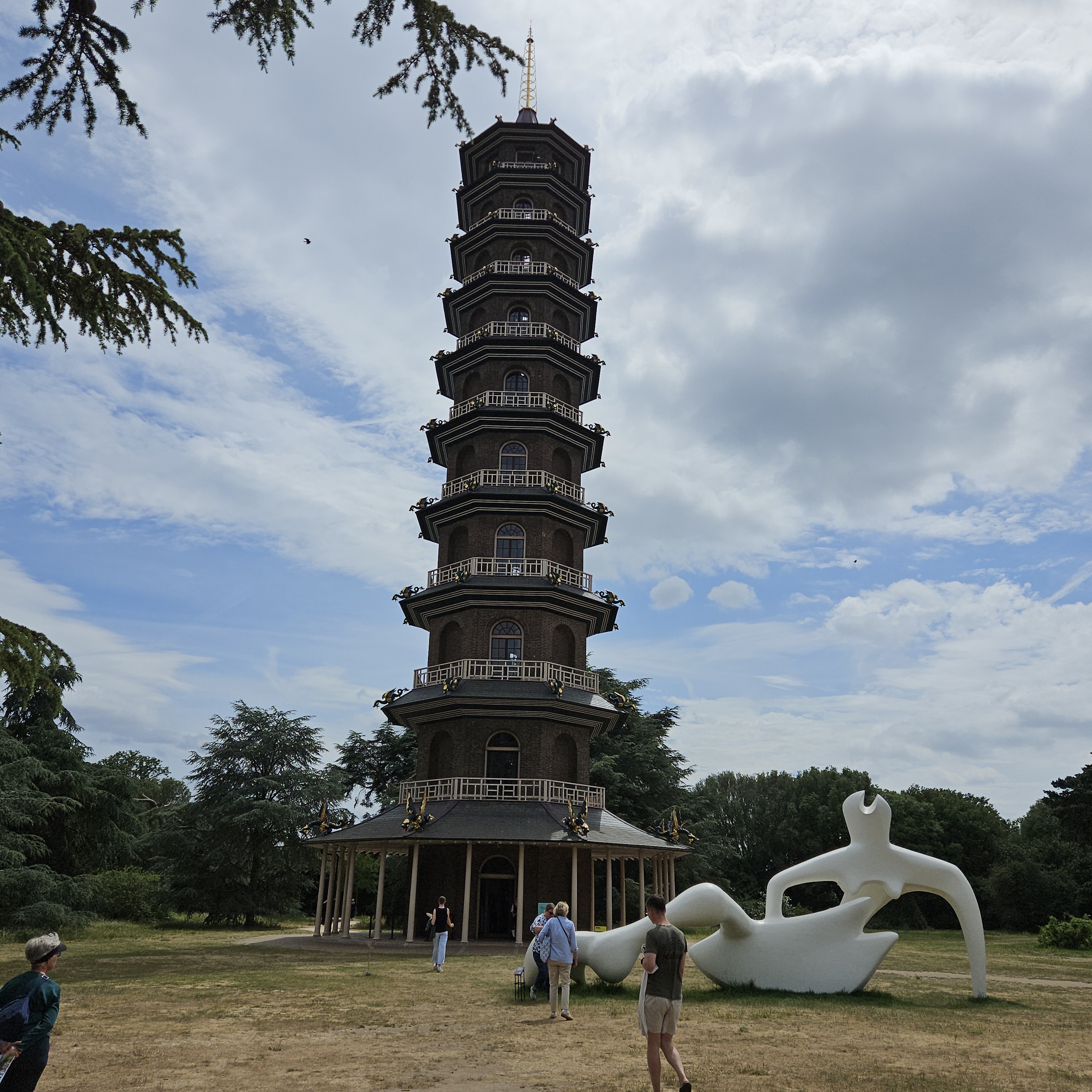
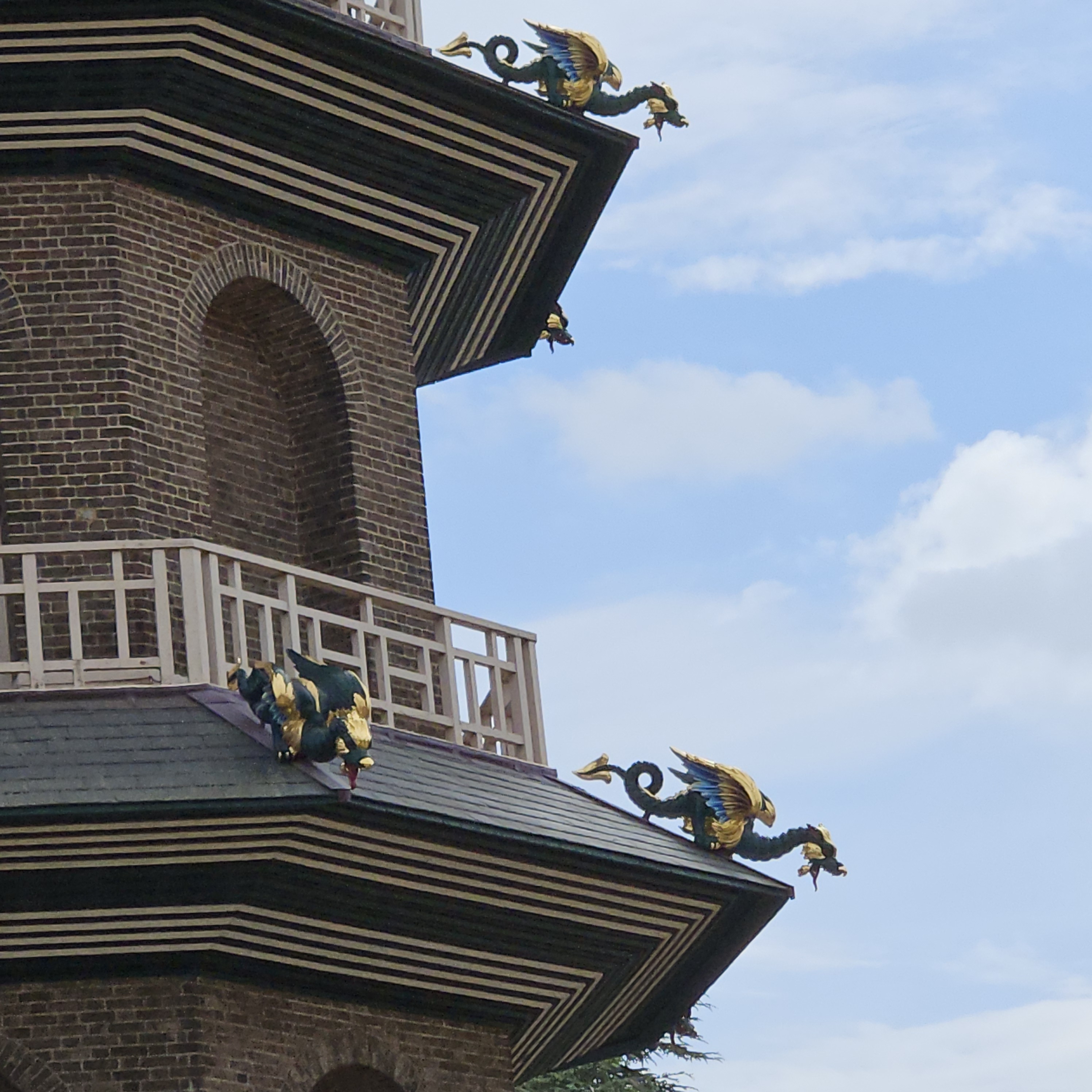
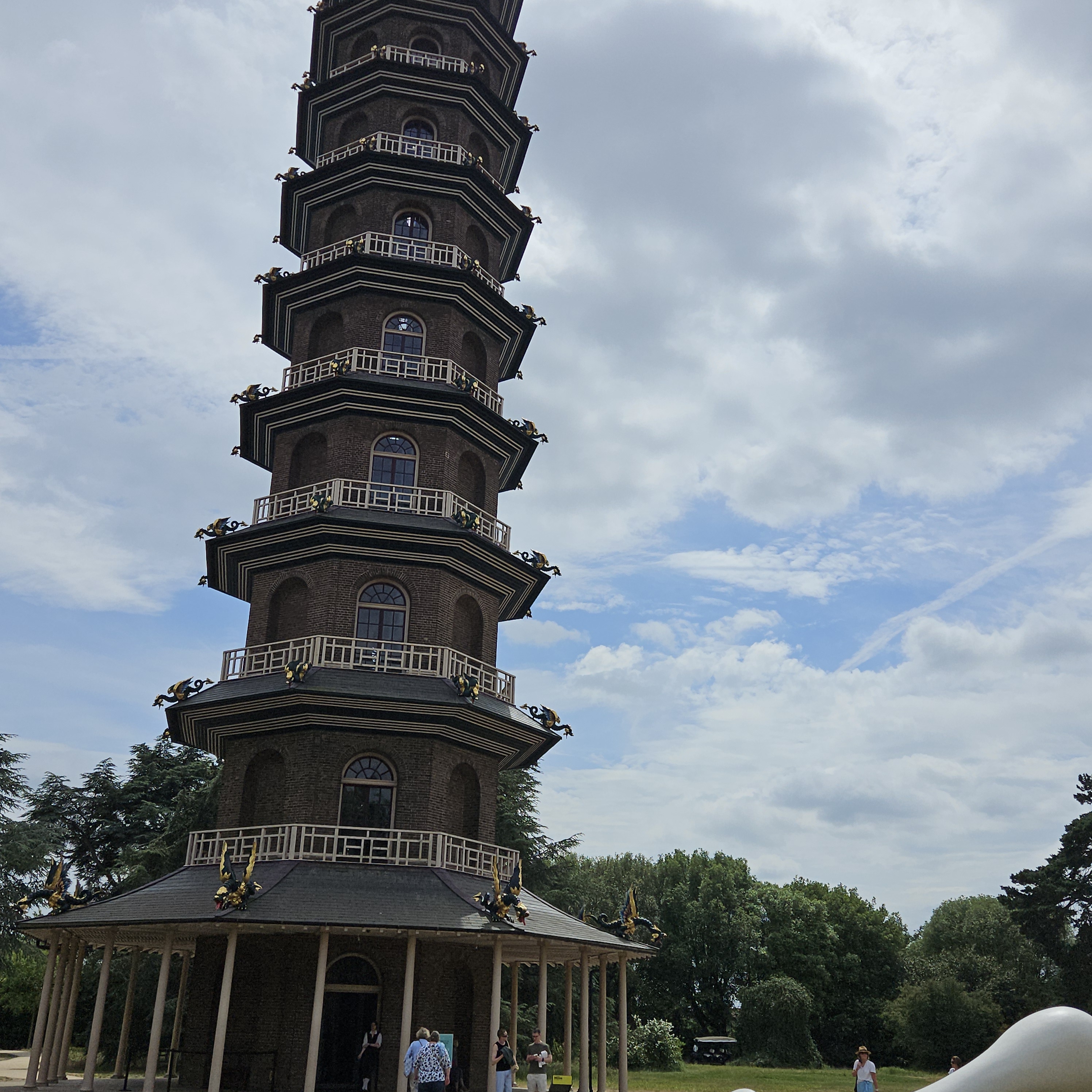
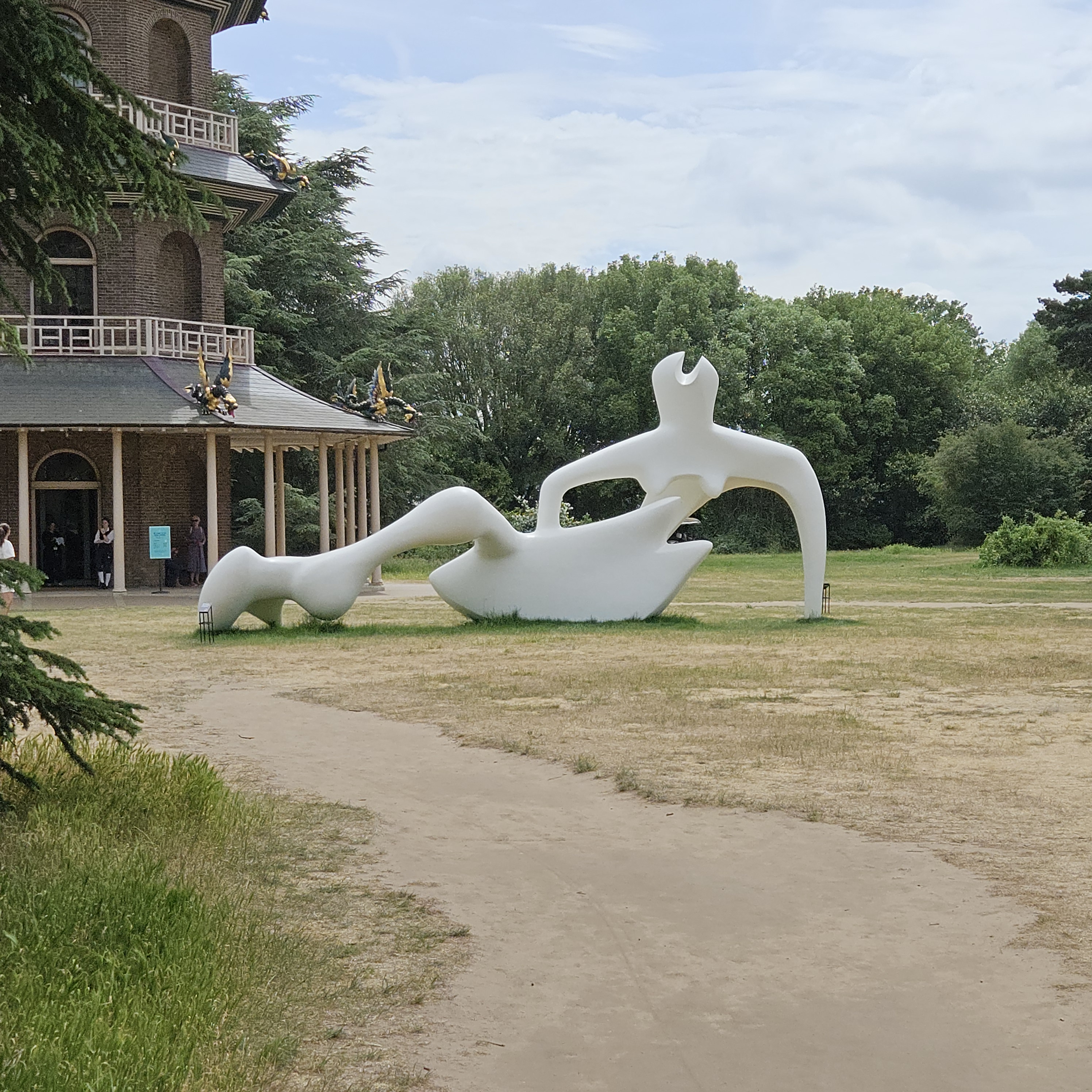
The Great Pagoda is located in the southeast corner of Kew Gardens. It is designed to imitate the Chinese Ta. The lowest of the ten octagonal stories is 49 feet in diameter. The total height is 164 feet. Each story has a projecting roof in the Chinese style. The pagoda was originally covered with ceramic tiles and adorned with large dragons. The dragons were made of wood painted gold and eventually rotted away over time. The walls of the building are composed of brick. The center staircase has 253 steps. 80 dragons have been remade and now sit on each story of the building.
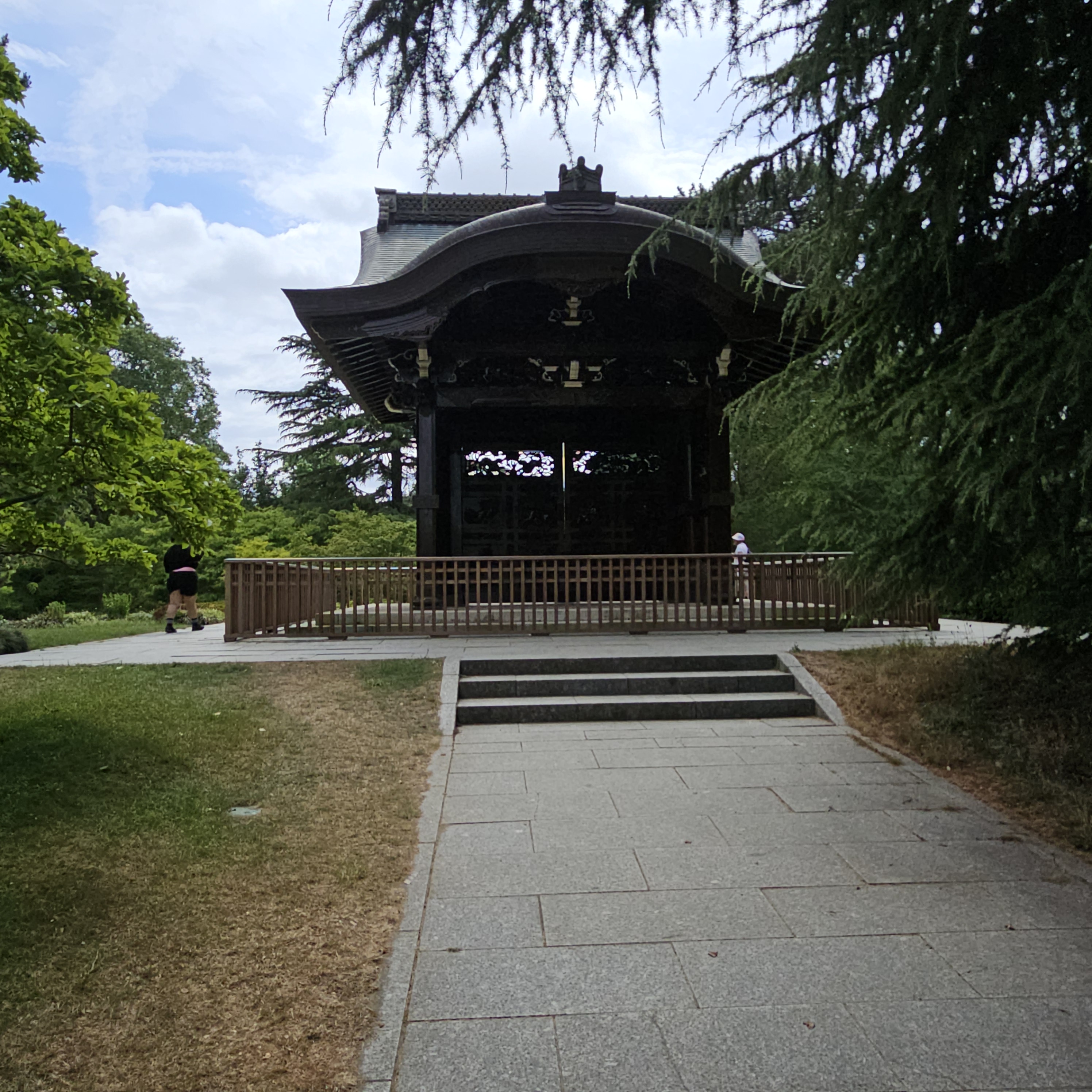
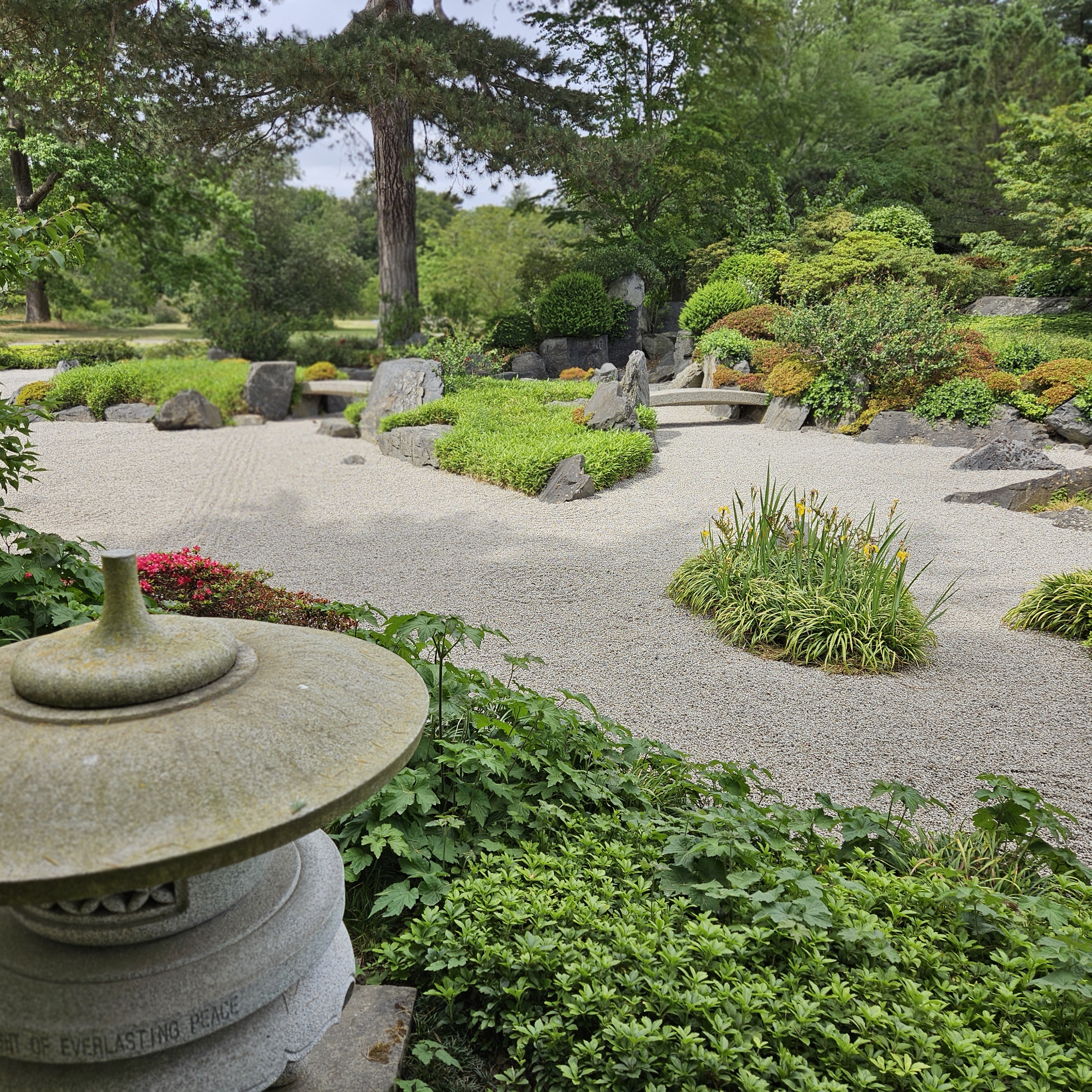
The Japanese Gateway (Chokushi-Mon) is a four-fifths scale replica of the karamon (gateway) of the Nishi Hongan-ji temple in Kyoto. It is surrounded by a reconstruction of a traditional Japanese garden.
Queen Charlotte’s Cottage was built sometime before 1771 for Queen Charlotte by her husband, George III.
King William’s Temple is a double porticoed Doric temple in stone with a series of cast-iron panels set in the inside walls commemorating British military victories from Minden (1759) to Waterloo (1815). It was named after King William IV.
The Temple of Aeolus is a domed rotunda with eight Tuscan columns. The temple was one of three named to honor British victories in the Seven Years’ War. This temple celebrates the HMS Aeolus.
The Temple of Arethusa is a small Greek temple portico with two Ionic columns and two outer Ionic pillars; it is pedimented with a cornice and key-pattern frieze. This temple celebrates the HMS Arethusa.
The Temple of Bellona is a whitewashed stucco temple. The temple’s walls are decorated with garlands and medallions with the names and numbers of British and Hanoverian units connected with the Seven Years’ War. This temple celebrates the HMS Bellona.
Ice House is from the early 18th-century. It has a brick dome with an access arch and barrel-vaulted passageway, covered by a mound of earth.
Kew Palace is the smallest of the British royal palaces. The construction method is known as Flemish bond and involves laying the bricks with long and short sides alternating. This and the gabled front give the construction a Dutch appearance.
The “Queen’s Garden” is at the rear of the building and includes a collection of plants believed to have medicinal qualities. The garden displays plants that existed in England in the 17th century.
The General Museum or “Museum No. 1” contains Kew’s economic botany collections, including tools, ornaments, clothing, food, and medicines. It is designed to illustrate human dependence on plants.

 Allen Mesch