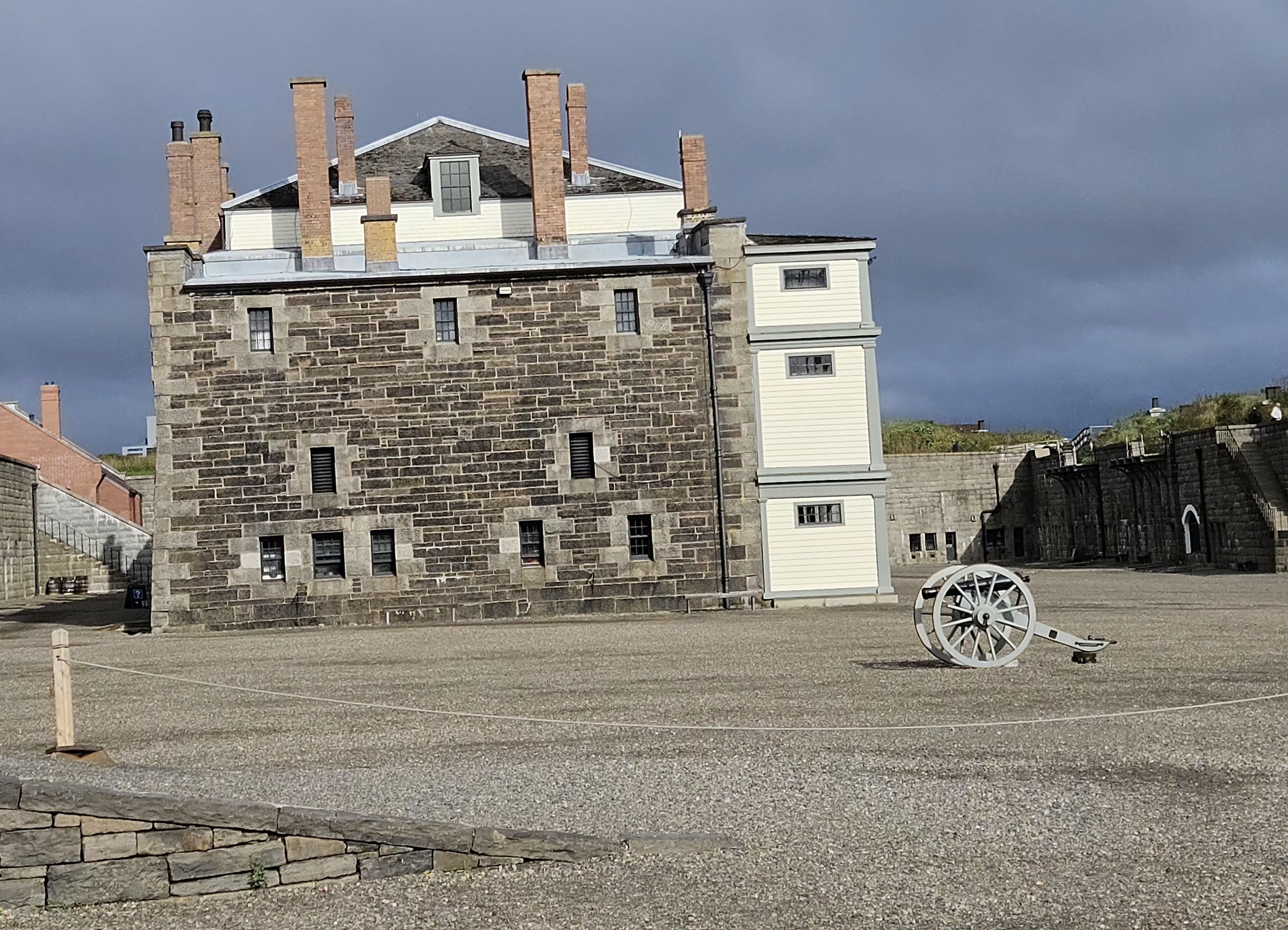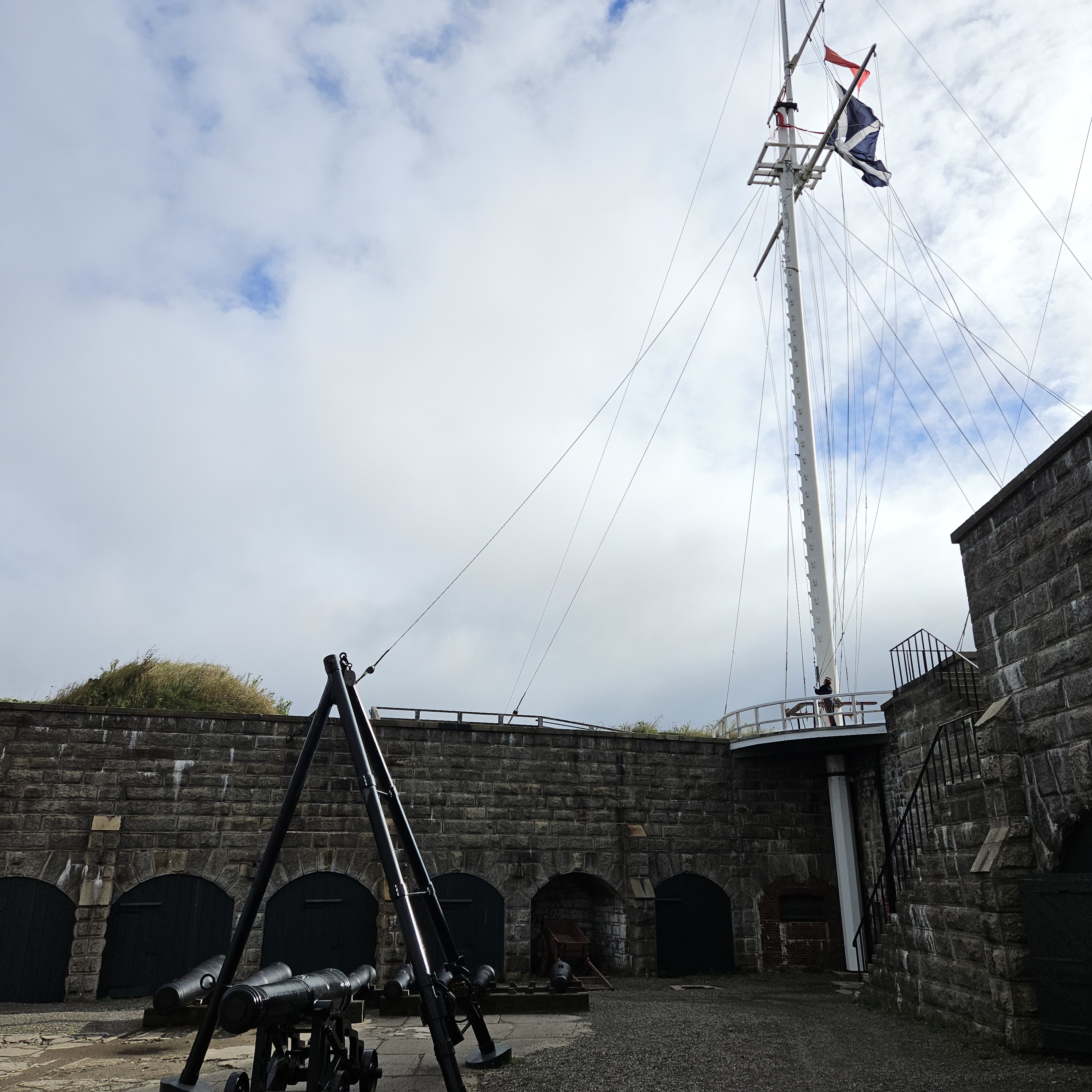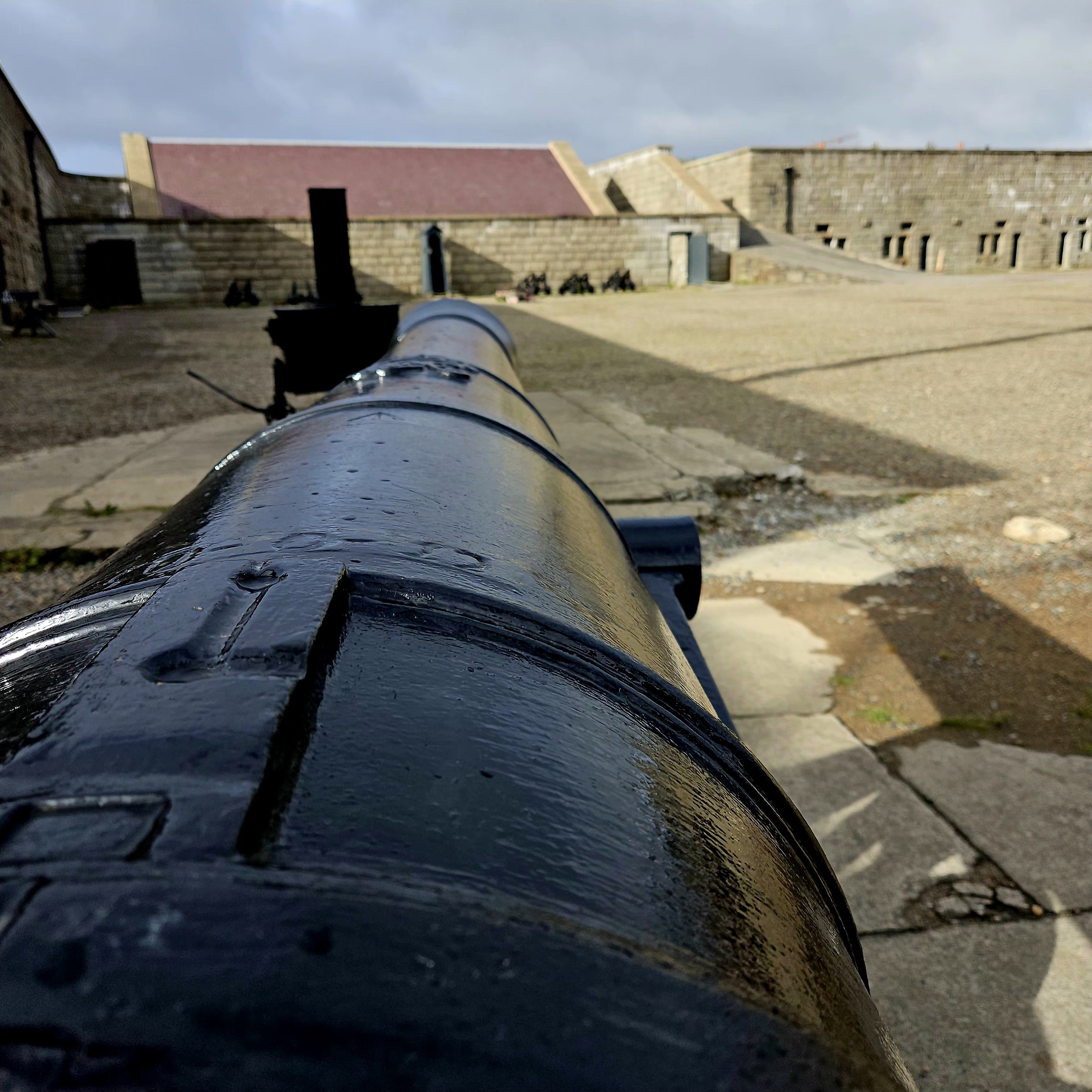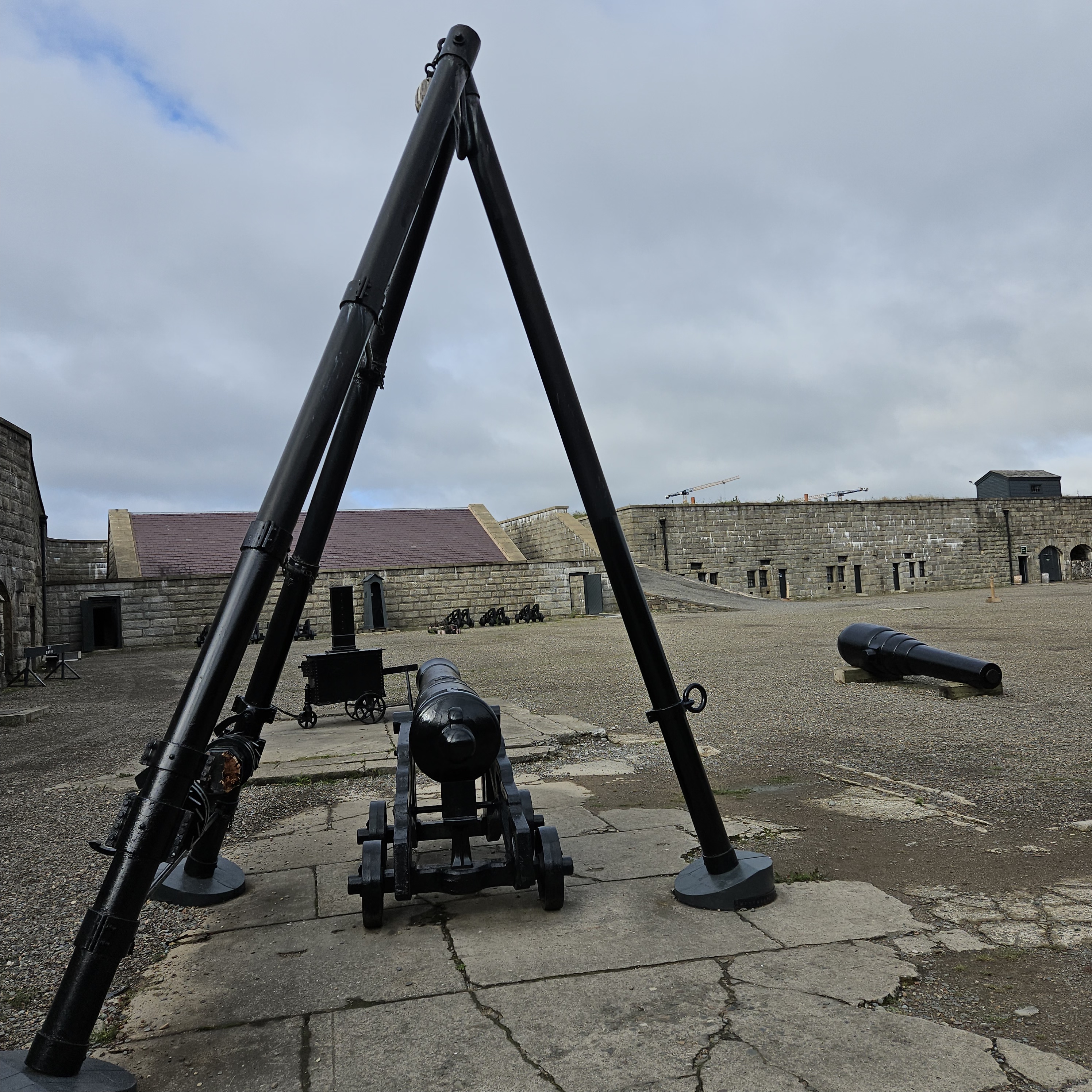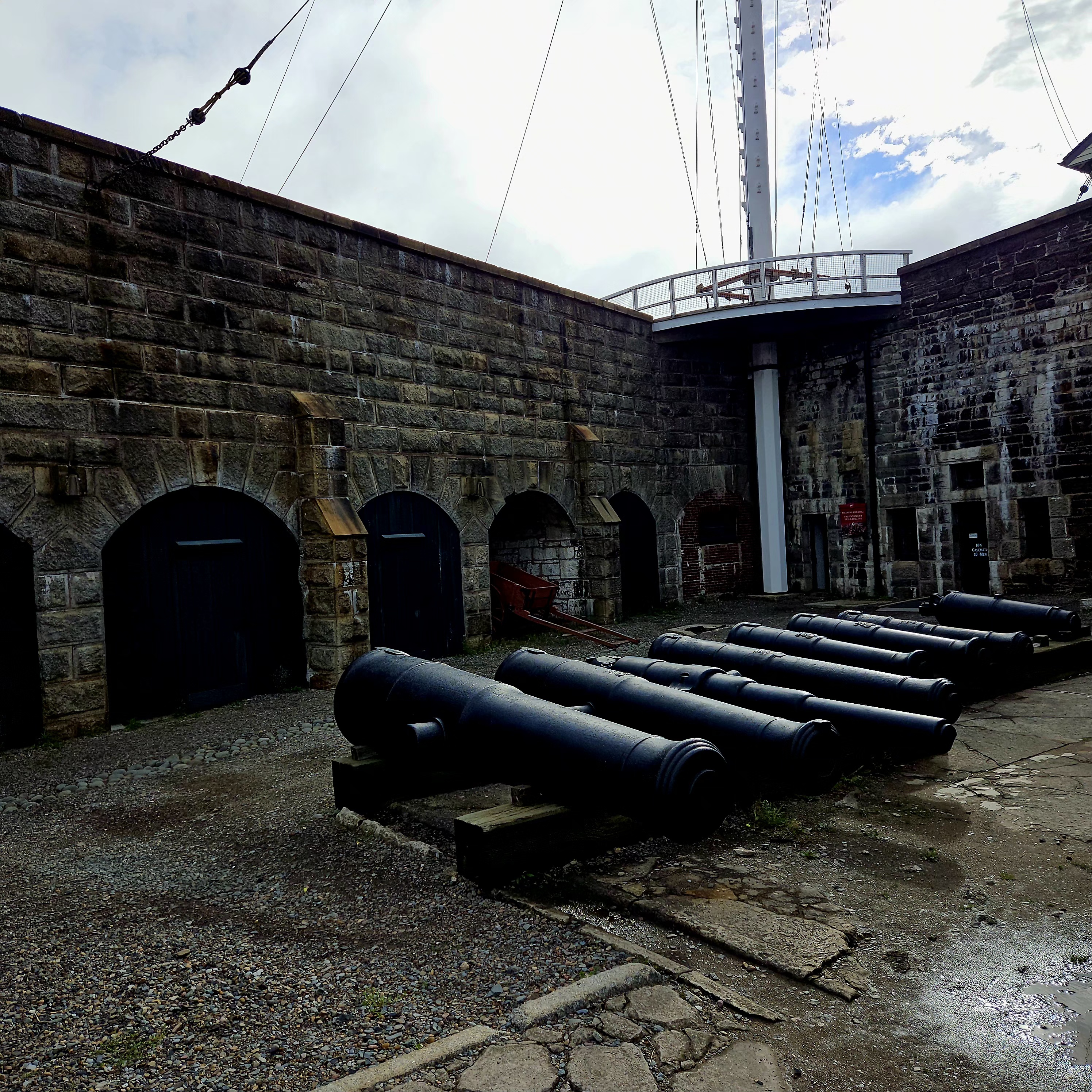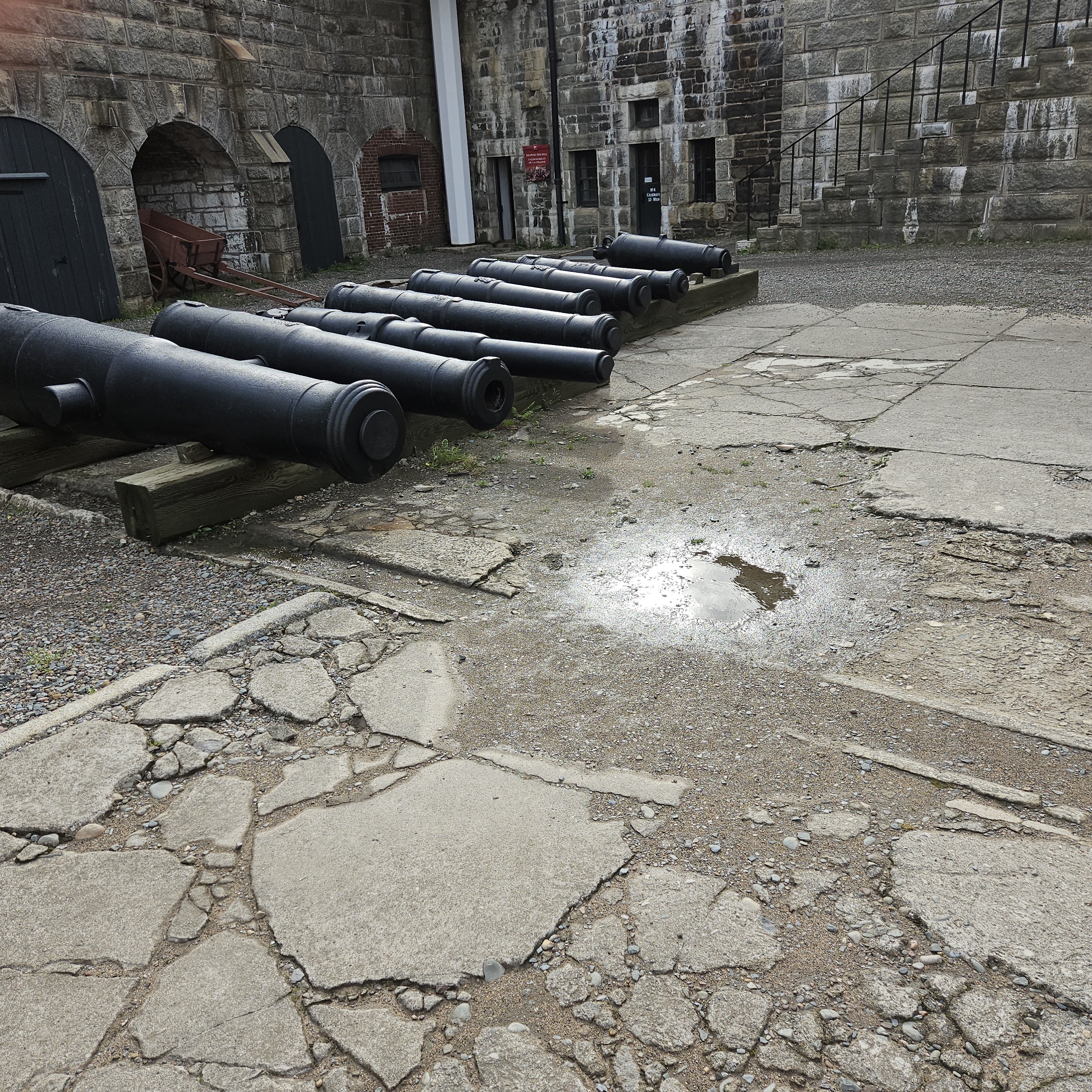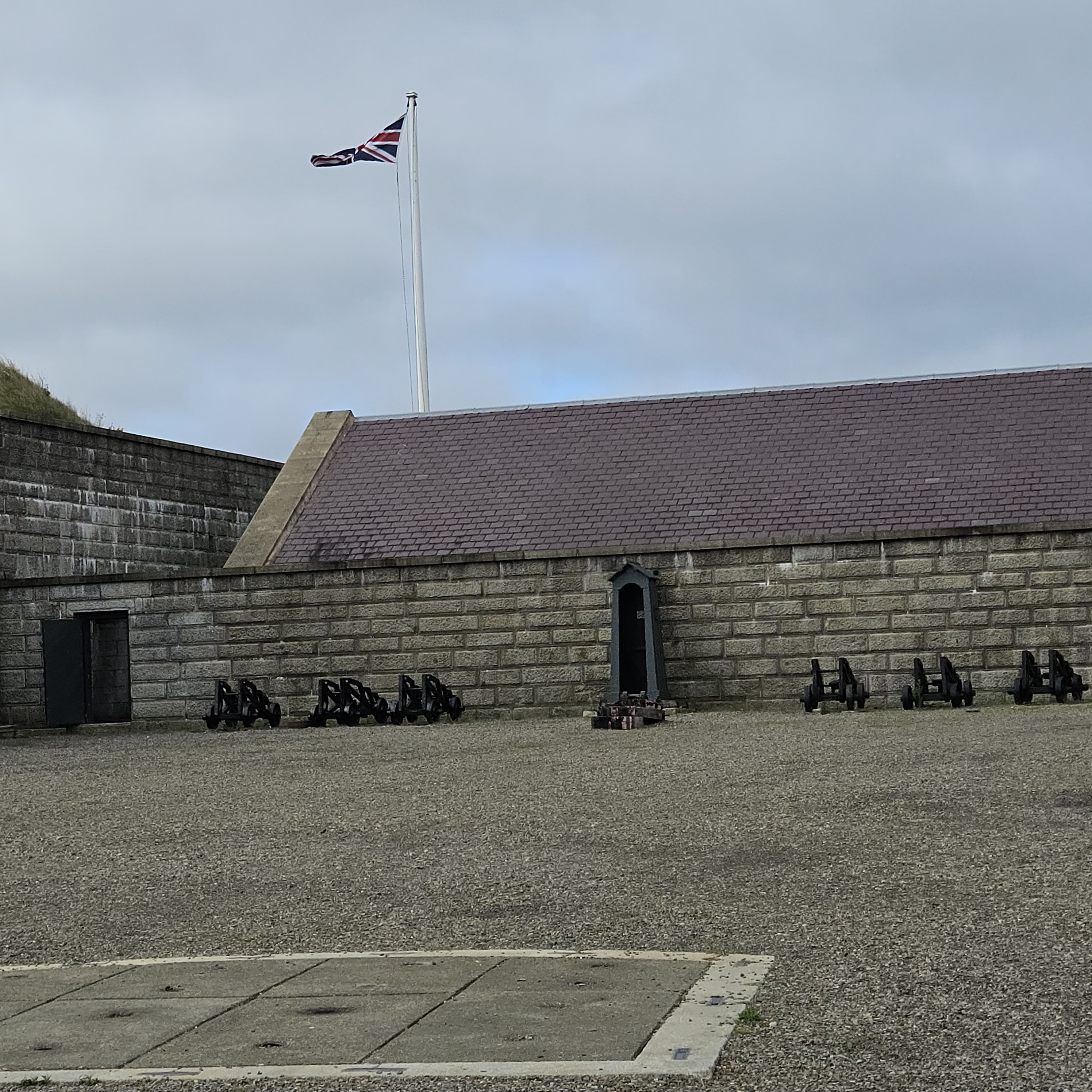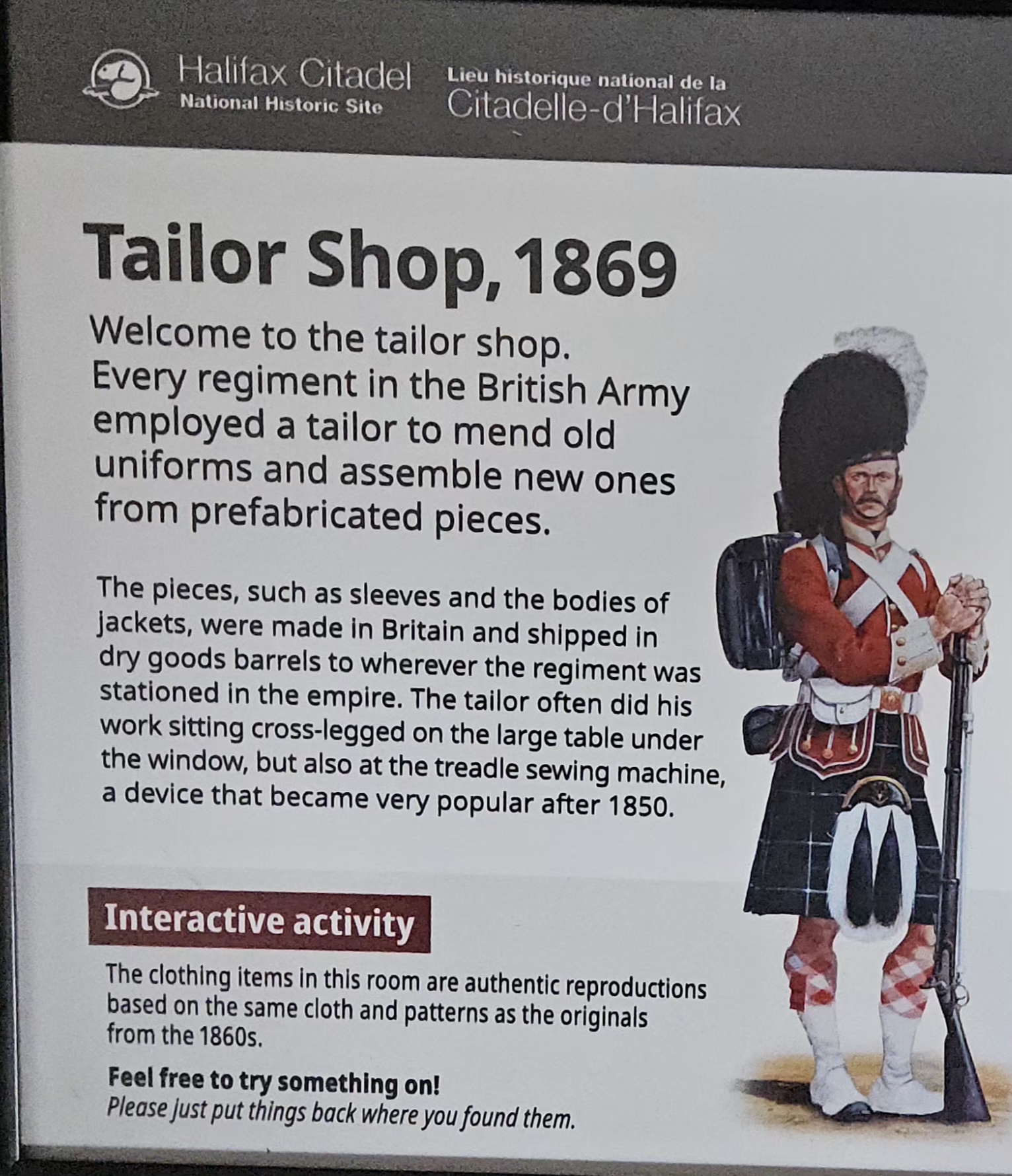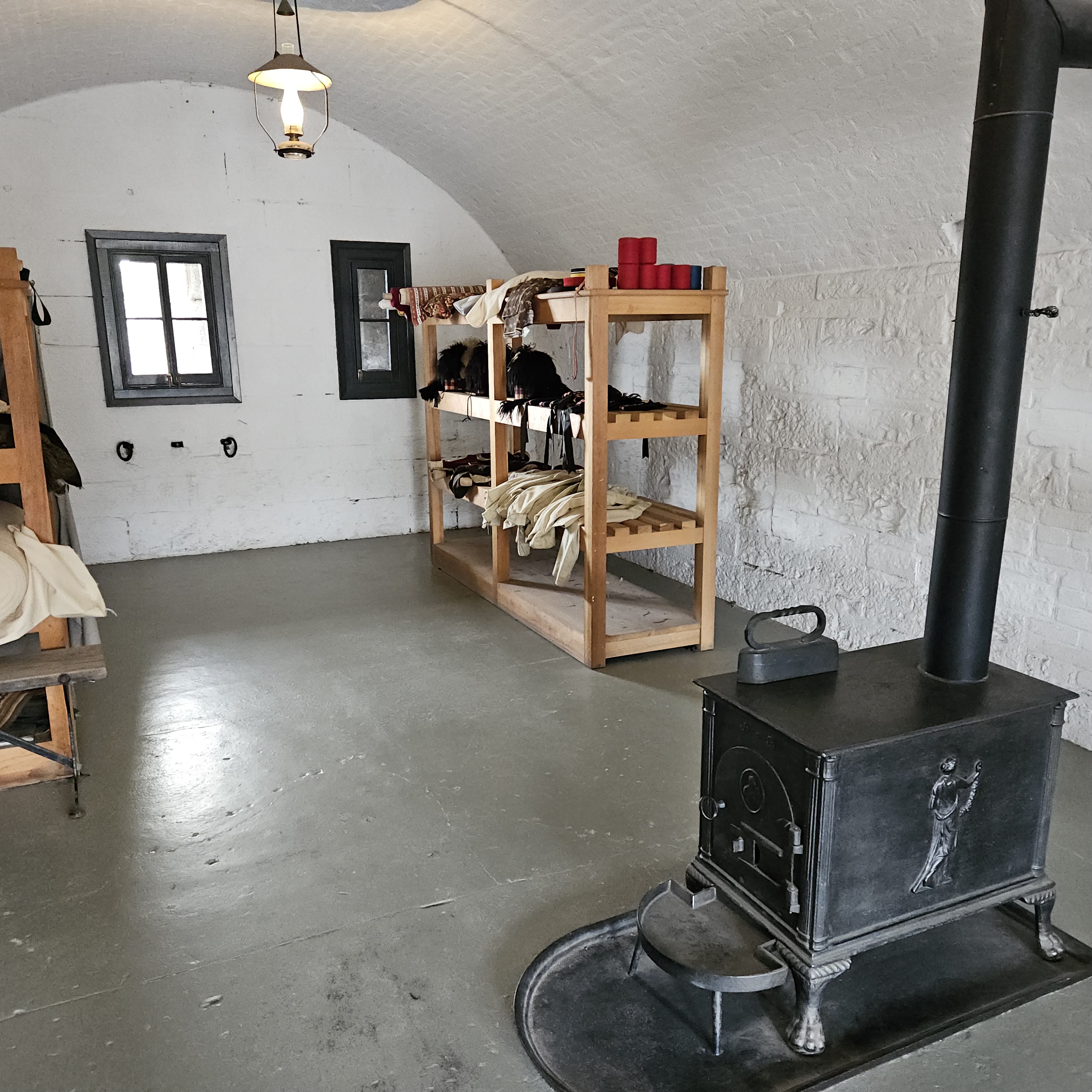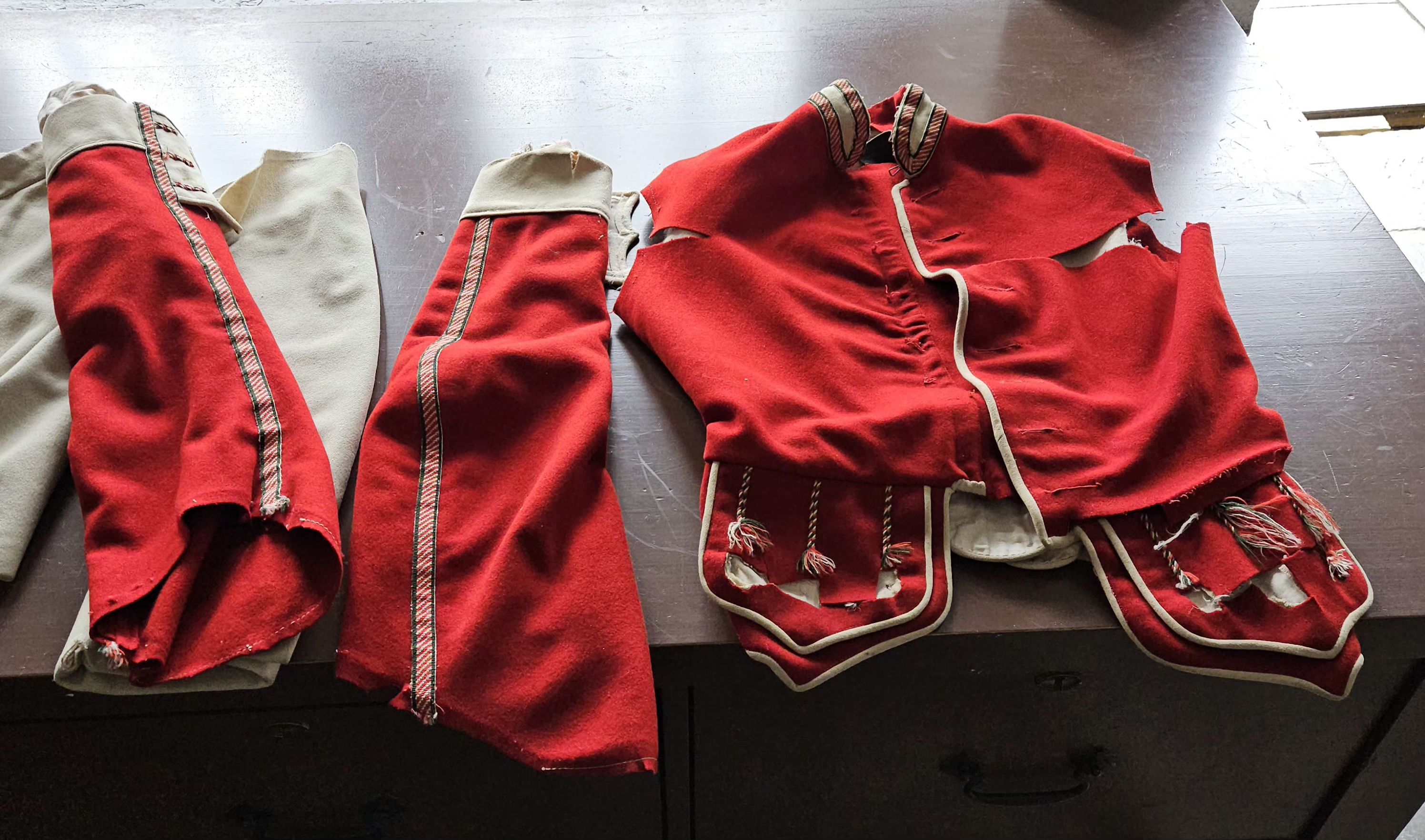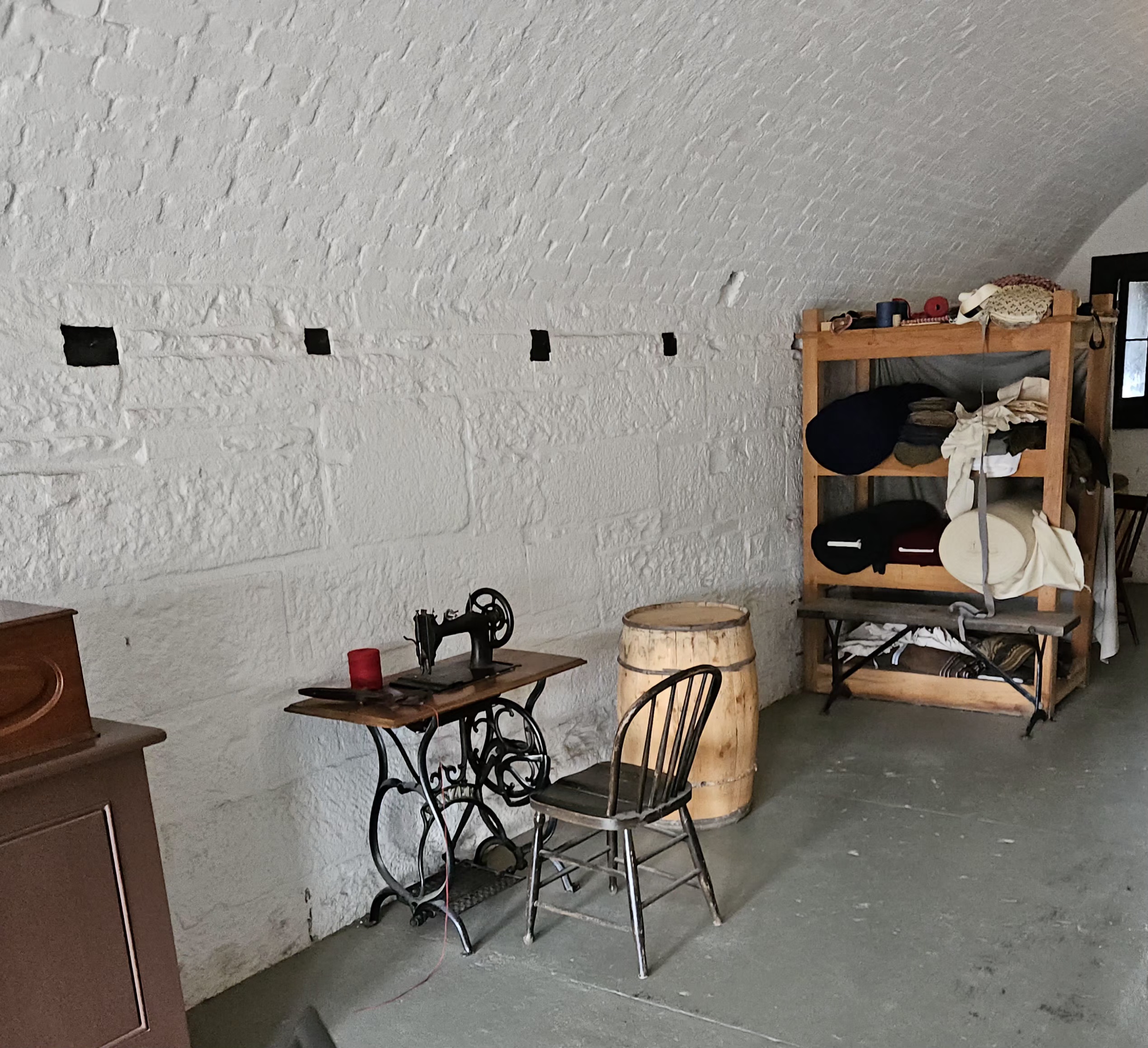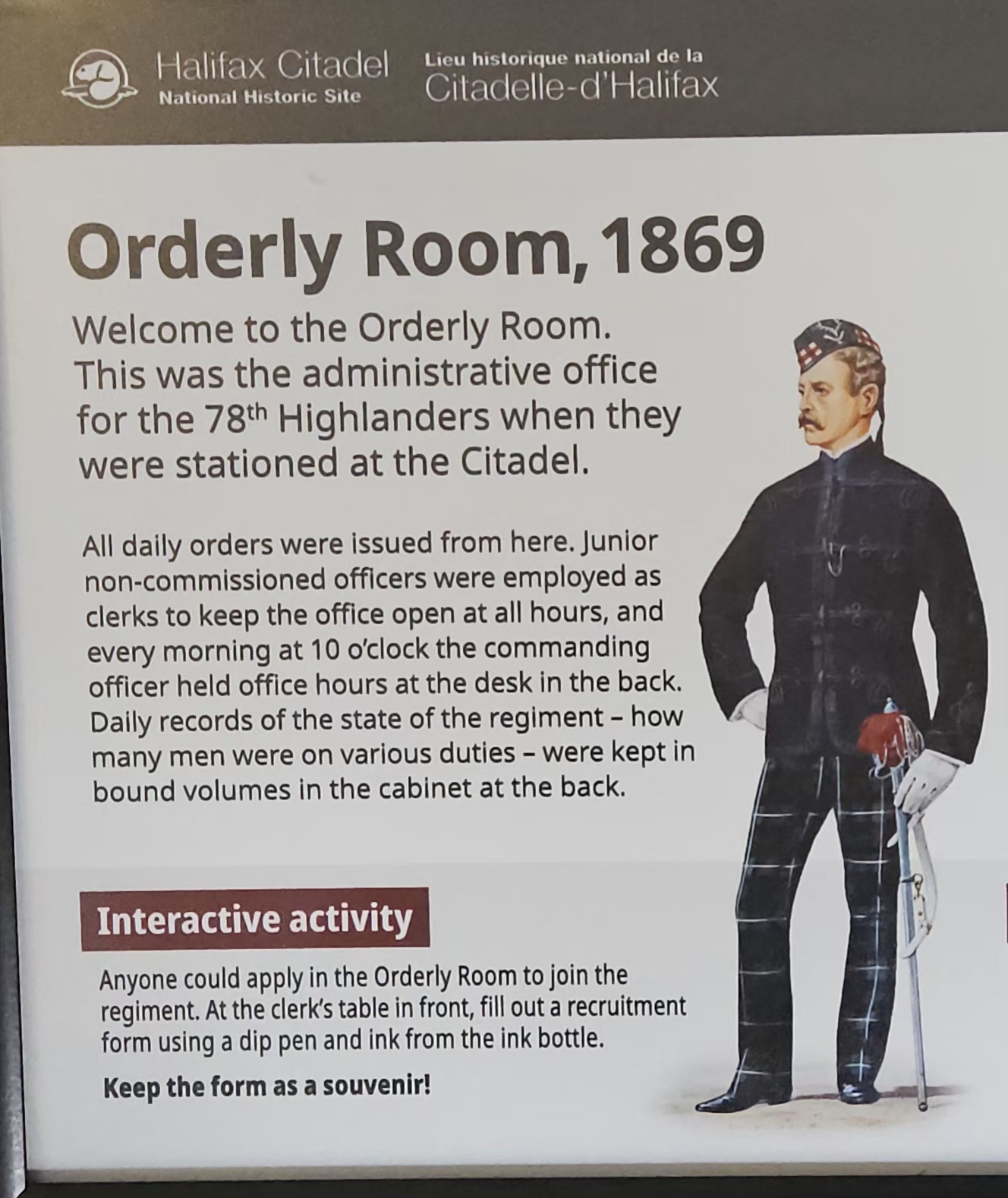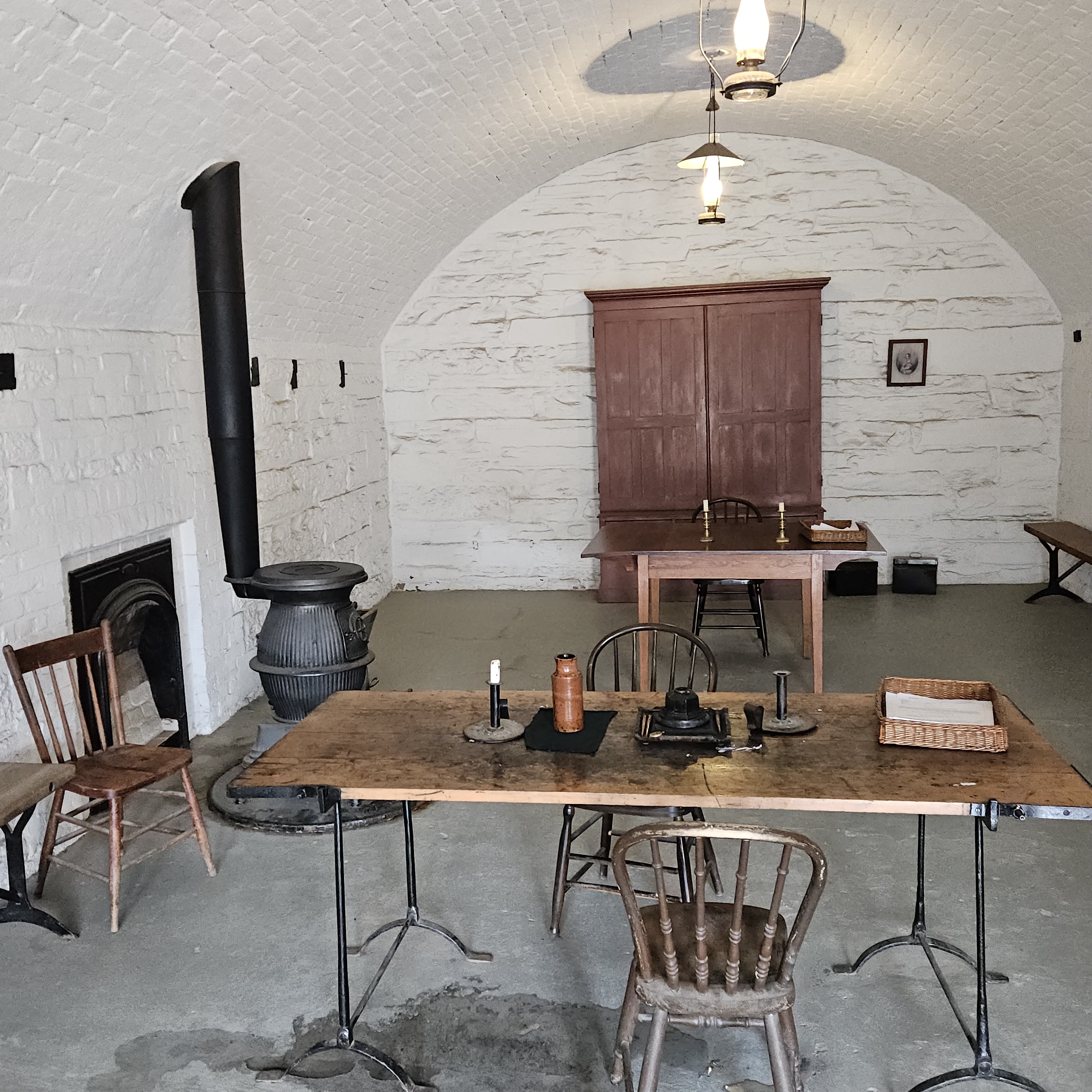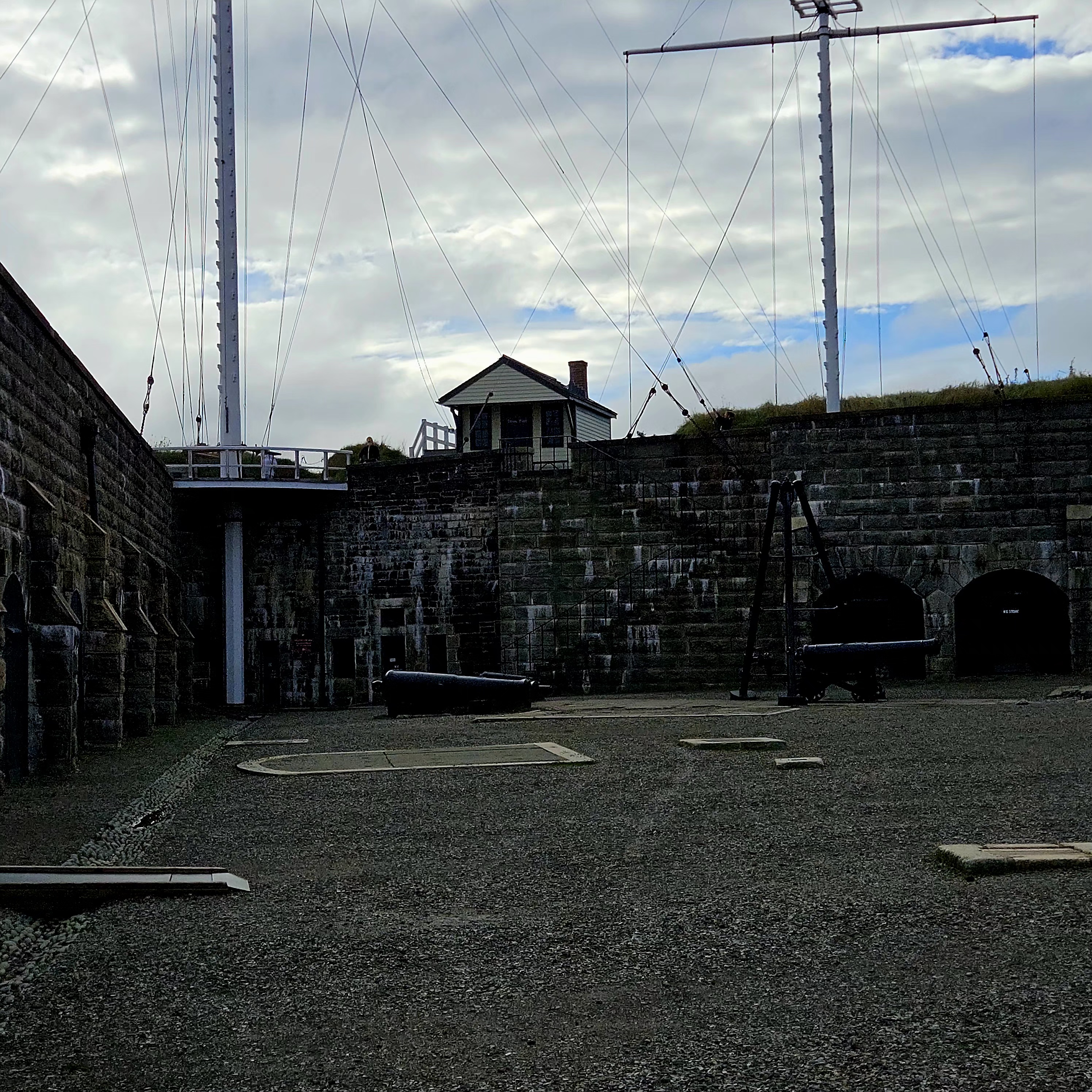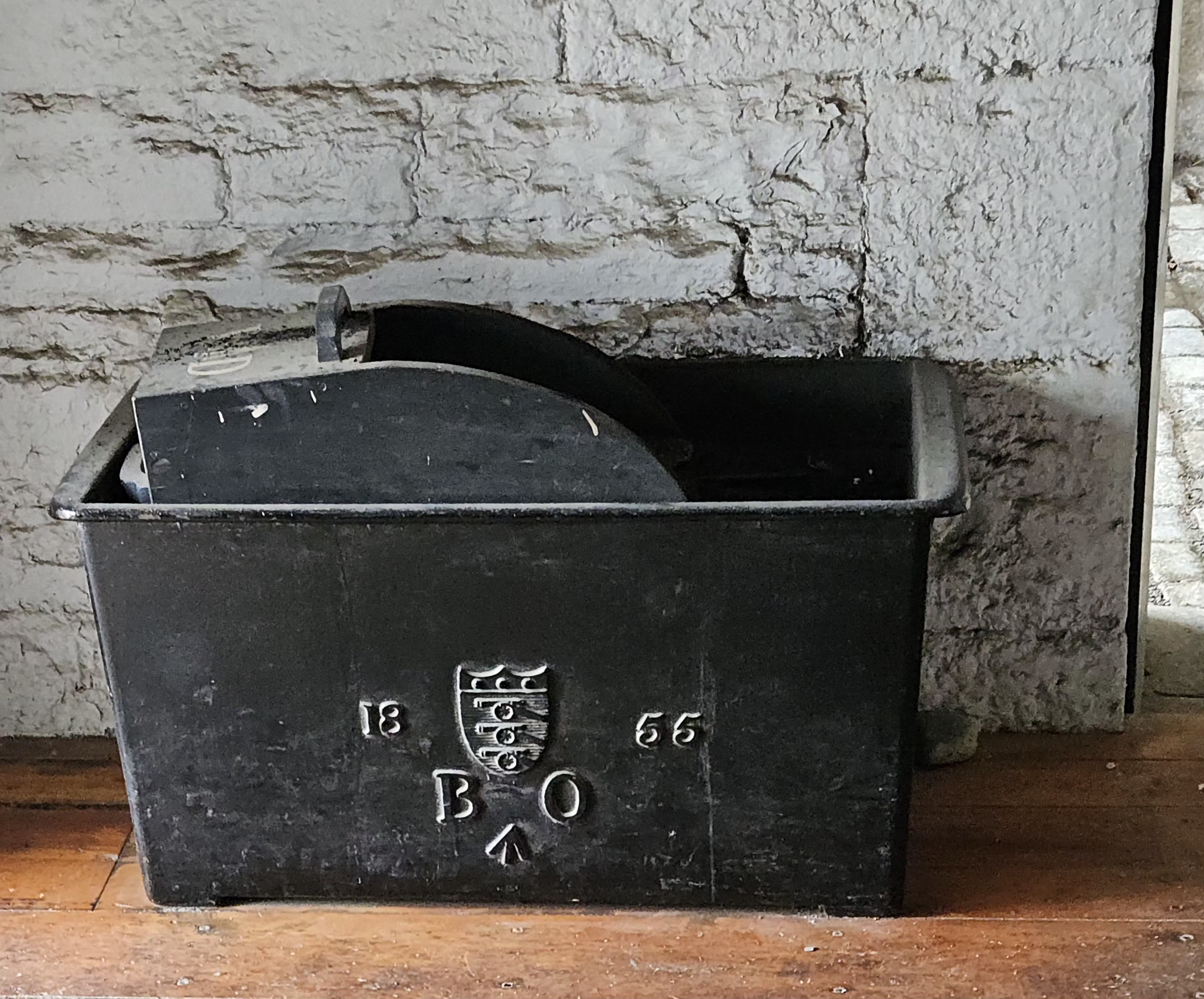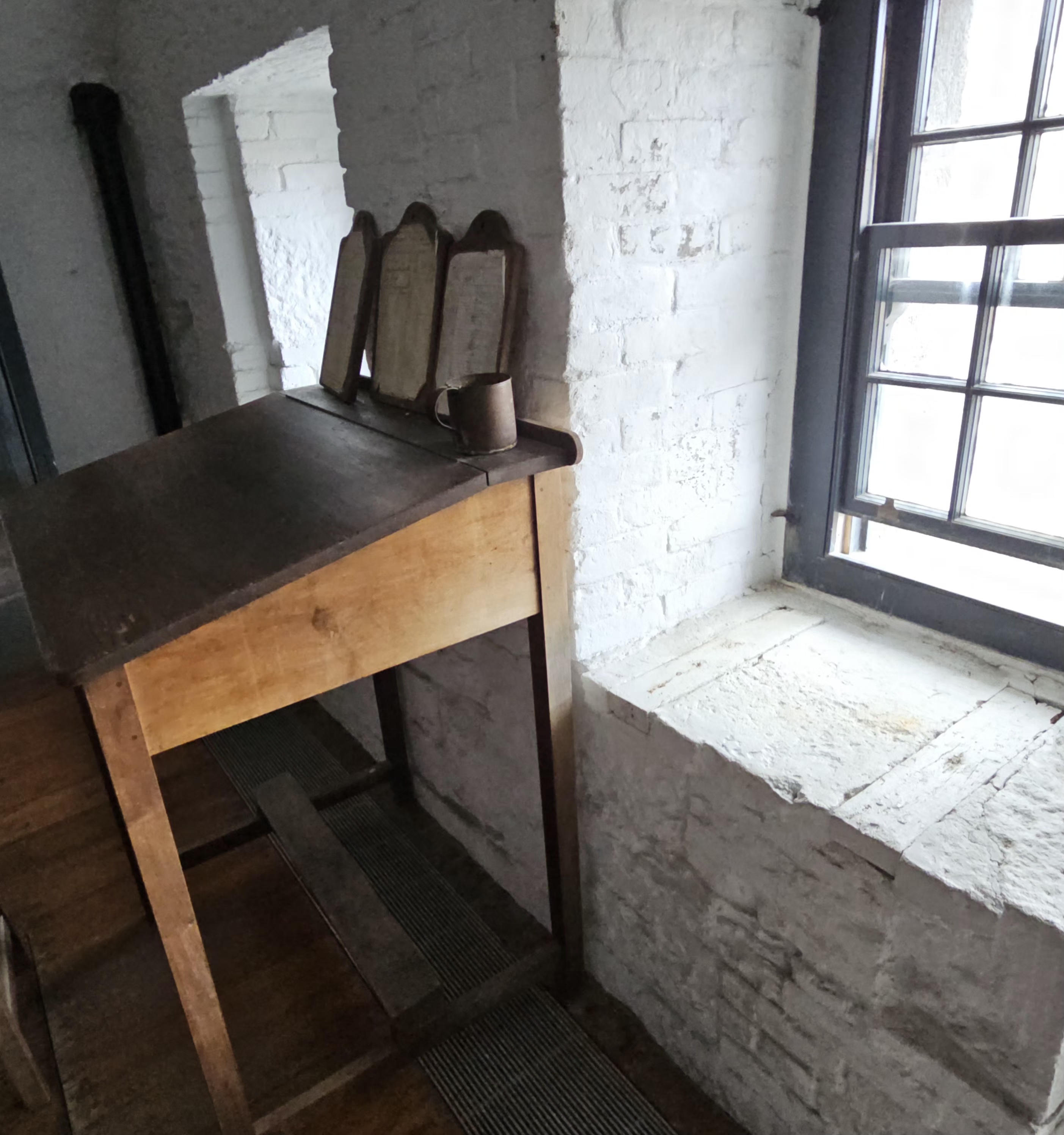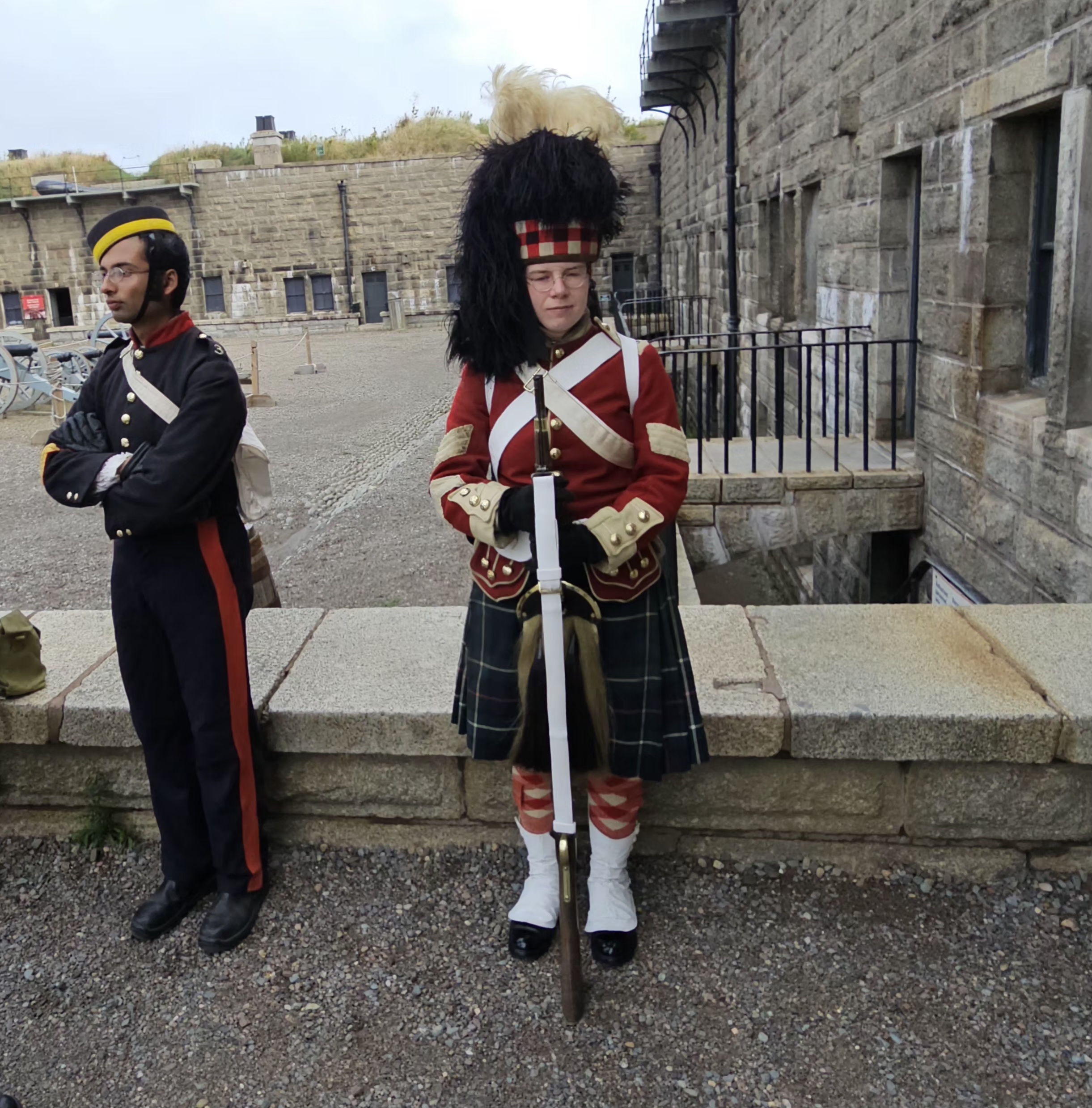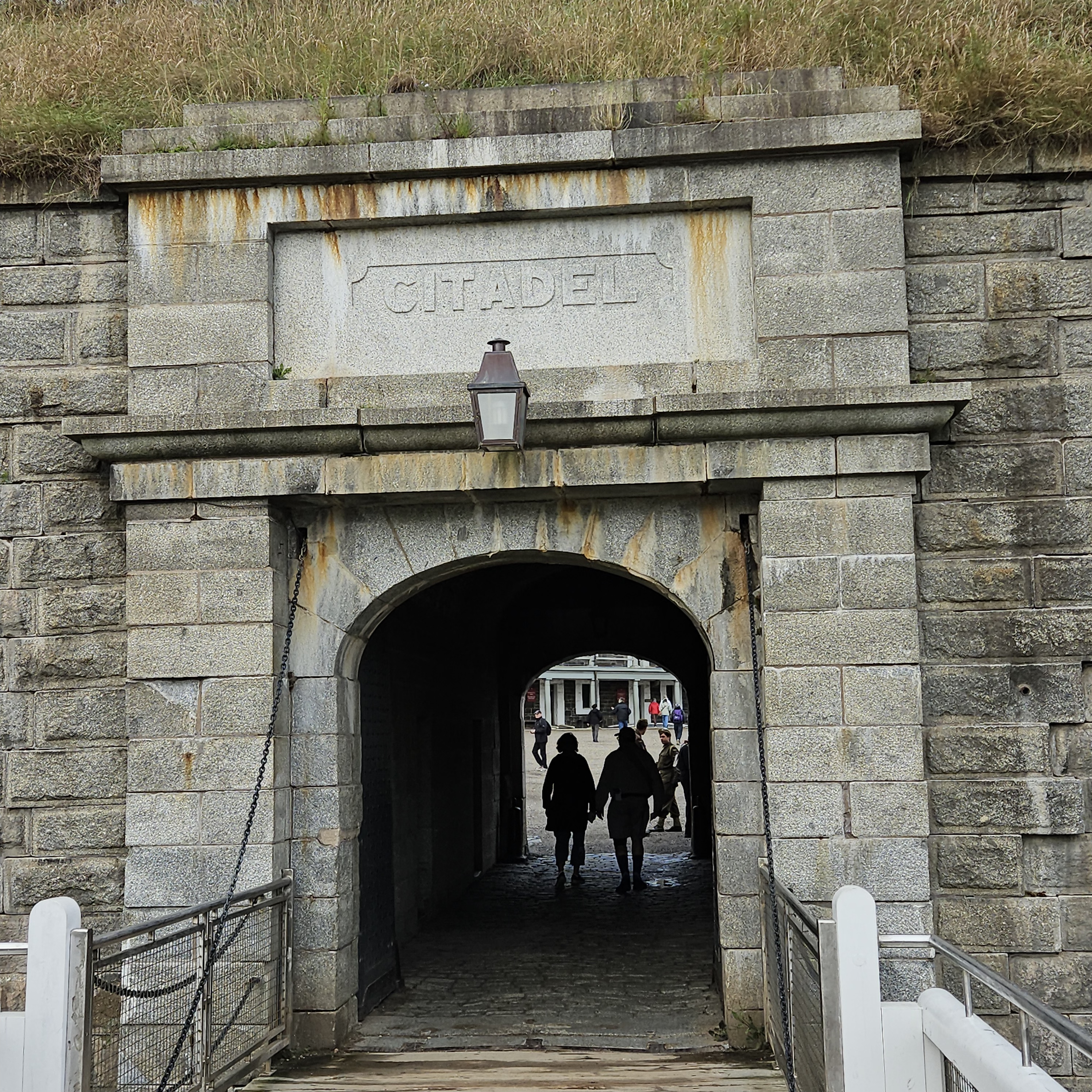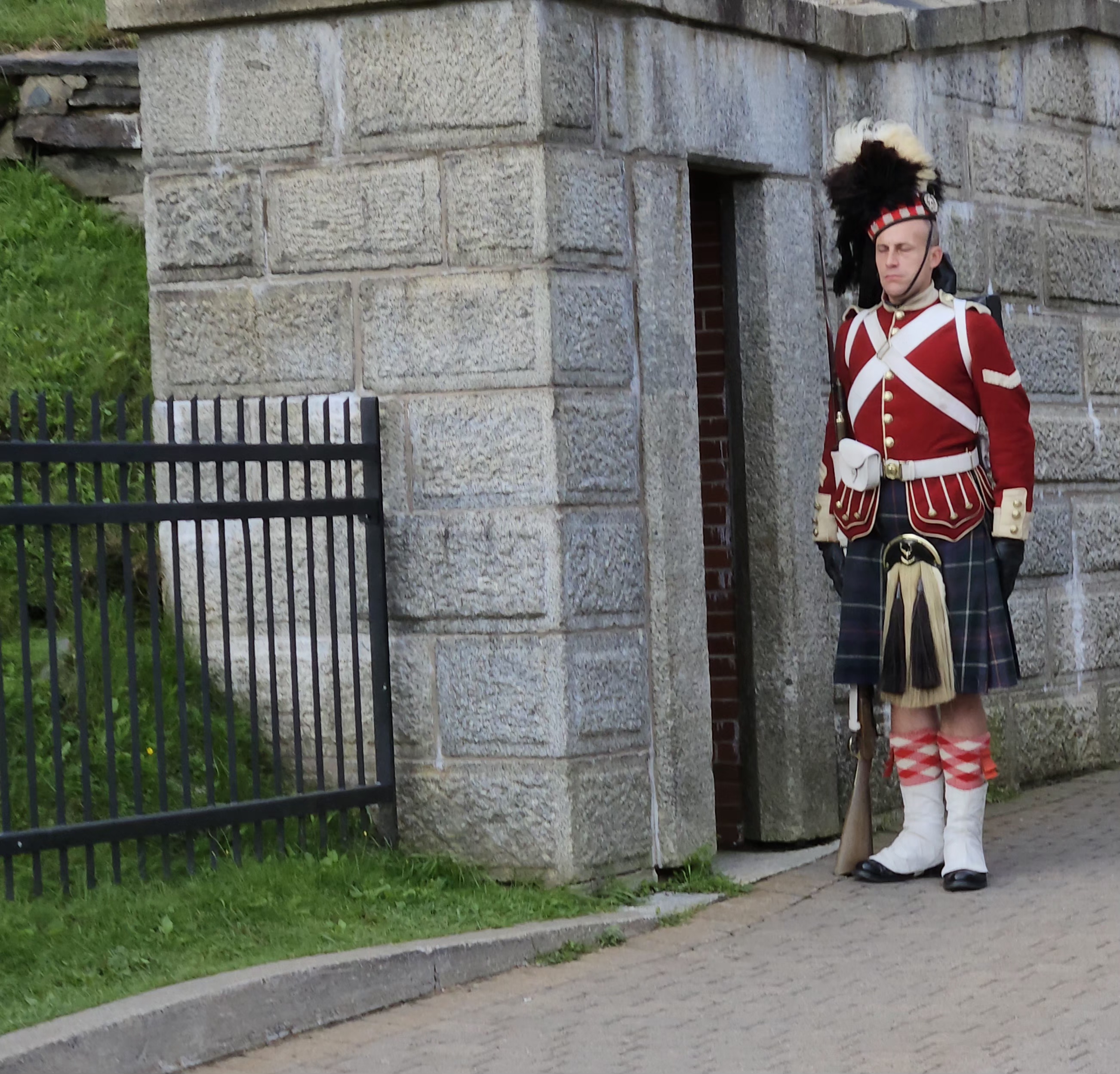
The Halifax Citadel began life in 1748. It has undergone four different designs over the past 278 years. I had the pleasure of visiting the fortress in September 2026. I have attached photographs that I took during my visit.
The First Citadel
On June 21, 1749, Edward Cornwallis entered Chebucto Harbour with 2,576 British colonists. They immediately cleared land for a settlement named after their patron, the Earl of Halifax, President of the Board of Trade and Plantations. Soon, they built several fortifications, including a wooden garrison near the summit of a prominent hill overlooking the harbor—the first Halifax Citadel.
The fortified community was part of a wave of British settlement in Nova Scotia that began in 1748. After France regained Louisbourg on Cape Breton Island, Britain feared an attack on the mainland. Halifax’s deep, ice-free harbor provided a strong defense, and the hill chosen for the first Citadel offered the best vantage point for protecting the town.
British troops completed the first Citadel on September 11, 1749. Unlike today’s stone fortress, it was built of wood. Its greatest enemies proved to be the climate and neglect, not the French: fog, rain, and harsh winters hastened its decay.
Halifax continued to expand and became Nova Scotia’s capital when the colony gained representative government in 1758. A new danger emerged when the American Revolution began in 1776, renewing fears of an attack on this vital British naval base and prompting plans for another Citadel.
The Second Fortress
By 1761, years of neglect and Nova Scotia’s damp climate had left the first Halifax Citadel in ruins, though it had never been attacked. Construction of a replacement began, but repeated setbacks delayed its completion for several years.
Plans for a new Citadel required lowering the hill by 40 feet, but too few soldiers were stationed in Halifax to complete the work. Although 1,000 troops arrived from Massachusetts in 1761, little progress was made by summer’s end. Work planned for the next summer was abandoned after the French attacked St. John’s, Newfoundland, forcing the British to strengthen harbor defenses on Georges Island and along the Halifax and Dartmouth shores.
The American Revolution in the 1770s renewed attention to Halifax’s land defenses and the Citadel. Because many residents had come from New England and supported the revolution, Britain feared an American land attack. Led by Captain William Spry, British troops built a new fort based on expanded 1761 plans. Its centerpiece was a large octagonal tower that housed 100 soldiers.
Like its predecessor, the second Citadel never saw battle. By 1784, neglect and Nova Scotia’s climate had left it in ruins. Renewed conflict between Britain and France later prompted plans for a third fort atop Citadel Hill.
The Third Fortress
When Prince Edward, Duke of Kent, arrived in Halifax in 1794 as commander-in-chief of British forces in Nova Scotia, Britain was at war with France. Although the conflict was distant, officials feared an attack on Halifax’s strategic naval base. Finding the town’s defenses in poor condition, Edward launched a campaign to repair them and build new fortifications, including a third Halifax Citadel named for his father, King George III.
Although plans for the new Halifax Citadel were approved in 1795, shortages of manpower and materials delayed construction until 1796. By then, the old fortress had been levelled and the hill lowered by 15 feet.
The new fort took four years to complete and was the first built directly atop the hill. Similar in size and shape to the present Citadel, it was smaller than the fort it replaced. Constructed mainly of earth and timber, it contained only three major buildings: a barracks, a provision store, and a powder magazine.
Like the first two Citadels, the third never saw battle. Despite repeated repairs, including patchwork during the War of 1812, it was in ruins by 1825. Planning soon began for a fourth, more permanent fort.
The Fourth and Current Citadel
In the 1820s, rising tensions led Britain to fear that U.S. forces might seize Halifax by land if war broke out. Britain again strengthened the town’s defenses, this time choosing a permanent fort to protect the vital naval base for generations. Construction of the fourth Halifax Citadel began in August 1828.
Designed by Royal Engineers Colonel Gustavus Nicolls, the new star-shaped stone fortress was expected to take six years to complete. Design flaws delayed construction, and the Halifax Citadel was not finished until 1856. Like its predecessors, it never saw battle, and advances in weaponry soon made it obsolete.
In 1906, Britain transferred the Halifax Citadel to the Canadian Department of Militia and Defence. During World War I, it housed soldiers and served as the command center for Halifax Harbour’s defenses. It again became a temporary barracks during World War II, offering many troops their final glimpse of Canada before they went overseas.
Today, the Halifax Citadel is one of Canada’s most significant and beloved historic sites. Parks Canada has carefully restored it to its Victorian-era appearance. Exhibits and living history programs preserve its enduring place in the story of Halifax and Canada. [1]
[1] “The Four Citadels,” Halifax Citadel National Historic Site, Parks Canada, The Four Citadels – Halifax Citadel National Historic Site, retrieved October 15, 2026.
The Halifax Citadel in 2026