Authors hate it when their writing is modified or misquoted.
One of my favorite quotes is from Thomas Jefferson’s 1787 letter to William Stephens Smith.
 “The tree of liberty must be refreshed from time to time with the blood of patriots and tyrants.” This sentence is often used to justify violence in connection with political positions. I find it amusing the following sentence is never included in the quote: “It is it’s natural manure.” Does equating blood with manure make the first sentence less noble?
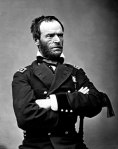 General William Sherman’s quote on war is simplified to “war is hell.” The full sentence is “There is many a boy here today who looks on war as all glory, but, boys, it is all hell. You can bear this warning voice to generations yet to come.”
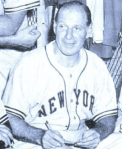 Leo Durocher’s baseball quote is usually given as “Nice guys finish last.” The actual quote is “Nice guys actually finish seventh” or “Take a look at them. All nice guys. They’ll finish last. Nice guys – finish last.”
A rather bad misquote is from Ludwig Mies van der Rohe. The incorrect quote is “The devil is in the details.” The correct quote is “God is in the details.”
Lastly, a quote from English poet Violet Fane often stated as “Good things come to those who wait.” However, what she actually said was “All things come to he who waits (…) they come, but often come too late.”
The list goes on and on. Perhaps the culprit is the newspaper. Sherman is quoted as saying, “I think I know what military fame is; to be killed on the field of battle and have your name misspelled in the newspapers.” Walt Whitman in letter to his mother during the Civil War. “The fighting has been hard enough, but the papers make lots of additional items, and a good deal they just entirely make up.
 Adjectives are a writer’s best friend. They help describe a person, place, or thing to allow a reader to form a mental picture of a subject. For example:
 I believe that most of the time these labels are racist in intent. They are superficial and demeaning, the vocabulary of lazy and bigoted minds. We should not describe our friends with labels such as: “my black friend John,” “my Jewish doctor Nathan,” “my Catholic neighbor Mary,” “my Hispanic teammate Peter,” or “my son’s Asian girl friend Nancy.”
 Young people do not feel the necessity of employing these labels, let’s hope that they can