You know the question I am referring to. It’s the same one we ask after every shooting, drug overdose, drunken driver manslaughter, beaten or murdered spouse, child poisoning, and immigrant death.
Here and now stop asking the asking the questions and take action. You are not a victim. Wringing your hands and screaming at the TV won’t get it done. By doing nothing you are an enabler.
Call all of your legislators. Contact government agencies. Vote and run for office. Boycott companies that support politicians and lobbyists who put money ahead of life.
Yes, put on your big girl or big guy pants, get off the couch, and be an instrument of positive change.
Get your head out of the sand and be a force of good not a ‘”it’s not my problem.” Build fences, not walls. Have those unpleasant conversations.
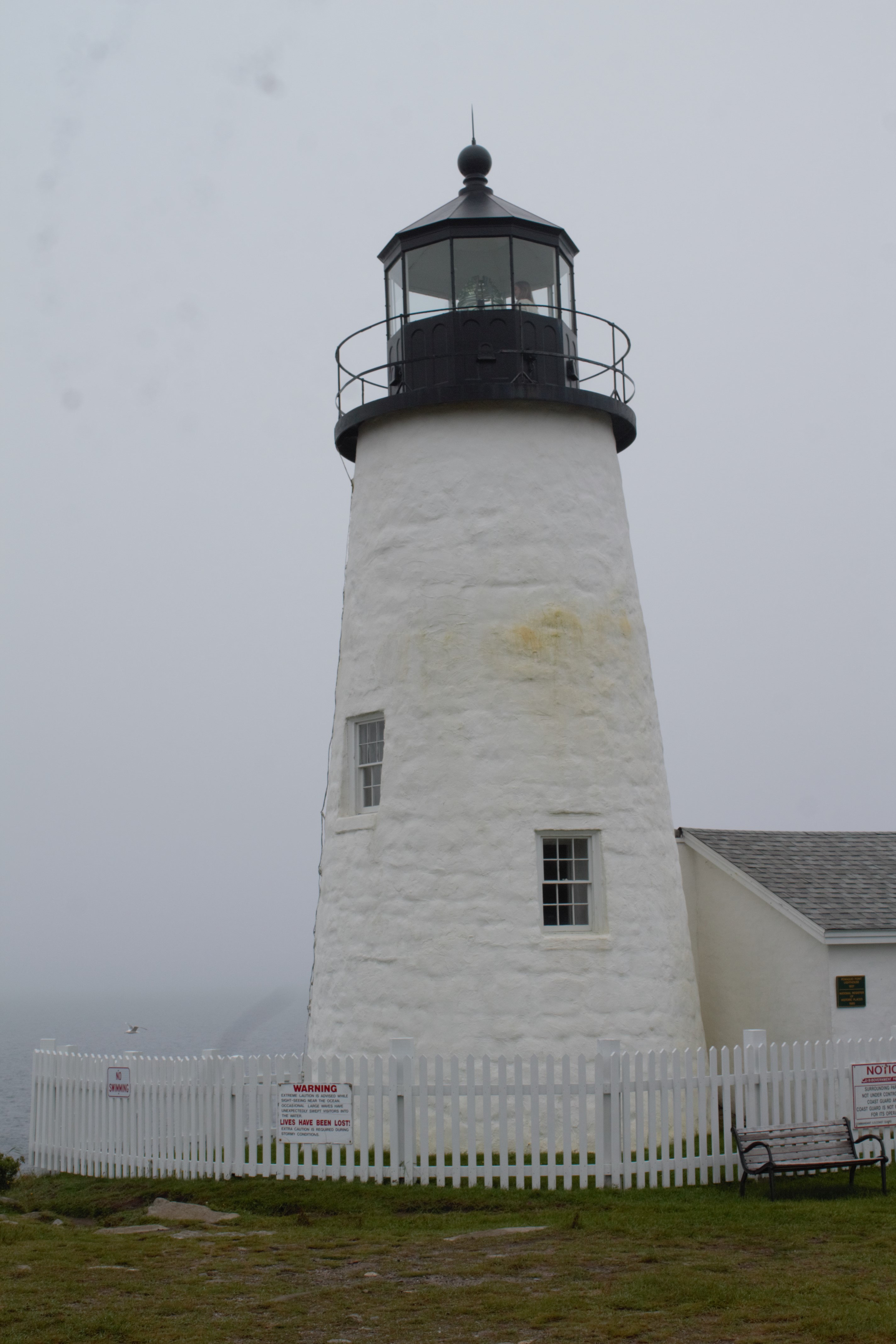
Our polarized, divisive culture seems to be without heroes and role models. We are adrift in a dark sea of disillusionment and distrust, and we need “human lighthouses” to give us hope and direct us back to the goodness in each other and in our own hearts.
Steve Pemberton found a lighthouse in an ordinary man named John Sykes, his former high school counselor. John gave Steve a safe harbor after Steve escaped an abusive foster home and together they navigated a new path that led to personal and professional success. Through stories of people like John and several others, you will identify how the hardships you have overcome equip you to be a “human lighthouse”, inspiring those around you.
The humble gestures of kindness that change the course of our lives can shift the course for America, too. With a unique vision for building up individuals and communities and restoring trust, The Lighthouse Effect opens your eyes to those who are quietly heroic. You will reflect on the lighthouses in your own life and be reminded that the greatest heroes are alongside us – and within us.
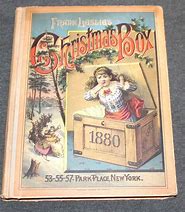
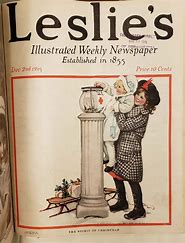
Time to celebrate our love for family and friends. I have compiled several illustrations from Frank Leslie’s Illustrated Newspaper for your holiday enjoyment.
Happy Holidays and Best Wishes for a Wonderful 2024!
Recently, I watched the movie Shake Hands with the Devil.
Shake Hands with the Devil is a 2007 Canadian war drama film starring Roy Dupuis as Roméo Dallaire, which premiered at the Toronto International Film Festival in August 2007. Based on Dallaire’s autobiographical book Shake Hands with the Devil: The Failure of Humanity in Rwanda, the film recounts Dallaire’s harrowing personal journey during the 1994 Rwandan genocide and how the United Nations didn’t heed Dallaire’s urgent pleas for further assistance to halt the massacre. <Source: Shake Hands with the Devil (2007 film) – Wikipedia>
The movie prompted me to ask the question: “Why isn’t the United Nations interceding in the Ukraine-Russia war and the Israel-Hamas war?” It seems like a reasonable question. So why aren’t the news media asking the United Nations for a response?
Ukrainian President Volodymyr Zelensky asked the UN Security Council the same question. “You need to act immediately,” Zelensky implored the UN during a live-streamed address on April 6 to its members. He begged them to do something to stop the war in his country, criticizing the Security Council’s inaction directly. And he called out the elephant in the room: Russia, one of the five permanent members of the Council, whose status gives it the ability to veto any action it disagrees with.“We are dealing with a state that turns the right of veto in the UN Security Council into a right to die,” Zelensky said.
What about the Israel-Hamas war that is claiming the deaths of thousands of innocent Palestinians?
The U.N. Security Council failed to address the Israeli-Hamas war in Gaza, rejecting rival United States and Russian resolutions.
The council is the U.N.’s most powerful body, charged with maintaining international peace and security, but its divisions have left it impotent and scrambling to try to find a resolution with acceptable language.
The resolution drafted by the United States, Israel’s closest ally, would have reaffirmed Israel’s right to self-defense, urged respect for international laws — especially protection of civilians — and called for “humanitarian pauses” to deliver desperately needed aid to Gaza.
In Wednesday’s vote in the 15-member council, 10 countries voted in favor, Russia, China, and the United Arab Emirates voted against, and Brazil and Mozambique abstained. The resolution was not adopted because permanent council members Russia and China cast vetoes.
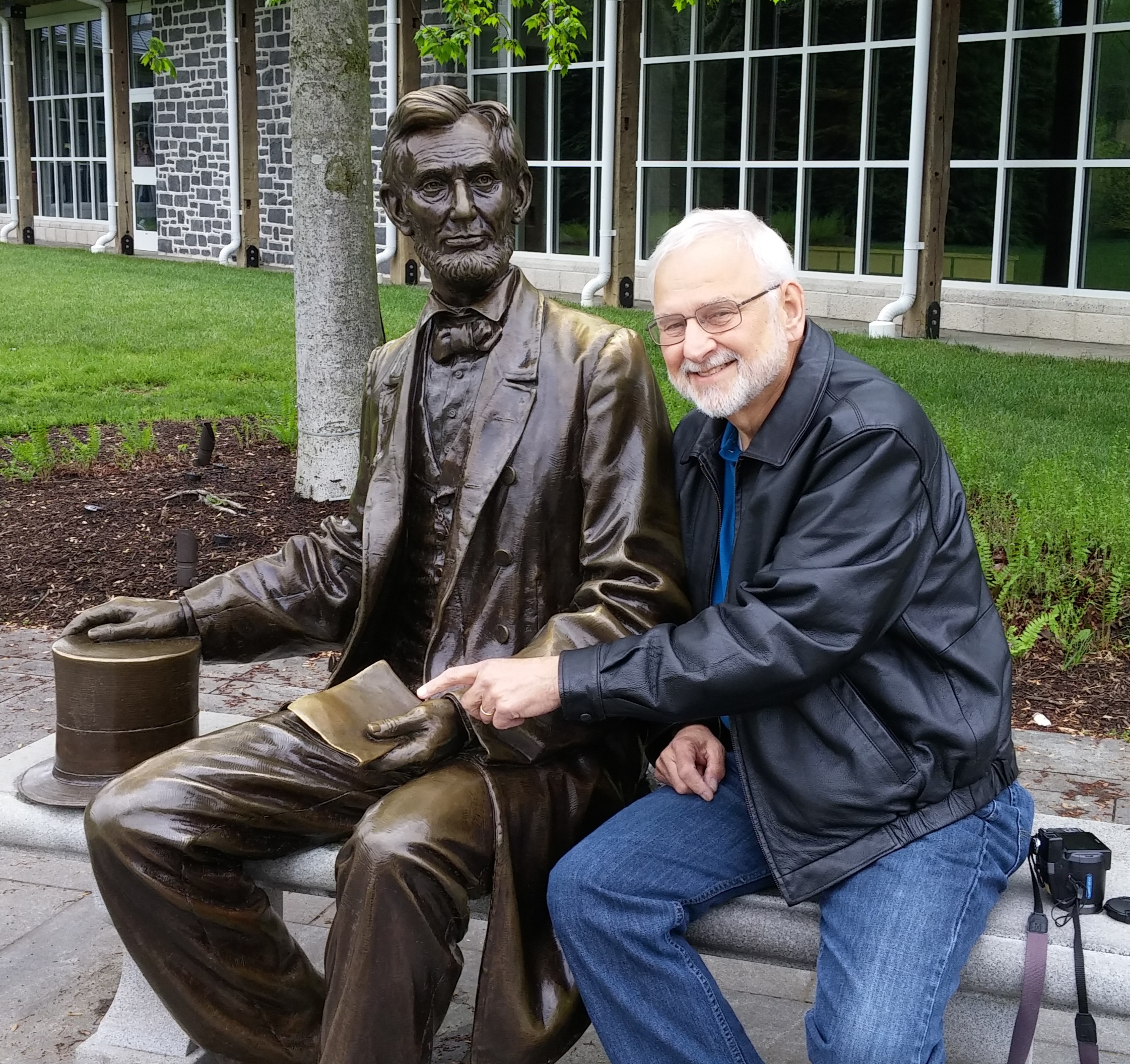
Statue of President Abraham Lincoln and Little Known Author (Author’s Photograph)
On October 3, 1863, President Abraham Lincoln issued the following Thanksgiving Proclamation:
The year that is drawing toward its close has been filled with the blessings of fruitful fields and healthful skies. To these bounties, which are so constantly enjoyed that we are prone to forget the source from which they come, others have been added which are of so extraordinary a nature that they can not (sic cannot) fail to penetrate and soften even the heart which is habitually insensible to the ever-watchful providence of Almighty God.
During a civil war of unequaled magnitude and severity, which has sometimes seemed to foreign states to invite and to provoke their aggression, peace has been preserved with all nations, order has been maintained, the laws have been respected and obeyed, and harmony has prevailed everywhere, except in the theater of military conflict, while that theater has been greatly contracted by the advancing armies and navies of the Union. Needful diversions of wealth and of strength from the fields of peaceful industry to the national defense have not arrested the plow, the shuttle, or the ship; the ax has enlarged the borders of our settlements, and the mines, as well as the iron and coal as of our precious metals, have yielded even more abundantly than heretofore. The population has steadily increased notwithstanding the waste that has been made in the camp, the siege, and the battlefield, and the country, rejoicing in the consciousness of augmented strength and vigor, is permitted to expect continuance of years with large increase of freedom.
No human counsel hath devised nor hath any mortal hand worked out these great things. They are the gracious gifts of the Most High God, who, while dealing with us in anger for our sins, hath nevertheless remembered mercy. It has seemed to me fit and proper that they should be solemnly, reverently, and gratefully acknowledged, as with one heart and one voice, by the whole American people. I do therefore invite my fellow-citizens (sic fellow citizens) in every part of the United States, and also those who are in foreign lands, to set apart and observe the last Thursday of November next as a day of thanksgiving and praise to our beneficent Father who dwelleth in the heavens. And I recommend to them that while offering up the ascriptions justly due to Him for such singular deliverances and blessings they do also, with humble penitence for our national perverseness and disobedience, commend to His tender care all those who have become widows, orphans, mourners, or sufferers in the lamentable civil strife in which we are unavoidably engaged, and fervently implore the imposition of the Almighty hand to heal the wounds of the nation and to restore it, as soon as may be consistent with the divine purpose, to the full enjoyment of peace, harmony, tranquillity, and union.
In testimony whereof I have hereunto set my hand and caused the seal of the United States to be affixed. Done at the city of Washington, this 3d (sic 3rd) day of October, A.D. 1863, and of the Independence of the United States the eighty-eighth. — Abraham Lincoln
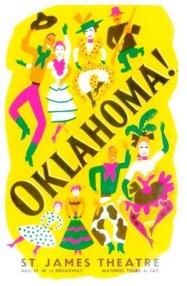
It’s a Scandal! It’s a Outrage! is a song from the 1943 musical Oklahoma!
Traveling salesman Ali Hakim has just been pushed into marrying Ado Annie Carnes by her father, Andrew Carnes. In the musical, Hakim is the type of character who would flirt with forty women but would prefer marriage only over being shot. Feeling trapped, he sings with the men of Oklahoma about how tricky and dirty girls are in getting husbands, using their fathers (with their guns) as backups. The song ends with the men declaring a revolution and then having their plans thwarted by women, who come in and drag them away.
During the song, Ali Hakim compares humans to chickens (“A rooster in a chicken coop is better off’n men, he ain’t the special property of just one hen!”) and tells of the dangers of being caught flirting (“If you make one mistake when the moon is bright, then they tie you to a contract so you make it every night!”).
Sherman High School Outrage
Sherman High School planned on producing the musical Oklahoma, but the school may cancel the presentation. The “problem” according to the school administrators is that a transgender student Max Hightower won the part of a male character (Ali Hakim) in the school’s production. Now the school has removed him from the part and told Max’s dad that “the biological sex of actors in the school play must match the biological sex of the characters they play.”
Adding insult to injury, the Sherman School District said Oklahoma contains “mature adult themes, profane language and sexual content.”
The district gets a failing grade for removing Max and misrepresenting the musical.
How dumb can a group of educators be? In Shakespeare’s time, men played the part of women. Shakespeare’s plays The Merchant of Venus and Twelfth Night include cross-dressing. Under Sherman District’s rules, Mary Martin would be prohibited from playing the lead in Peter Pan. Mrs. Doubtfire would never be shown in Sherman. Wikipedia site “Cross-gender Acting” contains a list of male and female actors who have played the opposite sex. In 1982 Linda Hunt played the role of Billy Kwan in The Year of Living Dangerously. In 1996, Eddie Murphy played the role of Mama/Granny Klump in The Nutty Professor. In 2005, Tyler Perry played the role of Madea in Dairy of a Mad Black Woman. In 1982, Dustin Hoffman plays Dorothy Michaels in the show-within-show soap opera Southwest General in Tootsie.
What about Cross-species Acting? Should humans be allowed to play lions, cats, tigers, and giraffes? How about fictional beings like tin men, scarecrows, cowardly lions, and beasts?
Should Oklahoma! have an R-rating? An editorial in The Dallas Morning News says “no.” “Oklahoma! is about as American musical theater can get. In 2008, Time reported that Oklahoma! was the eighth-most popular show staged by American high schools, right up there with such scandalous content as Beauty and the Beast and Seussical, the Musical.
Ali and Allen
Well, Max, you and I have something in common. I played Ali Hakim in my high school’s performance of Oklahoma! way back in 1960. My classmates and teachers thought I had a “a comic touch.” I remember my first stage kiss and singing “It’s a Scandal! It’s a Outrage.” The cast was great with fine voices and acting skills. I remember being offstage and joining my fellow cast members in singing the title song. We couldn’t part ways and had many cast parties after our two-night run.
So Max, long before you or your father were born, I made my musical debut as Ali Hakim.
School District Comes to Its Senses
Thanks to many voices, the Sherman School District has changed its decision and reinstated Max.
“We want to apologize to our students, parents and our community,” board President Brad Morgan said Monday night. Please see the video.
I am glad that the Sherman School District realized its error and returned Max to the part his was born to play.
In the autumn of 1864, Massachusetts Governor John A. Andrew wrote to President Lincoln asking him to express condolences to Mrs. Lydia Bixby, a widow believed to have lost five sons during the Civil War. Lincoln’s letter to her was printed by the Boston Evening Transcript. Later it was revealed that only two of Mrs. Bixby’s five sons died in battle, Charles and Oliver. Of the remainder, one deserted the army, one was honorably discharged, and another deserted or died a prisoner of war.
Executive Mansion, Washington, Nov. 21, 1864.
Dear Madam,–
I have been shown in the files of the War Department a statement of the Adjutant General of Massachusetts that you are the mother of five sons who have died gloriously on the field of battle.
I feel how weak and fruitless must be any word of mine which should attempt to beguile you from the grief of a loss so overwhelming. But I cannot refrain from tendering you the consolation that may be found in the thanks of the Republic they died to save.
I pray that our Heavenly Father may assuage the anguish of your bereavement, and leave you only the cherished memory of the loved and lost, and the solemn pride that must be yours to have laid so costly a sacrifice upon the altar of freedom.
Yours, very sincerely and respectfully,
A. Lincoln
Please take a moment to thank a veteran for their service to our country. They preserve our democracy and protect us from attacks by domestic and foreign terrorists.
I am disappointed to be writing this post. I have held adjunct faculty positions at Texas Women’s University, Southern Methodist University, and the University of Texas at Dallas. I have also taught classes in the SAIL program at Collin College. I am shocked about the events at the University of Texas at Arlington. How can the University tolerate such bad behavior?
This is not about disagreements about the Hamas-Israeli War. Rather my post is about how students and a university administration should behave. Let me begin with what I believe the college and university experience should look like.
Students Attend College to Learn
In order to learn new ideas and gain new skills, students must listen. They should also engage in meaningful and respectful conversations with fellow students and faculty. They should be open to ideas and viewpoints that are new, different from their beliefs, and from various perspectives. They should learn how to differentiate between facts and fiction.
Students Attend College to Interact with People with Different Beliefs and Backgrounds
College can be a great place to meet people from different countries, who speak different languages, eat different food, and have different customs. We live in a global economy and students should embrace the opportunity to expand their geographic universe. This is also a chance to apply new information that alters biases and typecasting. Students who stick to their own little group miss this chance to become citizens of the world.
Students Should Learn to Respect the Ideas of Others
Simply put, this means engaging your ears before you engage your mouth. Respecting the views of others means listening to what they say without interruption. Bullying and browbeating someone who shares different views has no place on a college campus.
University Administrators Should Not Accept Outrageous Classroom Behavior
University administrators and faculty have a responsibility to educate their students. This education applies to classroom material and behavior. Students who show no respect for their professors do not belong on campus. They interfere with other students who are there to learn not to be intimidated. Students who do not understand this or respect the common rules of decency should not be allowed in the classroom. As far as I know, the University of Arlington has administered no punitive action on these students who verbally attacked their professor and other students. Shame on you. The lack of response opens the way to violence against other students and faculty. The university should be a “safe” place for the entire community.
University Administrators Should Not Gag Faculty
Putting all the blame on faculty members, especially those who are bold enough to host controversial subjects, destroys academic freedom and politicizes education. Catering to the desires of groups of students by creating a mountain of paperwork and approvals destroys the ability of the faculty to teach.
How Would I Handle the Situation?
If I was presiding over a classroom where a student would not let me teach, I would politely ask the student to stop interrupting, ask if they would like to talk to me in private, or ask them to leave the room so others could learn. I asked my wife, a former kindergarten teacher, how she would deal with the situation. She said she would remove the rest of the class from the offending student. In my case, she suggested that I end the class and dismiss the students. The offending student would lose his audience.
Consequences
Texas politics and open-carry gun legislation have already hurt state universities’ ability to attract students and faculty. What esteemed professor would want to teach at a school where the administration does not have his back? What student would want to attend a school where the administration fails to provide a safe learning environment?
Sasquatch or Bigfoot is a large and hairy human-like mythical creature alleged to inhabit forests in North America, particularly in the Pacific Northwest. Sasquatch is often described as a large, muscular, bipedal ape or human-like creature covered in black, dark brown, or reddish hair. Anecdotal descriptions estimate a height of roughly 6–9 feet, with some descriptions having the creatures standing as tall as 10–15 feet. Common descriptions include broad shoulders, no visible neck, and long arms.
“Bigfoot” carving at the Crystal Creek Reservoir in Colorado
Sasquatch Sightings
According to Live Science, over 10,000 reported Sasquatch (Bigfoot) sightings have been in the continental United States. About one-third of all Sasquatch sightings are in the Pacific Northwest. The Sightings predominantly occur in the northwestern region of Washington state, Oregon, Northern California, and British Columbia. According to data collected from the Bigfoot Field Researchers Organization’s (BFRO) Bigfoot sightings database in 2019, Washington has over 2,000 reported sightings, California over 1,600, Pennsylvania over 1,300, New York and Oregon over 1,000, and Texas has just over 800.
Is Sasquatch Real?
The consensus among scientific experts is that claims of the existence of Bigfoot are not credible. Belief in the existence of such a large, ape-like creature is more often attributed to hoaxes, confusion, or delusion rather than to sightings of a genuine creature. In a 1996 USA Today article, Washington State zoologist John Crane said, “There is no such thing as Bigfoot. No data other than material that’s clearly been fabricated has ever been presented.”
Phillips Stevens, a cultural anthropologist at the University at Buffalo, summarized the scientific consensus as follows:
It defies all logic that there is a population of these things sufficient to keep them going. What it takes to maintain any species, especially a long-lived species, is you gotta have a breeding population. That requires a substantial number, spread out over a fairly wide area where they can find sufficient food and shelter to keep hidden from all the investigators.
Most reports are considered mistakes or hoaxes, even by those researchers who claim Bigfoot exists.
What if Sasquatch Was Real?
Let us suppose for a minute that Sasquatch was real. Would he want to establish a relationship with humans? He hasn’t so far and does not seem to need anything that civilization might offer him. Would he be treated as a unique member of society? Seriously? He would be displayed in zoos and probed and examined by scientists like a laboratory specimen. If I may be so bold as to answer. “No! Hell No! Let me live free and away from these humans.”
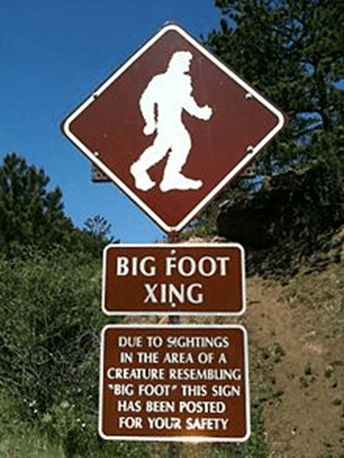
A tongue-in-cheek sign warning of Bigfoot crossings on Pikes Peak Highway in Colorado
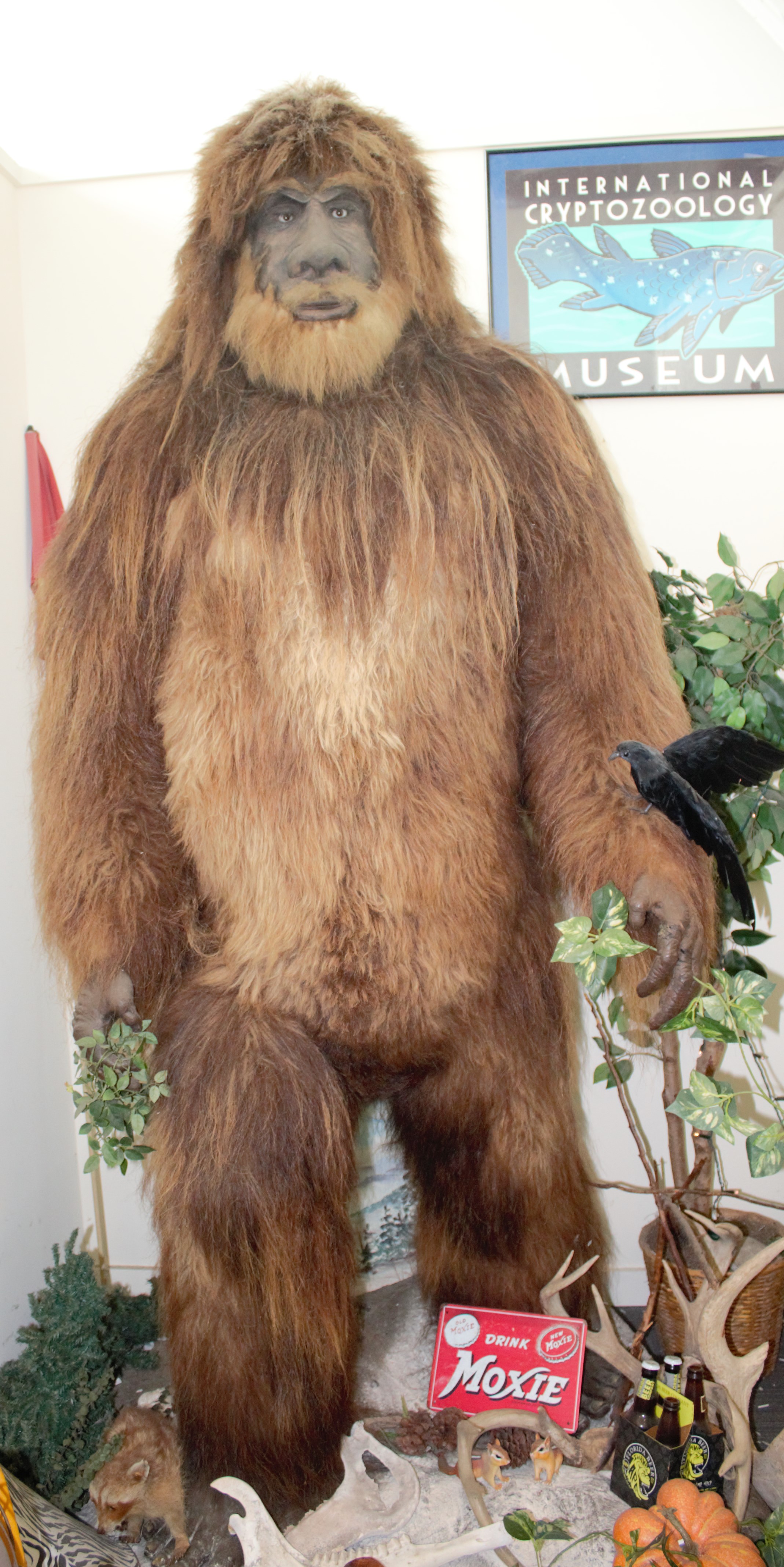
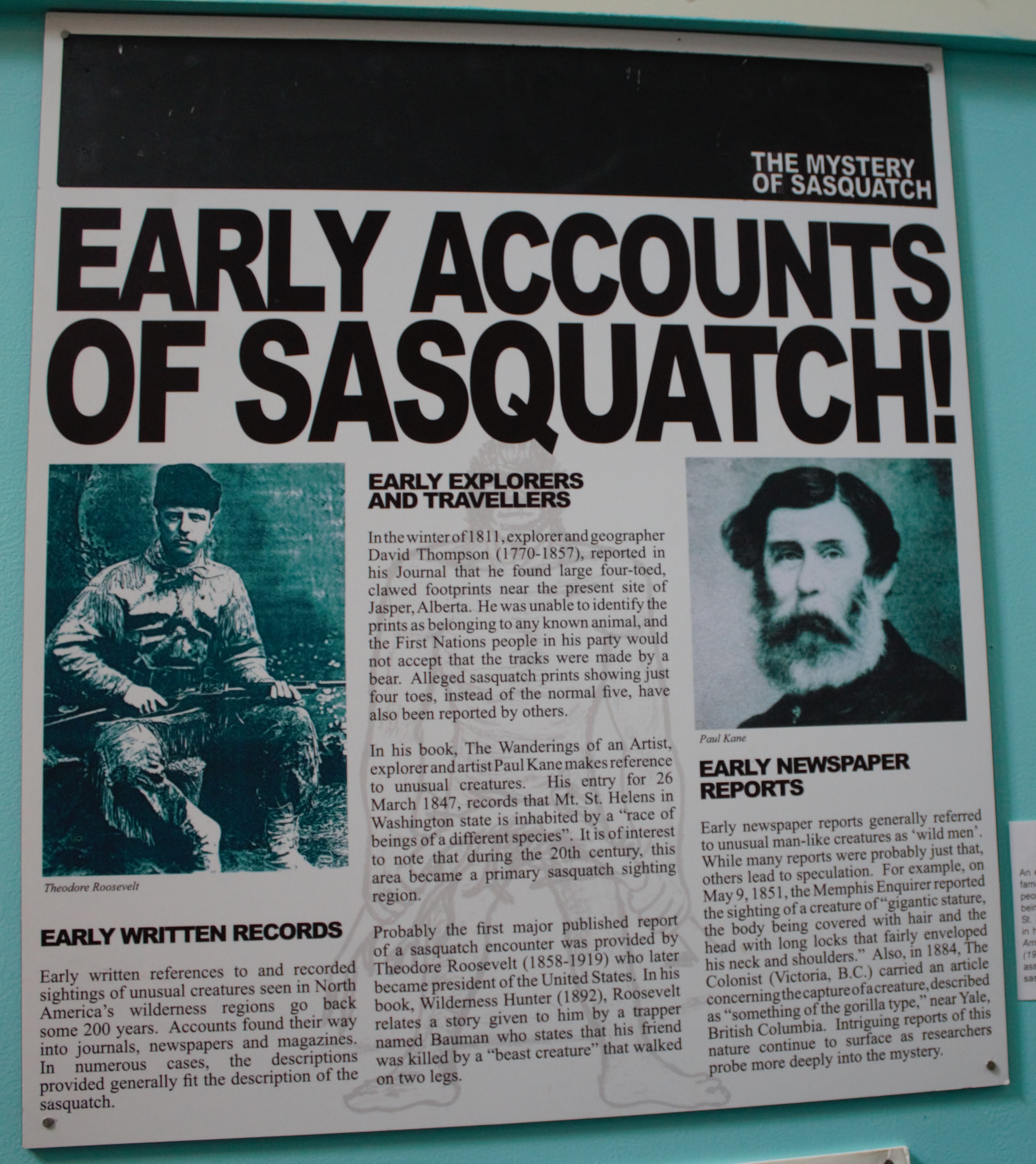
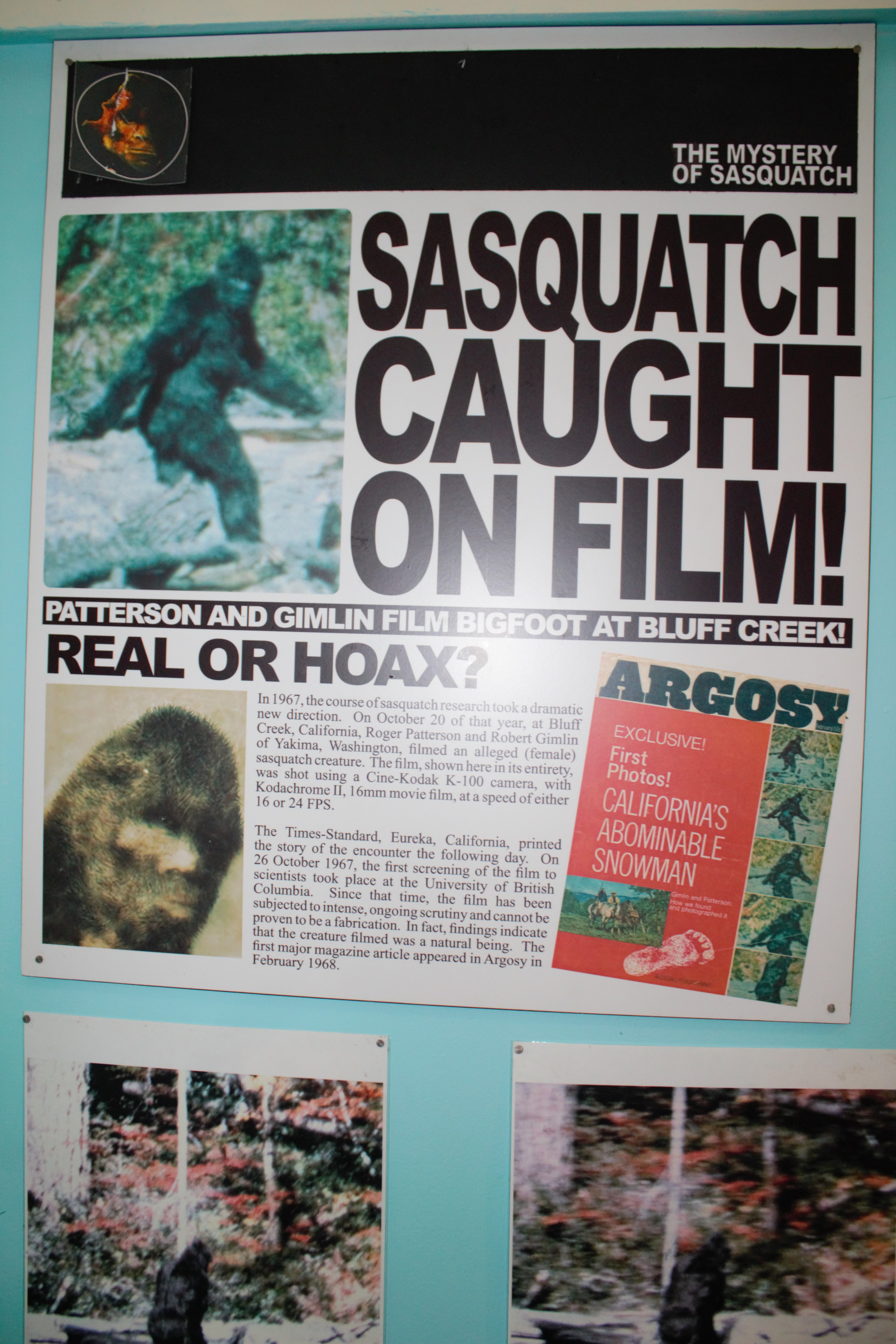
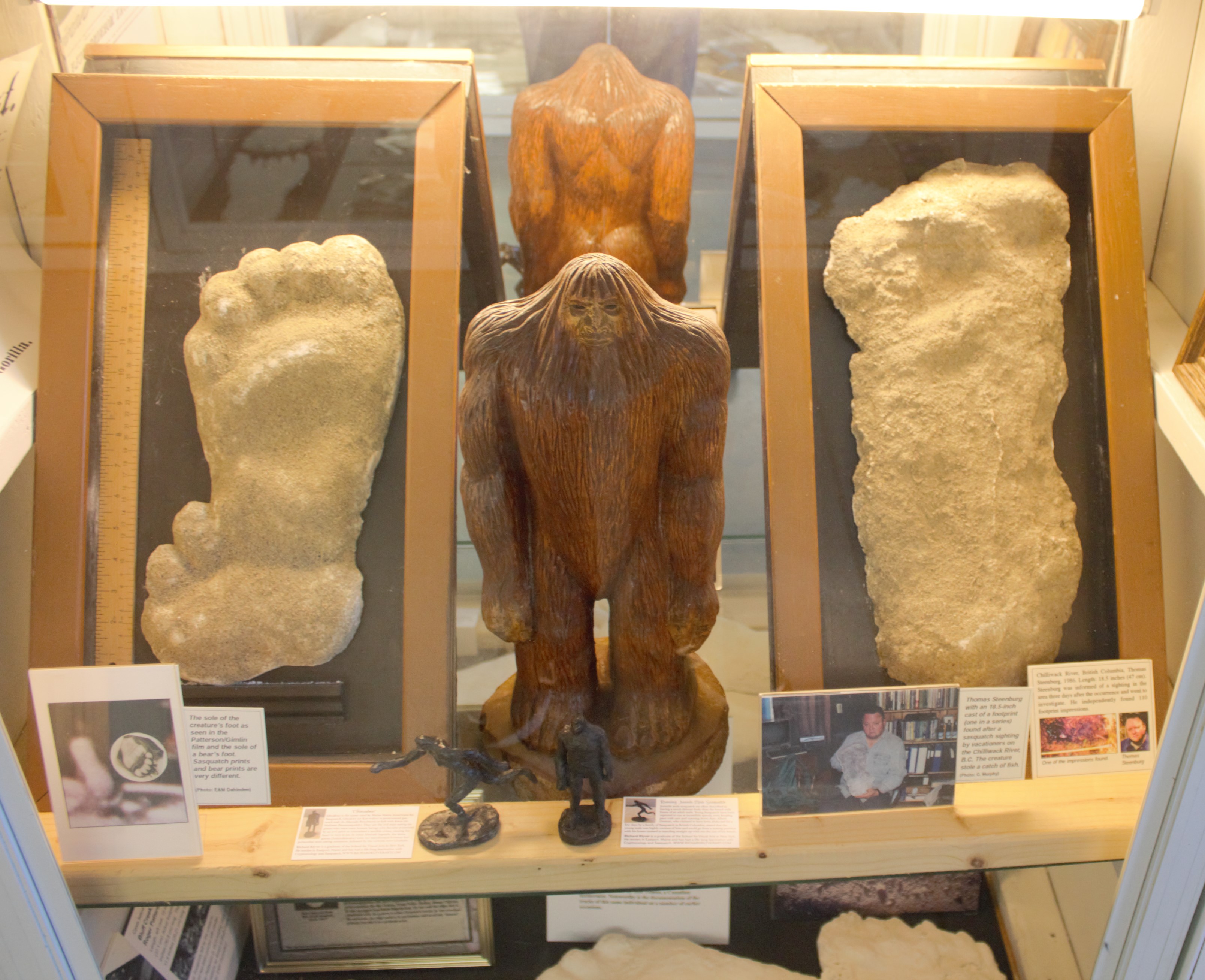
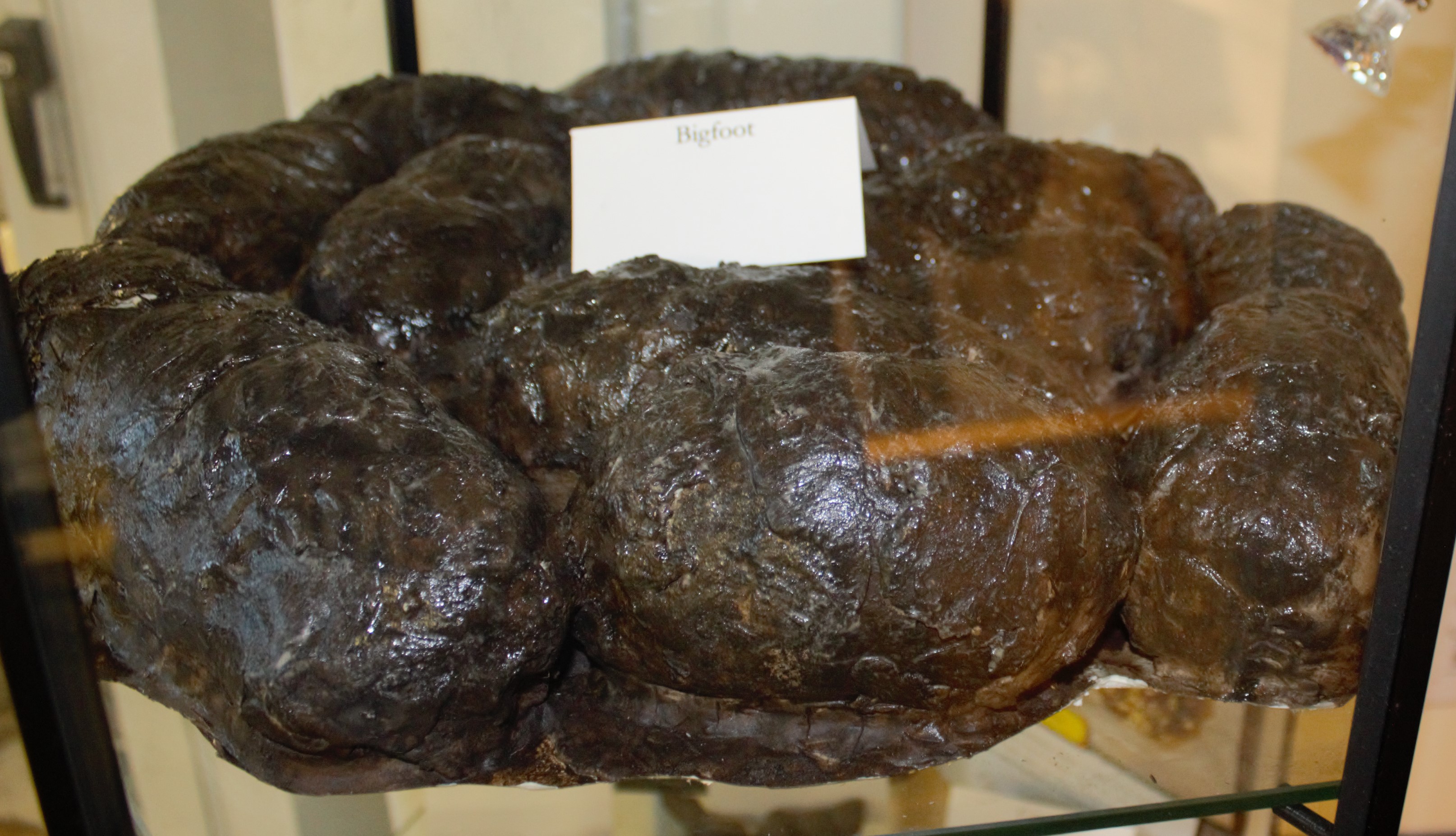
On a recent trip to Maine, my wife and I visited the International Cryptozoology Museum in Portland, Maine. Cryptozoology is the search for and study of animals whose existence or survival is disputed or unsubstantiated such as Big Foot, Sasquatch, and the Loch Ness monster. Here are some pictures from our visit.
Sasquatch and Me
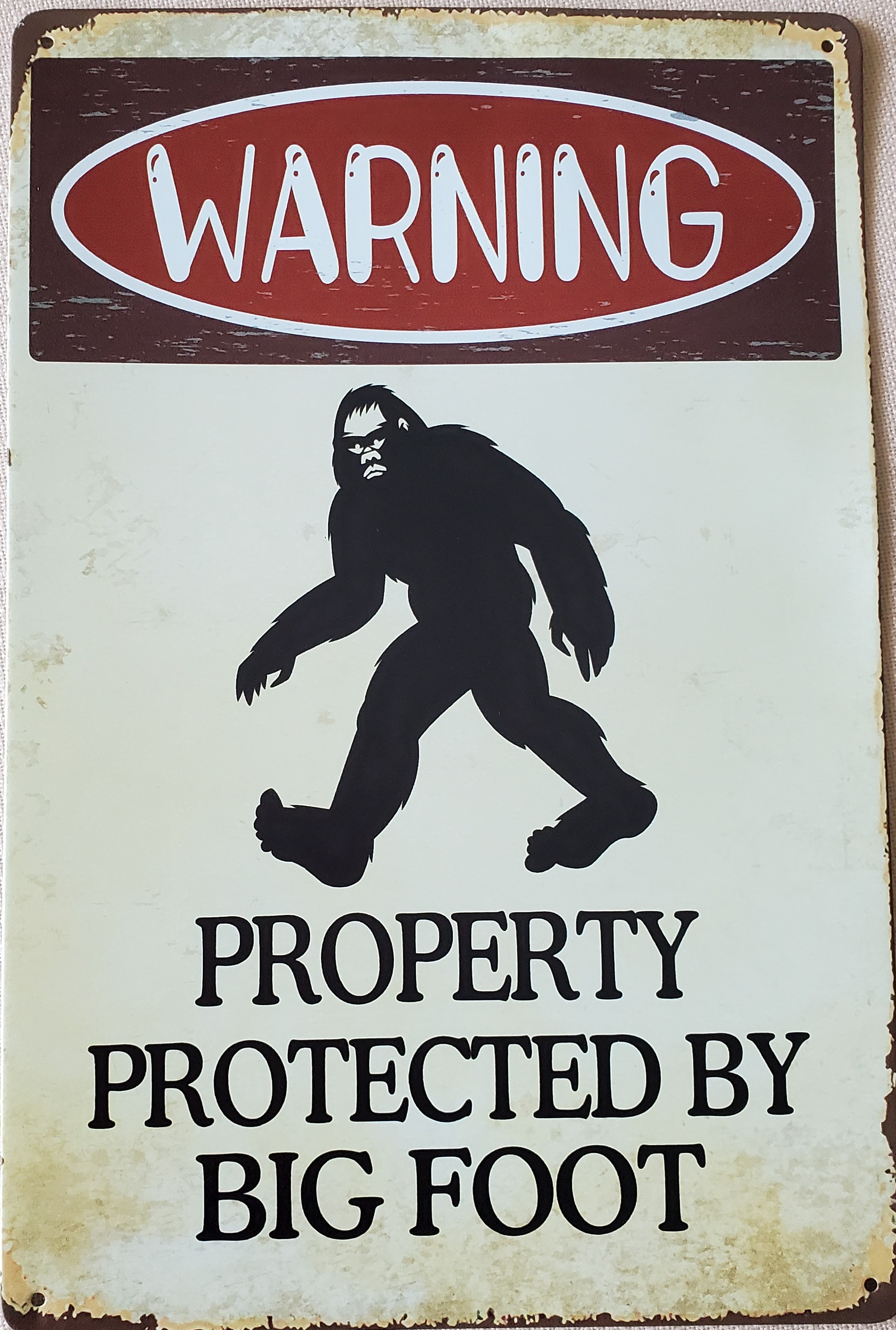
My fascination with Sassy began on a trip to the Pacific Northwest. I have tee shirts, magnets, and metal signs. I even have a 8-foot-high Sasquatch in my front yard.
Well, I’ve had fun with Sassy and I hope you like these pictures.
By adding your name to my list, you will be eligible to win free copies of:
My books
Pictures from my collection of Civil War art
Books from my library of non-fiction titles
My original artwork
My short stories
You will also be able to access exclusive pages on my website, engage in real-time telephone conversations, suggest topics for future books, and host book signing events.

















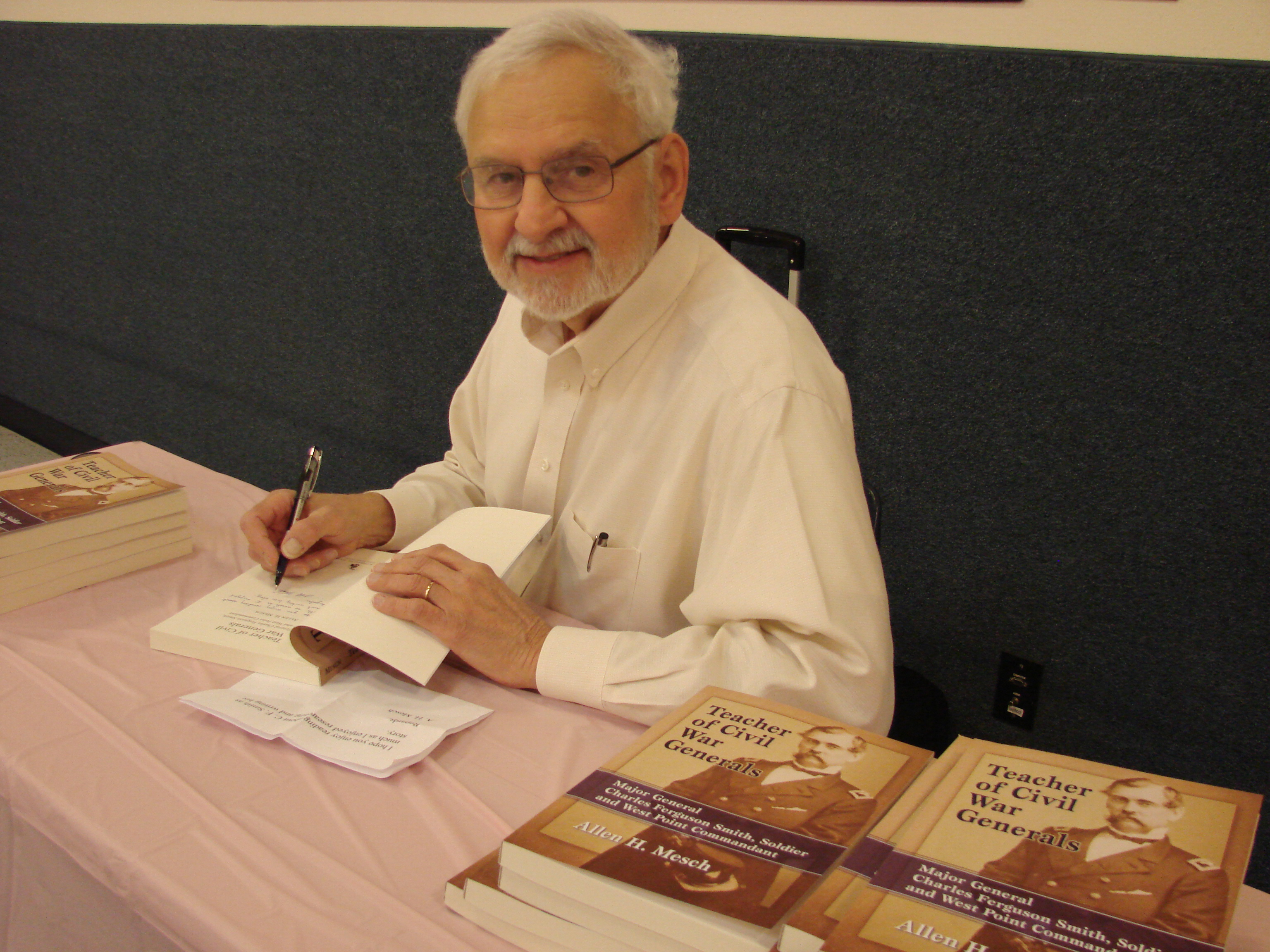


 Allen Mesch
